
工业软件

Search documents
国际锐评丨看懂这个“5.0%”的含金量与新机遇
Sou Hu Cai Jing· 2026-01-19 14:42
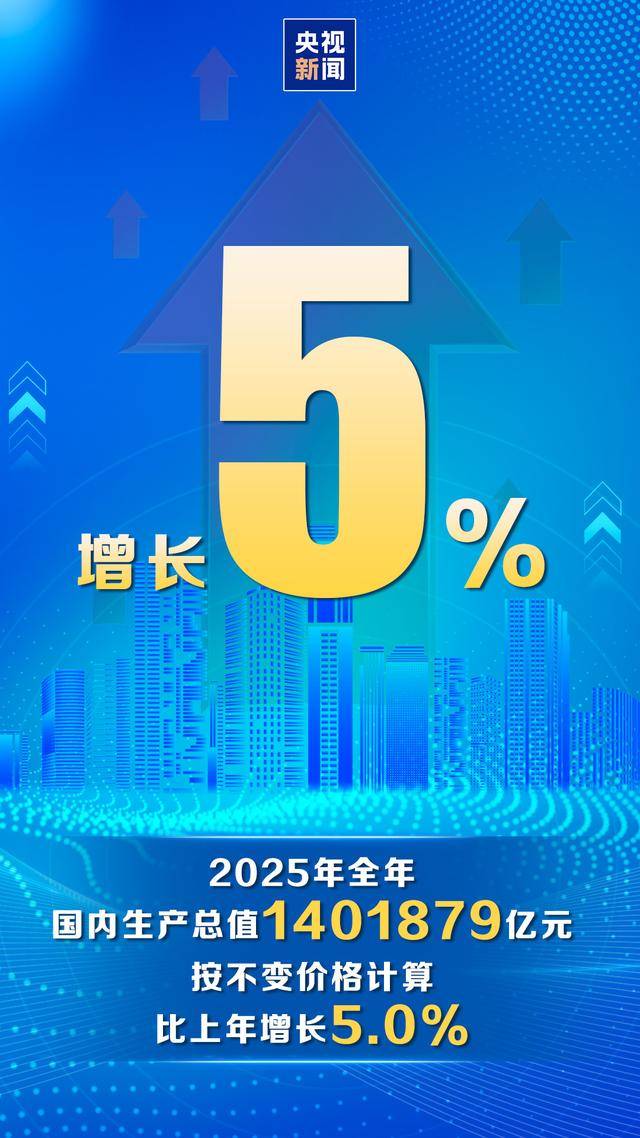
Group 1 - China's economy demonstrates strong resilience and stability, providing significant opportunities for multinational companies amid a complex external environment [1][4] - The GDP growth target of 5.0% for 2025 is seen as a solid achievement, marking a milestone with GDP surpassing 140 trillion yuan, contributing approximately 30% to global economic growth [1][4] - Major international organizations have raised their growth forecasts for China, indicating a positive outlook from global capital, including firms like JPMorgan and BlackRock increasing their investments in Chinese assets [1][4] Group 2 - The growth is attributed to China's innovation-driven development strategy and effective government policies that have stimulated domestic demand, with consumer spending contributing over 50% to economic growth [4] - Key economic indicators show stability, with the CPI remaining flat, urban unemployment averaging 5.2%, and record high foreign exchange reserves exceeding $3.3 trillion [4][5] - China's industrial base remains solid, with foreign companies benefiting from a stable market environment, as evidenced by a 4.1% increase in sales revenue for companies like KSB [5] Group 3 - The total value of imports and exports grew by 3.8%, with per capita disposable income increasing by 5.0%, highlighting the robust market potential [5][7] - High-tech manufacturing's value added rose to 17.1%, and the R&D investment intensity surpassed the OECD average for the first time, reflecting a strong focus on innovation [5][7] - Nearly 70% of multinational companies express confidence in their future in China, with 94% committed to investing in the Chinese market, indicating a favorable business climate [8]

政策密集出台,促进AI+工业加速融合
Changjiang Securities· 2026-01-19 05:58
Investment Rating - The industry investment rating is "Positive" and maintained [7] Core Insights - Recent policies have been introduced to promote the integration of AI and industrial sectors, enhancing the dual empowerment of AI and manufacturing applications. AI is viewed as a crucial productivity driver, with significant potential for growth in the AI+ industrial space. The penetration rate of AI in the industrial sector is expected to continue rising [2][4] - The industrial software market is projected to expand due to equipment upgrades and domestic replacements, with growth rates likely to exceed the global average. The report suggests focusing on leading companies in niche segments that possess data and know-how advantages, particularly those represented by central control technology [2][4] Summary by Sections Policy Developments - Multiple policies have been released to facilitate AI and industrial integration, including the "AI+ Manufacturing" action plan, which aims to enhance AI applications in manufacturing. Key quantitative targets include the deep application of 3-5 general large models in manufacturing, the creation of 100 high-quality industrial data sets, and the cultivation of 2-3 globally influential enterprises [4] Market Potential - China is the largest manufacturing country, with an industrial value added expected to reach 40.5 trillion yuan by 2024, accounting for about 30% of global manufacturing value. The industrial internet core industry is projected to exceed 1.6 trillion yuan by 2025, driving an additional 2.5 trillion yuan in industrial value added. The penetration of AI in industrial applications is rapidly increasing, with the application rate of large models in industrial enterprises rising from 9.6% in 2024 to 47.5% in 2025 [2][4] Investment Recommendations - The report emphasizes the importance of focusing on leading companies in niche segments that have data and know-how advantages. The industrial software market is expected to continue expanding, driven by the dual factors of equipment updates and AI enhancements, with industry growth likely to outpace global averages [2][4]

数学“破圈”运筹帷幄 产业升级心中有“数”多行业以数学“求解”产业卡脖子难题
Xin Lang Cai Jing· 2026-01-18 21:31
Group 1 - Mathematics is increasingly recognized as a strategic competitive advantage in various industries, including artificial intelligence, industrial software, aerospace control, medical software, and energy simulation [1][4][7] - The 10th World Congress of Chinese Mathematicians attracted over 2,000 mathematicians and scholars from more than 30 countries, with over 314 mathematical presentations, many of which are closely related to industrial applications [2][4] - The integration of mathematics with industry has progressed from cross-disciplinary exploration to deep fusion, positioning mathematics as a core engine driving industrial innovation and supporting national strategies [2][3] Group 2 - Experts emphasize that since 2018, China's focus on mathematics has increased significantly, particularly in addressing technological bottlenecks [4][5] - In artificial intelligence, stronger mathematical capabilities lead to better model performance, including code generation and problem-solving abilities [4][6] - Mathematics is crucial for various sectors, such as electronic design automation (EDA) in integrated circuits, where core algorithms reflect deep integration with computational and applied mathematics [4][5] Group 3 - The development of geometric engines, essential for CAD, CAE, and CAM software, is heavily reliant on mathematical principles [5] - New mathematical methods are enhancing medical imaging technologies, improving model stability and generalization, and reducing costs for patients [5][6] - Mathematical optimization techniques have significantly improved operational efficiency in satellite management and oil and gas reservoir simulations [6][7] Group 4 - The rise of Chinese engineers in the AI field is closely linked to their strong mathematical foundation [7][8] - Supporting mathematical development requires a conducive environment and innovative education, rather than purely utilitarian approaches [7][8] - Mathematics should be viewed as a strategic resource, with efforts to improve overall mathematical literacy across all age groups [8]
险资看好2026权益市场 掘金“硬科技”投资机会
Shang Hai Zheng Quan Bao· 2026-01-18 18:15
Group 1 - The influx of incremental funds is expected to act as a "catalyst" for market growth, with residents shifting their asset allocation from deposits to other assets due to low long-term deposit rates [1] - There is a noticeable increase in residents' enthusiasm for purchasing insurance, particularly dividend insurance products, which may channel funds into the stock market in the future [1] - The trend of "deposit migration" indicates that household savings are entering the capital market through various channels, with ordinary residents' funds likely becoming a major source of market entry by 2026 [1] Group 2 - Insurers are adopting a "barbell" asset allocation strategy, heavily investing in dividend assets while also allocating to growth assets, particularly in response to emerging structural opportunities in the equity market [2] - The market's profit growth rate is expected to rebound in 2026, with a focus on "hard technology" sectors such as AI computing power, industrial software, high-end machine tools, hydrogen energy, and aerospace support [2] - Technology and advanced manufacturing are identified as key investment themes for 2026, with firms like Huatai Asset actively positioning in AI, semiconductors, robotics, and new energy sectors while selectively investing in finance, cyclical, and consumer sectors [2] Group 3 - Mid-sized insurance companies are focusing on growth assets that can deliver tangible results, targeting three main areas: manufacturing with global competitive advantages, sectors experiencing accelerated domestic substitution with real demand, and early-stage industries supported by clear policies and capital [3] - Key sectors of interest include engineering machinery, new energy equipment, semiconductors, new materials, commercial aerospace, and AI applications [3]
\平台+场景智能体\驱动工业智能化跃升:AI 制造政策频出,关注 AI 工业制造
GUOTAI HAITONG SECURITIES· 2026-01-17 09:40
Investment Rating - The report assigns an "Accumulate" rating for the industry [4][33]. Core Insights - The report emphasizes the integration of AI and industrial manufacturing, highlighting the transition from "perceptual interconnection" to "deep intelligence" through policies that promote the development of industrial internet platforms [2][21]. - It outlines four major innovative actions proposed by the policy: platform cultivation, data intelligence enhancement, large-scale application, and ecological support, focusing on the deep integration of AI and industrial internet [2][10]. Summary by Sections 1. Policy Overview and Key Indicators - The report discusses the "Action Plan for Promoting High-Quality Development of Industrial Internet Platforms (2026-2028)" issued by the Ministry of Industry and Information Technology, defining industrial internet platforms as crucial for data aggregation, model accumulation, and application development [8]. - By 2028, the plan aims for over 450 influential platforms, more than 120 million industrial device connections, and a platform penetration rate exceeding 55% [9]. 2. Four Major Action Frameworks 2.1. Platform Cultivation - The report advocates for differentiated platform development, focusing on professional, industry-specific, and collaborative platforms to enhance digital product and service supply [10][12]. - It promotes a "small, fast, light, and precise" approach to digital solutions, transitioning from project-based to subscription-based models [10]. 2.2. Data Intelligence Enhancement - The report highlights the need to improve data collection and integration capabilities, establishing a robust industrial data labeling system and exploring new data management models [13][14]. - It encourages the development of a high-quality industrial model system and supports the "Model as a Service" (MaaS) approach [14][15]. 2.3. Large-Scale Application - The report emphasizes the importance of applying digital management and intelligent production models in traditional industrial settings, particularly for small and medium-sized enterprises [16][17]. 2.4. Ecological Support - The report calls for the establishment of an open-source community for industrial internet platforms and the development of a new standard system to enhance security and data management [19][20]. 3. AI + Manufacturing - The report outlines the synergy between various policies aimed at integrating AI into manufacturing, with specific targets for the development of industrial intelligent entities and high-quality data sets by 2028 [21][22]. - It notes a rapid increase in the penetration rate of industrial intelligent entities, indicating a shift from experimental phases to widespread application across multiple scenarios [22]. 4. Investment Recommendations - The report recommends focusing on companies such as Zhongkong Technology, Rilian Technology, and others, while suggesting to pay attention to companies like Weihong Co. and Rongzhi Rixin [23].
科技成果加速从“书架”走向“货架”——安徽出实招助推科产融合
Xin Lang Cai Jing· 2026-01-16 19:06
Group 1 - The core viewpoint of the news is that Anhui province is implementing a series of new measures to promote the integration of technology and industry, aiming to enhance innovation and entrepreneurship through a robust support system for technology talent [1][2] - Anhui will support high-level technology teams with annual funding and equity investment of up to 20 million yuan for those with core technologies, and will appoint technology personnel from universities to act as "technology vice presidents" in enterprises [2] - The province aims to strengthen the construction of a technical manager team, with an annual budget of 10 million yuan to support the development of a technology market across provincial, municipal, and county levels [2] Group 2 - The "Thousand Talents Training Camp" project will be implemented to train key personnel from high-tech enterprises and research institutions, focusing on the needs of technological innovation and industrial development [2] - The establishment of a platform for regular communication between researchers, engineers, and product managers is highlighted as a key factor in facilitating better collaboration and solution development [1] - Anhui's policies are designed to connect the innovation chain, industrial chain, capital chain, and talent chain, accelerating their integration and interaction [1]
能科科技20260115
2026-01-16 02:53
Summary of Nengke Technology Conference Call Company Overview - Nengke Technology has been developing cloud-native industrial software series since 2020, including LeCang, LeYan, LeZao, and LeShu, utilizing a three-tier architecture of data center, middle platform, and front-end applications [2][3][4] - The company plans to submit a 1 billion yuan targeted issuance application to the Shanghai Stock Exchange in 2025 to enhance its technological strength and market competitiveness [2][5] Core Business and Strategic Focus - The targeted issuance project focuses on three key areas: Lingqing (AI industrial research and development), Lingzhu (industrial software with AI), and Lingzhi (AI embodiment) [2][6] - Nengke Technology aims for a compound annual growth rate (CAGR) of no less than 30% over the next three years, with AI expected to become the largest business segment by 2026 [2][7] Industry Position and Competitive Landscape - The company is positioned within the industrial AI and military AI applications, focusing on sectors such as equipment, automotive, electronics, and energy [3][4] - Nengke Technology's strategy includes benchmarking against companies like Palantir while innovating based on its unique characteristics [4][9] - The company has a growing presence in specialized industries, with a 44% revenue contribution from these sectors by Q3 2026 [3][14] Financial Projections and Revenue Growth - The company aims to transition from quantity to high-quality sales revenue through the targeted issuance, focusing on high-end equipment manufacturing and expanding into aerospace, engines, vehicles, and new energy sectors [2][8] - Revenue from augmented reality (AR) is projected to grow from 20 million yuan (1% of revenue) in 2023 to 270 million yuan (18% of revenue) in 2024, and 330 million yuan (30% of revenue) by Q3 2025 [8] AI Strategy and Development - Nengke Technology's AI strategy includes developing agents for research, manufacturing, operations, and quality control, with a focus on high-value scenarios [11][19] - The company plans to enhance its AI capabilities by training a workforce of AI engineers and leveraging national policies to drive growth [7][19] Collaborations and Ecosystem Development - Nengke Technology collaborates with major platforms like Huawei and Alibaba to enhance its AI ecosystem, aiming to empower industrial clients through seamless integration [12][13] - The company has completed approximately 500 projects in the commercial aerospace sector, serving over 200 clients, with a total project volume of around 1 billion yuan [16] Future Outlook - The company anticipates that AI applications and robotics will drive revenue growth and improve profitability, with gross margins expected to rise from 30%-40% in 2023 to 40%-45% in 2024 [17] - Nengke Technology is committed to advancing its AI strategy, with plans to make AI its primary business segment by 2026-2027 [19]

研报掘金丨国盛证券:维持鼎捷数智“买入”评级,入选WIM2025中国数据智能服务商TOP20
Xin Lang Cai Jing· 2026-01-15 09:08
Core Insights - Dingjie Smart has been recognized as one of the TOP 20 data intelligence service providers in China for 2025, reaffirming its leading position in the industry digitalization [1] Group 1: Company Recognition - The company has successfully entered the TOP 20 list of data intelligence service providers in China for 2025, highlighting its strong industry presence [1] - Dingjie Smart's expertise and data accumulation in the industry enable it to empower enterprises through AI, enhancing data value [1] Group 2: Business Coverage and Development - The company's business encompasses various sectors, including R&D design, digital management, production control, and AIoT industrial software [1] - Dingjie Smart is upgrading its Athena Smart Native Base to expand AI applications driven by digital intelligence [1] Group 3: Industry Positioning and Future Outlook - The company is actively advocating for and participating in the construction of an open and collaborative industrial ecosystem [1] - Revenue projections for Dingjie Smart are estimated at 2.438 billion, 2.608 billion, and 2.841 billion yuan for 2025, 2026, and 2027 respectively, with net profits expected to be 180 million, 204 million, and 263 million yuan for the same years [1] - Based on comparable company valuations, a "Buy" rating is maintained for Dingjie Smart [1]

为什么中国不能走“消费大国”那条捷径?真正的底牌永远是制造业
Sou Hu Cai Jing· 2026-01-14 15:52
Core Argument - The article argues that transitioning from a manufacturing-based economy to a consumption-driven one in China is not feasible without a strong production system, high labor productivity, and stable employment and income growth [3][4][42]. Group 1: Understanding "Consumer Power" - The concept of a "consumer power" is often misunderstood as merely spending more money, but it requires a robust economic structure that supports income generation [5][6]. - A true consumer power must meet three criteria: high income and productivity, sustainable employment structures, and a strong position in international division of labor [7]. Group 2: The Role of Manufacturing - Manufacturing is not an outdated model but serves as a safety net, employment pool, technological foundation, and fiscal base for a country of China's size [4]. - The unique value of manufacturing lies in its ability to organize large-scale employment across various sectors, which is crucial for improving income and job stability [8][10]. Group 3: Economic Structure and Welfare - High welfare and wages are not achievable without a strong underlying economic structure, which includes high productivity, strong capital returns, and advantages in international division of labor [19][20]. - Countries that cannot create high added value while seeking high welfare and consumption may end up relying on debt, inflation, or industrial relocation, which ultimately harms the lower-income groups [20]. Group 4: Path to Sustainable Growth - The article emphasizes that the correct approach is to strengthen industries that can continuously create value before discussing welfare and consumption upgrades [21][24]. - The logical chain for sustainable growth is: upgrading manufacturing → more stable employment and higher productivity → stronger household income → natural consumption upgrade [24]. Group 5: Recommendations for China - China should focus on enhancing manufacturing to support stronger consumption capabilities, with key areas of investment including high-end equipment, advanced materials, and smart manufacturing [27][28]. - Employment absorption capacity should be a hard indicator in industrial policy, as industries that can create numerous middle-skill jobs are essential for expanding the middle class and solidifying the consumption base [28]. - Improving lower-income levels should rely on skills, productivity, and fair distribution mechanisms rather than one-time subsidies [29]. - Development of productive service industries, which can enhance overall efficiency and wage levels, is crucial, as these services are symbiotic with manufacturing [31]. Group 6: Conclusion - The article concludes that a large country's strength lies not in its ability to spend but in its capacity to produce, innovate, and create jobs [42].

人民财评:让“AI+制造”成为产业升级“加速器”
Ren Min Wang· 2026-01-14 09:09
Core Viewpoint - The implementation of the "Artificial Intelligence + Manufacturing" initiative by eight government departments aims to deeply integrate AI with the manufacturing sector, enhancing productivity and driving industrial upgrades in China [1][2]. Group 1: Policy and Objectives - The "Artificial Intelligence + Manufacturing" initiative outlines a systematic policy framework to promote the integration of AI into manufacturing, emphasizing that AI is a key variable while manufacturing is the core carrier [1]. - The initiative includes seven key tasks and 21 specific measures to accelerate the intelligent, green, and integrated development of the manufacturing industry [1]. Group 2: Industry Impact - The initiative is expected to benefit the entire "Artificial Intelligence + Manufacturing" supply chain, including sectors such as AI chips, industrial software, smart equipment manufacturing, and data services [2]. - AI is anticipated to optimize production processes, enhance quality, efficiency, and flexibility, and facilitate a dual empowerment of AI technology and manufacturing applications [2]. Group 3: Implementation and Collaboration - Successful implementation of the initiative requires collaboration among various stakeholders, including government, enterprises, and industry organizations [3]. - The government needs to optimize the institutional environment, while enterprises should actively engage in transformation, and industry organizations must enhance collaboration between academia and industry [3].