
肉类加工

Search documents
突然!特朗普下令:调查美国食品供应链!
Zheng Quan Shi Bao Wang· 2025-12-08 00:19
Group 1: Investigation into Food Supply Chain - The Trump administration has ordered an investigation into the U.S. food supply chain, focusing on potential price manipulation and anti-competitive behavior, particularly by foreign companies [2][3] - A special task force will be established by the Department of Justice and the Federal Trade Commission to examine various anti-competitive practices and assess whether foreign control of food-related industries poses a national security threat [2] - The executive order emphasizes the importance of an affordable and secure food supply for national and economic security, highlighting that anti-competitive actions threaten the stability and affordability of the U.S. food supply [2] Group 2: Rising Meat Prices - The investigation follows a previous order to examine the meat processing industry, where Trump accused foreign-owned companies of contributing to rising beef prices [3] - Retail prices for ground beef have increased by 12.9% and steak prices by 16.6% over the past year, significantly exceeding the overall food inflation rate of 3.1% [3] - Economic factors such as supply constraints and high demand for beef are identified as primary reasons for the price increases, with the U.S. cattle inventory at its lowest level in nearly 75 years [3] Group 3: Welfare Fraud in Minnesota - A series of welfare fraud cases in Minnesota have come to light, with the amount involved exceeding $1 billion, raising concerns about systemic regulatory failures in government welfare funding [6][7] - The organization "Feeding Our Future" is implicated in defrauding the federal child nutrition program of over $250 million between 2020 and 2022 [6] - Investigations have led to the indictment of 87 individuals, with 61 convictions, primarily involving members of the Somali immigrant community in Minnesota [7]


突然!特朗普下令:调查!
Zheng Quan Shi Bao Wang· 2025-12-07 23:51
Group 1: Investigation into Food Supply Chain - President Trump has ordered an investigation into the U.S. food supply chain, focusing on potential price manipulation and anti-competitive behavior, particularly by foreign companies [2][3] - The investigation will be conducted by the Department of Justice and the Federal Trade Commission, which will form a special task force to examine various anti-competitive practices and assess whether foreign control poses a national security threat [2] - The executive order emphasizes the importance of an affordable and secure food supply for national and economic security, highlighting that anti-competitive actions threaten the stability and affordability of the U.S. food supply [2] Group 2: Rising Beef Prices - Beef prices have surged significantly, with retail prices for ground beef rising by 12.9% and steak by 16.6% over the past year, far exceeding the overall food inflation rate of 3.1% [3] - The average price for a pound of chuck ground beef has increased from $5.58 to $6.33, indicating a substantial rise in consumer costs [3] - Economic factors contributing to high beef prices include supply constraints and strong demand, with the U.S. cattle inventory at its lowest level in nearly 75 years due to drought conditions affecting herd sizes [3] Group 3: Welfare Fraud in Minnesota - A series of welfare fraud cases in Minnesota has come to light, with the total amount involved exceeding $1 billion, raising concerns about systemic regulatory failures in government welfare funding [4][5] - The organization "Feeding Our Future" is at the center of the fraud, having allegedly defrauded the federal child nutrition program of over $250 million between 2020 and 2022 [4][5] - The investigation has led to 87 individuals being charged, with 61 convictions, and has sparked political backlash against the Somali immigrant community in Minnesota, as well as criticism of the state's Democratic officials [5][6]
突然!特朗普下令:调查!
券商中国· 2025-12-07 23:43
Core Viewpoint - The article discusses President Trump's recent actions to investigate the U.S. food supply chain for potential price manipulation and anti-competitive behavior, particularly focusing on foreign companies and the implications of welfare fraud in Minnesota [1][2]. Group 1: Investigation into Food Supply Chain - Trump has ordered the Department of Justice and the Federal Trade Commission to investigate the U.S. food supply chain, specifically looking for price manipulation and anti-competitive practices that have increased costs for meat, seeds, and fertilizers [2]. - The executive order emphasizes that a safe and affordable food supply is crucial for national and economic security, and it highlights concerns over foreign-controlled entities potentially threatening the stability and affordability of the food supply [2][3]. - Recent data shows that retail prices for ground beef rose by 12.9% and steak by 16.6% over the past year, significantly outpacing the overall food inflation rate of 3.1% [3]. Group 2: Welfare Fraud in Minnesota - A series of welfare fraud cases in Minnesota have come to light, with the amount involved exceeding $1 billion, leading to significant political repercussions [4]. - The organization "Feeding Our Future" is implicated in defrauding the federal child nutrition program of over $250 million between 2020 and 2022, using false claims about providing meals to thousands of children [4][5]. - The investigation has led to 87 individuals being charged, with 61 convictions, primarily involving members of the Somali immigrant community in Minnesota [5].

特朗普签署行政令调查外资企业食品反竞争行为
Xin Hua She· 2025-12-07 04:48
Core Viewpoint - The U.S. government is taking action to investigate and address price manipulation and anti-competitive behavior in the food supply chain, particularly focusing on foreign-controlled companies that are contributing to rising food costs for American households [1] Group 1: Government Actions - President Trump signed an executive order to establish food supply chain safety working groups within the Department of Justice and the Federal Trade Commission [1] - The working groups are tasked with investigating price monopolies and anti-competitive practices, with a specific focus on foreign-controlled companies [1] - The groups have the authority to take enforcement actions and develop new rules to combat anti-competitive behavior [1] Group 2: Economic Impact - The U.S. Consumer Price Index (CPI) has seen a year-on-year increase from 2.3% in April to 3% in September [1] - In September, prices for beef, coffee, and tea rose by over 10% year-on-year [1] - Households in the U.S. are now spending an additional $208 per month to purchase the same goods and services as in September of the previous year, according to Moody's report [1] Group 3: Industry Concerns - Trump has previously called for an investigation into major meat processing companies, accusing foreign-controlled firms of collusion, price manipulation, and monopolistic practices that have led to increased beef prices [1]
特朗普下令调查食品行业潜在价格操纵行为
Xin Lang Cai Jing· 2025-12-06 23:33
Core Points - President Donald Trump has ordered the Department of Justice and the Federal Trade Commission to investigate the U.S. food supply chain, focusing on potential price manipulation and other anti-competitive behaviors that have driven up costs for meat, seeds, and fertilizers, particularly targeting foreign companies [1][3] - The executive order comes in response to growing public dissatisfaction regarding rising living costs, an issue that has contributed to the Democratic Party's success in several key elections against the Republican Party in November [1][3] Industry Focus - The investigation will specifically examine anti-competitive practices and whether foreign entities' control over the food-related industry poses a national security threat [1][3] - Last month, Trump had already initiated an investigation into the meat processing industry, accusing "foreign-controlled major companies" of causing the increase in beef prices [2][4]
反制加码!数千吨美国牛肉,被中国拒之门外,美国厂商遭到重击
Sou Hu Cai Jing· 2025-12-06 07:21
Group 1 - The US-China trade friction has escalated in 2025, with the US imposing a 10% tariff on all Chinese imports starting in February, followed by additional tariffs on March 3 [1] - China's Ministry of Commerce announced extra tariffs on certain US agricultural products, including a 10% tariff on beef, significantly reducing the competitiveness of US beef in the Chinese market [1][3] - The US beef export volume to China plummeted from over a thousand tons per week to nearly zero, with the USDA reporting only 54 tons exported after March, primarily remnants of old contracts [5][7] Group 2 - Major US meat processing companies like Tyson Foods and Cargill lost their export qualifications to China, leading to significant inventory issues and financial losses [3][5] - The Texas and Nebraska beef-producing states were hit hardest, with a 10% drop in cattle output and increased unemployment among workers [5][11] - The American Meat Export Federation estimated annual losses could reach $500 million due to the trade disruptions [5] Group 3 - The value of US beef exports to China dropped from $1.58 billion to just $8.1 million by July, a staggering 90% decline [7] - The share of US meat exports to China fell from 5% to below 1%, forcing companies to diversify their markets to Southeast Asia and Europe, which are significantly smaller [11][18] - By April, tariffs on US beef reached 56%, completely erasing price advantages, and compliance with new Chinese regulations became a major hurdle for US exporters [13][15] Group 4 - By June, US beef exports faced a crisis, with many shipments redirected to Japan to mitigate losses, and over 900 companies lost their export status [15][16] - The US meat export association reported annual losses exceeding $1 billion, with companies suing the government over policy failures [16][20] - Following a new trade agreement in November, some restrictions were lifted, allowing for a gradual recovery of US beef exports, but significant losses had already occurred [18][24] Group 5 - The trade conflict highlighted the dual-edged nature of trade wars, where US attempts to pressure China ultimately harmed American farmers [20][24] - China successfully diversified its import sources, stabilizing its market while US suppliers faced inventory buildup and financial strain [20][22] - The situation prompted a reevaluation among US companies regarding reliance on single markets, emphasizing the need for supply chain adjustments and market diversification [22][24]
随行代表团阵容豪华,国际舆论场聚焦经贸,马克龙开启三天访华行程
Huan Qiu Shi Bao· 2025-12-03 23:05
Group 1: French Business Delegation - The French delegation accompanying President Macron includes over 80 members, including six ministers and 35 CEOs from various sectors such as Airbus, EDF, and Danone, indicating a strong focus on cooperation and business opportunities in China [3][4] - The visit aims to secure respect for Europe as an important partner to China, with a particular emphasis on energy agreements and agricultural cooperation, especially in the pork industry [4][5] - Macron's visit to Chengdu is seen as a strategic move to enhance mutual trust and address differences following global disruptions caused by the COVID-19 pandemic and the Ukraine crisis [3][5] Group 2: Economic and Trade Relations - The visit is expected to focus on trade issues, including the potential for agreements in the energy sector, as well as discussions on agricultural exports, particularly pork by-products, which have high demand in China [4][5] - There is a recognition of the changing economic landscape, with France's traditional export strengths in aviation and energy facing increased competition from China, marking a shift in the economic dynamics between Europe and China [6][7] - The visit is also seen as an opportunity for France to regain market opportunities in China amidst the backdrop of evolving global trade relations and the need for Europe to assert its position in the face of US-China tensions [8][9]

Brazil judge orders government to add JBS subsidiary to 'dirty list' for slavery
Reuters· 2025-12-03 21:02
Group 1 - A federal labor judge in Brazil has added a poultry unit of meatpacker JBS to a "dirty list" of employers linked to slavery-like working conditions [1] - This decision highlights ongoing labor issues within the meatpacking industry in Brazil, particularly concerning worker treatment and rights [1] - The inclusion on the "dirty list" may impact JBS's reputation and operations, potentially leading to increased scrutiny from regulators and consumers [1] Group 2 - The ruling reflects broader concerns about labor practices in the Brazilian meatpacking sector, which has faced criticism for inadequate working conditions [1] - JBS, as a major player in the industry, could face financial repercussions and operational challenges as a result of this legal decision [1] - The case underscores the importance of compliance with labor laws and the potential consequences for companies that fail to uphold worker rights [1]
全球肉业巨头将关停核心牛肉加工厂,牛肉产业的苦日子要来了?
Sou Hu Cai Jing· 2025-12-01 10:36
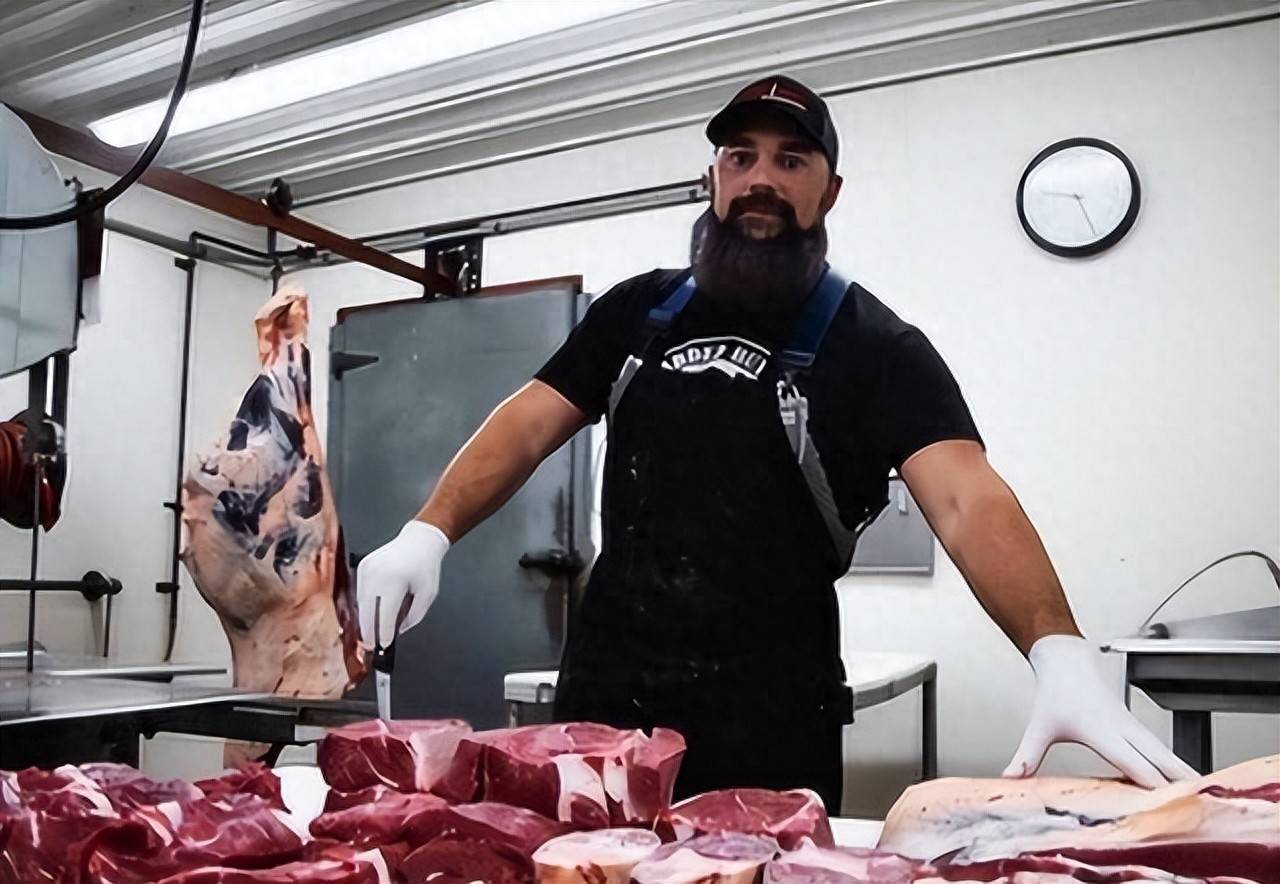
Core Points - Tyson Foods announced the closure of a major beef processing plant in Lexington, Nebraska, and plans to reduce production at a Texas facility, affecting approximately 1,700 workers [1] - The closed plant employs around 3,200 workers and processes about 5,000 cattle daily, representing 4.8% of the U.S. daily beef slaughter [1] - The beef segment is crucial for Tyson Foods, contributing $21.623 billion to the company's total revenue of $54.44 billion for fiscal year 2025 [1] Financial Performance - Tyson Foods reported a $426 million operating loss in its beef segment for fiscal year 2025, marking an increase in losses compared to the previous year [2] - The beef segment has been the only loss-making division for Tyson Foods, with total losses reaching $648 million in fiscal year 2023 [2][3] - The company anticipates further losses in the beef segment, estimating a loss of $400 million to $600 million for fiscal year 2026 [2] Market Conditions - The ongoing losses in the beef segment are attributed to tight cattle supply in the U.S., exacerbated by tariffs affecting imports from countries like Brazil and Australia, and rising costs for feed and farming equipment [4] - The U.S. cattle herd has reached a 75-year low, with over 100,000 family farms exiting the industry in the past decade, limiting the ability to expand cattle numbers [4] - Tyson Foods' COO indicated that the industry may be in the early stages of a cattle herd recovery, but supply constraints are expected to persist in the short term [4][5] Impact on the Industry - Tyson Foods' decision to reduce beef production capacity may have implications for the broader beef industry, including potential impacts on the Chinese market where Tyson has established operations [7] - Tyson Foods has a significant presence in China, with a comprehensive supply chain that includes processing plants and research centers, which may mitigate the impact of U.S. plant closures on the Chinese beef market [9] - Despite the company's established operations in China, the overall tightness in global beef supply could pose risks to the domestic market, as China relies heavily on imports for beef supply [11]

牛兴鲜品牌焕新:南京首个“兴鲜帮”鲜牛肉社区连锁门店正式升级
Jiang Nan Shi Bao· 2025-11-28 07:02
Core Insights - The company has officially launched a brand upgrade for its first "Xingxianbang" fresh beef community chain store in Nanjing, aiming to enhance consumer experience with better quality and convenience [1] Brand Upgrade: Visual and Conceptual Enhancements - The brand has undergone a comprehensive optimization of its image, featuring a new VI system and logo that are simpler and more approachable, conveying the core concept of "farm to table" [2] - The company relies on its deep expertise in the entire beef industry chain, ensuring that the fresh beef sold is free from hormones, water injection, and lean meat essence, supported by a traceable sourcing system [2] One-Stop Service for Community Living - The company has introduced a one-stop service solution called "Xingxianbang," offering free cutting services and comprehensive support from ingredient selection to cooking guidance, catering to various cooking scenarios [3] Meal Solution: Fresh Beef for Healthy Living - The "One Meal" solution promotes a healthy lifestyle with fresh beef, designed for convenience with small portion sizes to avoid waste and ensure freshness, allowing consumers to easily prepare delicious meals [4] Online and Offline Integration to Enhance Consumer Experience - The company utilizes a "Yunmall" mini-program for local delivery, instant takeout, and precise marketing, while also offering online ordering and offline pickup services to save consumers time and effort [5] Future Outlook: Continuous Upgrades and Community Service Expansion - The company is accelerating its market layout while continuing to embody the "farm to table" brand philosophy, aiming to provide fresher, safer, and higher-quality beef through integrated online and offline services [6]