
船舶海工

Search documents
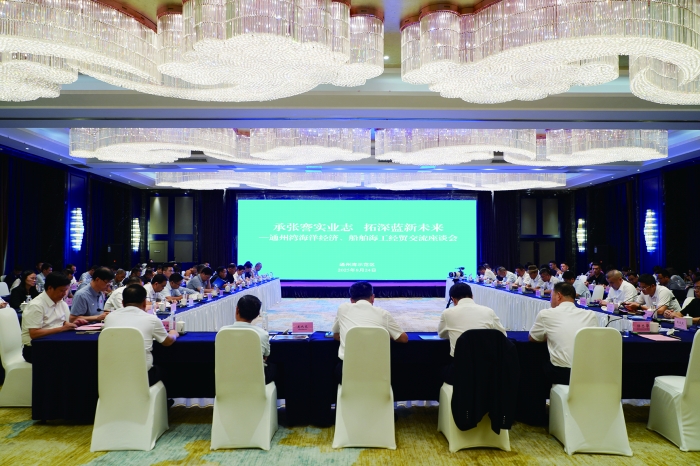
近百家优强企业走进南通共探海洋经济发展新路径
Shang Hai Zheng Quan Bao· 2025-08-28 19:45
Group 1 - The "Tongzhou Bay Marine Economy and Shipbuilding Industry Economic Exchange Symposium" was held in Nantong, focusing on marine economic development opportunities and industry cooperation [3][4] - Nantong has developed six trillion-level industrial clusters, including shipbuilding, electronic information, and high-end equipment, with a total market capitalization of listed companies reaching 400 billion [4][5] - The city aims to enhance its business environment and attract quality enterprises and investment institutions to foster the marine economy and blue economy [4][5] Group 2 - Nantong's GDP is projected to reach 1,242.19 billion in 2024, with a year-on-year growth of 6.2%, ranking second among China's trillion-level cities [5] - The Tongzhou Bay Demonstration Zone has consistently led Nantong's GDP growth, with a remarkable growth rate of 11.8% in the first half of 2025 [5] - The marine economy is expected to contribute 260 billion to Nantong's GDP in 2024, accounting for a quarter of the province's total [5][6] Group 3 - Various companies expressed interest in collaborating with Nantong, highlighting the city's favorable business environment and industrial planning [6][7] - Companies like Taily Technology and Hunan Tianqiao Hoisting emphasized the alignment of their strategic directions with Nantong's industrial strengths [6][7] - Financial representatives suggested leveraging Nantong's fixed asset investment for bond financing and capital operation to support industrial development [8]

以海聚能 大有可为——南通通州湾示范区打造船舶海工产业新高地
Shang Hai Zheng Quan Bao· 2025-08-28 19:35
Core Insights - The article highlights the rapid development and investment potential of the Tongzhou Bay Demonstration Zone in Nantong, which has transformed from a coastal wasteland into a thriving industrial hub, attracting numerous companies and investments [1][6][7]. Group 1: Industrial Development - Tongzhou Bay has become a key area for high-end equipment manufacturing, with companies like Nantong Huaten Intelligent Equipment Manufacturing Co., Ltd. focusing on large-scale, modular, and intelligent shipbuilding [2][3]. - The region's geographical advantages, including direct access to maritime transport, have attracted companies such as Tiens Wind Power, which invested 2 billion yuan to acquire Jiangsu Changfeng Marine Equipment Manufacturing Co., Ltd. to enhance its offshore wind power capabilities [3][4]. Group 2: Economic Growth - The GDP growth rate of the Tongzhou Bay Demonstration Zone has consistently led Nantong City, with a reported growth of 11.8% in the first half of 2025 [7]. - Over the past three years, key economic indicators such as industrial electricity consumption and fixed asset investment have also ranked first in Nantong City, with 59 projects signed and registered this year alone [7]. Group 3: Talent Attraction and Employment - The local government has implemented various policies to attract talent, including financial incentives for young professionals, which has led to a significant increase in the local workforce [10]. - The influx of talent is evident, with the floating population in Tongzhou Bay increasing from 10,000 in 2021 to 45,000 over four years, indicating strong development potential [7]. Group 4: Infrastructure and Services - The local government is actively improving infrastructure and services to support industrial growth, including expanding port facilities and streamlining administrative processes for companies [8][9]. - Companies have reported positive experiences with government support, which has facilitated their operations and resource management [9].

每月8艘船舶出坞 镇江海工产业火力全开
Ren Min Wang· 2025-08-27 01:18
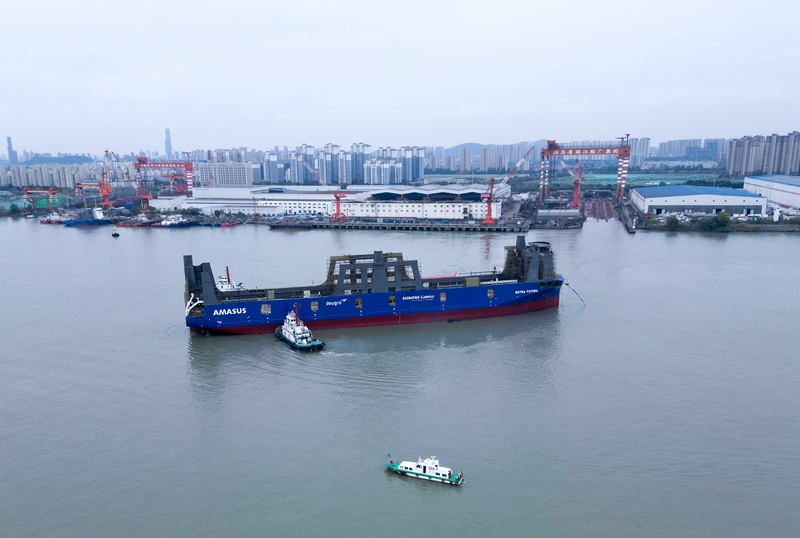
Core Insights - The ship "DJHC6149," measuring 99.98 meters, was successfully launched in the Yangtze River segment of Zhenjiang, marking a peak production period for the local marine engineering industry [1] - Zhenjiang has 81 shipbuilding and marine engineering companies, with 44 being above designated size, representing 54.3% of the total [1] - The marine engineering industry in Zhenjiang is projected to achieve a taxable sales revenue of 18.02 billion yuan in 2024 [1] - In the current year, the Yangtze River segment of Zhenjiang has seen a total of 50 ships launched and 44 ships trialed, indicating stable and efficient industry development [1] - To support the marine engineering industry, the Zhenjiang Maritime Bureau has established the "Zhenheyi·River Benefit" service brand, offering comprehensive support for shipbuilding processes [1] Industry Overview - The collaboration between 12 shipbuilding enterprises and 69 supporting companies has fostered a synergistic development model in Zhenjiang's marine engineering sector [1] - The Zhenjiang Maritime Bureau has implemented a streamlined administrative process for new ship launches, trials, and deliveries, significantly reducing costs and improving operational efficiency [1]
“皇冠上的新明珠” 我国自主建造新型FLNG正式启航
Yang Shi Xin Wen· 2025-08-26 22:04
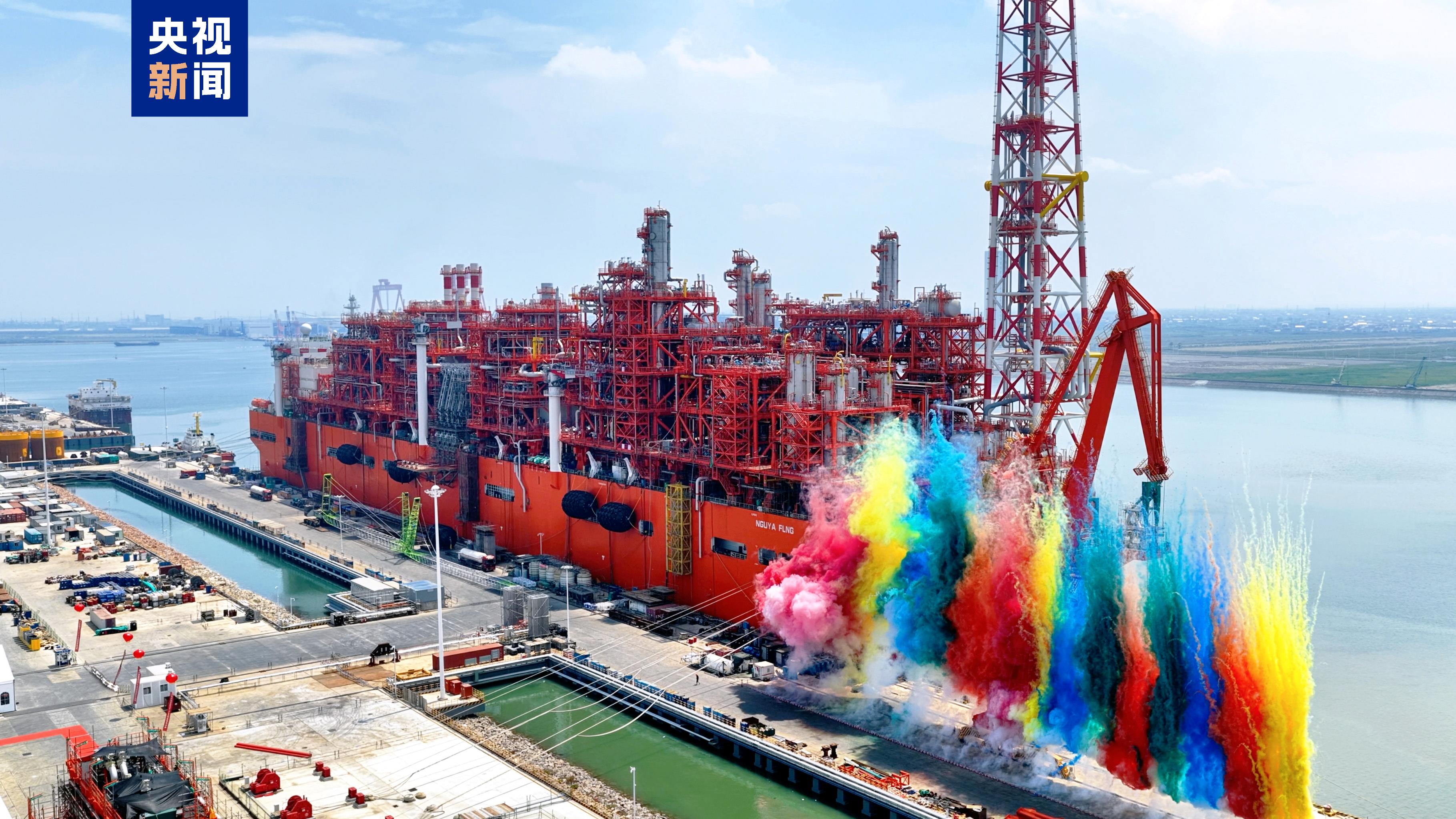
Core Insights - The launch of China's self-built floating liquefied natural gas production unit "NGUYA FLNG" marks a significant breakthrough in global FLNG technology and engineering management [1][3] - This event highlights the construction capabilities of Chinese enterprises in the high-end energy equipment sector [1] Group 1: Technical Specifications - The "NGUYA FLNG" measures 376 meters in length, 60 meters in width, and 35 meters in depth [3] - It has a liquefied natural gas (LNG) storage capacity of 180,000 cubic meters and an annual LNG production capacity of 2.4 million tons [3] Group 2: Industry Significance - Floating liquefied natural gas production units (FLNG) are complex, high-cost, and high-value products in marine engineering, often referred to as the "crown jewel" of the shipbuilding and offshore engineering industry [3]
我国首座大型海上浮式液化天然气生产装置启航
Zhong Guo Zheng Quan Bao· 2025-08-26 20:14
Core Viewpoint - The successful launch of the "Nguya FLNG," China's largest floating liquefied natural gas (LNG) production facility, marks a significant advancement in marine energy development and strengthens Congo's position in global energy supply [1][2]. Group 1: Project Details - The Nguya FLNG, built by Huisheng Clean Energy Technology Group, is designed for ENI's LNG project in Congo, with a total length of 376 meters, width of 60 meters, depth of 35 meters, and a total weight of approximately 130,000 tons [1]. - The facility has a storage capacity of 180,000 cubic meters and an annual production capacity of 2.4 million tons, contributing to an overall annual LNG production capacity increase in Congo to 3 million tons [1]. - The project took 36 months to complete, achieving 30 million safe working hours without incidents, showcasing the efficiency of Huisheng Clean Energy's project management and the strength of the Chinese supply chain [2]. Group 2: Technological Innovations - Nguya FLNG incorporates cutting-edge floating LNG liquefaction technology and features Huisheng's self-supporting prismatic B-type (SPB) tank, which has a capacity of 45,000 cubic meters, the largest single product of its kind since the 1980s [2]. - The facility integrates multiple low-carbon technologies, ensuring efficient operation while effectively reducing carbon emissions [2]. Group 3: Strategic Implications - The Nguya FLNG serves as a vital piece of equipment for promoting marine economic development and acts as a bridge connecting Chinese manufacturing with the global energy sector [3]. - Huisheng Clean Energy aims to continue driving innovation and collaboration in high-end, green, and sustainable energy projects, contributing to the low-carbon transition and sustainable development of the global energy industry [3].
镇江船舶海工产业集群加速崛起:8 艘船舶两月下水,海事服务护航产业高速发展
Yang Zi Wan Bao Wang· 2025-08-26 07:37
Core Insights - The shipbuilding and marine engineering industry in Zhenjiang has shown significant growth, with 8 vessels launched in the last two months, indicating a peak production period [1] - By mid-2025, Zhenjiang is expected to have 81 shipbuilding and marine engineering enterprises, with 44 being large-scale companies, contributing to a robust industrial ecosystem [1] - The industry is projected to achieve a taxable sales revenue of 18.02 billion yuan in 2024, reflecting strong development momentum [1] Industry Development - The Zhenjiang shipbuilding and marine engineering sector has developed a comprehensive industrial system that includes ship manufacturing and supporting services, leading to the emergence of national-level "single champions" and specialized "little giant" enterprises [2] - The Zhenjiang Maritime Safety Administration has established a service brand to support the marine engineering industry, implementing a streamlined regulatory process to enhance operational efficiency and reduce costs for enterprises [1][2]
如皋聚力“以港强市” 聚焦“跨江向海”
Xin Hua Ri Bao· 2025-08-22 23:26
Core Viewpoint - Rugao City is advancing the "Port-Strong City" strategy to leverage its geographical advantages and accelerate development opportunities [1][3]. Group 1: Economic Development - Rugao is focusing on transforming its water transport advantages into economic strengths, with a systematic approach to enhance port economy, upgrade industries, and improve urban quality [3]. - The total investment of 1 billion yuan in the Senyong high-end process equipment manufacturing project highlights the city's commitment to industrial growth [2]. - Rugao's industrial sales exceeded 100 billion yuan in the first half of the year, with six major industrial chains accounting for 87% of the industrial output value [2]. Group 2: Port and Logistics - Rugao Port has become a logistics hub within a 100-kilometer radius, with 25 approved berths and container shipping routes reaching multiple global regions [4]. - The port's development has led to a 13.1% increase in foreign trade, with exports growing by 17.9% in the first half of the year [4]. - The integration of port services and trade is being optimized to enhance economic growth [4]. Group 3: Marine Economy - Rugao is creatively proposing a development model that combines river and sea resources, focusing on shipbuilding and marine engineering as key industries [6]. - The city is actively attracting high-end intelligent manufacturing and new material projects to foster marine industry growth [7]. - The establishment of the first commercial coral farming facility in China demonstrates Rugao's commitment to developing a robust marine economy [7].
三年目标出炉!上海发力“AI + 制造”
Guo Ji Jin Rong Bao· 2025-08-20 06:16
Core Points - The implementation plan for "AI + Manufacturing" in Shanghai aims to deeply integrate artificial intelligence technology with the manufacturing industry, accelerating the new industrialization process and forming new productive forces [1][8] - Shanghai plans to promote the intelligent application of 3,000 manufacturing enterprises within three years, establish 10 industry benchmark models, and create around 100 benchmark intelligent products [2][8] - The plan focuses on various industries including integrated circuits, electronic information, automotive, high-end equipment, shipbuilding, aerospace, advanced materials, steel, fashion consumer goods, and pharmaceutical manufacturing [4][8] Group 1: Three-Year Goals - Shanghai aims to implement intelligent applications in 3,000 manufacturing enterprises, enhancing production efficiency, reducing operational costs, and improving product quality [2][3] - The establishment of 10 "AI + Manufacturing" demonstration factories will showcase integrated advanced AI technologies [2][3] - The development of around five comprehensive integration service providers will offer one-stop intelligent solutions for enterprises [3] Group 2: Industry-Specific Strategies - For traditional manufacturing sectors like steel and shipbuilding, the focus will be on intelligent transformation of production processes, promoting human-machine collaborative manufacturing units [4] - In emerging manufacturing sectors such as electronic information and automotive, the emphasis will be on developing specialized models for specific scenarios to enhance the efficiency of large and small models [4] - The plan encourages collaboration between consumer terminal companies and AI firms to develop intelligent products, enhancing the capabilities of terminal devices [5] Group 3: Robotics Application - The plan highlights the deployment of industrial robots in sectors with repetitive, hazardous tasks, such as welding and painting in automotive manufacturing [7] - Large-scale application of intelligent robots aims to automate production processes, reduce labor costs, and improve product quality [7] - Safety and reliability standards for humanoid robots in industrial settings will be established to ensure safe applications [7] Group 4: Industry Growth Metrics - Shanghai's AI industry scale surpassed 270 billion yuan, with a growth rate exceeding 30% in the first half of the year [9] - The production of service robots and industrial robots increased by 16.1% and 11.9%, respectively [9] - The total computing power in Shanghai exceeded 70,000 P, with significant infrastructure developments in 5G networks [9]
AI超级赛道,利好!上海,最新发布!
天天基金网· 2025-08-20 03:31
Core Viewpoint - The article discusses the implementation plan for accelerating the integration of AI and manufacturing in Shanghai, aiming to enhance the smart development of the manufacturing sector over the next three years [2][4]. Group 1: Implementation Plan Overview - The plan aims to promote the deep integration of AI technology with manufacturing, enhancing new industrialization and forming new productive forces [2]. - It targets the achievement of smart applications in 3,000 manufacturing enterprises, the creation of 10 industry benchmark models, and the establishment of around 10 "AI+Manufacturing" demonstration factories [2][4]. - The plan emphasizes the importance of financial support, including using production data as collateral for bank loans and promoting financing through intellectual property [2]. Group 2: Focus on Key Industries - The implementation plan focuses on several key industries, including integrated circuits, electronic information, automotive, high-end equipment, shipbuilding, aerospace, advanced materials, steel, fashion consumer goods, and pharmaceutical manufacturing [4]. - Specific applications of AI in these industries include enhancing design capabilities in integrated circuits, automating processes in electronic information, and developing intelligent systems in automotive manufacturing [5]. Group 3: Technological Innovations - The plan calls for innovations in foundational and cutting-edge technologies, including multi-modal algorithm innovations and enhanced understanding of physical laws for better simulation capabilities [4]. - It also emphasizes the need for improved visual processing and intelligent decision-making capabilities through better recognition of industrial documents and operational constraints [4]. Group 4: AI+Manufacturing Demonstration Factories - The article highlights the establishment of "AI+Manufacturing" demonstration factories characterized by high-density distribution of intelligent agents and multi-scenario integration [7]. - These factories will utilize various technologies, including spatial computing and multi-agent collaboration, to enhance operational efficiency and safety in manufacturing processes [7]. Group 5: Consumer Electronics and AI - The plan encourages collaboration between consumer electronics companies and AI firms to develop edge models and enhance the application capabilities of smart consumer devices [8]. - It aims to promote the iteration and upgrade of new intelligent consumer terminals, such as AI computers, glasses, and smartphones, fostering the development of an intelligent terminal industry cluster [8].

上海:推动3000家制造业企业实现智能化应用
Zhong Guo Zheng Quan Bao· 2025-08-19 20:09
Group 1 - The core viewpoint of the implementation plan is to enhance the level of intelligent development in Shanghai's manufacturing industry over three years, aiming to achieve significant innovations in areas such as data, models, platforms, and scenarios [1][2] - The plan targets the application of AI in 3,000 manufacturing enterprises, the establishment of 10 industry benchmark models, and the creation of 100 benchmark intelligent products [1][2] - It also aims to promote 100 demonstration application scenarios and build around 10 "AI + manufacturing" demonstration factories, fostering a competitive ecosystem for intelligent manufacturing services [1][2] Group 2 - The plan emphasizes the need to tackle foundational and cutting-edge technologies, enhancing industrial model capabilities and promoting innovations in multimodal algorithms [2] - Key industries targeted for AI application include integrated circuits, electronic information, automotive, high-end equipment, shipbuilding, aerospace, advanced materials, steel, fashion consumer goods, and pharmaceutical manufacturing [2] - The initiative includes the construction of "AI + manufacturing" factories characterized by high-density distribution of intelligent agents and multi-scenario integration [2][3] Group 3 - The plan encourages the application of industrial robots in key sectors such as electronics, automotive, and equipment, particularly in repetitive, hazardous, and health-risk work scenarios to improve efficiency and safety [3] - It promotes large-scale applications of intelligent robots in assembly, welding, spraying, and material handling processes [3] - The initiative aims to create human-machine collaborative intelligent manufacturing units in industries like steel and shipbuilding, focusing on the automation of complex processes [3]