证券交易

Search documents
延长股票交易时间!刚刚宣布,美股将迎重大变革
Zheng Quan Shi Bao· 2025-12-16 02:02
Core Viewpoint - Nasdaq plans to extend trading hours for stocks and exchange-traded products from 16 hours to 23 hours per week, aiming to meet the growing global demand for U.S. stocks, with a target launch in the second half of 2026 [1][3][4] Group 1: Extended Trading Hours - Nasdaq will submit a proposal to the SEC on December 15 to implement nearly round-the-clock trading, with trading hours extending from 4 AM to 8 PM for daytime and from 9 PM to 4 AM for nighttime [2][3] - The new trading week will start on Sunday at 9 PM and end on Friday at 8 PM, marking a significant step towards achieving continuous trading [3][4] Group 2: Market Demand and Globalization - There has been a surge in demand for uninterrupted trading from international investors, particularly from Asia and Europe, who face challenges due to time zone differences [3][5] - Nasdaq's senior vice president Chuck Mack emphasized the increasing globalization of markets and the need for investors to trade according to their local schedules [3][5] Group 3: Industry Trends and Competitors - Other major exchanges, including the New York Stock Exchange and the Chicago Board Options Exchange, are also pursuing similar plans to extend trading hours, indicating a trend in the U.S. capital markets [4] - The success of all-hours trading will depend on upgrades to the securities information processor and the introduction of all-hours clearing services by the DTCC by the end of 2026 [4] Group 4: Investor Behavior and Market Dynamics - Despite lower trading volumes during extended hours, there is a notable increase in demand for nighttime trading, with many investors currently relying on alternative trading systems [5] - Nasdaq has previously submitted proposals for trading tokenized stocks, reflecting its commitment to adapting to market trends and investor needs [5]

纳斯达克申请延长工作日交易时间至23小时 计划新增一个交易时段
Xin Lang Cai Jing· 2025-12-16 01:31
Core Viewpoint - Nasdaq is seeking regulatory approval to extend its trading hours to 23 hours on weekdays, aiming to meet the growing demand from global investors for trading flexibility [1][3]. Group 1: Nasdaq's Trading Hour Extension - Nasdaq has submitted a proposal to the SEC to add a new trading session from 9 PM to 4 AM Eastern Time, in addition to existing pre-market, regular, and after-hours trading sessions [1][3]. - The company emphasizes that the extension is driven by the increasing interest from investors in trading U.S. stocks outside traditional hours, which are currently from 9:30 AM to 4 PM Eastern Time, Monday to Friday [1][3]. - Nasdaq anticipates being ready to implement the extended trading hours by the third quarter of 2026, pending regulatory approval and alignment with other industry participants [1][3]. Group 2: Market Impact - The proposed changes are expected to attract more retail investors from various global markets, particularly benefiting South Korean retail investors who hold significant amounts of U.S. stocks [2][4]. - Other exchanges, such as the New York Stock Exchange, are also planning to extend trading hours, with a proposal for 22 hours of trading time already receiving preliminary approval from the SEC [1][3].
拟延长交易时间!纳斯达克,重大宣布
Zheng Quan Shi Bao· 2025-12-16 00:30
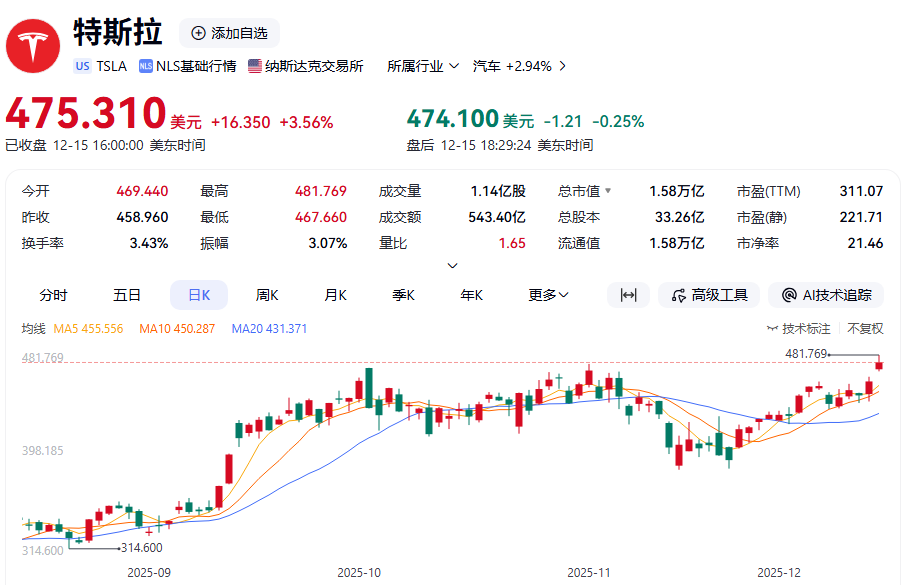
Market Overview - On December 15, U.S. stock indices collectively declined, with the Dow Jones down 0.09%, Nasdaq down 0.59%, and S&P 500 down 0.16% [2] Tesla Developments - Tesla's stock price rose over 3%, reaching a nearly one-year high, as the company is piloting a driverless Robotaxi service in Austin [3] - Analyst Dan Ives from Wedbush predicts Tesla's market value could reach $3 trillion by the end of 2026, with Full Self-Driving (FSD) penetration potentially exceeding 50% [5] - Ives maintains a "outperform" rating for Tesla with a target price of $600 [5] Broadcom Performance - Broadcom's stock fell 5.59%, marking a three-day decline of 17.7% [5] - China International Capital Corporation maintains an "outperform" rating for Broadcom, with a target price of $475, citing strong AI ASIC revenue and a backlog of $73 billion [5] Oracle's Market Position - Oracle's stock dropped 2.66%, facing pressure from aggressive AI investment plans, with credit risk indicators reaching a 16-year high [7] - The company experienced its largest stock drop in nearly 11 months [7] Nasdaq Trading Hours Expansion - Nasdaq plans to submit a proposal to the SEC to extend trading hours from 16 to 23 hours on weekdays, introducing a new night trading session [8] - The new trading schedule will include a day session from 4 AM to 8 PM and a night session from 9 PM to 4 AM [8]


纳斯达克寻求延长交易时间,华尔街为全天候交易做准备
Xin Lang Cai Jing· 2025-12-15 23:21
Core Viewpoint - Nasdaq plans to submit documents to the SEC to launch all-day stock trading, marking a significant step towards continuous trading five days a week, expected to be implemented in the second half of 2026 [1] Group 1: Nasdaq's Trading Plans - Nasdaq aims to extend trading hours from 16 hours to 23 hours per week, introducing two trading sessions: a daytime session from 4 AM to 8 PM and a night session from 9 PM to 4 AM [1] - The daytime trading session will continue to include pre-market, regular, and after-hours trading, with the regular market opening at 9:30 AM and closing at 4 PM [2] Group 2: Industry Trends - Other exchanges, including the New York Stock Exchange and the Chicago Options Exchange, have also announced plans for 24-hour stock trading, indicating a global trend towards more continuous trading [1] - Nasdaq's executives highlight the increasing globalization of the U.S. market, reflecting a broader shift in trading practices [1]
纽约证券交易所(NYSE)发布 2025 年业务亮点
Xin Lang Cai Jing· 2025-12-15 14:36
(来源:吴说) 吴说获悉,纽约证券交易所(NYSE)发布 2025 年业务亮点,披露其已为加密资产进入公开资本市场 铺平道路:年内上市 Circle Internet Group(CRCL)、Bullish(BLSH) 与 Twenty One Capital (XXI),并成为美国加密货币 ETF 交易的首选平台,全年推出 25 只数字资产 ETF,涵盖 GDLC、 Bitwise Solana Staking ETF(BSOL)及 Franklin XRP ETF(XRPZ) 等,同时迎来美国首只在交易所上 市的封闭式加密基金 C1 Fund。 来源:市场资讯 ...

北交所市值打新是真是假?看这四个核心点
财联社· 2025-12-13 14:36
Core Viewpoint - The rumors regarding the online testing phase of the market capitalization-based IPO system at the Beijing Stock Exchange (BSE) are confirmed to be untrue, stemming from market expectations for reform rather than actual developments [1][2]. Group 1: Clarification of the Rumors - The BSE's new system implementation requires a strict procedural process, and the claim that it has entered an online testing phase is inaccurate [2]. - The strong market anticipation for reforms at the BSE is a key reason for the rapid spread of these rumors [3]. Group 2: Market Expectations and Impacts - The introduction of a market capitalization-based IPO mechanism is expected to enhance market trading vitality, although it may also increase overall market volatility [3][7]. - The progress of the North Certificate 50 ETF is clearer and is viewed positively for its potential impact on the BSE market [4][9]. Group 3: Understanding Market Capitalization-based IPOs - The BSE aims to optimize its IPO issuance system, with the market capitalization-based IPO being a new approach that links investor eligibility and quota to their stock holdings [6]. - This change is anticipated to alleviate liquidity pressure and attract long-term capital into the market [6]. Group 4: Potential Risks and Mechanism Evaluation - The market capitalization-based IPO mechanism could amplify market volatility, especially during downturns, where concentrated selling could exacerbate declines [7]. - The BSE should focus on improving the pricing mechanism to better support innovative enterprises, as merely changing the distribution of IPO profits may have limited impact on market competitiveness [8]. Group 5: North Certificate 50 ETF Launch - The North Certificate 50 ETF is expected to attract significant capital, potentially reaching a fundraising scale in the hundreds of millions, which would stabilize the funding structure of the BSE [10]. - The ETF will enhance market attention and liquidity, providing a low-cost investment tool for ordinary investors [10].
摩根QDII额度十万,就坚持了1天 香港指数也很卷
Xin Lang Cai Jing· 2025-12-09 09:32
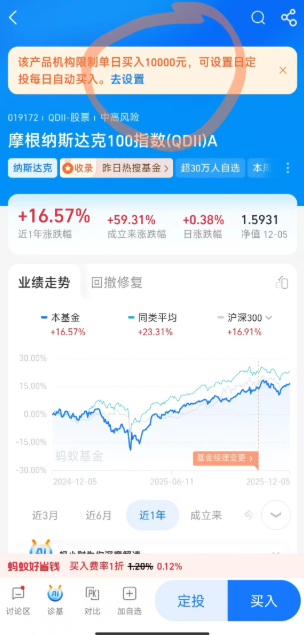
今天说两个事情: 摩根十万,就坚持了1天;香港指数也很卷。 第一、摩根十万,就坚持了1天 来源:投基摸狗 昨天我说了摩根放开QD额度到1天10万,我猜摩根坚持不了几天,结果不用几天,已经改了——大家看 大的销售渠道,天天基金和蚂蚁基金(图一、图二),摩根的纳指和标普的限额已经变成1万了。 我听说是摩根没宣传,但是抢疯了,好几个其他基金公司或是销售渠道的人传一天卖了十几个亿,不知 道这消息准确不准确。 我就好奇了一个问题为啥摩根同时放开纳指和标普都到十万,大家都关注纳指,标普讨论的相对就少不 少。 之前有一些朋友在我后台留言问的也都是纳指有没有额度,问标普的少。 莫非大家都关注ai? 当然还是那些话: 即使降低到1天限购1万,摩根的纳指和标普额度也是目前比较多的基金公司。 如果要买的可以考虑,相对来说QD额度比较紧缺,1天1万对咱们普通老百姓来说,也不少。 如果担心风险的没必要买,我一直就是这样的观点,我也没收摩根啥钱(当然现在这样火,人家也不需 要宣传),所以我的立场就是提供信息,想买的就买,觉得有风险就等等。 第二、香港指数也很卷 很多人上午看到这个基金新闻了——香港交易所今天推出了香港交易所科技100指数 ...

香港交易所科技100指数推出 易方达基金获授权
Zhong Zheng Wang· 2025-12-09 06:05
Core Viewpoint - The Hong Kong Stock Exchange has launched the Hong Kong Stock Exchange Technology 100 Index, marking a significant milestone in its index and data business development [1] Group 1: Index Overview - The Technology 100 Index tracks the performance of the 100 largest technology companies listed on the Hong Kong Stock Exchange [1] - The index covers six major innovative themes: artificial intelligence, biotechnology and pharmaceuticals, electric vehicles and smart driving, information technology, internet, and robotics [1] - All constituent stocks of the index meet the qualifications for southbound trading, catering to the investment needs of both Chinese and global investors [1] Group 2: Strategic Partnerships - The Hong Kong Stock Exchange has signed an authorization agreement with E Fund Management to promote related products in the mainland market [1] - The partnership aims to meet the strong demand from mainland investors for capturing investment opportunities in the Hong Kong stock market [1] - E Fund Management expressed its intention to develop ETF products tracking the Technology 100 Index, allowing investors to share in the investment opportunities of Hong Kong-listed technology companies [1]
北交所上市公司纳科诺尔大宗交易折价27.59%,成交金额121.65万元
Sou Hu Cai Jing· 2025-12-03 09:44
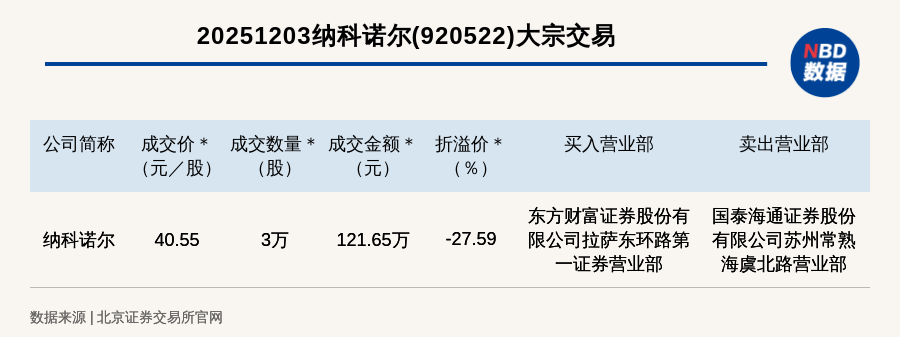
Group 1 - The core event involves a block trade of Naconor (stock code: 920522) on the Beijing Stock Exchange, with a closing price of 56 yuan per share [1] - The block trade occurred on December 3, 2025, at a transaction price of 40.55 yuan per share, representing a discount of 27.59% [1] - The total volume of the trade was 30,000 shares, resulting in a transaction amount of 1.2165 million yuan [1] Group 2 - The buying brokerage was Dongfang Caifu Securities Co., Ltd., specifically the Lhasa Donghuan Road First Securities Office [1] - The selling brokerage was Guotai Junan Securities Co., Ltd., from the Suzhou Changshu Haiyu North Road Office [1]
芝商所宕机引爆白银狂潮?57美元历史新高背后的"拉网线"疑云
第一财经· 2025-11-29 01:57
2025.11. 29 本文字数:2740,阅读时长大约4分钟 感恩节停摆 期货是金融市场的核心工具,交易商、投机者及企业可通过期货对各类基础资产进行对冲或持仓操作。芝商所本月早些时候的数据显示,10月衍生品日 均交易量达2630万份合约。芝商所提供涵盖多领域的期货及期货期权产品,具体包括大宗商品、利率、股票指数、外汇和加密货币。 一则市场猜测 值得注意的是,芝商所期货交易突然中断引发网络热议 ——尤其是白银投资者,他们注意到此次故障发生在白银期货触及54美元上方历史新高仅几分钟 后。社交媒体上却涌现出大量猜测,认为此次交易中断与白银价格持续突破有关。 作者 | 第一财 经 樊志菁 当地时间周四,芝加哥商品交易所集团(CME)遭遇系统故障,导致全球外汇、大宗商品及股票期货交易陷入停滞,投资者和经纪商"无从下手"。这也 是芝商所时隔11年再次发生重大故障,与上次仅涉及农产品合约不同,这一次影响范围更大。 与此同时,白银在交易恢复后快速拉升创历史新高,让"拉网线"的市场传言愈演愈烈,该兼具工业和金融属性的贵金属行情未来怎么走无疑将成为年末 金融市场的一大焦点。 作为全球规模最大的交易所运营商,芝商所于美国东部时间 ...