Online Food Delivery

Search documents
点外卖手机上就能看骑手给餐箱消毒?响应外卖监管新规“干净计划”落地
Yang Zi Wan Bao Wang· 2025-10-23 05:29
Core Insights - JD.com is enhancing food safety in the delivery process by implementing a "Clean Plan" that includes the disinfection of delivery boxes, making it the first in the industry to adopt such measures [1][2] - The disinfection process is visible to consumers through videos and reports, addressing long-standing concerns about hygiene in food delivery [1][2] Group 1: Disinfection Process - The disinfection process for delivery boxes involves three steps: ultrasonic fogging, detailed wiping with 75% medical alcohol, and UVC ultraviolet sterilization, achieving a sterilization rate of 99.99% [2] - The entire disinfection process is monitored and recorded, ensuring transparency and authenticity for consumers [2] Group 2: Consumer Engagement - Consumers can view the disinfection video and the sterilization report directly on the order page, enhancing trust in the delivery service [2] - Feedback from users has been positive, with many expressing appreciation for the visible disinfection process [1][2] Group 3: Implementation and Expansion - The disinfection service is currently being piloted in select delivery stations in Beijing, with plans for gradual expansion to other major cities based on pilot feedback [2]

京东外卖积极响应外卖监管新规,推出“干净计划”率先落地餐箱消毒
Zhong Jin Zai Xian· 2025-10-23 03:38
Core Points - JD.com Food Delivery has launched a "Clean Plan" to enhance food safety by implementing a daily disinfection process for delivery boxes, becoming the first in the industry to do so [1][3] - The disinfection process includes ultrasonic mist spraying, detailed wiping with 75% medical alcohol, and UVC ultraviolet sterilization, achieving a sterilization rate of 99.99% certified by a CMA accredited institution [3][4] - The entire disinfection process is visualized and traceable, allowing customers to view the disinfection video and inspection reports through the order page [4][8] Industry Context - Concerns over food safety and hygiene in the delivery industry have been prevalent, with past incidents eroding consumer trust [3] - The initiative aims to address these concerns by providing transparency and assurance regarding the cleanliness of delivery boxes [3][4] - JD.com Food Delivery plans to expand this service to other major cities based on feedback from the pilot program in Beijing [8]

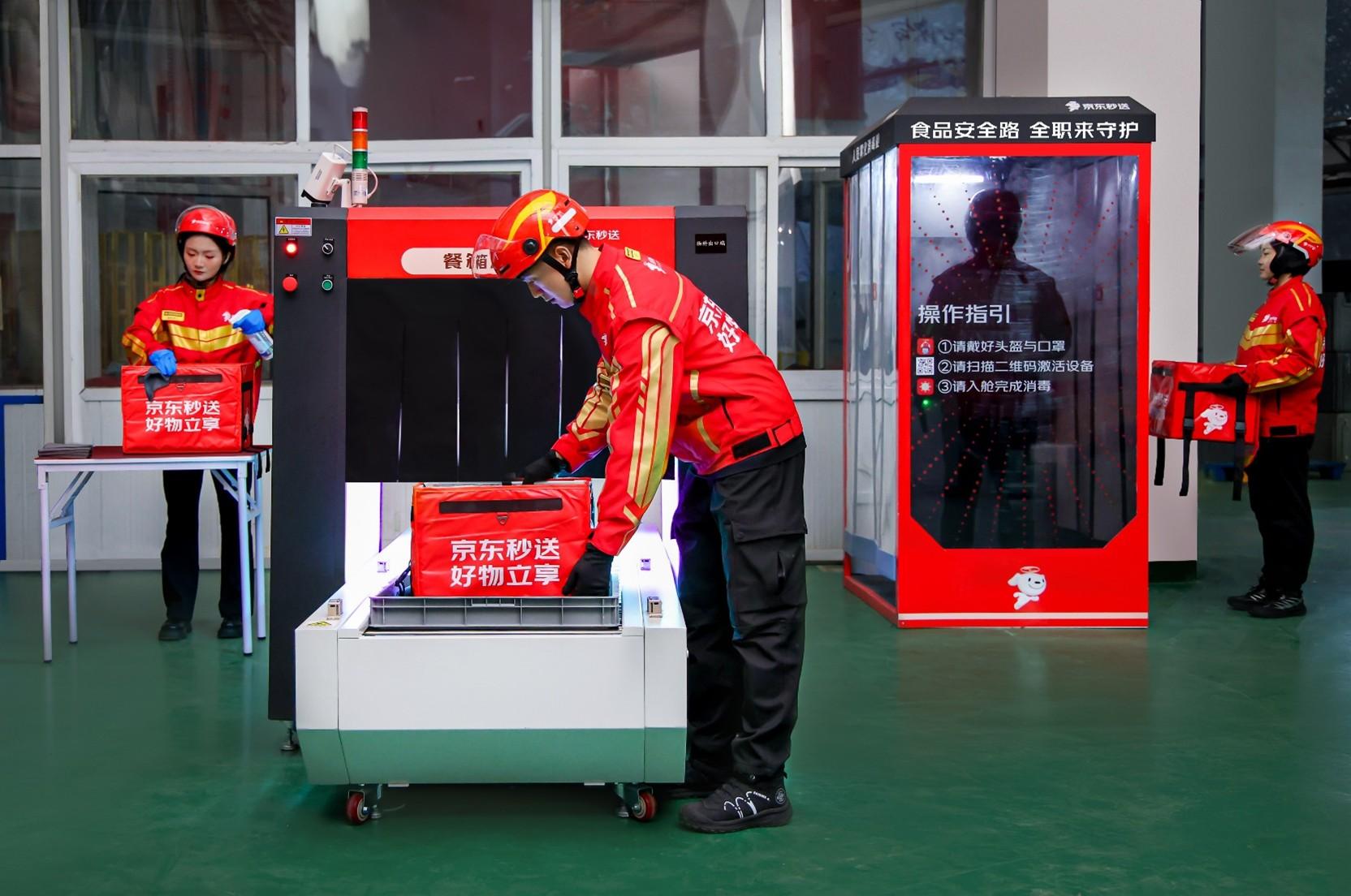
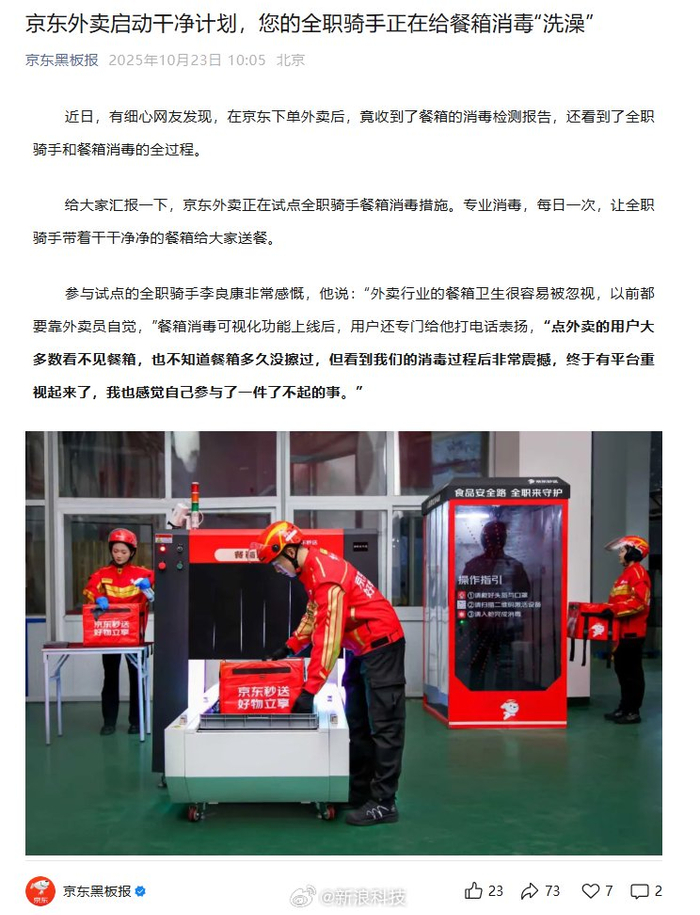
京东外卖试点全职骑手餐箱每日消毒
Xin Lang Ke Ji· 2025-10-23 03:02
【#京东外卖启动干净计划#】京东黑板报发文称:近日,有细心网友发现,在京东下单外卖后,竟收到 了餐箱的消毒检测报告,还看到了全职骑手和餐箱消毒的全过程。给大家汇报一下,京东外卖正在试点 全职骑手餐箱消毒措施。专业消毒,每日一次,让全职骑手带着干干净净的餐箱给大家送餐。 ...
Meituan: Margin Normalization Due To End Of The Price War May Result In Valuation Upside
Seeking Alpha· 2025-10-22 15:37
Core Insights - The article emphasizes the importance of identifying companies with the potential to consistently outperform the broader market, focusing on robust, consistent, and predictable cash flows for accurate valuation [1] Group 1: Investment Philosophy - The investment approach combines fundamental analysis with macroeconomic factors, allowing for a disciplined framework that adapts to various market cycles [1] - The focus is on sectors and asset classes that present value and alpha opportunities, indicating a broad investment strategy [1] - Attention to macroeconomic developments is crucial as they can influence market cycles and valuation adjustments [1] Group 2: Engagement and Community - The motivation to write on Seeking Alpha is to share insights and engage in discussions with the investment community, aiming to provide actionable ideas [1] - The content is intended for both novice and seasoned investors, fostering a collaborative environment for exchanging important insights [1]


Morgan Stanley Raises PT on DoorDash, Inc. (DASH), Keeps a Buy Rating
Yahoo Finance· 2025-10-22 09:17
Core Insights - DoorDash, Inc. (NASDAQ:DASH) is recognized as one of the best revenue growth stocks to invest in, with a recent price target increase from Morgan Stanley from $300 to $330, maintaining a Buy rating [1] - Jefferies also raised its price target for DoorDash from $265 to $280, while keeping a Hold rating, emphasizing the importance of focusing on 2026 growth and AI disintermediation [2] - DoorDash operates as a local commerce platform, connecting merchants, consumers, and independent contractors across more than 30 countries through its DoorDash Marketplace and Wolt Marketplace [3]

美团饿了么京东试点取消骑手超时罚款,长沙等城市先行
Chang Sha Wan Bao· 2025-10-22 02:19
Core Viewpoint - The article discusses the shift in the food delivery industry towards eliminating penalties for late orders, highlighting the safety concerns associated with the previous penalty system and the adoption of new evaluation mechanisms by major platforms like Meituan and Ele.me [1] Group 1: Industry Changes - Meituan initiated a pilot program to eliminate penalties for late deliveries in December 2024, which was followed by the introduction of the "Anzhun Card" system in March 2025, replacing the penalty system with a scoring mechanism [1] - By July 2025, the new assessment mechanism was tested in major cities including Changsha, Wuhan, and Hangzhou, with plans for broader implementation [1] - As of August 2025, Meituan announced plans to fully eliminate late delivery penalties by the end of the year, with the "Anzhun Card" already operational in over 100 cities nationwide [1] Group 2: Competitor Responses - Other platforms have begun to follow Meituan's lead, with Ele.me announcing in September 2025 the gradual elimination of late delivery penalties and the introduction of a new "service score" system [1] - JD.com also announced a pilot program to eliminate late delivery penalties in 25 cities, including Changsha, adopting a "service score" management approach [1]

美团:2025 年第三季度预期-充满挑战的季度,与预期存在偏差
2025-10-19 15:58
Summary of Meituan (3690.HK) 3Q25E Preview and Business Updates Company Overview - **Company**: Meituan (3690.HK) - **Industry**: Food delivery and on-demand services Key Financial Estimates - **3Q25 Revenue Forecast**: Rmb97.25 billion, representing a 3.9% year-over-year increase [3][56] - **Adjusted Net Profit (NP)**: Forecasted at -Rmb16.3 billion, compared to Bloomberg consensus of -Rmb12.3 billion [3][56] - **Core Loss Adjustments**: - CLC (Core Local Commerce) loss revised to Rmb15 billion from Rmb9.7 billion [2][57] - Food delivery loss revised to Rmb19.2 billion from Rmb14.1 billion [2][57] - On-demand delivery operational loss forecasted at Rmb20 billion [57] - **4Q25 Revenue Outlook**: Expected to be Rmb92.4 billion, a 4.4% year-over-year increase [4] - **Target Price Adjustment**: Revised to HK$117 from HK$133, maintaining a Neutral/High Risk rating [7] Business Performance Insights - **Operational Losses**: - Total operational loss for 3Q25 is forecasted at Rmb17.3 billion [1][57] - Losses from new initiatives expected to be Rmb2.37 billion [1][57] - **Market Competition**: Intense competition in food delivery is leading to high operational losses, with expectations of continued high losses into 4Q25 [1][58] Business Updates and Initiatives - **Keeta Expansion**: - Keeta is set to launch operations in Brazil on October 30, with plans to expand into 15 metro regions by June 2026 [30][31] - Keeta has recently entered the UAE market, marking its third Middle Eastern food delivery market [27][28] - **New Product Launches**: - Launch of brand flagship InstaMart for 30-minute delivery of brand products in tier-1 cities [20][21] - Expansion of Happy Monkey supermarkets, with the first store opening in Beijing on October 24 [49] - **AI Product Development**: - Introduction of LongCat AI products aimed at enhancing operational efficiency and customer engagement [50][51][52] User Engagement and Traffic - **User Metrics**: - Monthly Active Users (MAU) for Meituan reached 524 million in August 2025, a 9% year-over-year increase [38] - Daily Active Users (DAU) also saw growth, reaching 185.2 million [38] - **Meituan Waimai Performance**: - MAU for Meituan Waimai was 61.4 million, down 7% year-over-year, while Eleme's MAU was 104.7 million, up 11% year-over-year [40][41] Consumer Trends - **Holiday Consumption Trends**: - Significant increase in consumer spending during the National Day and Mid-Autumn Festival, with cross-city orders up 47% year-over-year [48] - Notable growth in sales of mobile phones, digital products, and gifting items during the holiday period [48] Conclusion - Meituan is navigating a challenging competitive landscape with significant operational losses expected in the near term. However, the company is actively expanding its service offerings and geographic reach, particularly through Keeta's international expansion and new product launches. User engagement metrics indicate a solid user base, although competition remains fierce in the food delivery sector.

外卖市场要变天!Foodhub全球总部落地都柏林,加入外卖大战
Sou Hu Cai Jing· 2025-10-15 02:38
Core Insights - Foodhub, a company established in 2017, has over 1,000 employees and more than 1 million users, collaborating with over 30,000 restaurants, takeaways, and venues across Ireland, the UK, the US, Australia, and New Zealand [3] - The company processes over 65 million orders annually through its app and website, utilizing a unique business model that charges restaurants a fixed weekly fee instead of taking a percentage of order amounts, which has been well-received by independent restaurant owners [3] - The CEO of Foodhub, Ardian Mula, highlighted Dublin's strategic position as a gateway to the European market, citing the abundance of tech talent and a thriving restaurant industry as key factors for their expansion [3] - The Irish Minister for Enterprise and Employment praised the arrival of innovative companies like Foodhub, stating it enhances the competitiveness of the local restaurant industry [3] - The CEO of IDA Ireland views Foodhub's establishment as a strong endorsement of Ireland's reputation as an international business and innovation hub, indicating increased competition in the European food delivery market [3]

饿了么回应何时取消超时扣款:正在南通、常州等地试点推广
Feng Huang Wang· 2025-10-14 07:56
Core Points - The company "Ele.me" is responding to inquiries about the cancellation of penalty fees for late deliveries, indicating that it is testing a new service score system to replace the existing penalty fee structure [1] - The new service score system aims to promote a performance-based reward system, encouraging more effort and better service quality among delivery personnel [1] - The pilot program for the new service score system is currently being implemented in cities such as Nantong, Changzhou, Jieyang, and Jingdezhen, with plans to expand to more cities by October [1]

New DoorDash-Criteo Deal Lets Brands Target Shoppers Like Never Before
Yahoo Finance· 2025-10-06 11:50
Core Insights - Criteo S.A. and DoorDash, Inc. have announced a multi-year partnership to enhance advertising opportunities in DoorDash's marketplace, focusing on grocery, convenience, and non-restaurant retail sectors [1][2] - The partnership aims to leverage the growth of retail media, providing brands with new ways to reach consumers closer to the point of purchase [2] Partnership Details - Criteo will function as an extension of DoorDash's U.S. ad sales team, collaborating with brands and agencies to scale media placements on DoorDash's platform [2] - The companies plan to explore deeper integration of their advertising technologies over time [2] Advertising Opportunities - Advertisers using Criteo will have access to various DoorDash ad formats, including on-site video, display banners, Sponsored Product, and Sponsored Brands, as well as off-site channels like display, video, search, and social [3] - The partnership is expected to help advertisers reach consumers more effectively, drive measurable sales, and influence incremental trips [5] Strategic Statements - Stephen Howard-Sarin from Criteo emphasized the importance of delivery in the consumer journey and noted that DoorDash has become a key destination for convenience, grocery, and alcohol brands [4] - John Roswech from DoorDash highlighted the goal of building an ad platform that supports business growth on DoorDash and beyond, citing Criteo's strong relationships in the grocery and retail sectors as a reason for the partnership [6] Market Reaction - Following the announcement, CRTO shares increased by 2.78% to $22.15, while DASH shares rose by 0.53% to $272.67 in premarket trading [6]