互联网医疗

Search documents
破局更年之困,共筑健康生态——以岭药业携手京东健康启动深化合作,共推更年期健康管理新篇章
Jiang Nan Shi Bao· 2025-08-20 05:43
Core Insights - The collaboration between Yiling Pharmaceutical and JD Health aims to enhance the "Anti-Aging Center" digital marketing initiative, leveraging both companies' strengths in their respective fields [1][2] Group 1: Collaboration Details - The partnership focuses on utilizing JD Health's platform traffic and digital marketing capabilities to create a comprehensive platform for expert education, authoritative information, and anti-aging resources [2] - Yiling Pharmaceutical will leverage its expertise in traditional Chinese medicine (TCM) research and product development, particularly promoting its core product, the Eight Sons Kidney Capsule [2][3] Group 2: Product Focus and Market Strategy - The collaboration will emphasize the unique benefits of the Eight Sons Kidney Capsule, particularly in women's health, addressing menopausal symptoms, and promoting a youthful appearance [2][3] - Both companies will conduct real-world studies and data analysis to reinforce Yiling Pharmaceutical's position as a leader in the scientific and data-driven TCM field [3] Group 3: Future Vision and Goals - The partnership is seen as a significant step towards digital transformation for Yiling Pharmaceutical, aiming to provide precise and scientific health solutions for women [4] - The collaboration aligns with the "Healthy China 2030" strategy, focusing on menopause health management and enhancing the overall health service ecosystem [4]

港股午评:恒指跌0.57%失守25000点,科技股、医药股普跌,泡泡玛特再创新高
Ge Long Hui A P P· 2025-08-20 04:16
Market Performance - The Hong Kong stock market continued its downward trend, with the Hang Seng Technology Index experiencing a significant decline of 1.26% [1] - The Hang Seng Index and the China Enterprises Index fell by 0.57% and 0.67% respectively, with the Hang Seng Index dropping below the 25,000-point mark [1] Sector Performance - Major technology stocks underperformed, negatively impacting market sentiment, with Kuaishou down nearly 5%, JD.com and Alibaba down 1.5%, and Baidu, Tencent down 1% [1] - Pharmaceutical stocks, which had previously been on the rise, are now undergoing adjustments, with internet healthcare and innovative drug concept stocks showing notable declines, including Tongyuan Kang Pharmaceutical down over 22% [1] - Chinese brokerage stocks also faced collective weakness, with Hongye Futures and Dongfang Securities leading the declines [1] - Other sectors such as heavy machinery, lithium battery, home appliances, aviation, building materials, and steel also saw declines [1] Notable Performances - Fuyao Glass experienced a significant increase of nearly 14% following its earnings report, marking it as one of the strongest performers [1] - Morgan Stanley indicated that Chinese bank stocks are likely to see further increases, with domestic bank stocks generally rising [1] - New consumption concept stocks saw a boost, particularly Pop Mart, which surged by 8.6%, marking its first time above 300 Hong Kong dollars [1]

京东健康(06618.HK):25H1收入和利润显著超预期 公司上调全年业绩指引
Ge Long Hui· 2025-08-20 03:07
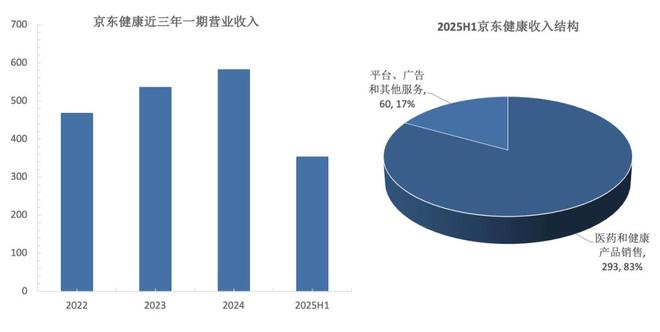
Core Viewpoint - The company has exceeded market expectations in revenue due to the spillover demand for original research drugs within hospitals, achieving a revenue of 35.29 billion yuan in H1 2025, representing a 24.5% increase [1] Revenue and Growth - In H1 2025, the company generated revenue of 35.29 billion yuan (+24.5%), with pharmaceutical and health product sales reaching 29.33 billion yuan (+22.7%) and platform, advertising, and other services generating 5.96 billion yuan (+34.4%) [1] - In Q2 2025, the company achieved revenue of 18.65 billion yuan (+23.7%), indicating a sustained rapid growth in online original research drugs [1] Profitability - The company reported a gross margin of 25.2% (+1.6 percentage points) and an operating profit of 2.13 billion yuan (+105.5%), with an operating profit margin of 6.0% (+2.4 percentage points) [1] - Adjusted net profit reached 3.57 billion yuan (+35.0%), with an adjusted net profit margin of 10.1% (+0.8 percentage points), primarily driven by rapid growth in advertising and commission income [1] Cost Structure and Efficiency - The company optimized its overall expense ratio, with a fulfillment fee rate of 10.1% (-0.3 percentage points), sales fee rate of 5.1% (+0.2 percentage points), R&D fee rate of 2.1% (-0.2 percentage points), and management fee rate of 1.7% (-0.7 percentage points) [2] - The decline in fulfillment fee rate was attributed to an increase in average transaction value, while AI technology has been deployed to enhance operational efficiency [2] Future Projections - Revenue forecasts for FY25 and FY26 are set at 70.4 billion yuan and 81.2 billion yuan, respectively, reflecting year-on-year growth of 21.0% and 15.4% [3] - The company anticipates a 25% growth in pharmaceuticals and high double-digit growth in health products for H2 2025 [3] Profit Forecasts - Adjusted operating profits for FY25 and FY26 are projected at 3.4 billion yuan and 4.5 billion yuan, representing year-on-year growth of 29.3% and 34.9% [3] - Adjusted net profits for FY25 and FY26 are expected to be 5.6 billion yuan and 5.7 billion yuan, with growth rates of 15.9% and 2.6% [4] Valuation - Using a DCF valuation method, the estimated equity value of the company is 218 billion HKD, corresponding to a target stock price of 68.14 HKD per share, with an upward adjustment of 58.8% [4]

京东健康(06618.HK):业绩超预期 商品和服务收入均表现亮眼
Ge Long Hui· 2025-08-20 03:07
Core Insights - The company reported strong financial results for H1 2025, with revenue of 35.3 billion yuan, a year-on-year increase of 25%, and adjusted net profit of 3.6 billion yuan, up 35% year-on-year, exceeding market expectations [1] - The growth was driven by increased pharmaceutical sales and digital marketing, along with an improvement in gross margin [1] Revenue Breakdown - Pharmaceutical and health product sales generated 29.3 billion yuan, a year-on-year increase of 23% [1] - Online platforms, digital marketing, and other services contributed 6 billion yuan, growing 34% year-on-year [1] - Key growth drivers included the launch of over 30 innovative drugs online and an increase in active users, surpassing 200 million [1][2] Cost Efficiency and Profitability - The fulfillment expense ratio decreased to 10.07%, down 0.31 percentage points year-on-year, due to cost dilution from increased order volume [2] - Adjusted net profit margin improved to 10.1%, up 0.8 percentage points year-on-year, reflecting scale effects [2] Strategic Developments - The company is enhancing its ecosystem by expanding retail infrastructure and internet medical services, including partnerships for comprehensive treatment services [2] - AI product upgrades are being implemented, with over 500 intelligent agents launched in online hospitals, serving more than 50 million users [2] Future Outlook - Revenue forecasts for 2025-2027 have been raised to 70.09 billion, 81.35 billion, and 91.02 billion yuan, respectively [3] - Adjusted net profit for 2025 is slightly lowered to 4.23 billion yuan, while 2026-2027 net profit estimates are slightly increased [3] - The company maintains a competitive edge through its supply chain, service ecosystem, and AI collaboration, leading to an optimistic growth outlook [3]
平安好医生(01833)下跌7.1%,报15.69元/股
Jin Rong Jie· 2025-08-20 03:04
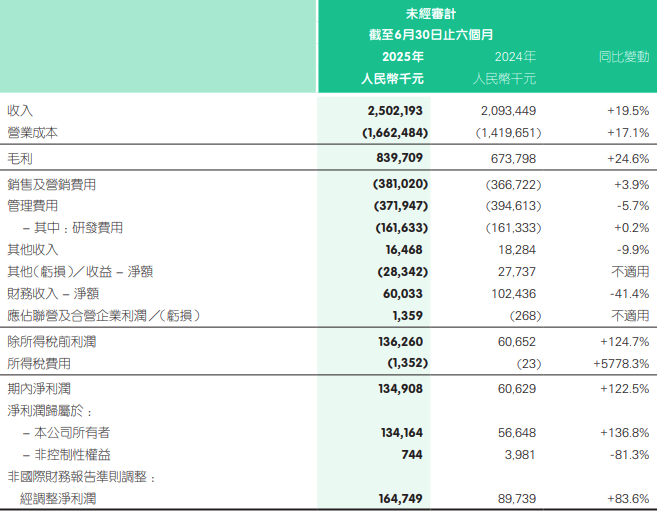
Group 1 - The core point of the article highlights the decline in the stock price of Ping An Good Doctor, which dropped by 7.1% to 15.69 yuan per share, with a trading volume of 32.136 million yuan [1] - As of the mid-year report for 2025, Ping An Good Doctor reported total revenue of 2.502 billion yuan and a net profit of 134 million yuan [2] - The company achieved a significant year-on-year increase in net profit attributable to shareholders, which rose by 136.84%, resulting in basic earnings per share of 0.07 yuan [2] Group 2 - Ping An Good Doctor's main business includes family doctor services and comprehensive elderly care solutions, aiming to provide high-quality medical health and elderly management services [1] - The company served nearly 13 million family doctor members and covered home-based elderly care services across 54 cities, collaborating with 1,508 corporate clients and 4,000 hospitals [1]
平安好医生(1833.HK):上半年营收净利双增 “医险协同”模式深化赋能
Xin Lang Cai Jing· 2025-08-20 03:00
Core Viewpoint - Ping An Good Doctor (1833.HK) has demonstrated strong financial performance in the first half of 2025, indicating a sustainable business model and self-sustaining capabilities [1][2]. Financial Performance - The company achieved revenue of 2.502 billion RMB, a year-on-year increase of 19.5% [1] - Net profit attributable to shareholders reached 134 million RMB, up 136.8% year-on-year [1] - Gross margin improved to 33.56%, an increase of 1.37 percentage points [1] - Adjusted net profit under non-IFRS reached 165 million RMB, a growth of 83.6% year-on-year [1] Market Performance - The Hong Kong healthcare sector has shown strong performance, with the Hang Seng Healthcare Index rising 90% this year [3] - Ping An Good Doctor outperformed its peers, reflecting positive market sentiment towards its growth prospects [3] - Over the past 60 trading days, institutional investors have increased their holdings in Ping An Good Doctor, with a total increase of nearly 38 million shares [3][4] Business Growth - The company reported strong growth in both its F-end (financial client) and B-end (enterprise client) businesses, with revenues of 1.433 billion RMB (up 28.5%) and 527 million RMB (up 35.2%) respectively [6] - The number of paying users in the F-end reached approximately 20 million, a year-on-year increase of 34.6% [7] - The B-end health management business served over 3,500 paying enterprise clients, with a user growth of 39.2% [7] Market Opportunity - The aging population in China presents a significant market opportunity, with over 310 million people aged 60 and above by the end of 2024 [8] - The silver economy is expected to reach 30 trillion RMB by 2030, driving demand for healthcare services [8] - The company aims to leverage its integrated healthcare services through family doctors and elderly care managers to capture this market [8][9] AI Empowerment - The company is enhancing its service capabilities through AI, utilizing a closed-loop service model based on data, models, and scenarios [10] - AI-assisted consultation accuracy is approximately 98%, and the accuracy of complex disease treatment plans is nearly 80% [11] - The integration of AI is expected to significantly reduce service costs and improve operational efficiency [11]

平安好医生上半年营收净利双增 持续强化AI医疗服务能力
Zheng Quan Ri Bao Wang· 2025-08-20 02:49
Core Insights - Ping An Good Doctor reported a total revenue of 2.5 billion yuan for the first half of 2025, representing a year-on-year growth of 19.5% [1] - The net profit attributable to shareholders reached 134 million yuan, showing a significant increase of 136.8% year-on-year [1] - The company experienced a 30.2% growth in revenue from its comprehensive financial client (F-end) and enterprise (B-end) health business [1] - The total number of paid users increased by 35.1% year-on-year [1] Revenue and User Growth - The number of paid users on the F-end reached approximately 20 million, with a year-on-year growth of 34.6% [1] - The number of paid enterprise clients exceeded 3,500, while the B-end paid user count surpassed 3.6 million, reflecting a growth of 39.2% [1] Core Services and Coverage - Family doctors and elderly care managers are identified as the two core hubs of the company [1] - The number of family doctor rights users exceeded 35 million, and the number of home care rights users grew by 83% [1] - The service network covers 85 cities, with five group standards established [1] Service Network Expansion - The company expanded its service network to include "four-to" services: online, in-store, at home, and at enterprises [1] - It established 37 departments with approximately 50,000 internal and external medical teams, signing contracts with over 3,200 expert doctors [1] - Collaborations include over 4,000 hospitals, nearly 106,000 health service providers, 240,000 pharmacies, and more than 100 elderly care institutions [1] AI Capabilities - The company strengthened its medical AI closed-loop service capabilities and application implementation [2] - A "7+N+1" medical AI product system was launched, achieving an accuracy rate of approximately 98% for AI-assisted consultations and nearly 80% for complex disease MDT treatment plans [2] - AI-assisted daily consultations can handle up to 4 million cases, and the average service cost for family doctors decreased by about 52% [2]
平安好医生上半年实现营收25亿元 归母净利润同比增长136.8%
Zhong Zheng Wang· 2025-08-20 01:49
Core Insights - Ping An Good Doctor reported a total revenue of 2.5 billion yuan for the first half of 2025, representing a year-on-year growth of 19.5% [1] - The company achieved a net profit attributable to shareholders of 134 million yuan, marking a significant year-on-year increase of 136.8% [1] - The number of paying users reached approximately 24 million, reflecting a growth of 35.1% compared to the previous year [1] Revenue Breakdown - Revenue from the comprehensive financial client (F-end) and enterprise (B-end) health business grew by 30.2% year-on-year [1] - F-end paying users numbered around 20 million, with a year-on-year growth of 34.6% [1] - B-end paying users exceeded 3.6 million, showing a year-on-year increase of 39.2% [1] Technology Empowerment - The company achieved an AI-assisted consultation accuracy rate of approximately 98% [1] - The accuracy rate for complex disease MDT treatment plans was nearly 80% [1] - AI-assisted doctors handled up to 4 million consultations daily [1] Service Network Expansion - Ping An Good Doctor expanded its service network to cover "four channels": online, in-store, at home, and at enterprises [1] - By the end of the first half, the company established 37 departments with around 50,000 internal and external doctors [1] - The company signed contracts with over 3,200 expert doctors and collaborated with more than 4,000 hospitals, nearly 106,000 health service providers, and 240,000 pharmacies [1]
平安好医生发2025半年报,归母净利润大增136.8%
Nan Fang Du Shi Bao· 2025-08-19 14:21
Core Viewpoint - Ping An Good Doctor reported strong growth in revenue and profitability for the first half of 2025, driven by its commitment to building a professional healthcare bridge and leveraging advanced technology to provide cost-effective services [3] Financial Performance - Total revenue reached 2.5 billion yuan, a year-on-year increase of 19.5% [3] - Net profit attributable to shareholders was 134 million yuan, up 136.8% year-on-year [3] - Revenue from the comprehensive financial client (F-end) and enterprise health management (B-end) business grew by 30.2% [3] - The number of paying users increased by 35.1% year-on-year [3] Business Model and Strategy - The company deepened the "medical-insurance synergy" model, enhancing collaboration with Ping An Group's comprehensive financial services [4] - It developed a product system combining commercial insurance, health protection, and medical services, targeting enterprise clients for steady revenue growth [4] - The F-end paying user base reached approximately 20 million, a 34.6% increase year-on-year [4] Health Management Services - The company provided comprehensive health management services to over 3,500 paid enterprise clients, with B-end paying users exceeding 3.6 million, a 39.2% increase year-on-year [6] - It focused on enhancing user engagement through online family doctor services and offline activities [6] Service Network Expansion - The company expanded its service network to cover various channels, establishing partnerships with over 4,000 hospitals and nearly 106,000 health service providers [8] - It signed contracts with over 3,200 expert doctors and built a team of approximately 50,000 internal and external doctors [8] AI Integration and Efficiency - The company enhanced its medical AI capabilities, launching a comprehensive AI product system that includes various AI-driven healthcare services [9] - AI-assisted consultation accuracy reached approximately 98%, and the efficiency of complex disease treatment plans improved significantly [9] Brand Development - The rebranding of "Ping An Good Doctor" marks a significant milestone in the company's strategy and its commitment to the medical-insurance synergy model [10] - The CEO emphasized the company's dedication to customer needs and sustainable long-term value creation for stakeholders [10]

财报里的「健康」信号:拆解京东健康高质量增长背后的逻辑
3 6 Ke· 2025-08-19 13:49
Core Viewpoint - JD Health is focusing on strengthening its supply chain capabilities and enhancing medical service capabilities, particularly through the integration of online and offline services, which is a key part of its long-term strategy [1][2]. Business Developments - On August 15, JD Health announced a strategic partnership with Eisai China, allowing the exclusive online launch of the insomnia treatment drug, Lemborexant, which is expected to reshape the insomnia medication market [1]. - In the first half of 2025, JD Health launched over 30 innovative drugs online and collaborated with various medical device and health supplement brands for multiple product launches [1][2]. Service Model Innovation - The digital healthcare industry is increasingly focusing on the integration of online and offline services, with JD Health developing a comprehensive service model that includes "medical testing, diagnosis, and medication" [3]. - JD Health has established an internet hospital that offers specialized services in five key areas, enhancing its service depth and breadth [3]. User Growth and Financial Performance - In the first half of 2025, JD Health achieved a revenue of 35.3 billion yuan, a year-on-year increase of 24.5%, with active user numbers surpassing 200 million [7]. - The revenue from JD Health's pharmaceutical e-commerce segment reached 29.3 billion yuan, growing by 23%, while medical services revenue increased by 34% to 6 billion yuan [8]. AI Integration and Market Response - Following the financial report, JD Health's stock price surged by 21% over two trading days, reflecting market confidence in its business model and performance [13][14]. - JD Health has launched the "AI Jingyi" series, which includes various AI-driven services, and has served over 50 million users, indicating a strong focus on AI applications in healthcare [14][15].