消费金融

Search documents
阳光消金违规被罚140万元 为光大银行控股子公司
Zhong Guo Jing Ji Wang· 2025-08-08 07:22
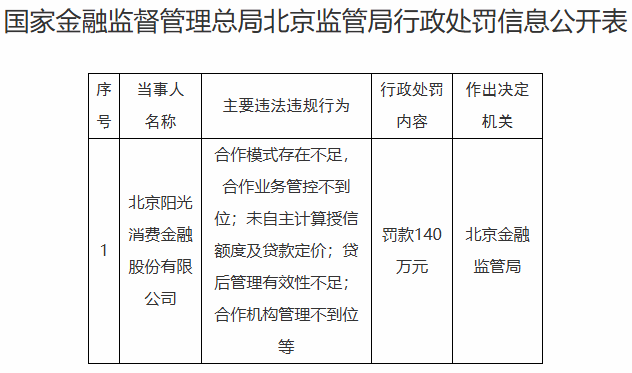
中国经济网北京6月3日讯 国家金融监督管理总局网站近日公布的北京监管局行政处罚信息公开表 显示,北京阳光消费金融股份有限公司合作模式存在不足,合作业务管控不到位;未自主计算授信额度 及贷款定价;贷后管理有效性不足;合作机构管理不到位等。北京金融监管局对其罚款140万元。 光大银行(601818.SH)2024年年度报告显示,北京阳光消费金融股份有限公司成立于2020年8月,从 事发放个人消费贷款相关业务,注册地北京市,注册资本10亿元。光大银行持有股份占比60%。 | 序 | 当事人 | 主要违法违规行为 | 行政处罚 | 作出决定 | | --- | --- | --- | --- | --- | | 릉 | 名称 | | 内容 | 机关 | | 1 | 北京阳光 消费金融 | 合作模式存在不足, 合作业务管控不到 额度及贷款定价;贷 | 罚款140 | 北京金融 | | | | 位;未自主计算授信 | | | | | 股份有限 | | 万元 | 监管局 | | | | 后管理有效性不足; | | | | | 公司 | | | | | | | 合作机构管理不到位 | | | | | | # | | | (责 ...


金融支持提振扩大消费指导意见出台
Zhong Guo Zheng Quan Bao· 2025-08-08 07:20
Core Viewpoint - The People's Bank of China and other regulatory bodies have issued guidelines to enhance financial support for consumption, aiming to stabilize economic growth and consumer expectations [1][2]. Group 1: Key Areas of Focus - The guidelines emphasize the importance of boosting consumption as a key driver for domestic demand and economic growth, especially as external demand weakens [2]. - Six main areas are identified for enhancing consumption: increasing consumer capacity, expanding financial supply for consumption, unlocking consumer potential, improving supply efficiency, optimizing the consumption environment, and providing policy support [2][3]. Group 2: Financial Support for Consumption - The focus is on three main consumption sectors: goods consumption, service consumption, and new consumption types, with specific measures to support each area [2][3]. - For goods consumption, the guidelines propose innovative consumer credit products and support for trade enterprises to enhance domestic sales [2]. - In service consumption, increased financing support is directed towards sectors like retail, hospitality, and elder care, with an emphasis on innovative financing models [3]. Group 3: Expanding Financial Supply - The guidelines encourage the establishment of a multi-layered consumer finance service system, enhancing credit support through various financing channels such as bonds and equity [4]. - Financial institutions are urged to innovate and optimize credit products while increasing support for qualified enterprises in sectors like culture, tourism, and education [4]. Group 4: Enhancing Consumer Capacity - The guidelines highlight the need to improve residents' income levels as a critical factor in stimulating consumption, with measures to support entrepreneurship and wealth management [5][6]. - Infrastructure improvements in logistics and supply chains are also emphasized to enhance the efficiency of consumption supply [6]. Group 5: Optimizing the Consumption Environment - The guidelines propose enhancing consumer payment services, building a robust credit system, and protecting consumer rights to create a more favorable consumption environment [6]. - The People's Bank of China will work with relevant departments to implement these policies and monitor their effectiveness [6].
助贷机构名单“瘦身”进行时 银行合规成本提升加剧马太效应
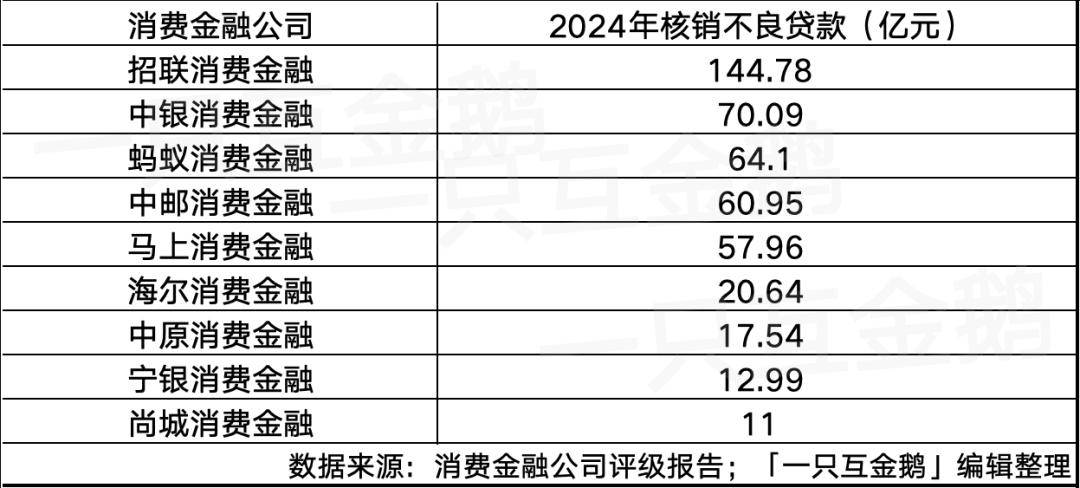
Zhong Guo Zheng Quan Bao· 2025-08-08 07:19
Core Viewpoint - The implementation of new regulations for internet lending in China is accelerating a "reshuffling" in the industry, leading to a concentration of resources among major lending platforms while smaller platforms are being forced out due to increased compliance pressures [1][2]. Group 1: Regulatory Changes - The new regulations, effective from October 1, require banks to manage their partnerships with lending platforms through a list system, prohibiting collaborations with unlisted entities [2]. - Financial institutions are currently reducing their partnerships with smaller lending platforms, reflecting a tightening risk appetite in the banking sector [2][3]. Group 2: Impact on Lending Platforms - Smaller lending platforms previously utilized hidden fees to raise effective interest rates above the 24% threshold, but the new regulations have closed this loophole, posing challenges for their business models [1][3]. - Major lending platforms with strong compliance and risk pricing capabilities are expected to benefit from the new regulations, as banks prefer to collaborate with them due to their larger customer bases and better risk management [5]. Group 3: Market Dynamics - The lending market is showing a clear trend towards concentration, with major platforms like Ant Group, Meituan, Douyin, JD.com, and others frequently appearing in the partnership lists of various financial institutions [5]. - Banks are increasingly focusing on the traffic advantages of leading internet platforms, which enhances their customer acquisition strategies [5]. Group 4: Evaluation Mechanisms - Some banks have established systematic rating mechanisms for evaluating potential lending partners, assessing factors such as shareholder background, management stability, and risk management capabilities [6].
唯品富邦消费金融“招兵买马” 新老混杂竞争加剧
Bei Jing Shang Bao· 2025-08-08 06:59
Group 1 - The core viewpoint of the articles highlights the ongoing developments in the consumer finance industry, particularly the establishment of new companies like Weipin Fubon Consumer Finance and the changes in leadership within existing firms [1][2][3] - Weipin Fubon Consumer Finance has completed its internal preparations and is actively recruiting for 40 positions related to consumer finance, indicating a strong focus on leveraging its existing e-commerce platform customer base [1] - The company aims to participate in the Chengdu-Chongqing economic circle, starting from Chengdu and expanding its reach across the western region and nationwide [1] Group 2 - The consumer finance industry is experiencing significant leadership changes, with multiple companies such as Jiexin Consumer Finance and Shengyin Consumer Finance undergoing executive turnover in May [2] - Analysts suggest that these leadership changes can bring fresh perspectives and management ideas, but may also disrupt existing strategies and organizational stability [2] - The Beijing Banking and Insurance Regulatory Commission has emphasized the need for consumer finance companies to enhance their loan processing and consumer protection measures, following recent issues related to consumer rights [3][4] Group 3 - The regulatory environment is tightening, with new requirements aimed at curbing misleading advertising and ensuring consumer rights are protected, which is expected to lead to a more orderly market [4] - Industry experts recommend that consumer finance companies reassess their business processes and improve communication with consumers to enhance transparency and consumer rights [4] - As competition intensifies, especially with new entrants in the market, smaller consumer finance platforms are likely to face ongoing challenges [5]
消费金融对日常生活有何作用?
Sou Hu Cai Jing· 2025-08-08 01:24
Group 1 - Consumer finance plays a fundamental and critical role in meeting diverse consumer demands, allowing consumers to purchase high-priced items through credit services, thereby enhancing their quality of life [1] - The emergence of consumer finance has broken the limitations of previous funding constraints, enabling consumers to shift from basic necessities to higher quality and more personalized products, which drives market innovation and product development [1] - Consumer finance is essential for economic growth, stimulating consumption and creating a positive cycle that boosts production and employment, thereby enhancing economic stability and efficiency [2] Group 2 - The rise of consumer finance has led to the creation of numerous jobs in related industries, including credit approval, risk management, and customer service, contributing positively to employment stability [2] - Consumer finance significantly impacts daily life and extends to macroeconomic operations and social employment, injecting strong momentum into the improvement of individual living standards and the stable development of the economy [2]
透视花呗、借呗业务:自营余额超50%,其余为联合贷
Sou Hu Cai Jing· 2025-08-07 19:45
Core Viewpoint - Ant Group's consumer finance business, primarily represented by Huabei and Jiebei, is structured into self-operated and platform business segments, with a focus on understanding their operational models through recent financial debt issuance materials [1][3]. Group 1: Business Structure - Ant Group's consumer finance operations are divided into two main parts: self-operated business managed by Ant Consumer Finance, which includes direct loan issuance and partnerships with banks and trust companies, and platform business that collaborates with financial institutions in a "assisted loan" model [1][2]. - Huabei is identified as a credit purchase product with a maximum interest-free period of 41 days, while Jiebei is a credit loan product with annual interest rates ranging from 5.475% to 24% [4]. Group 2: Financial Performance - As of the end of 2024, Ant Consumer Finance reported a loan balance of 310.849 billion, reflecting a growth of 36.92% compared to the end of 2023 [6]. - The non-performing loans (NPL) reached 5.519 billion at the end of 2024, an increase from 3.946 billion at the end of 2023, resulting in a non-performing loan ratio of 1.78% [7]. - The company’s write-off scale for 2024 was 6.410 billion, which is considered moderate compared to other licensed consumer finance companies [9][10]. Group 3: Revenue and Income - Ant Consumer Finance's total revenue for 2024 was approximately 15.213 billion, significantly up from 8.629 billion in 2023 [15]. - Net interest income for 2024 was 11.630 billion, compared to 5.971 billion in 2023, indicating a strong growth trajectory [15]. - The net income for 2024 was reported at 3.051 billion, a substantial increase from 151.518 million in 2023 [15]. Group 4: Business Characteristics - As of the end of 2024, over 50% of the loan balance was from self-operated loans, with the majority of loans being under 10,000, and 97.04% of loans having a contract term of 12 months or less [16]. - The age demographic of borrowers primarily falls between 25 to 50 years, with a concentration in the 30 to 40 age group, which aligns with the target consumer profile for online financial services [19].
曾刚:化解压力求突破 消费金融再进阶
Jing Ji Guan Cha Bao· 2025-08-07 15:59
Core Viewpoint - The importance of consumer finance is increasingly recognized as a crucial bridge connecting finance and consumption, especially in the context of China's economic transformation and the need to stimulate domestic demand [1][5]. Economic Environment - China's economy is facing challenges such as insufficient domestic demand and weak consumer willingness, with consumer contribution to economic growth at 82.5% in 2024, still below pre-pandemic levels [1][2]. - The leverage ratio of households continues to rise, and income growth is slowing, which constrains consumer spending [1]. Market Dynamics - The consumer finance market has expanded significantly, exceeding 50 trillion yuan, accounting for about 40% of GDP, but growth rates have slowed from around 20% in 2020 to below 10% in 2024 [2]. - The competitive landscape is diversifying, with major players including commercial banks, licensed consumer finance companies, and internet platforms, each targeting different consumer segments [3]. Innovation in Products and Services - Consumer finance products are evolving towards scenario-based, differentiated, and intelligent offerings, covering a wide range of consumption scenarios from durable goods to frequent small purchases [4]. - Digitalization is enhancing the efficiency and reach of consumer finance services, with many institutions adopting online customer acquisition methods and utilizing advanced technologies [4]. Policy Initiatives - The "Notice" issued by the National Financial Supervision Administration outlines measures to support the development of consumer finance, emphasizing the need for diverse financial products and services to meet evolving consumer demands [5][6]. - Specific initiatives include promoting green consumption through low-interest loans for purchasing energy-efficient products and supporting the recovery of the tourism sector with targeted credit [6]. Consumer Protection and Market Regulation - The "Notice" stresses the importance of market transparency and consumer rights protection, requiring financial institutions to clearly disclose loan costs and improve contract clarity [7][8]. - A fair dispute resolution mechanism is highlighted to enhance market credibility and address illegal practices within the industry [8]. Future Outlook - The consumer finance industry is expected to continue evolving by aligning with consumer demand upgrades, accelerating digital transformation, and enhancing risk management practices [9]. - The dual support of digital technology and policy initiatives is anticipated to significantly boost consumer capacity and contribute to sustainable economic growth [9].
信也科技上涨5.21%,报8.985美元/股,总市值22.77亿美元
Jin Rong Jie· 2025-08-07 15:34
Group 1 - The stock price of Xinyi Technology (FINV) increased by 5.21% on August 7, reaching $8.985 per share, with a total market capitalization of $2.277 billion [1] - As of March 31, 2025, Xinyi Technology reported total revenue of 3.481 billion RMB, representing a year-on-year growth of 9.98%, and a net profit attributable to shareholders of 746 million RMB, which is a 41.44% increase year-on-year [1] Group 2 - Xinyi Technology is set to disclose its mid-year report for the fiscal year 2025 on August 19, with the actual disclosure date subject to company announcement [2] - The company aims to enhance financial services through advanced technologies such as big data and artificial intelligence, striving to become the most trusted financial technology platform for users and partners [2] - Xinyi Technology's business includes technology-driven consumer finance, international operations, and wealth intermediary services, focusing on innovation to empower institutions and support the development of the real economy [2] - The company has established deep collaborations with Zhejiang University and Renmin University of China to explore artificial intelligence and digital inclusive finance, promoting breakthroughs in advanced technology applications in China [2]
信也科技上涨2.93%,报8.79美元/股,总市值22.28亿美元
Jin Rong Jie· 2025-08-07 13:56
Core Insights - Xinyi Technology (FINV) opened at $8.79 per share, up 2.93%, with a total market capitalization of $2.228 billion as of August 7 [1] - For the fiscal year ending March 31, 2025, Xinyi Technology reported total revenue of 3.481 billion RMB, a year-on-year increase of 9.98%, and a net profit attributable to shareholders of 746 million RMB, reflecting a growth of 41.44% [1] Group 1 - Xinyi Technology is set to disclose its mid-year report for the fiscal year 2025 on August 19, with the actual date subject to company announcement [2] - The company aims to enhance financial services through advanced technologies like big data and artificial intelligence, promoting a mission of making finance better [2] - Xinyi Technology's business encompasses technology-driven consumer finance, international operations, and wealth intermediary services, focusing on innovation to empower institutions and support the real economy [2] Group 2 - The company is committed to linking B-end and C-end services, creating an open ecosystem while also contributing to the development of inclusive finance in Southeast Asia [2] - Xinyi Technology provides comprehensive BOT services across marketing, technology, and risk control to enhance operational efficiency for B-end institutions [2] - The company has increased investments in technology and established deep collaborations with Zhejiang University and Renmin University of China to explore artificial intelligence and digital inclusive finance [2]
乐信二季度财报:营收35.9亿元,环比增15.6% 利润连续5个季度环比上升
Jing Ji Guan Cha Bao· 2025-08-07 07:27
Core Viewpoint - Lexin reported strong financial performance in Q2 2025, with revenue of 3.59 billion yuan, a 15.6% increase quarter-over-quarter, and a profit of 670 million yuan, marking a 15.2% quarter-over-quarter increase and a 116.4% year-over-year increase, achieving the highest profit in 14 quarters [1][2] Financial Performance - Revenue for Q2 2025 reached 3.59 billion yuan, reflecting a 15.6% increase from the previous quarter [1] - Non-GAAP EBIT was 670 million yuan, up 15.2% quarter-over-quarter and 116.4% year-over-year [1] - The profit margin (annualized net profit/loan balance) improved by 34 basis points compared to Q1, with multiple quarters of over 20 basis points increase [2] Scale and User Metrics - The transaction volume in Q2 was 52.86 billion yuan, with a managed loan balance of 105.78 billion yuan and a user base of 236 million [2] - The number of users significantly increased, contributing to the overall growth in transaction volume [4] Asset Quality - Key risk indicators showed improvement for four consecutive quarters, with the new asset FPD7 decreasing by approximately 5% quarter-over-quarter, and the overall asset delinquency rate dropping by about 2% [2] - The overall asset non-performing loan rate over 90 days decreased by approximately 6% quarter-over-quarter, indicating a steady improvement in asset quality [2] Shareholder Returns - In July, the company initiated a share repurchase plan worth 60 million USD, and starting in the second half of the year, the dividend payout ratio will increase from 25% to 30% of net profit, enhancing shareholder returns [2] Strategic Initiatives - The CEO emphasized a strategic transformation driven by risk and data, leading to a high-quality growth quarter, with a focus on prudent management and steady growth in ecological business [3] - The company is responding to government policies aimed at boosting consumption by enhancing product offerings and optimizing service experiences [3] Business Development - The company upgraded its supply chain in the installment shopping mall, introducing well-known brands and enhancing operational models to meet diverse user needs, resulting in a 139% year-over-year increase in GMV during the "6.18" shopping festival [4] - Lexin's inclusive finance initiatives have supported small and micro enterprises, with a total loan amount of 4.69 billion yuan linked during the quarter [4] R&D Investment - In Q2, Lexin invested 160 million yuan in R&D, a 10% year-over-year increase, maintaining industry leadership in technological investment [6]