
中药

Search documents
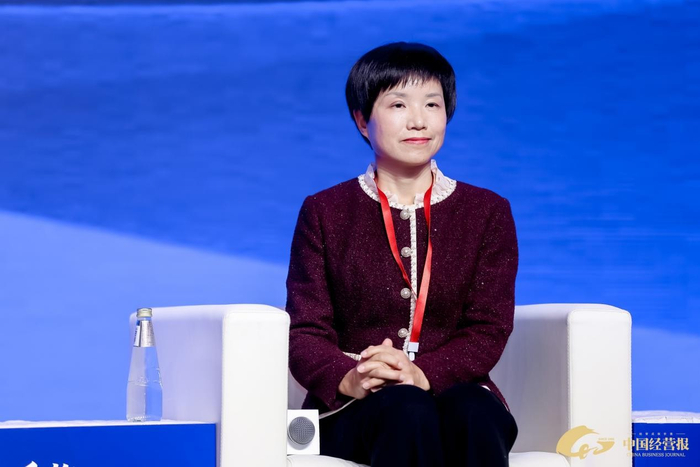
寿仙谷董秘刘国芳:守正创新 灵芝品牌快速破圈
Zhong Guo Jing Ying Bao· 2025-12-12 22:08
Core Insights - The Chinese health industry is entering a significant growth phase, driven by an aging population and increasing acceptance of traditional Chinese medicine [2] - Shouxiangu aims to become a leading brand in organic Chinese medicine and global Lingzhi products, focusing on product quality and consumer trust [3] Company Strategy - Shouxiangu's main products include third-generation wall-breaking Lingzhi spore powder and Dendrobium candidum series, with Lingzhi spore powder accounting for approximately 72% of sales in the first half of 2025 [3] - The company is expanding its market presence outside Zhejiang province, where current sales account for less than 10% [3][4] - Shouxiangu plans to adopt a dual approach for expansion, including learning from successful distributors and forming strategic partnerships with well-known pharmaceutical distribution companies [4] Digital Transformation - The company is leveraging AI technology to enhance production efficiency and product quality, while also utilizing digital marketing to improve customer engagement and conversion rates [4] Industry Challenges - The traditional Chinese medicine sector faces cyclical pressures from high-end consumption contraction and inventory issues, alongside long-term structural challenges [4] - The industry is experiencing a shift in consumer demographics, with younger consumers becoming a significant market segment [4] Marketing and Product Innovation - Shouxiangu is enhancing brand visibility through sponsorships and engaging with new media platforms for broader consumer reach [5] - The company is diversifying its product offerings to appeal to younger consumers, including ready-to-drink products and innovative formats like capsules and oral liquids [5]


白云山现2笔大宗交易 合计成交35.94万股
Zheng Quan Shi Bao Wang· 2025-12-12 15:45
据天眼查APP显示,广州白云山医药集团股份有限公司成立于1997年09月01日,注册资本162579.0949 万人民币。(数据宝) 12月12日白云山大宗交易一览 | 成交量 | 成交金 额 | 成交价 | 相对当日 收盘折溢 | | | | --- | --- | --- | --- | --- | --- | | (万 | | 格 | | 买方营业部 | 卖方营业部 | | 股) | (万 | (元) | 价 | | | | | 元) | | (%) | | | | 24.21 | 630.09 | 26.03 | 0.00 | 瑞银证券有限责任公司上海花园石桥路证券营业 部 | 机构专用 | | 11.73 | 305.33 | 26.03 | 0.00 | 中信证券股份有限公司总部(非营业场所) | 机构专用 | 注:本文系新闻报道,不构成投资建议,股市有风险,投资需谨慎。 (原标题:白云山现2笔大宗交易 合计成交35.94万股) 白云山12月12日大宗交易平台共发生2笔成交,合计成交量35.94万股,成交金额935.42万元。成交价格 均为26.03元。从参与大宗交易营业部来看,机构专用席位共出现 ...
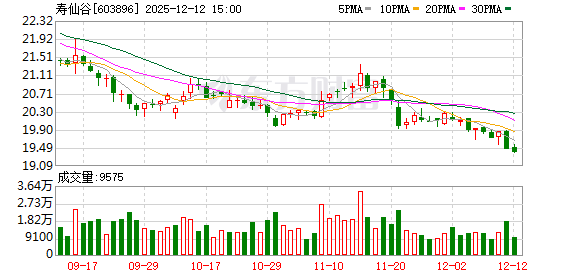
寿仙谷:公司与多位中国工程院院士在食药用菌育种、栽培以及药食同源产品开发等领域有深入合作
Mei Ri Jing Ji Xin Wen· 2025-12-12 11:49
(文章来源:每日经济新闻) 每经AI快讯,有投资者在投资者互动平台提问:请问贵公司有考虑跟工程院医药大拿合作开发中药方 吗? 寿仙谷(603896.SH)12月12日在投资者互动平台表示,公司与李玉、孙宝国、朱蓓薇等多位中国工程 院院士在食药用菌育种、栽培以及药食同源产品开发等领域有深入合作。 ...
贵州百灵:12月12日召开董事会会议
Mei Ri Jing Ji Xin Wen· 2025-12-12 10:50
每经头条(nbdtoutiao)——实施城乡居民增收计划、降准降息等工具灵活高效运用、增加普通高中学 位……深度解读中央经济工作会议 (记者 曾健辉) 2025年1至6月份,贵州百灵的营业收入构成为:工业占比56.3%,商业占比40.71%,医疗业占比 2.27%,其他行业占比0.73%。 截至发稿,贵州百灵市值为75亿元。 每经AI快讯,贵州百灵(SZ 002424,收盘价:5.35元)12月12日晚间发布公告称,公司第六届第二十 一次董事会会议于2025年12月12日在公司三楼会议室以现场结合通讯方式召开。会议审议了《关于召开 2025年第三次临时股东会的议案》等文件。 ...

云南白药(000538) - 2025年12月11日调研活动附件之投资者调研会议记录
2025-12-12 10:48
Financial Performance - In the first three quarters of 2025, the company achieved operating revenue of CNY 30.654 billion, a year-on-year increase of 2.47% [2] - Net profit attributable to shareholders reached CNY 4.777 billion, exceeding the full-year 2024 figure of CNY 4.749 billion, with a year-on-year growth of 10.41% [2] - Non-recurring net profit was CNY 4.550 billion, surpassing the 2024 full-year figure of CNY 4.523 billion, reflecting a year-on-year increase of 6.68% [2] - The weighted average return on equity was 11.92%, up by 1.10 percentage points year-on-year [2] - Operating cash flow net amount reached CNY 4.456 billion, a year-on-year increase of 9.40% [2] - As of the end of the period, cash and cash equivalents totaled CNY 8.618 billion, with a debt-to-asset ratio of 25.36% [2] Pharmaceutical Business Development - The pharmaceutical division implemented integrated marketing strategies focusing on various scenarios, achieving over 20% growth in O2O sales [4] - Online sales during the 2025 "618" shopping festival saw significant improvements, with 48.45 million visitors and a GMV of CNY 254 million [4] - Clinical research on products like Yunnan Baiyao (powder) and capsules for diabetes foot and bone pain showed steady progress [4] Health Products Performance - The health products division maintained its leading market share in toothpaste, while the brand "Yangyuanqing" ranked first in Tmall for anti-hair loss shampoo during the 2025 "618" period [6] Acquisition and Integration Strategy - The acquisition of Juyitang aims to enhance the company's capabilities in the traditional Chinese medicine sector, with a production capacity of 25,000 tons for herbal pieces and 1,500 tons for formula granules [7] - Juyitang's established online sales channels and large B-end customer base are expected to provide strategic synergies and improve operational efficiency [7] Research and Development Pipeline - The company is focusing on secondary innovation and rapid drug development, with 16 major traditional Chinese medicine projects and 37 ongoing projects [8] - Key projects include the completion of Phase II clinical trials for Sanqi tablets and the initiation of Phase III trials for various products [8] - Long-term projects include the launch of clinical trials for innovative drugs and monoclonal antibody projects [8]

云南白药(000538) - 2025年12月10日调研活动附件之投资者调研会议记录(一)
2025-12-12 10:42
Group 1: Pharmaceutical Business Performance - In the first half of 2025, the pharmaceutical business group achieved a main business revenue of 4.751 billion yuan, a year-on-year increase of 10.8% [2] - Sales revenue of Yunnan Baiyao aerosol exceeded 1.453 billion yuan, with a significant year-on-year growth of over 20.9% [2] - Other core products, including Yunnan Baiyao plaster and capsules, also saw notable growth, contributing to the overall revenue increase [2] - Plant-based products, such as Qixue Kang oral liquid, reached sales of 202 million yuan, with a year-on-year growth of approximately 116.2% [2] Group 2: Health Product Channel Development - The company has established a comprehensive national sales team for health products, maintaining a leading market share in Yunnan Baiyao toothpaste [4] - Continuous optimization of the entire channel has strengthened traditional offline advantages while also focusing on emerging retail formats like instant retail and community group buying [4] Group 3: Traditional Chinese Medicine Cultivation Achievements - The company has implemented a precise research and transformation model for seed innovation, achieving coverage of ten major Yunnan medicinal sources [5] - The area of high-quality seed promotion has reached 90% of the annual target, with significant progress in the construction of "Yun Medicine Seed Valley" [5] - Over 7,000 acres of GAP management have been added for various medicinal herbs, integrating low-altitude economy and IoT technology [5] Group 4: Online Sales Performance - The pharmaceutical business group has expanded its online market, with O2O sales increasing by over 20% year-on-year [6] - During the 2025 "618" shopping festival, the company achieved a GMV of 254 million yuan through e-commerce platforms, attracting 48.45 million visitors [7] - Yunnan Baiyao toothpaste maintained the top market share in the domestic channel, while Yangyuan Qing ranked first in Tmall for anti-hair loss shampoo [7] Group 5: Nuclear Medicine Research Progress - The INR101 diagnostic nuclear medicine project has initiated Phase III clinical trials, with 32 research centers established and 60 subjects enrolled [8] - The INR102 therapeutic nuclear medicine project has received a clinical trial notification, with Phase I trials underway and 12 patients enrolled [8]
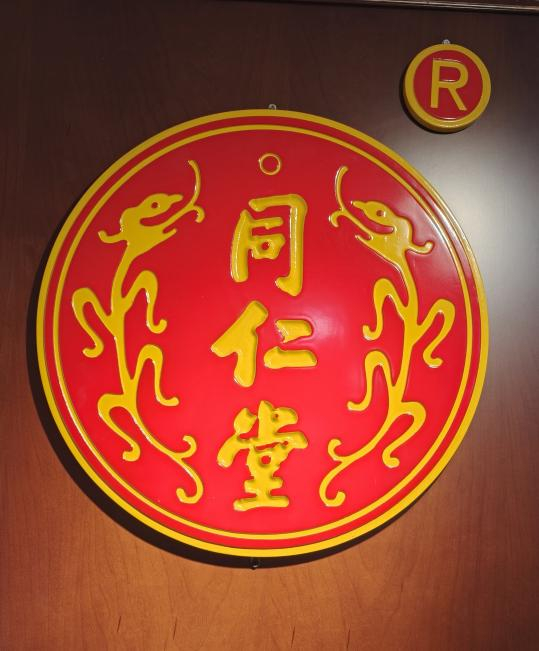
求医问药:老字号同仁堂“双龙标” 藏着百年正宗的密码
Zheng Quan Ri Bao Zhi Sheng· 2025-12-12 10:32
如今市面上同仁堂相关产品琳琅满目,想要精准选购到正宗老字号产品,核心秘诀就是认准"双龙标"。 无论线上电商还是线下门店,只要产品外包装印有这枚承载着历史与匠心的标志,便是出自北京同仁堂 的优质正品。 一枚"双龙标",连接着老字号的过去与现在。它不仅是辨别正宗的直观符号,更是同仁堂对消费者的品 质承诺,守护着百年品牌的信誉与口碑。 (CIS) 同仁堂"双龙标"诞生于1980年,出自集团美术设计师庄书英之手,如今已是享誉海内外的驰名商标。谈 及设计灵感,离不开老字号的匠心传承——商标整体采用圆形子母线构图,原型正是同仁堂经典的蜡封 大蜜丸,寓意着产品的饱满质感与和谐配方;正中"同仁堂"三字,由著名书法家启功先生亲笔题写,笔 墨遒劲有力,尽显文化底蕴;两侧"二龙戏珠"图案搭配卷草纹装饰,灵感源自《三希堂法帖》中北宋宋 徽宗的泥金题签与宣和之印,龙作为中华民族的祥瑞象征,既契合中医药"天人合一"的核心理念,也暗 含"药到病除、福泽安康"的美好期许。 历经四十余年沉淀,"双龙标"早已超越普通商标的意义。它是同仁堂集团唯一合法持有的核心品牌标 识,也是"同仁堂"字号的专属承继象征——根据品牌管理规则,未经集团书面授权,任 ...

康缘药业:获得泻白散颗粒药品注册证书
Xin Lang Cai Jing· 2025-12-12 10:25
Core Viewpoint - Kangyuan Pharmaceutical has received a drug registration certificate for Xiebaisan Granules from the National Medical Products Administration, indicating a significant regulatory milestone for the company [1] Group 1: Product Details - The drug's generic name is Xiebaisan Granules, with main ingredients including fried mulberry bark, prepared lycium bark, fried licorice, and glutinous rice [1] - The dosage form is granules, with a specification equivalent to 8.20g of decoction pieces per bag [1] - The registration classification is Traditional Chinese Medicine Class 3.1, and the drug has a shelf life of 18 months, classified as a prescription drug [1]

中药板块12月12日跌0.31%,信邦制药领跌,主力资金净流出1.44亿元
Zheng Xing Xing Ye Ri Bao· 2025-12-12 09:06
从资金流向上来看,当日中药板块主力资金净流出1.44亿元,游资资金净流出8876.18万元,散户资金净 流入2.33亿元。中药板块个股资金流向见下表: 以上内容为证券之星据公开信息整理,由AI算法生成(网信算备310104345710301240019号),不构成投资建议。 证券之星消息,12月12日中药板块较上一交易日下跌0.31%,信邦制药领跌。当日上证指数报收于 3889.35,上涨0.41%。深证成指报收于13258.33,上涨0.84%。中药板块个股涨跌见下表: ...


从“纾困共赢”到“对簿公堂”:贵州百灵与华创证券纠葛背后的多重风险
Xin Lang Cai Jing· 2025-12-12 08:24
Core Viewpoint - The ongoing legal dispute between Guizhou Bailing's actual controller Jiang Wei and the rescue party Huachuang Securities has evolved from a "capital success story" into a courtroom battle, highlighting multiple conflicts in equity, finance, and control, and raising alarms about the frequent changes in equity and rescue models in the A-share market [1][5] Governance Structure Risks - Huachuang Securities initially entered as a financial investor, promising not to seek control, but gradually intervened in the company's operations, leading to accusations of interference in normal business decisions by Jiang Wei [2][6] - Jiang Wei's share pledge rate is at 100%, with multiple debt default risks, creating a "dual-head game" where the rescue party is deeply involved in daily operations while the actual controller faces financial pressure and loss of influence, significantly reducing strategic execution and internal management efficiency [2][6] Financial and Operational Risks - Guizhou Bailing reported a net profit loss of 415 million yuan in 2023, and due to a qualified opinion on its financial report, its stock will be subject to ST treatment starting May 2024, damaging market credibility [3][7] - The financial issues leading to the ST designation were partly due to internal conflicts, with Huachuang Securities' appointed executives reporting their own divisions [3][7] - The company has faced repeated setbacks in financing and strategic investments, with Huachuang Securities allegedly obstructing the introduction of strategic investors, resulting in missed opportunities and a vicious cycle of "rescue-stalemate-operational deterioration" [3][7] Legal and Regulatory Risks - The parties have entered a phase of legal confrontation, with Huachuang Securities seeking repayment of over 1.7 billion yuan in principal, interest, and penalties, while Jiang Wei countersues for share reduction and compensation for stock price losses [4][8] - Jiang Wei is under investigation by the CSRC for insider trading and information disclosure violations, complicating the resolution of the dispute [4][8] - The rescue fund's planned exit from 2022 to 2024 has stalled due to disagreements on buyback, reduction, and payment, leading to a failure of the rescue mechanism and resulting in prolonged litigation and asset freezes [4][8]