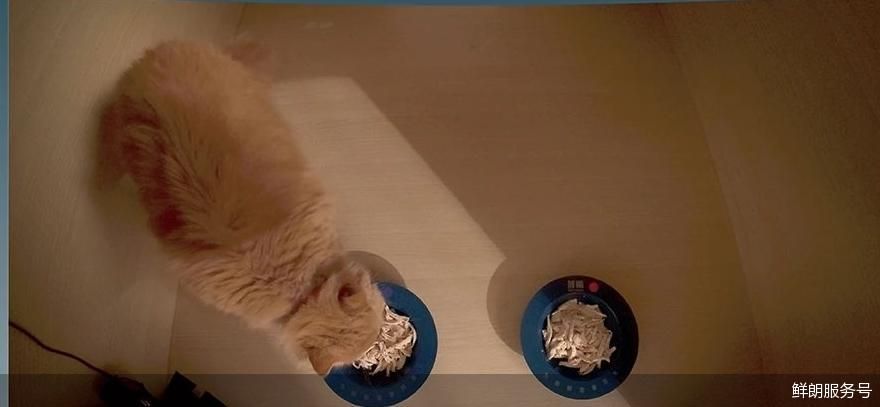
宠物食品

Search documents
中宠股份:上半年净利润同比增长42.56% 拟10派2元
Zheng Quan Shi Bao Wang· 2025-08-05 08:03
人民财讯8月5日电,中宠股份(002891)8月5日晚间发布2025年半年报,上半年实现营业收入24.32亿 元,同比增长24.32%;归母净利润2.03亿元,同比增长42.56%。公司拟向全体股东每10股派发现金红利 2元(含税)。 ...
中宠股份(002891.SZ):上半年净利润2.03亿元 同比增长42.56%
Ge Long Hui A P P· 2025-08-05 08:02
格隆汇8月5日丨中宠股份(002891.SZ)公布2025年半年度报告,上半年公司实现营业收入24.32亿元,同 比增长24.32%;归属于上市公司股东的净利润2.03亿元,同比增长42.56%;归属于上市公司股东的扣除 非经常性损益的净利润1.99亿元,同比增长44.64%;基本每股收益0.6841元;拟向全体股东每10股派发 现金红利2.00元(含税)。 ...
中宠股份:上半年净利润同比增长42.56% 每10股派2元
Mei Ri Jing Ji Xin Wen· 2025-08-05 08:02
每经AI快讯,8月5日,中宠股份(002891.SZ)公告称,中宠股份发布2025年半年度报告摘要,公司上半 年实现营业收入24.32亿元,同比增长24.32%;归属于上市公司股东的净利润为2.03亿元,同比增长 42.56%。公司拟每10股派发现金红利2.00元(含税),不进行公积金转增股本。 ...
中宠股份:2025年半年度净利润约2.03亿元,同比增加42.56%
Mei Ri Jing Ji Xin Wen· 2025-08-05 07:59
中宠股份(SZ 002891,收盘价:58.72元)8月5日晚间发布半年度业绩报告称,2025年上半年营业收入 约24.32亿元,同比增加24.32%;归属于上市公司股东的净利润约2.03亿元,同比增加42.56%;基本每 股收益0.6841元,同比增加40.88%。 (文章来源:每日经济新闻) ...

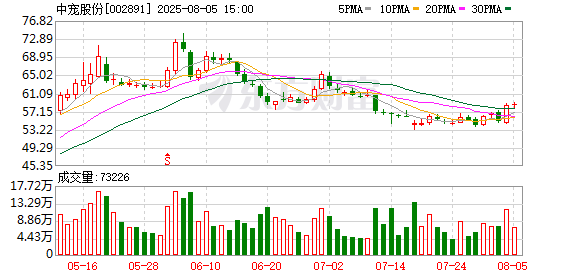
中宠股份:2025年上半年净利润2.03亿元,同比增长42.56%
Xin Lang Cai Jing· 2025-08-05 07:56
中宠股份公告,2025年上半年营业收入24.32亿元,同比增长24.32%。净利润2.03亿元,同比增长 42.56%。公司拟向全体股东每10股派发现金红利2元(含税)。 ...
当前阶段如何看新消费板块?
2025-08-05 03:20
Summary of Key Points from Conference Call Records Industry Overview Pet Food Industry - The pet food industry is experiencing a significant trend towards domestic high-end products, with companies like Guobao and Zhongchong performing exceptionally well. Sales growth for the industry from January to May was approximately 17%, with Guobao's online growth at about 49% and Zhongchong's online growth between 25% and 30% [1][2][4]. - Guobao's sub-brand, Freigate, is expected to open up long-term growth potential, with an estimated profit of 800 million yuan for the year and a low valuation, suggesting a potential for increased investment [1][4]. - Zhongchong's Wanpi brand showed strong performance in the first half of the year, with an expected profit of 440-450 million yuan, and optimistic projections for next year at 580-600 million yuan [1][4]. Restaurant Industry - The restaurant industry has entered a consumption replacement cycle, with positive outlooks for Yum China, Xiaocaiyuan, and Green Tea. Xiaocaiyuan is projected to achieve a profit of around 700 million yuan, corresponding to a valuation of about 14 times [1][5]. - Green Tea is noted for its higher cost-performance ratio, while Yum China benefits from growth in takeout and KFC business [1][5]. Beverage Industry - The tea beverage sector is seeing attention on brands like Guming and Mixue, with Guming expected to exceed 2 billion yuan in profit and a continuous growth in store openings [1][5]. Automotive Industry - Xiaomi's automotive business is projected to significantly increase production capacity by the end of 2025, supporting a sales target of over 400,000 units this year and an expected 700,000 to 900,000 units next year. The Ultra version models have a high sales ratio, with an average price of about 300,000 yuan, enhancing gross margins [1][7]. Core Insights and Arguments Performance Trends - The overall performance of the new consumption sector has shown signs of a pullback since early June, particularly in the food and beverage industry post the 618 shopping festival. However, the rise of domestic high-end pet food brands is notable, with four out of the top five brands on Tmall being domestic [2][4]. - Guobao's revenue growth in the second quarter is expected to be around 25%, despite a 5%-10% decline in overseas OEM revenue due to trade tensions [2][4]. Investment Recommendations - The pet food industry is expected to maintain a high level of prosperity, with strong recommendations for Guobao and Zhongchong [1][4]. - In the restaurant sector, investment opportunities are identified in Yum China, Xiaocaiyuan, and Green Tea, with Xiaocaiyuan's expansion and profitability being particularly highlighted [1][5]. Market Dynamics - The gold and jewelry industry is experiencing a shift towards differentiation, with companies like Laopu benefiting from this trend. Despite a 20% decline in overall industry volume in the second quarter, certain companies continue to perform well [2][24]. - The cosmetics industry is facing a systemic pullback, but long-term growth potential remains strong for companies like Maogeping, Shangmei, and Jinbo Biological, which are expected to achieve annual growth rates of 20%-30% [23][25]. Other Important Insights - The pet supplies sector is also highlighted for its potential, with companies like Yiyi, Tianyuan, and Yuanfei Pet showing stable growth and significant opportunities in brand operations [21][22]. - The personal care sector is expected to rebound in the second half of the year, with companies like Baiya expected to recover from short-term volatility and achieve growth rates of over 30% [20][22]. This comprehensive overview captures the key insights and trends across various industries, highlighting potential investment opportunities and market dynamics.

宠物行业基本面更新
2025-08-05 03:15
Summary of Pet Industry Conference Call Industry Overview - The pet food industry in China is experiencing a significant transformation, with online sales growth of approximately 7.4% in May and June 2025, indicating a pre-emptive sales performance due to extended promotional periods, while still maintaining overall growth [1][2] - The market is witnessing increased brand differentiation, particularly in the baked food segment, with brands like Guobao's Fuleijiate showing remarkable growth of 178% in June and a combined growth of 164% for May and June [1][3] - The concentration of the domestic pet food industry is rapidly increasing, with the top ten companies holding about 30% market share, compared to over 50% in Japan and over 70% in the U.S. [1][6] Consumer Trends - Young consumers, especially those born after 2000, are driving the premiumization of the cat food market, with higher penetration rates for cat food compared to dog food, reflecting a trend towards emotional consumption favoring high-end brands like Fuleijiate [1][4][5] - The overall pet food market saw an online growth rate of about 14% in the first half of 2025, despite a decline in major platforms like Tmall, JD, and Douyin in June [2] Competitive Landscape - Domestic pet companies are increasingly opting for self-built factories to enhance competitiveness through channel control and product quality, rather than pursuing large-scale mergers and acquisitions [1][7] - The number of registered pet companies in 2024 saw its first decline of 12%, indicating a phase of brand consolidation and excess capacity in the mid-to-low-end market [1][8] Future Trends - The implementation of stricter advertising tax policies in October 2025 is expected to benefit larger, financially sound companies while increasing pressure on smaller enterprises, leading to further market differentiation [1][13] - The next two to three years are anticipated to be a golden period for rapid concentration in the pet industry, with a focus on expanding market share and improving market position [1][10] Investment Outlook - There is optimism regarding the emergence of a leading domestic pet brand capable of achieving over 20% market share and 15% net profit margin, potentially reaching a market capitalization exceeding 100 billion [1][11] - Major domestic companies like Zhongtong and Guobao reported over 30% year-on-year growth in Q2 2025, indicating a shift towards more rational consumer behavior and reduced reliance on promotional activities [1][12] - The pet industry remains a long-term investment opportunity, with expectations of a leading company emerging within the next three to five years [1][14]
国产宠物粮扩产潮背后的价格战
Bei Jing Shang Bao· 2025-08-04 15:57
Core Viewpoint - The domestic pet food industry is experiencing a "self-built factory trend," with leading brands actively acquiring factories and expanding production capacity to establish long-term competitive advantages in a rapidly evolving market [1][2]. Group 1: Acquisition and Capacity Expansion - The capital operations in the domestic pet food sector have significantly accelerated, exemplified by Jichong Holdings' acquisition of 60% of Liaoning Xianchong and a planned investment of 180 million yuan to upgrade its production line [2]. - Other leading brands, such as Chengshi Yikou and Guobao, are also investing in new factories and expanding existing ones, indicating a shift from a light-asset model to a more capital-intensive approach [3][4]. - The market is transitioning from price and channel competition to brand competition, with domestic brands increasing their market share through enhanced R&D and brand building [2][4]. Group 2: Industry Dynamics and Competition - The shift towards self-built factories is driven by a fundamental change in industry competition logic, moving from a "traffic era" to a "supply chain competition" era, as brands face rising customer acquisition costs [4][5]. - The price advantage of domestic brands is significant, with domestic cat food priced much lower than imported options, enhancing their competitiveness [4][5]. - The focus is shifting from low-cost products to high-quality offerings, as younger pet owners demand better quality, leading to a competitive landscape centered around supply chain and technology [5][6]. Group 3: Globalization and Market Trends - The self-built factory trend is reshaping the domestic pet food landscape, with larger companies able to invest heavily while smaller brands struggle to keep up [6][7]. - The Chinese pet food market has surpassed a trillion yuan, becoming one of the fastest-growing segments globally, with potential for international competition through overseas factories and acquisitions [7][8]. - The industry is moving towards a model where companies are concentrated while brands may remain dispersed, driven by precise positioning and differentiated demands [7][8].
得利斯加入宠物食品混战
Bei Jing Shang Bao· 2025-08-04 12:49
Core Viewpoint - The company Delisi is entering the freeze-dried pet food market through a strategic partnership with two major freeze-dried food producers, aiming to address key challenges in pet food quality and stability while targeting the mid-to-high-end market segment [2][3]. Company Developments - Delisi has signed a strategic cooperation agreement with Xiamen Haifusheng Food Group and New Sanhe (Yantai) Food Co., focusing on product supply, market expansion, and technology collaboration in freeze-dried pet food [2]. - The company previously expressed interest in the pet food sector, having registered a subsidiary in October 2022 to explore opportunities in this market [3]. Financial Performance - Delisi has faced declining revenue growth from 2021 to 2024, with revenues of 3.13 billion, 3.075 billion, 3.092 billion, and 2.965 billion respectively, and losses of 34 million and 33.67 million in 2023 and 2024 [3]. - The company's main revenue source, chilled and frozen meat products, has seen a significant decline in revenue, with a drop of 24.82%, 8.47%, 11.85%, and 10.51% from 2021 to 2024 [4]. Market Trends - The pet food market in China is experiencing rapid growth, with the market size projected to increase from 15.7 billion in 2012 to 158.5 billion in 2024, reflecting a compound annual growth rate of 21.2% [4]. - Freeze-dried pet food has emerged as the largest segment within the pet food market, indicating a strong demand for innovative products in this category [4]. Competitive Landscape - The pet food sector is attracting various food companies, with notable recent entries including Animex Foods acquiring Pupil Foods and Three Squirrels launching a pet food brand [5]. - Industry analysts highlight the need for continuous innovation and brand differentiation for companies like Delisi to succeed in the competitive pet food market [5].

国产宠物品牌迎来自建工厂潮 宠粮扩产背后的价格战
Bei Jing Shang Bao· 2025-08-04 11:15
Core Insights - The domestic pet food industry is experiencing a "self-built factory trend," with leading brands engaging in capital operations to acquire factories and expand production capacity, aiming to establish long-term competitive advantages in a fiercely competitive market [1][3][8] Group 1: Capital Operations and Factory Expansion - The capital operations in the domestic pet food sector have significantly accelerated, exemplified by Jichong Holdings' acquisition of 60% of Liaoning Xianchong and a planned investment of 180 million yuan to upgrade its production line [3][4] - Major brands are increasingly focusing on their own brands, with companies like Guibao Pet highlighting their self-owned brand business as a competitive advantage compared to peers [3][5] - The market competition is shifting from price and channel competition to brand competition, with domestic brands gaining market share due to increased investment in R&D and brand building [3][5] Group 2: Factory Layout and Production Capacity - Xianlang has established a factory layout across multiple regions, including a poultry-focused factory in Henan and a planned intelligent production base in Zhejiang, enhancing its supply chain control [4][5] - Other leading brands are also investing in new factories, such as Chengshi Yikou's 200 million yuan investment in Shandong for high-end pet food production [4][5] - The shift from a light asset model to a heavy asset model through capital mergers and self-built factories indicates a strategic move to control the supply chain [4][5] Group 3: Industry Dynamics and Consumer Trends - The transition to self-built factories is driven by a fundamental change in industry competition logic, moving from a "traffic era" to a focus on supply chain and technology competition [5][6] - As the pet owner demographic becomes younger and more quality-conscious, the demand for high-quality pet food is increasing, leading to a shift from price wars to supply chain competition [6][7] - The concentration of the pet food market is expected to increase, with larger companies benefiting from economies of scale, while smaller brands may struggle to keep up with the capital requirements of a heavy asset model [8][9]