
纺织服装

Search documents
《“十五五”规划建议》解读:纺织服装行业的升级路径:科技创新与绿色转型
Lian He Zi Xin· 2025-11-14 11:28
Investment Rating - The report indicates a positive outlook for the textile and apparel industry, emphasizing the need for technological innovation and green transformation as key drivers for future growth [1][3]. Core Insights - The textile and apparel industry is undergoing significant changes due to weakened cost advantages and increased environmental requirements, necessitating a shift towards technological innovation and green transformation [1][3]. - The "14th Five-Year Plan" highlights the importance of smart and green development paths, positioning the industry for modernization and enhanced competitiveness on a global scale [3][10]. - The report outlines two main development paths: smart upgrade through technological innovation and green transformation for sustainable development [4][7]. Summary by Sections Smart Upgrade - The report emphasizes the need for traditional technology upgrades and the promotion of intelligent manufacturing to enhance production efficiency and reduce operational costs [4][5]. - By 2027, significant improvements in production efficiency and cost reductions are expected in various sectors, including a 5% to 10% decrease in comprehensive costs in the dyeing industry [5]. - Leading companies are already investing in product innovation and technology development, leveraging digital and intelligent technologies to enhance competitiveness [4][6]. Green Transformation - The textile industry is characterized by high energy and water consumption, with the dyeing process accounting for over 10% of industrial water usage [7][8]. - From 2005 to 2024, the industry has seen a cumulative energy consumption reduction of over 65% per unit of output, with a 12% annual growth in the recycling of used textiles [8]. - The report identifies challenges in achieving comprehensive green transformation, including insufficient investment in environmental equipment by small and medium enterprises and the high costs of producing green fibers [8][9]. Policy Outlook - The report outlines the evolution of policies from focusing on technology and equipment innovation to emphasizing intelligent manufacturing and high-quality development [10][12]. - The "14th Five-Year Plan" establishes a dual focus on smart and green development, setting the macroeconomic tone for the next five years [10][12].
鲁泰A(000726.SZ):目前服装订单周期在2-3个月,面料订单周期在1.5个月左右
Ge Long Hui· 2025-11-14 09:08
Core Viewpoint - The company is experiencing an improvement in order cycles for both clothing and fabric, indicating a potential recovery in demand and production efficiency [1] Summary by Categories Order Cycles - The current order cycle for clothing is 2-3 months, while the fabric order cycle is approximately 1.5 months [1] Financial Performance - The functional fabric project, operated by Luyuan Company, achieved a revenue of 88.05 million yuan in the first three quarters [1] - Despite an increase in capacity utilization due to improved orders, the company is still in a loss position due to previously low production levels, although losses are expected to decrease as production increases [1]

鲁泰A(000726.SZ):目前没有家纺板块,亦未涉及智能可穿戴产品
Ge Long Hui· 2025-11-14 08:35
Core Viewpoint - The company, Lutai A (000726.SZ), currently does not have a home textile segment and is not involved in smart wearable products. It is focusing on expanding its market presence in Europe and South America while enhancing its product development in functional fabrics and leisure products [1]. Group 1 - The company is collaborating with relevant parties to maintain stability and further explore international markets [1]. - Future plans include strengthening the development of functional fabrics and leisure products [1]. - The company aims to leverage its full industry chain advantages and international layout to provide a one-stop service for "fabric clothing" [1]. Group 2 - The company intends to enhance joint development efforts to increase customer loyalty [1]. - The focus is on promoting sustainable high-quality development [1].
鲁泰A(000726.SZ):公司前三季度海外基地营收占公司营收的42%
Ge Long Hui· 2025-11-14 08:35
Core Viewpoint - The company has established a complete industrial chain from spinning to garment processing in Southeast Asia since 2014, and most projects are now in a stable profit cycle, with the impact of the US tariff dispute being multi-regional and comprehensive [1] Group 1 - The company has invested in production bases in Southeast Asia, achieving a complete industrial chain [1] - Most projects, except for a few new ones, have entered a stable profit cycle [1] - The revenue from overseas bases accounted for 42% of the company's total revenue in the first three quarters [1] Group 2 - The easing of tariffs and the tariff advantages of Southeast Asia in the EU market will become more apparent [1]
四川前锋区举办2025年银政企座谈会 助力45户企业对接融资需求11.54亿元
Sou Hu Cai Jing· 2025-11-14 08:33
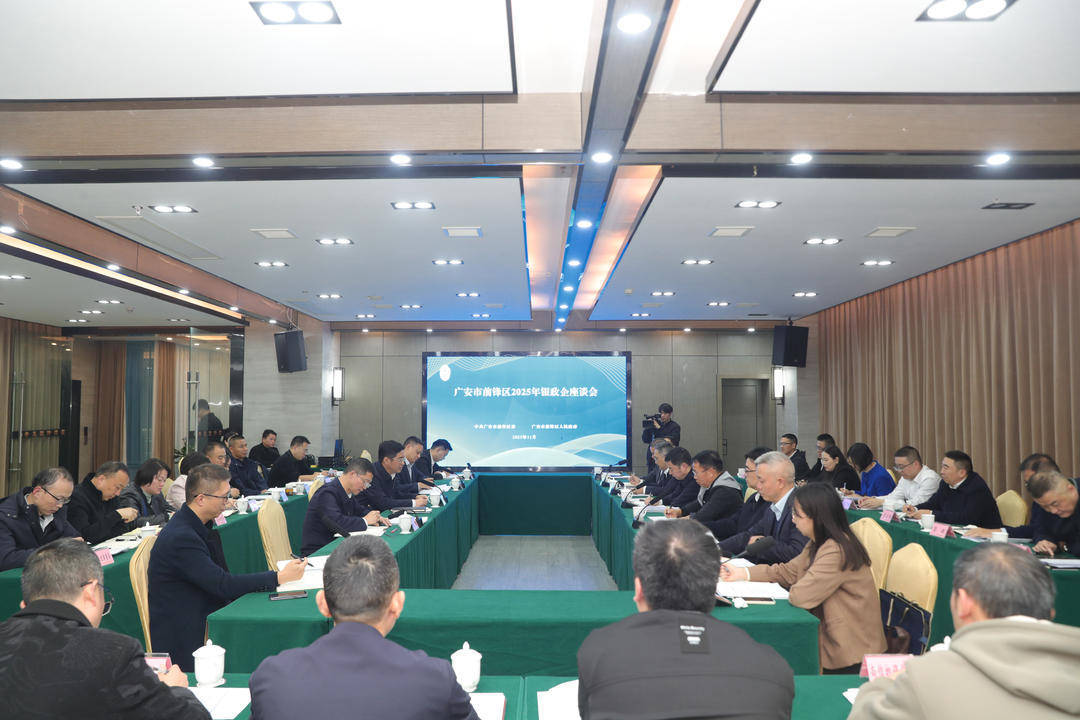
姜曦悦 封面新闻记者 刘彦君 "我们将全力当好'红娘',做好'桥梁',成为金融机构和企业的坚实依靠。" 11月13日,在广安市前锋区举行的2025年银政企座谈会上,区委区政府相关负 责人如是说。 会议通报了全区前三季度金融运行情况,发布了近期重点企业融资需求清单(45户企业融资需求11.54亿元),并向企业家代表发放了广安市银行业金融 机构信贷产品手册。 本次座谈会汇聚了13家驻市银行机构、3家担保公司、6家驻区银行机构以及22户企业代表,覆盖工业、商贸物流、建筑、教育医疗等多个领域。会议旨在 搭建高效对接平台,促进资金供需双方更深入地交流与合作,凝聚金融发展合力,推动金融"活水"精准灌溉实体经济,为区域高质量发展注入强劲动能。 交流环节中,企业代表踊跃发言。四川俊乔针织服装有限公司负责人表示,随着厂房扩建与订单稳步增长,企业需为明年扩大产能提前筹备资金。四川三 丰数智纺织有限公司相关负责人则提出,正推进智能化改造,期望在设备采购和流动资金方面获得更灵活的中长期贷款支持。针对企业诉求,与会金融机 构积极回应,并详细推介了适配的信贷产品。 近年来,前锋区紧抓成渝地区双城经济圈建设机遇,创新运用"前锦"系列普惠金 ...

湘潭市文亮工贸有限公司成立 注册资本20万人民币
Sou Hu Cai Jing· 2025-11-14 07:19
Core Viewpoint - Xiangtan Wenliang Industrial and Trade Co., Ltd. has been established with a registered capital of 200,000 RMB, indicating a new player in the textile and footwear industry [1] Company Overview - The legal representative of the company is Tang Liang [1] - The registered capital of the company is 200,000 RMB [1] Business Scope - The company operates in various sectors including: - Sales of textile products and raw materials [1] - Wholesale and retail of shoes and hats [1] - Internet sales (excluding items requiring permits) [1] - Sales of leather products [1] - Wholesale and retail of clothing and accessories [1] - Domestic trade agency [1] - Manufacturing of shoes and plastic products [1] - Production of labor protection supplies (excluding projects requiring approval) [1]
南阳市企业联合会赴新野县调研指导工业经济发展工作
Sou Hu Cai Jing· 2025-11-14 04:12
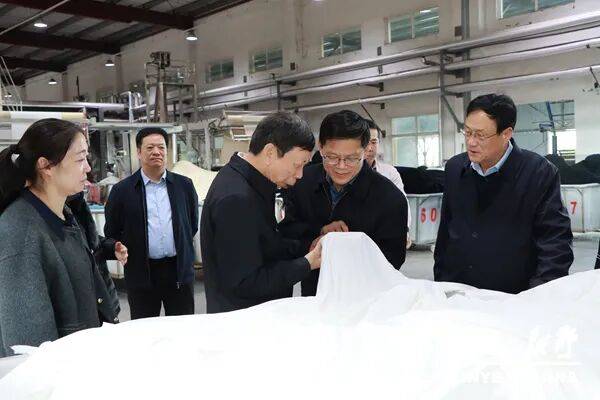
赵红亮代表县委、县政府,对市企业联合会长期以来的关心支持表示感谢。赵红亮指出,新野始终把优 化营商环境作为推动高质量发展的基础性工程,持续强化县企业联合会组织建设,充分发挥其桥梁纽带 作用,整合工信局、企业服务中心等部门力量,在企业服务专区建设、政策直达、要素保障等方面实现 创新突破,形成了以纺织服装、光电电子、玩具制造等特色产业集群为支撑,以科技创新为驱动,以数 字化专业化为路径的工业发展新格局。下一步,新野将认真研究吸纳调研组提出的宝贵意见,聚焦企业 急难愁盼,进一步优化服务机制、提升服务效能,全力推动县域工业经济提质增效,为全市发展大局作 出新的贡献。 刘朝瑞一行先后走访新野纺织、鼎泰高科、磊展玩具产业园等龙头企业,实地察看生产车间,详细了解 企业运行、科技研发、产业链延伸及市场拓展情况,并就进一步培育壮大企业规模、强化科技创新、持 续优化营商环境等方面提出指导意见。 来源:新野政务网 11月11日,南阳市企业联合会党委书记、名誉会长刘朝瑞带领市企业联合会、企业家协会一行,深入新 野县调研重点工业企业发展情况,并就优化营商环境、提升企业服务工作进行指导。县委书记赵红亮, 县政协主席黄慧,县先进制造业开发 ...
从医用到日用 稳健医疗把“小棉花”做出大生意
Zheng Quan Ri Bao· 2025-11-13 16:47
Core Insights - The article highlights the transformation of Shengjian Medical from a medical dressing company to a consumer goods powerhouse, emphasizing the integration of medical-grade standards into everyday products like cotton towels and sanitary napkins [1][2][3] Company Overview - Shengjian Medical was established in 2000, initially focusing on medical dressings, and developed the first domestic cotton water-jet non-woven fabric technology in 2005, addressing infection issues in traditional medical gauze [2] - In 2009, the company launched "Cotton Era," marking its entry into the consumer market with a focus on high-safety cotton products [2][3] Market Performance - From 2015 to 2024, the revenue from Shengjian Medical's consumer goods business grew from 642 million to 4.991 billion, representing over a sixfold increase [3] - In the first three quarters of 2025, the consumer goods segment achieved a revenue of 4.01 billion, a year-on-year increase of 19.1%, surpassing the medical business revenue [3] Product Development - The cotton towel, a flagship product of Cotton Era, adheres to medical-grade standards throughout its production process, ensuring safety and comfort [4] - The Chinese cotton towel market demand reached 60 billion units in 2022, with a CAGR of 58.6% from 2015 to 2022 [4] Strategic Focus - Cotton Era has expanded its product range to include female hygiene, baby products, and home care, focusing on four strategic categories [6] - The company emphasizes long-termism, prioritizing supply chain optimization, channel development, and research over aggressive advertising or price wars [6][7] Sales Channels - The company operates both online and offline channels, with a total of 484 stores as of mid-2025, and has opened 16 new stores in the first half of the year [6] - Online sales reached 2.46 billion in the first three quarters of 2025, with a 23.5% year-on-year growth, particularly driven by interest e-commerce platforms like Douyin [7] Research and Development - Shengjian Medical invested 350 million in R&D in 2024, accounting for 3.88% of sales revenue, and holds 1,639 patents, a threefold increase since 2019 [7] - The company continues to innovate in product functionality, enhancing features such as softness, breathability, and antibacterial properties [7]
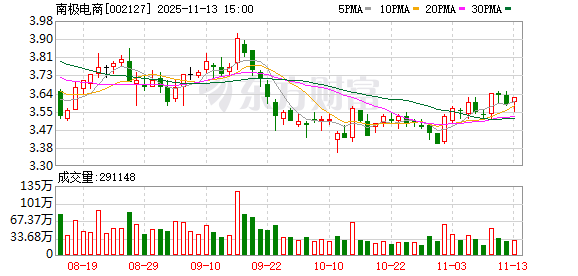
南极电商:后续公司将会与全国各地门店渠道洽谈以寻求业务合作
Zheng Quan Ri Bao· 2025-11-13 14:09
Group 1 - The company has confirmed the establishment of two "Super Antarctic" stores located in Shanghai and Changzhou [2] - The company plans to negotiate with various store channels nationwide for potential business collaborations [2]

河南夏邑:“一根线”织就百亿产业新未来
He Nan Ri Bao· 2025-11-13 08:13
Core Insights - The textile and apparel industry in Xiayi County has become a significant driver of local economic development, showcasing impressive growth in production capacity and employment opportunities [1][3][4]. Group 1: Industry Overview - Xiayi County's textile and apparel sector includes over 500 enterprises, with major players like Yihui Textile and Jianfeng Hat Industry, contributing to its recognition as a key textile base in China [3][4]. - The industry has a production capacity of 3.2 million spindles, 170,000 tons of fabric, and the ability to process 170 million garments, providing jobs for over 20,000 people [1][3]. Group 2: Company Development - Jianfeng Hat Industry, a major player in the sector, has grown from 500 employees and 120 million yuan in annual sales in 2018 to over 1,600 employees and 500 million yuan in sales by September 2025 [2][3]. - The company exports products to over 20 countries and regions, including Europe and the United States, highlighting its international reach [2]. Group 3: Technological Advancements - The industry is undergoing a transformation towards smart manufacturing, with significant investments in automation and digitalization, leading to a reduction in labor costs by over 20% and an increase in tax revenue by over 10% [6][7]. - Xiayi County has achieved a digital transformation rate of over 70% among industrial enterprises, with a focus on integrating technology into production processes [7]. Group 4: Future Development Plans - The local government is committed to enhancing the textile and apparel industry's competitiveness by promoting cluster development, high-end products, and brand creation [8]. - Plans include the establishment of a comprehensive textile and apparel industry chain and attracting new investments to further bolster the sector's growth [8].