
低空产业

Search documents
工信部:实施新一轮钢铁、有色金属、石化等重点行业稳增长行动
2 1 Shi Ji Jing Ji Bao Dao· 2025-07-18 09:39
Core Insights - The industrial sector in China showed a robust performance in the first half of 2023, with a year-on-year growth of 6.4% in industrial added value, surpassing GDP growth by 1.1 percentage points [1] - Manufacturing investment increased by 7.5% year-on-year, supported by major engineering projects and technological upgrades [1] - Key industries such as electrical machinery, automotive, electronics, and chemicals contributed significantly to industrial growth, with high-tech manufacturing accounting for 16.4% of the total industrial added value [1][4] Group 1: Industrial Growth and Performance - All 31 provinces in China reported growth in industrial added value, with notable increases in Fujian, Anhui, Henan, and Hunan exceeding 8% [2] - Eight major industrial provinces achieved profit growth rates above the national average, with Henan, Hunan, Hubei, and Jiangsu recording double-digit growth [2] - The equipment manufacturing sector played a stabilizing role, representing 35.5% of total industrial added value, with profits increasing by 7.2% from January to May [4] Group 2: Policy and Future Directions - The government plans to implement a new round of growth stabilization measures across ten key industries, focusing on structural adjustments and eliminating outdated production capacity [2][5] - Emphasis will be placed on enhancing development quality through technological innovation and promoting high-end manufacturing [3] - Initiatives will be taken to support small and medium enterprises, reduce their burdens, and improve the overall business environment [3]
10大重点行业稳增长!方案即将出台
Wind万得· 2025-07-18 07:55
Group 1 - The Ministry of Industry and Information Technology (MIIT) is set to release growth stabilization plans for ten key industries including steel, non-ferrous metals, petrochemicals, and building materials, focusing on structural adjustments, supply optimization, and phasing out outdated production capacity [1] - MIIT aims to implement national major science and technology projects and key research and development plans, fostering new industries and accelerating the development of bio-manufacturing and low-altitude industries, while promoting innovation in future industries such as humanoid robots, the metaverse, and brain-computer interfaces [1] - The MIIT will accelerate the implementation of the "Artificial Intelligence +" initiative, promoting the deployment of large models in key manufacturing industries to enhance intelligence levels and advance the construction of a green low-carbon standard system [1] Group 2 - The MIIT will continue to implement high-quality development plans for the copper, aluminum, and gold industries, focusing on stabilizing growth and promoting transformation through coordinated efforts on both supply and demand sides [2] - In terms of stabilizing growth, the emphasis will be on efficient resource utilization, improving supply quality through deep processing materials, and fostering new consumption markets to achieve qualitative and quantitative growth in the industry [2] - The MIIT is also working on cultivating pilot platforms in six key areas, including raw materials, equipment manufacturing, consumer goods, information technology, emerging and future industries, and common technologies, with a goal of establishing over five national-level manufacturing pilot platforms by the end of the year [2] Group 3 - The MIIT will strengthen systematic planning with a focus on application landing, selecting and promoting a batch of exemplary digital transformation solutions that are replicable and easy to promote, addressing the pain points and challenges faced by enterprises [3] - The ministry aims to cultivate high-level digital transformation service providers to promote the transition of enterprises towards a "product + service" model, enhancing the digital development level of clusters [3] - A digital transformation standard system will be established to accelerate the supply of high-quality standards for new technologies, products, and consumption, with the goal of leading global industrial development with more Chinese standards [3]


山东力争年内建五个枢纽型、十个中心型起降场,百个数字化起降点
Qi Lu Wan Bao· 2025-07-11 12:10
Core Viewpoint - Shandong Province is advancing its low-altitude economy by developing essential infrastructure and services to support low-altitude flight activities, aiming to establish a new benchmark in the industry [1][2]. Group 1: Infrastructure Development - The Shandong government is implementing the "Three-Year Action Plan for High-Quality Development of Low-Altitude Economy (2025-2027)" to accelerate the construction of low-altitude infrastructure [1]. - Six transport airports in the province have achieved "transportation integration" development, with the establishment of the first reinforced grass runway at Rizhao Airport to support various low-altitude aircraft [1]. - A total of 285 drone take-off platforms have been built since last year, bringing the total to 524, along with the establishment of 9 low-altitude flight camps [1]. Group 2: Service and Support Facilities - Over 4,100 low-altitude communication, navigation, and monitoring facilities have been established, achieving basic coverage of key airspace [1]. - A provincial comprehensive service management platform has been created to facilitate one-click application and approval for low-altitude flights, with trial operations in several cities [2]. Group 3: Future Goals and Plans - Shandong aims for "full coverage, full service, and national leadership" in low-altitude infrastructure, focusing on integration, intelligence, and sustainability [2]. - Plans include the construction of a networked, integrated, and multi-purpose take-off facility system, with new airports in Zaozhuang and Liaocheng to support low-altitude flight operations [2]. - The province intends to establish five hub-type take-off sites, ten center-type take-off sites, and 100 digital take-off points within the year [2]. Group 4: Safety and Reliability - The construction of a high-security, high-reliability, and low-latency communication navigation monitoring network is underway to ensure comprehensive control of unmanned aerial vehicles [3]. - The use of real-world 3D data resources aims to create high-precision 3D maps for efficient utilization of low-altitude airspace resources [3]. Group 5: Intelligent Network System - The development of a low-altitude intelligent network system is prioritized, ensuring seamless integration with national systems and local regulatory services [3]. - Local governments are encouraged to build low-altitude service management platforms that connect with the provincial platform to provide essential services for low-altitude users [3].
50个重点产品、30个典型应用场景,打造低空产业“山东样板”
Zhong Guo Fa Zhan Wang· 2025-07-11 08:13
Core Viewpoint - Shandong Province is actively promoting the development of the low-altitude industry by selecting 50 key products and 30 typical application scenarios, showcasing innovation and practical applications in various fields [1][2][3] Group 1: Key Products - The selected 50 key products cover the entire industry chain, including 15 types of complete machines, 11 platform systems, and 24 components and supporting products, demonstrating a comprehensive product system [1] - Key products focus on technological breakthroughs, featuring advanced components like optical quantum radar and lightweight aviation engines, highlighting the region's independent innovation capabilities [2] Group 2: Application Scenarios - The 30 typical application scenarios span over 10 fields, including cultural tourism, logistics, medical services, and marine inspection, reflecting real-world needs [2] - Examples include the regular operation of low-altitude logistics between islands, significantly reducing delivery times from 30-40 minutes by water to just 10 minutes by air [2] Group 3: Synergy and Development - The collaboration between key product development and application scenarios creates a virtuous cycle of "product innovation - scenario implementation - industry upgrade," establishing a benchmark for low-altitude economic development [3] - Shandong aims to enhance the low-altitude industry ecosystem by focusing on "hard technology + real demand," promoting high-quality development in the sector [3]
北京“两区”建设五周年,五大重点园区实现跨越式发展
Xin Jing Bao· 2025-07-11 02:11
Core Insights - The five-year development of key parks under the "Two Zones" initiative in Beijing has led to significant advancements in industrial upgrading, open innovation, and urban transformation, positioning these parks as core engines for high-quality development in the capital [1] Group 1: Financial Sector Developments - Xicheng Financial Street has seen 208 financial projects included in the municipal "Two Zones" initiative, with a total investment exceeding 620 billion yuan, accounting for over 80% of the district's project total [2] - By 2024, the financial sector's added value in Xicheng is projected to reach 279.7 billion yuan, representing approximately 34.3% of the city's total [2] - The asset scale of financial institutions in Xicheng is expected to reach 156 trillion yuan by 2024, making up 70.3% of the city's total [2] Group 2: Innovation and Technology in Financial Services - Fengtai District's Lize area has increased the number of resident enterprises from 572 to over 1,300, with annual tax revenue growth maintaining double digits [4] - Lize has pioneered multiple digital currency application scenarios and established over 50 innovative financial products, including the first carbon reduction index swap transaction in the market [4] - The establishment of the Lize Cross-Border Financial Alliance aims to enhance cross-border service chains [4] Group 3: Industrial Transformation and Urban Development - Shijingshan's Shougang Park has transformed from an industrial rust belt to a vibrant urban showcase, attracting 941 enterprises and achieving an annual output value exceeding 73 billion yuan [6] - The park has become the first national sci-fi industry cluster, with 138 enterprises in the sci-fi metaverse sector, and has hosted nearly 1,000 international events [7] - The park's innovative management system has been recognized nationally for integrating industrial heritage protection with urban functional upgrades [7] Group 4: Green Energy and High-End Manufacturing - Fangshan District has been recognized for its high-end manufacturing base, focusing on green energy, and has been ranked among the top in the "Two Zones" evaluation for three consecutive years [8] - The district is home to the largest hydrogen fuel supply base in North China and is advancing a major green hydrogen transportation project [9] - Fangshan plans to invest 4.1 billion yuan in 11 pilot energy storage projects, enhancing communication resilience in mountainous areas [9] Group 5: Low-Altitude Economy and Technological Innovation - The Zhongguancun Yanqing Park has established itself as a hub for the low-altitude economy, with a 47.7% increase in output value and a 50.2% rise in revenue last year [10] - The park has developed a low-altitude flight management platform and launched the first regular drone delivery route, enhancing tourism and service delivery [10] - Future plans include deepening innovation in low-altitude technology and establishing a high-level open platform to support the capital's high-quality development [10]
2025国际低空经济博览会将于7月23日开幕 大疆等近300家参展商将亮相
news flash· 2025-07-08 10:39
智通财经7月8日电,2025国际低空经济博览会展前新闻发布会7月8日在上海举行。发布会上介绍,2025 国际低空经济博览会将于7月23日至7月26日举办,展会面积6万平米,30多场论坛活动,预计吸引参观 人数超5万人次。参展商数量近300家,大疆、普宙、兵器集团、腾盾科创、中国邮政速递物流、联合飞 机、沃飞长空、合肥合翼等知名企业将亮相。低空产业链上,上海碳纤维复合材料创新研究院等新材料 展商、宗申航发等新能源动力展商、华测导航等新技术展商将参展。 2025国际低空经济博览会将于7月23日开幕 大疆等近300家参展商将亮相 ...

千亿资本竞逐“低空” 河南如何借势“起飞”
Zhong Guo Chan Ye Jing Ji Xin Xi Wang· 2025-07-08 00:35
这是郑州航空港区首只专注低空经济的产业基金。 全国范围内,低空经济产业基金总规模破千亿,"天空之城"争夺战正酣。 三方国资联手,河南落子5亿元基金 7月2日,河南低空发展股权投资基金合伙企业(有限合伙)在中国证券投资基金业协会完成备案,首期 备案规模5亿元。 河南新设立的5亿元低空经济产业基金,由三方国资联合主导:郑州航空港新兴产业基金、河南航投集 团、河南资本集团。 这步棋是河南系统性布局低空经济的缩影。 2025年初,豫信空天产业基金完成备案,成为郑州航空港区围绕"4+3+3"现代产业体系构建基金矩阵的 重要一环。该基金由郑州航空港科创投资集团、豫信电子科技集团等实力机构参与,目标直指"内培外 引、产业精耕、资本推升、价值重塑"。 政策东风为资本布局提供了明确方向。 2024年7月,河南省政府发布《促进全省低空经济高质量发展实施方案(2024—2027年)》;随后,郑 州航空港专属方案迅速出台,明确规划了设立低空经济专项发展基金的举措;今年4月,支持低空经济 产业高质量发展的若干措施印发,路线图愈发清晰。 "当前,郑州航空港区产业集聚效应日益凸显,"一位郑州航空港区管委会的相关工作人员表示,"5G-A 网 ...
低空经济产业链产值突破400亿元 苏州加速打造全国低空经济示范区
Sou Hu Cai Jing· 2025-06-28 13:32
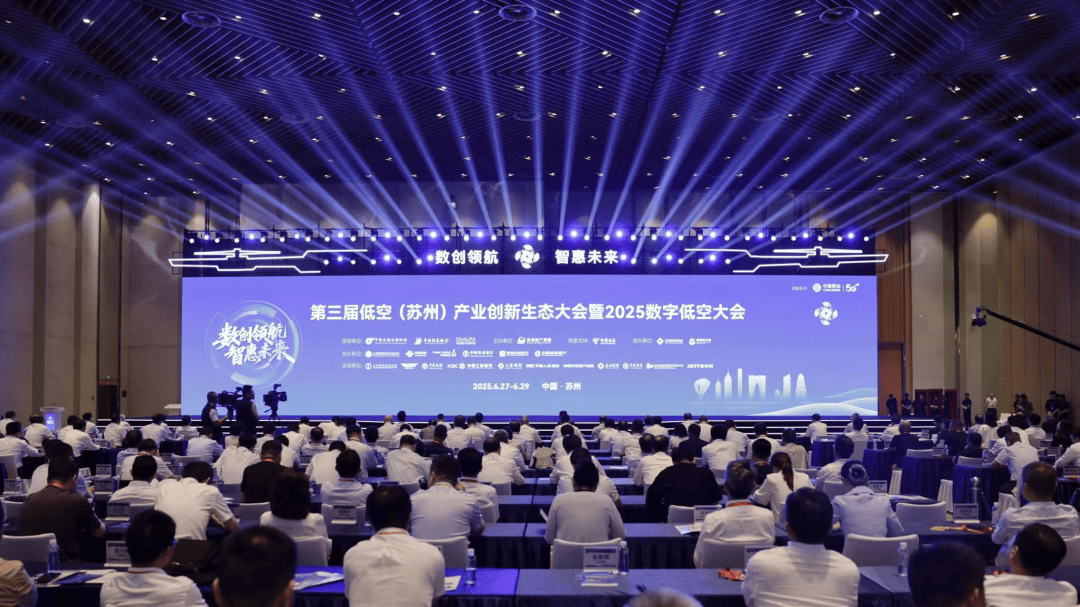
Group 1 - The third Low Altitude (Suzhou) Industry Innovation Ecological Conference and the 2025 Digital Low Altitude Conference opened in Suzhou, focusing on the forefront of digital low altitude development with over 500 participating enterprises [1] - Suzhou is actively seizing opportunities in the low altitude economy, adhering to a development approach that emphasizes "rules first, scenario-driven, market-oriented, technological support, and safety first," aiming to create a national low altitude economic demonstration zone [3] - Since the second low altitude conference in 2024, Suzhou has signed 88 low altitude projects with a total investment exceeding 230 billion yuan, and at the current conference, 45 low altitude projects were signed with a total investment exceeding 5 billion yuan [3] Group 2 - The conference awarded the title of "Suzhou Low Altitude Economic Leading Enterprise" to 21 companies, including Zhangjiagang Bairui Kun Aviation Materials Technology Co., Ltd. and Suzhou Tianmou Aviation Technology Co., Ltd. [3] - Suzhou has gathered over 500 enterprises related to the low altitude economic industry chain, with more than 40 complete machine enterprises and an output value exceeding 40 billion yuan [3] - The city has established over 140 take-off and landing points and provides one-stop services for low altitude economic development through the operation of the Suzhou Low Altitude Service Supervision Platform and the Low Altitude Flight Administrative Service Center [3] Group 3 - The conference also included the awarding of the Suzhou Low Altitude Economic Technology Innovation Center, the release of the latest reports and standards in the low altitude field, and the introduction of low altitude insurance service products and low altitude flight products [4] - New platforms were launched, including a low altitude monitoring and countermeasure application platform, a full lifecycle management platform for low altitude infrastructure, and a low altitude economic industry service platform [4]
迎风而上打造“低空之城”
Su Zhou Ri Bao· 2025-06-28 00:48
Core Insights - The third Low Altitude (Suzhou) Industry Innovation Ecological Conference and the 2025 Digital Low Altitude Conference was held in Suzhou, showcasing the city's efforts to build a national low-altitude economic demonstration zone [1] Industry Development - Suzhou has gathered over 30 complete machine manufacturing enterprises and more than 350 supporting companies in the low-altitude industry, indicating rapid development and competitive dynamics across different sectors [2][3] - The establishment of the Huqiao Low Altitude Economic Industrial Park has seen the number of enterprises grow to 30, with key players like Aerospace Times Feipeng and Kunshan Kunpeng Drone Technology leading the sector [3] Infrastructure and Services - The Suzhou Low Altitude Flight Service Center and the Suzhou Low Altitude Service Supervision Platform have been established to enhance service and safety in the rapidly growing low-altitude economy [4][5] - The service center has facilitated the approval of 63 airspace blocks, expanding the area from 1,150 square kilometers to 2,442.38 square kilometers, and registered 67 operating enterprises [4] Data Management and Safety - The platform provides efficient monitoring and management tools, continuously evolving to meet the needs of enterprises, including the introduction of grid code capabilities for enhanced airspace management [5] - The city is working to integrate flight data from various enterprises to improve the overall safety and efficiency of low-altitude operations [6] Future Plans - Suzhou aims to establish a high-standard low-altitude flight guarantee system, leveraging its strengths in digital economy, IoT, and AI technologies to further develop the low-altitude industry [6]
第三届低空(苏州)产业创新生态大会融合产品展示、研讨会等 设置五大展区
Su Zhou Ri Bao· 2025-06-27 00:51
Group 1 - The third Low Altitude (Suzhou) Industry Innovation Ecological Conference and 2025 Digital Low Altitude Conference will be held from June 27 to 29 at the Suzhou International Expo Center, featuring nearly 400 participating units covering the entire low-altitude economy industry chain [1] - The conference theme is "Digital Innovation Leading the Way, Intelligent Benefits for the Future," guided by several associations and hosted by Suzhou Aviation Industry Group [1] - Five exhibition areas will be set up, including low-altitude industry collaborative innovation, low-altitude manufacturing and supporting, digital low-altitude, low-altitude cultural tourism and popular science, and low-altitude comprehensive services [1] Group 2 - During the conference, various competitions will take place, including the second helicopter pilot skills competition in East China and the first Suzhou youth drone city invitation competition [2] - A roadshow area will feature 10 industrial parks and 42 key enterprises showcasing their innovations [2] - Knowledge lectures on low-altitude development will be open to the public, along with food and cultural markets, and drone performances over Jinji Lake on the evenings of June 27 and 28 [2]