
信用评级

Search documents
国际金融市场早知道:10月27日
Xin Hua Cai Jing· 2025-10-27 00:07
Group 1 - IMF calls for ASEAN countries to strengthen macroeconomic fundamentals, reduce bureaucratic red tape, and maintain a vibrant private sector to ensure healthy credit market development [1] - The U.S. government is pushing regulatory agencies to expedite approval processes for the growing data center industry, limiting project review timelines to 60 days, down from an average wait time of over 5 years [1] - The U.S. and Vietnam have reached a reciprocal trade framework, maintaining a 20% tariff while addressing agricultural market access barriers [2] - The U.S. and Thailand have issued a joint statement maintaining a 19% tariff on Thailand, while Thailand will eliminate tariffs on approximately 99% of U.S. goods [2] Group 2 - The U.S. has signed trade and key mineral agreements with Malaysia, upgrading their relationship to a comprehensive strategic partnership, and has also signed a trade agreement with Cambodia [3] - India is reportedly very close to finalizing a free trade agreement with the U.S., with final details being adjusted [4] - Japan's Prime Minister emphasizes addressing rising prices as a priority, proposing responsible fiscal policies to support industries like AI and provide subsidies to alleviate burdens on low- and middle-income groups [4] - The European credit rating agency Scope Ratings has downgraded the U.S. credit rating to AA- due to deteriorating public finances and weakened governance standards [4] Group 3 - U.S. manufacturing, services, and composite PMIs for October have rebounded, performing better than expected [5] - The final consumer confidence index for October in the U.S. has dropped to 53.6, with the current conditions index hitting a new low since August 2022 [6] - The Eurozone's October manufacturing PMI has risen to 50, with the services sector reaching a 14-month high and the composite PMI increasing to 52.2 [7] - Japan's core CPI for September has increased by 2.9%, marking the first acceleration in four months [8]
美国评级,突遭下调!发生了什么?
新浪财经· 2025-10-26 08:04
Core Viewpoint - The report from the European credit rating agency has downgraded the U.S. sovereign credit rating from "AA" to "AA-" due to the deteriorating public financial condition and declining governance standards in the U.S. [2] Financial Condition - The U.S. public finances are worsening, characterized by persistently high fiscal deficits, rising interest expenditures, and limited budget flexibility, leading to an increasing government debt level [2] - The report predicts that without substantial reforms, the U.S. government debt-to-GDP ratio could rise to 140% by 2030, significantly higher than most sovereign nations [2] Governance Standards - The decline in governance standards is a significant reason for the rating downgrade, with concerns over the concentration of executive power and the Trump administration's disregard for court orders and congressional oversight, which increases policy unpredictability and risks of policy errors [2] - The uncertainty displayed in tariff negotiations with major trading partners exemplifies this governance issue [2] Rating Outlook - The agency has assigned a "stable" outlook for the U.S. rating, indicating that the risks of both upgrades and downgrades are balanced over the next 12 to 18 months [2] - Downside risks include the continuous rise in debt levels and a potential significant weakening of the U.S. dollar's status as a global reserve currency, which could reduce global demand for U.S. Treasury securities [2] Recent Developments - As of October 21, the total U.S. federal government debt has surpassed $38 trillion, marking a significant increase from $37 trillion just two months prior [3] - The ongoing government shutdown, which has lasted for 24 days as of October 24, could potentially reduce economic growth by 0.1 to 0.2 percentage points for each week it continues [3] Other Rating Agency Actions - Other rating agencies have also downgraded U.S. ratings this year, citing policy risks and long-term fiscal challenges [4] - Fitch Ratings downgraded the outlook for 25% of U.S. industries to "negative" due to increased uncertainty, slowing economic growth, and expectations of prolonged high interest rates [5] - Moody's downgraded the U.S. sovereign credit rating from AAA to AA1, reflecting a significant increase in government debt and interest payment ratios compared to similarly rated countries [5]


美信用危机引爆谈判场:AA-评级戳破美国神话,中美攻守悄然易位
Sou Hu Cai Jing· 2025-10-26 04:27
Core Viewpoint - The recent downgrade of the U.S. sovereign credit rating by Scope Ratings to AA- reflects growing concerns over the country's debt levels and governance issues, coinciding with ongoing U.S.-China trade negotiations in Kuala Lumpur [1][3][4]. Group 1: Credit Rating Downgrade - Scope Ratings downgraded the U.S. sovereign credit rating from its previous level to AA-, which is three levels below the highest rating [1][3]. - The U.S. national debt has surpassed $38 trillion, approaching the $40 trillion mark, leading to increased interest payment burdens due to the federal funds rate of 4%-4.25% [3]. - The downgrade is seen as a necessary response to the unsustainable debt levels and interest obligations faced by the U.S. government [3]. Group 2: Governance Crisis - The ongoing government shutdown, which has lasted over three weeks, has exacerbated the situation, with significant political divisions between the Republican and Democratic parties [4][5]. - A government that frequently shuts down struggles to maintain market trust, raising concerns among investors about potential defaults [4]. Group 3: Implications for U.S.-China Trade Negotiations - The downgrade of U.S. credit strength presents a strategic opportunity for China in the ongoing trade negotiations, as the U.S. may be more eager to reach an agreement to stabilize its situation [7]. - The shift in power dynamics, with the U.S. losing its traditional economic dominance, allows China to negotiate from a position of strength, potentially securing more favorable terms [7][9]. - Historical patterns indicate that credit rating adjustments can lead to market reactions, affecting U.S. debt yields and global confidence in dollar assets, which may influence the broader context of U.S.-China negotiations [9]. Group 4: Future Negotiation Dynamics - The balance of power at the negotiation table has shifted, with the U.S. no longer holding the same level of authority it once did, while China benefits from its stable economic governance and credit accumulation [11]. - The credit rating event may lead to significant changes in the negotiation process, requiring both parties to adapt their strategies to leverage the new dynamics effectively [11].
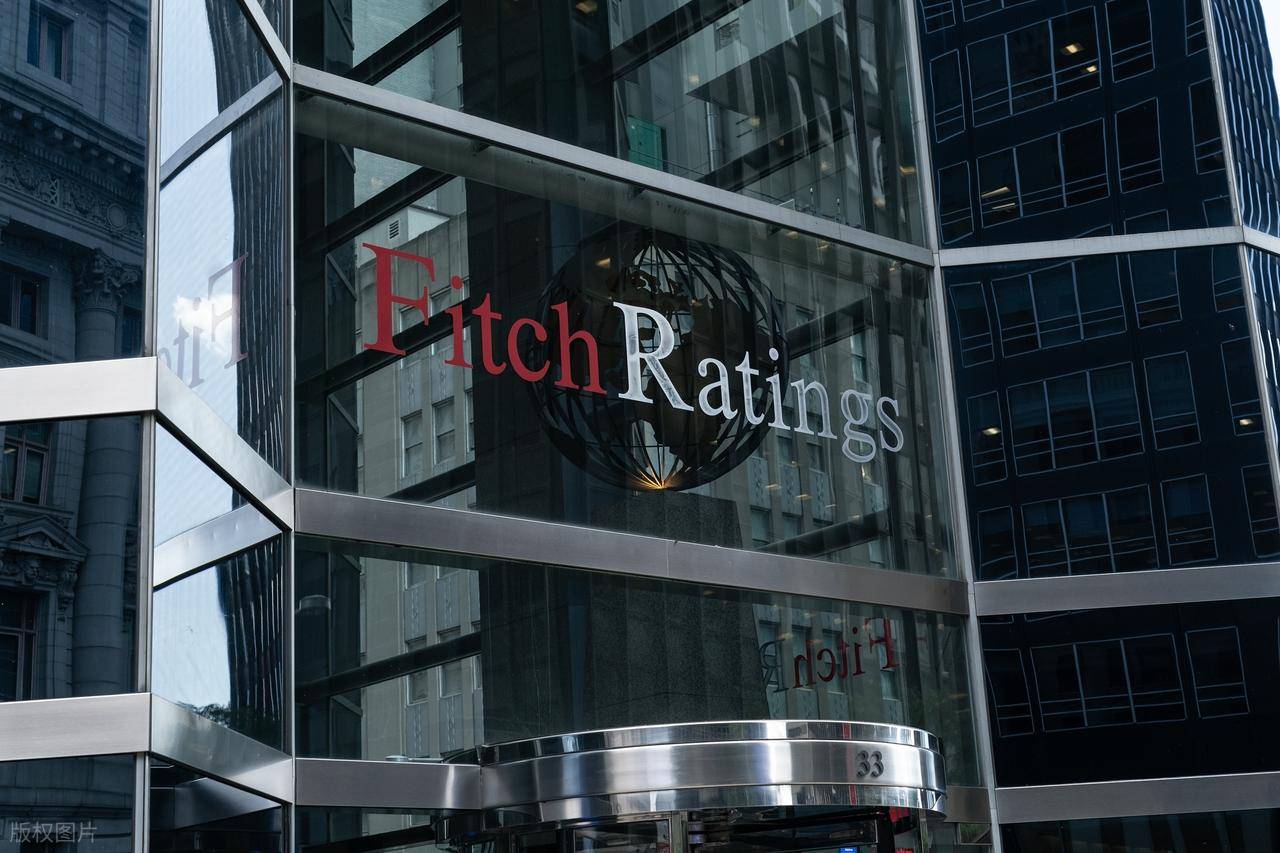
欧洲主要评级机构下调美国主权信用评级 美国多州警告:政府“停摆”可能导致饥饿问题恶化
Yang Guang Wang· 2025-10-26 01:04
Core Points - European credit rating agency Scope Ratings has downgraded the U.S. sovereign credit rating from "AA" to "AA-" due to deteriorating public finances and declining government governance standards [1] - The agency forecasts that without substantial reforms, U.S. government debt as a percentage of GDP could rise to 140% by 2030, significantly higher than most sovereign nations [1] Group 1: Public Finance - The report highlights that the U.S. public finances are deteriorating, evidenced by persistently high fiscal deficits, rising interest expenditures, and constrained budget flexibility [1] - These factors are contributing to a continuous increase in government debt levels [1] Group 2: Government Shutdown Impact - The ongoing federal government shutdown is causing delays in funding for the Supplemental Nutrition Assistance Program (SNAP), with temporary funding bills facing obstacles in Congress [1] - Food banks and anti-hunger organizations in eight U.S. states have warned that failure to distribute SNAP benefits in November could lead to a surge in food insecurity [1] - Approximately 7 million women, infants, and children depend on the Special Supplemental Nutrition Program, which is also threatened by the government shutdown [1]
美国评级,突遭下调!发生了什么?
Zheng Quan Shi Bao· 2025-10-25 15:02
Core Points - The European credit rating agency has downgraded the U.S. sovereign credit rating from "AA" to "AA-" due to deteriorating public finances and declining government governance standards [1] - The report predicts that without substantial reforms, U.S. government debt as a percentage of GDP could rise to 140% by 2030, significantly higher than most sovereign nations [1] - The agency has assigned a "stable" outlook for the U.S. rating, indicating balanced risks for upgrades and downgrades in the next 12 to 18 months [1] Financial Condition - The U.S. public finances are characterized by persistently high fiscal deficits, rising interest expenditures, and limited budget flexibility, leading to an ongoing increase in government debt levels [1] - As of October 21, the total U.S. federal government debt has surpassed $38 trillion, marking a significant increase from $37 trillion just two months prior [2] Governance Issues - The report highlights a decline in governance standards, citing the concentration of executive power and instances of the Trump administration ignoring court orders, which has increased policy unpredictability and risk of policy errors [1] - The uncertainty in tariff negotiations with major trading partners exemplifies the governance challenges faced by the U.S. [1] Rating Agency Actions - Other rating agencies have also downgraded U.S. ratings, with Fitch downgrading the outlook for 25% of U.S. industries to "negative" due to increased uncertainty and anticipated prolonged high interest rates [3] - Moody's downgraded the U.S. sovereign credit rating from AAA to AA1 earlier this year, citing rising government debt and interest payment ratios [3] Economic Impact - The ongoing government shutdown, which has lasted for 24 days as of October 24, is projected to reduce economic growth by 0.1 to 0.2 percentage points for each week it continues [2] - The shutdown has set a record for the second-longest government closure in U.S. history, further complicating the fiscal landscape [2]
美国评级突遭下调!发生了什么?
Zheng Quan Shi Bao· 2025-10-25 14:59
Core Points - The European credit rating agency has downgraded the U.S. sovereign credit rating from "AA" to "AA-" due to deteriorating public finances and declining government governance standards [1] - The report predicts that without substantial reforms, U.S. government debt as a percentage of GDP could rise to 140% by 2030, significantly higher than most sovereign nations [1] - The agency noted that the concentration of executive power and the Trump administration's disregard for court orders have increased policy unpredictability and risk of policy errors [1] - The U.S. rating outlook is "stable," with balanced risks for upgrades and downgrades in the next 12 to 18 months [1] - As of October 21, the total U.S. federal government debt has surpassed $38 trillion, marking a significant increase in a short period [2] Financial Implications - The U.S. federal government debt reached $37 trillion in mid-August, indicating rapid growth in just over two months [2] - The ongoing government shutdown, which has lasted 24 days as of October 24, could potentially reduce economic growth by 0.1 to 0.2 percentage points for each week it continues [2] - Other rating agencies, including Fitch and Moody's, have also downgraded U.S. ratings, citing increased policy risks and long-term fiscal challenges [3] - Fitch has projected that the U.S. government deficit could remain above 7% of GDP, with debt-to-GDP ratio expected to reach 135% by 2029 [3] - Moody's downgraded the U.S. rating from AAA to AA1, reflecting a significant increase in government debt and interest payment ratios compared to similarly rated countries [3] Trade and Economic Impact - The new U.S. government's imposition of tariffs on trade partners has notably hampered the domestic economy [4]
欧洲主要评级机构下调美国主权信用评级
Xin Hua Wang· 2025-10-25 13:31
新华社柏林10月25日电(记者车云龙 张毅荣)欧洲信用评级机构范围评级公司日前发布报告,将 美国主权信用评级从"AA"下调至"AA-",原因是美国公共财政状况持续恶化及政府治理标准下降。 【纠错】 【责任编辑:王雪】 该机构还表示,美国评级展望为"稳定",未来12至18个月内评级上调与下调风险总体平衡。报告强 调,下行风险包括债务水平持续上升,以及美元作为全球储备货币的地位可能明显削弱,从而导致全球 对美国国债需求下降。 范围评级公司总部设在德国柏林,2023年成为首家获得欧洲中央银行认可的欧洲信用评级机构。该 机构信用评级体系中,"AA"之上还有两个等级。 该机构表示,美国公共财政持续恶化主要表现在财政赤字持续高企、利息支出不断上升以及预算灵 活性受限。这些因素共同推动政府债务水平持续攀升。报告预计,若缺乏实质性改革,美国政府债务占 国内生产总值(GDP)比例到2030年将升至140%,远高于大多数主权国家。 报告指出,政府治理标准下降也是评级下调重要原因。该机构认为,美国行政权力日益集中,特朗 普政府多次无视法院命令、挑战司法权威、规避国会监督,降低了政策制定的可预测性和稳定性,增加 了政策失误风险。美国 ...
【环球财经】穆迪维持法国“Aa3”信用评级不变 但下调展望至负面
Xin Hua Cai Jing· 2025-10-25 10:10
Core Viewpoint - Moody's has maintained France's sovereign credit rating at "Aa3" but has downgraded the outlook from "stable" to "negative," contrasting with Fitch and S&P, which both lowered France's rating to "A+" [1] Group 1: Rating Changes - Moody's decision reflects concerns over political instability in France, which may weaken the government's ability to address significant policy challenges [1] - The rating level of "Aa3" is equivalent to "AA-" in the Fitch and S&P systems [1] Group 2: Financial Concerns - Key issues highlighted include high budget deficits, rising debt levels, and increasing financing costs, which could lead to a faster-than-expected deterioration of major fiscal indicators [1] - The report emphasizes the risk of undermining the results of previous structural reforms, particularly the important pension reform measures of 2023 [1] Group 3: Future Outlook - Moody's warns that without effective budget plans to control spending or increase revenue, France's fiscal deficit could expand further and persist for a longer duration [1] - Despite the downgrade, Moody's notes that France's financing capacity remains relatively robust compared to comparable countries like the UK, which holds an "Aa3" rating with a "stable" outlook [1]

穆迪将法国主权信用评级展望下调至“负面”
Sou Hu Cai Jing· 2025-10-25 08:49
(央视财经《天下财经》)继国际信用评级机构惠誉和标普接连下调法国主权信用评级后,当地时间24日,穆迪也宣布,由于法国存在政治不稳定风险,因 而下调该国的评级展望。 法国今年财政预算目标是把财政赤字率降低到国内生产总值的5.4%,并在2026年把财政赤字率降至5%以下。但本月早些时候标普指出,法国"公共财政的不 确定性依然很高",这可能抑制投资和私人消费,影响经济增长,进而拖累整体经济表现,标普已将法国主权信用评级从"AA-"下调至"A+",今年9月惠誉也 将法国主权信用评级下调至"A+"。 转载请注明央视财经 编辑:王一帆 穆迪24日发布声明称,将法国评级展望从"稳定"下调至"负面",将法国主权信用评级维持在"Aa3"。穆迪在声明中指出,法国政治分裂带来的风险加大,政 治不稳定可能会削弱法国政府应对关键挑战的决策能力,包括不断攀升的债务水平和持续上升的借贷成本等。 法国国家统计和经济研究所9月发布的数据显示,法国公共债务在今年二季度进一步攀升,达到约3.4万亿欧元,公共债务占国内生产总值的比例升至 115.6%。 ...

【环球财经】穆迪将法国主权信用评级展望下调至负面
Xin Hua She· 2025-10-25 03:11
Group 1 - Moody's has maintained France's sovereign credit rating at Aa3 but downgraded the outlook from "stable" to "negative" [1] - Moody's is the third major international rating agency to adjust France's sovereign credit rating, following Fitch and Standard & Poor's, which downgraded France to "A+" with a "stable" outlook [1] - The downgrade reflects concerns over weakened institutional and governance capabilities in France, as well as risks of regression in structural reforms [1] Group 2 - The French Minister of Economy and Finance, Roland Lescure, stated that Moody's decision underscores the necessity for France to reach a compromise on its budget [1] - The government aims to achieve a fiscal deficit of 5.4% of GDP by 2025 and to reduce the deficit ratio to below 3% of GDP by 2029 [1] - The IMF report indicates that without policy adjustments, France's fiscal deficit rate is expected to widen to 5.8% in 2026, further increasing to 6.2% in 2027 and 2028, and stabilizing around 6.3% in 2029 and 2030 [1]