
生命健康

Search documents
罗湖出台口岸经济高质量发展12条措施
Zheng Quan Shi Bao Wang· 2025-12-05 00:36
Core Viewpoint - The article discusses the recent release of measures aimed at promoting high-quality development of the port economy in Luohu District, focusing on leveraging the advantages of the Luohu port cluster to create a comprehensive economic zone that integrates trade, consumption, and innovation [1] Group 1: Economic Development Measures - The measures include four main directions and twelve specific initiatives to enhance trade upgrades and industrial collaboration [1] - In goods trade, the focus is on attracting high-value-added products and establishing headquarters for bulk commodity trade, along with developing cross-border e-commerce industrial parks [1] - In service trade, the initiatives target cross-border tourism, international logistics, and creative design, with plans to create digital creative art districts as service platforms [1] Group 2: Innovation and Technology - The plan emphasizes the application of new technologies and business models, particularly in the areas of "AI+" and low-altitude economy [1] - For "AI+" applications, the strategy includes promoting AI digital humans, biometric recognition services, and piloting cross-border unmanned transportation and freight [1] - The low-altitude economy will be tested at the Wenjindu port, initiating drone-based cross-border logistics delivery and exploring new models that integrate low-altitude services with cultural tourism [1]
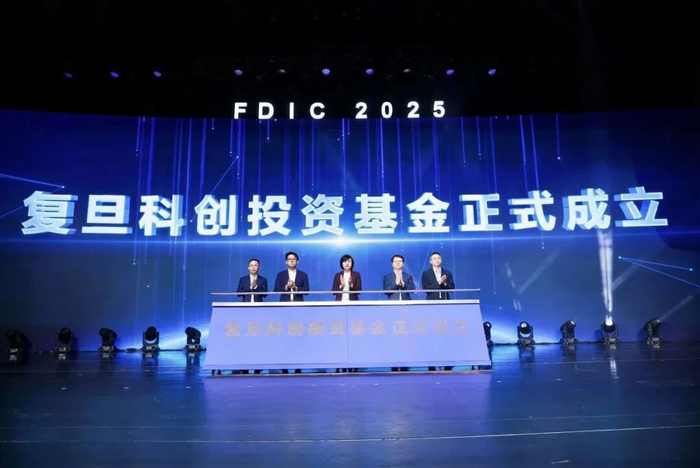
10亿元!“复旦系”基金加码科创
Shang Hai Zheng Quan Bao· 2025-12-03 11:52
Core Insights - The Fudan Science and Technology Investment Fund has been established with a total scale of 1 billion yuan, aimed at supporting the transformation of top scientific achievements by outstanding scientists within the Fudan ecosystem [1][3] - This new fund is positioned as a direct investment fund, marking a shift from "ecological building" to "frontline empowerment" in the field of technology achievement transformation [3][4] - The fund will focus on the top 5% of scientific achievements, concentrating resources on truly valuable and disruptive results [4][5] Investment Strategy - The fund will create a high-precision "Fudan Science and Technology Map" covering over 6,000 Fudan researchers, facilitating precise matching of capital with technological achievements [3][4] - It aims to invest in early-stage projects, including angel rounds, Pre-A rounds, and A rounds, particularly in the fields of life health, artificial intelligence, and new energy materials [7][9] - The fund will not only invest in Fudan's own research outcomes but also in projects from Fudan alumni and other disruptive frontier projects [4][5] Global Expansion - The Fudan Overseas Investment Fund has been launched with an initial target size of 100 million USD, aiming to attract international enterprises and talents interested in China's development [5][7] - This fund will support the internationalization of Fudan's research achievements and local innovative enterprises, enhancing China's influence in the global technology landscape [7][9] Research and Development Initiatives - The establishment of the Zuqin Innovation Transformation Research Institute aims to cultivate top entrepreneurial talents and transform leading scientific achievements [9][10] - The institute has set a "4×100" development goal for the next five years, focusing on nurturing 100 top entrepreneurial talents and transforming 100 top scientific achievements annually [9][10] - It will also build future innovation centers in areas such as quantum computing and brain-machine interfaces, and create a multi-functional support platform for technology transfer [10][11]

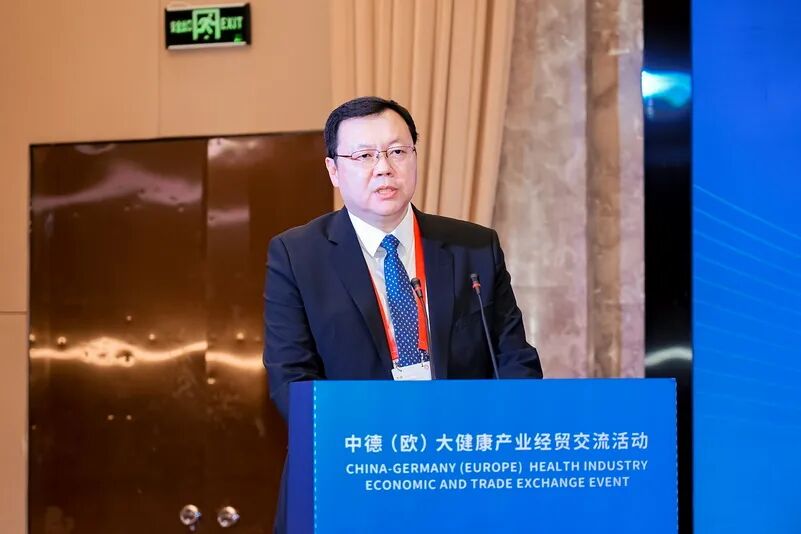
中德(欧)大健康产业经贸交流活动成功举办
Shang Wu Bu Wang Zhan· 2025-12-02 09:05
Core Insights - The event focused on enhancing practical cooperation in the health industry between China and Germany, highlighting the mutual advantages and vast cooperation potential in the sector [1][3]. Group 1: Event Overview - The China-Germany (EU) Health Industry Economic and Trade Exchange event was successfully held during the 2025 World Green Development Investment and Trade Expo in Nanchang, Jiangxi Province, with over 100 representatives from relevant industry departments and health enterprises [1]. - Key attendees included Zhang Wei, Vice Chairman of the Jiangxi Provincial People's Congress, and Hans-Peter Friedrich, former Vice President of the German Bundestag [1]. Group 2: Government and Industry Perspectives - The Chinese government emphasized its commitment to reform and opening up, stating that China remains an attractive destination for foreign investment due to its long-term economic growth and significant advantages [1]. - Friedrich highlighted Germany's strengths in the life and health sectors, while acknowledging China's vast market and robust industrial foundation, indicating ample room for collaboration [3]. Group 3: Investment Promotion and Policy Insights - During the event, the Ganjiang New Area and Nanchang High-tech Zone presented investment environment promotions, while the Jiangxi Provincial Health Commission and Medical Insurance Bureau provided policy interpretations [5]. - Industry experts and enterprises conducted specialized presentations and project roadshows to facilitate investment opportunities [5].
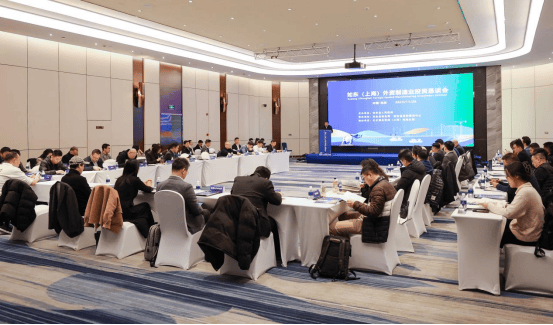
江苏如东(上海)外资制造业投资恳谈会在沪举行
Sou Hu Cai Jing· 2025-12-01 02:52
Core Insights - The Jiangsu Rudong (Shanghai) Foreign Investment Manufacturing Investment Conference was held, focusing on advanced fields such as intelligent equipment, life health, and functional foods, attracting over 50 domestic and international enterprises and institutions to explore new opportunities for industrial cooperation and development [1] Group 1: Economic Development - Rudong is strategically located at the northern wing of the Yangtze River estuary, with rich marine resources, including an 86-kilometer coastline and 4,555 square kilometers of sea area, positioning it as a potential city for maritime development [3] - The GDP of Rudong has consistently surpassed the 10 billion mark, with nearly 1,000 industrial enterprises achieving an industrial output value exceeding 220 billion [3] - The leading industries in new energy, new materials, and new equipment have surpassed 100 billion in output value, and Rudong ranks 28th among the top 100 counties (cities) in terms of basic economic competitiveness this year [3] Group 2: Industrial Cooperation - Over 50% of Rudong's investment projects originate from Shanghai, with more than 60% of enterprises closely cooperating with Shanghai, and over 70% of imports and exports relying on Shanghai ports [3] - The collaboration between Shanghai's "3+6" industrial system and Rudong's "1+3+N" system continues to expand, particularly in the life health sector [3] Group 3: Infrastructure and Innovation - Rudong Economic Development Zone, one of the first provincial-level development zones in Jiangsu, has established platforms such as semiconductor and life health industrial parks, attracting high-tech enterprises like Tokyo Semiconductor and China-US Ruikang [4] - The South Tong agricultural comprehensive development zone supports the food and health industry with specialized food parks and modern agricultural demonstration parks [4] - The conference featured a keynote speech on the development trends and innovative paths of marine food and health industries, emphasizing the integration of academia and industry [4]
十余家优质企业首批入驻!白云蓝湾生物制造创新基地正式开园
Nan Fang Nong Cun Bao· 2025-11-28 02:04
Core Points - The "Baiyun Lanwan Biomanufacturing Innovation Base" officially opened on November 27, marking a significant step in the biomanufacturing sector in the Guangdong-Hong Kong-Macao Greater Bay Area [2][12] - The base aims to create a comprehensive industrial chain covering research and development, pilot testing, production, and application, focusing on five key areas: biomedicine, life health, synthetic materials, functional foods, and ecological agriculture [3][4][16] Investment and Development - The project has a total investment of approximately 390 million yuan (about 56 million USD) and a construction area of around 85,000 square meters, including four high-standard factories and one supporting comprehensive building [14][15] - The opening ceremony saw the signing of contracts with 12 quality enterprises, including companies in biomedicine, marine technology, precision manufacturing, cosmetics, and urban consumption [21][23] Strategic Importance - The biomanufacturing sector is identified as a core area for cultivating new productive forces and is a strategic competitive high ground for the nation [9][10] - The Baiyun Lanwan Biomanufacturing Innovation Base serves as a key implementation vehicle for the "Three-Year Action Plan for Accelerating High-Quality Development of the Biomanufacturing Industry in Baiyun District" (2026-2028) [11][12] Ecosystem and Support - The base emphasizes a "business-centered" service philosophy, providing comprehensive support from hardware construction to full-cycle soft services for enterprise development [20][21] - A unique "soft service" system has been established, creating a collaborative ecosystem that includes scientific planning, precise investment attraction, financial empowerment, and open innovation [33][34] Future Prospects - Baiyun Investment Group plans to continue providing comprehensive and precise services in policy implementation, equity investment, talent introduction, market application, and resource assurance to enhance the development of the biomanufacturing sector [43][45] - The goal is to establish the Baiyun Lanwan Biomanufacturing Innovation Base as a significant biomanufacturing industrialization hub in the Greater Bay Area, contributing to the high-quality economic development of Baiyun District [45]

丹徒高新区:“五向发力”构筑核心竞争优势
Zhen Jiang Ri Bao· 2025-11-24 23:25
Group 1 - The successful convening of the 20th Central Committee's Fourth Plenary Session provides fundamental guidance for the Danju High-tech Zone to promote high-quality development on a new journey [1] - The high-tech zone will focus on "high," "new," "digital," "green," and "safe" development orientations, aiming to enhance the integration of technological and industrial innovation [1] - The strategy includes strengthening high-end equipment manufacturing and new materials as pillar industries, optimizing the life and health sector, and planning for the development of low-altitude economy future industries [1] Group 2 - The initiative aims to accelerate the modernization of industrial chains and enhance competitive advantages for high-quality development [1] - The focus is on promoting "dual high coordination" by leveraging university research resources to establish provincial-level innovation platforms and high-quality R&D institutions [1] - There will be increased support for enterprises' intelligent upgrades and digital transformations, enhancing the information, digital, and intelligent levels of infrastructure [1] Group 3 - The commitment to green development includes guiding enterprises towards low-carbon transformations and advancing the construction of zero-carbon parks and factories [2] - The goal is to significantly reduce pollutant emissions and energy consumption within the parks, gradually forming a green manufacturing system [2] - The safety production governance system will be improved, with enhanced monitoring and emergency response mechanisms in key industries [2]
武汉10家“一带一路”联合实验室、6家国际企业创新中心挂牌
Chang Jiang Ri Bao· 2025-11-21 00:21
Core Points - Wuhan has established 10 "Belt and Road" joint laboratories and 6 international enterprise innovation centers, marking a significant step in building an international open cooperation innovation network [1] - The event focused on cross-industry integration and aimed to promote technology and industrial cooperation between China and African countries, with over 200 attendees from various nations [1] - The meeting highlighted the importance of sharing information and technology between Angola and China, indicating a strengthening relationship [1] Group 1 - Wuhan has supported companies like Qingfa Hesheng in establishing 11 international enterprise innovation centers in countries such as Pakistan [2] - The city has facilitated the establishment of 15 municipal "Belt and Road" joint laboratories in Zimbabwe and Sudan through local universities and research institutions [2] - The initiative aims to integrate Wuhan's modern agriculture, optoelectronic information, and health industries into the global supply chain, expanding international market share [2] Group 2 - The Wuhan Science and Technology Innovation Bureau collected 74 technology demands from 37 African countries, emphasizing the industrial orientation of the meeting [2] - The bureau also gathered 113 technology achievements and product services from local enterprises and institutions for potential promotion in Africa [2] - New technologies and products from Wuhan's modern agriculture and optoelectronic information sectors have reached thousands of households in Africa, providing tangible benefits [2]
25个总投资65亿元产业项目签约!2025南京栖霞区金秋产业合作恳谈会举行
Yang Zi Wan Bao Wang· 2025-11-20 14:56
Core Insights - The 2025 Nanjing Qixia District Autumn Industry Cooperation Conference was held, gathering over 180 guests from various sectors to discuss collaboration and development [1][2] - This event marks the first systematic construction of a mechanism for attracting and nurturing enterprises in Qixia, aiming to enhance government-enterprise cooperation [1][2] Group 1: Investment and Economic Development - Qixia has signed 198 projects this year with a total investment exceeding 50 billion yuan [2] - The district aims to upgrade its service standards for enterprises and establish a regular communication mechanism between government and businesses [2] - The conference is intended to become an annual event, promoting deeper cooperation and investment in Qixia [2] Group 2: Recognition and Awards - Two national manufacturing champions and 15 specialized "little giant" enterprises were awarded titles for their contributions to innovation and industry [3] - A total of 25 industrial projects were successfully signed during the event, with a total investment of 6.5 billion yuan, covering emerging industries such as artificial intelligence and life sciences [3] - Five key industrial platforms were jointly launched, including a large commodity trading platform and a public service platform for AI applications [3]
淮安经开区“码上选”“现场看” 让好项目精准“安家”
Xin Hua Ri Bao· 2025-11-20 06:40
Core Insights - The introduction of the "Code-based" site selection mini-program in Huai'an Economic Development Zone significantly enhances the efficiency of industrial land selection by providing clear information about land indicators and surrounding environments [1][2]. Group 1: Innovation in Site Selection - The mini-program addresses issues of information asymmetry and transparency in land promotion, allowing for a more proactive approach to site selection [1]. - Companies can quickly filter available land parcels by scanning a QR code, accessing detailed information about land boundaries, area, planning purposes, and acquisition [2]. - The use of aerial imagery and AI views in the mini-program allows businesses to visually assess the surrounding environment, improving the overall site selection experience [2]. Group 2: Strategic Planning and Industry Development - The mini-program is based on land spatial planning and aligns with the development of key industries such as new-generation information technology, photovoltaic new energy, and automotive components [2]. - The platform promotes the use of existing land for new projects, facilitating the clustering of upstream and downstream industries, thereby creating a comprehensive industrial chain [2]. Group 3: Enhanced Service Efficiency - The mini-program features graded management of land parcels, enabling the generation of land reports and facilitating on-site selection [3]. - A total of 36 projects covering an area of 2,970 acres have successfully utilized this service, demonstrating its effectiveness in attracting significant health industry projects [3]. - Future plans include further integration of digital services and streamlined approval processes to support the development of a "3+3" industrial cluster [3].
“金钥匙”普陀开启产业转型升级 服务国家战略、推动区域协同发展 沿沪宁产业创新带动力澎湃
Jie Fang Ri Bao· 2025-11-17 01:42
Core Insights - The key term for Putuo District this year is "Yanghu-Ning Industrial Innovation Belt," which is a significant economic corridor connecting nine cities in the Yangtze River Delta region, projected to have a GDP exceeding 15.9 trillion yuan in 2024, accounting for 11.8% of the national economy [1][3] Group 1: Strategic Key - The Yanghu-Ning Industrial Innovation Belt serves as a vital artery for the national strategy of Yangtze River Delta integration, with Putuo acting as a key facilitator for innovation and collaboration [3] - Putuo District has initiated a series of industrial innovation "chain alliances" leveraging resources from major institutions along Wuning Road, enhancing the technological value of the "golden key" [3] - The establishment of the "Yangtze River Delta Isotope Technology Innovation Alliance" led by Shanghai Chemical Industry Research Institute marks a significant advancement in the biomedicine sector, breaking foreign monopolies on carbon-13 isotope technology [3] Group 2: Industrial Key - During the 14th Five-Year Plan, the four major industries of intelligent software, R&D services, technology finance, and life health have doubled their tax revenue contribution compared to the end of the 13th Five-Year Plan, yet a billion-level characteristic industrial cluster has not yet formed [5] - Putuo District has a long-standing reputation as a core area for bulk commodity trade, with its current bulk trade scale accounting for one-sixth of the city's total, and non-ferrous metals making up one-third of this trade [5] Group 3: Governance Key - The development goal is to enhance the quality of life for residents, with initiatives such as the comprehensive development of the Suzhou River and community engagement projects that allow residents to participate in local improvements [7] - The district encourages residents to undertake small community projects, fostering a sense of connection and warmth within the neighborhood, which reflects the underlying value of the "golden key" [7]