科学研究和技术服务业

Search documents
深圳市梦网低空飞行技术有限公司成立,注册资本10000万人民币
Sou Hu Cai Jing· 2025-12-25 23:24
Core Viewpoint - Shenzhen Dream Network Low-altitude Flight Technology Co., Ltd. has been established with a registered capital of 1 billion RMB, fully owned by Dream Network Cloud Technology Group Co., Ltd. [1] Company Overview - The legal representative of Shenzhen Dream Network Low-altitude Flight Technology Co., Ltd. is Chen Xin [1] - The company is classified under the scientific research and technical service industry, specifically in research and experimental development [1] - The registered address is located at Longtaili Technology Building, No. 30, Gaoxin Middle Fourth Road, Nanshan District, Shenzhen [1] Shareholding Structure - Dream Network Cloud Technology Group Co., Ltd. holds 100% of the shares in Shenzhen Dream Network Low-altitude Flight Technology Co., Ltd. [1] Business Scope - The company’s business scope includes: - Research and development of intelligent robots - Manufacturing and sales of intelligent unmanned aerial vehicles (UAVs) - Information system integration services - Development and sales of navigation terminals - Geographic remote sensing information services - Industrial automatic control system manufacturing and sales - Artificial intelligence public data platform and related services - Software development and data processing services [1]

深圳光智全谱科技有限公司成立,注册资本1000万人民币
Sou Hu Cai Jing· 2025-12-25 22:09
序号股东名称持股比例1光智科技股份有限公司100% 经营范围含一般经营项目是:集成电路芯片设计及服务;集成电路芯片及产品销售;光电子器件制造; 光电子器件销售;电力电子元器件制造;电工仪器仪表制造;仪器仪表销售;信息系统集成服务;集成 电路设计;软件开发;计算机系统服务;物联网技术服务;智能控制系统集成;数据处理服务;数据处 理和存储支持服务;网络技术服务;信息技术咨询服务;信息系统运行维护服务;半导体器件专用设备 制造;技术服务、技术开发、技术咨询、技术交流、技术转让、技术推广;货物进出口;技术进出口。 (除依法须经批准的项目外,凭营业执照依法自主开展经营活动),许可经营项目是:无 天眼查显示,近日,深圳光智全谱科技有限公司成立,法定代表人为朱世彬,注册资本1000万人民币, 由光智科技股份有限公司全资持股。 来源:市场资讯 企业名称深圳光智全谱科技有限公司法定代表人朱世彬注册资本1000万人民币国标行业科学研究和技术 服务业>研究和试验发展>工程和技术研究和试验发展地址深圳市罗湖区南湖街道嘉南社区沿河南路 1177号深港青年创新工坊225企业类型有限责任公司(非自然人投资或控股的法人独资)营业期限2025 ...

厦门海投芯智科技有限公司成立,注册资本500万人民币
Sou Hu Cai Jing· 2025-12-25 16:26
经营范围含科技推广和应用服务;人工智能公共服务平台技术咨询服务;智能机器人销售;智能机器人 的研发;工业机器人销售;工业机器人安装、维修;服务消费机器人销售;租赁服务(不含许可类租赁 服务);机械设备租赁;大数据服务;人工智能公共数据平台;工程和技术研究和试验发展;人工智能 基础资源与技术平台。(除依法须经批准的项目外,凭营业执照依法自主开展经营活动) 企业名称厦门海投芯智科技有限公司法定代表人苏堃注册资本500万人民币国标行业科学研究和技术服 务业>研究和试验发展>工程和技术研究和试验发展地址厦门市海沧区钟林路8号海投大厦2102单元之一 企业类型有限责任公司(非自然人投资或控股的法人独资)营业期限2025-12-25至无固定期限 来源:市场资讯 天眼查显示,近日,厦门海投芯智科技有限公司成立,法定代表人为苏堃,注册资本500万人民币,由 厦门海投产业投资发展有限公司全资持股。 序号股东名称持股比例1厦门海投产业投资发展有限公司100% ...
中企融资风向变了?制造业降温科技业崛起,钱流向揭示转型趋势
Sou Hu Cai Jing· 2025-12-25 06:21
Core Viewpoint - The article discusses the structural characteristics and changes in equity financing for Chinese enterprises, emphasizing its importance as a funding source for business development and reflecting capital market preferences and macroeconomic trends [1]. Financing Stage Classification and Overall Structure - Equity financing is categorized into four stages: startup, growth, expansion, and maturity, each corresponding to different financing rounds, with IPOs being the primary method of financing from 2000 to 2024 [3]. - The disclosed financing amounts for the startup, growth, expansion, and maturity stages are 229.14 billion, 4.4 trillion, 393.88 billion, and 20.7 trillion for mainland listings, respectively, with additional amounts from Hong Kong and U.S. markets totaling 670 billion [5]. Industry Distribution Differences by Stage - In the startup stage, the top three industries receiving financing are scientific research and technical services, information transmission software and IT services, and manufacturing, collectively accounting for over 70%, with scientific research leading at 37.6% [5]. - The manufacturing sector's share decreased from 52.4% in 2020 to 15.2% in 2024, while leasing and business services have seen steady growth [7]. - In the growth stage, the industry distribution remains similar to the startup phase, with manufacturing's share increasing from 16.3% to 31.9% over five years [7]. - The expansion stage shows a unique distribution, with information transmission software and IT services dominating at 45% [7]. Core Structural Features and Recent Trends - The financing structure exhibits four core features: high industry concentration with significant stage differences, pre-IPO financing heavily influenced by IPO rhythms, and a notable increase in early-stage financing since 2010 [12]. - The manufacturing sector remains dominant in post-IPO financing, consistently accounting for over 50% [9]. - Strategic emerging industries, particularly new-generation information technology, have a strong capital attraction, comprising over 60% in early financing [12]. - The support from Hong Kong and U.S. markets for light-asset enterprises has led to over 1 trillion in financing for information transmission software and IT services, surpassing mainland market levels [12]. - The financing demand for high-end manufacturing has risen significantly, indicating the sector's growth potential [13]. - Overall, the equity financing market for Chinese enterprises is maturing, providing robust financial support for high-quality economic development in China [13].


大庆鑫桥新能源科技有限公司成立,注册资本500万人民币
Sou Hu Cai Jing· 2025-12-25 03:17
天眼查显示,近日,大庆鑫桥新能源科技有限公司成立,法定代表人为谢春辉,注册资本500万人民 币,由大庆亿时项目管理有限公司全资持股。 经营范围含储能技术服务;新兴能源技术研发;企业管理;信息技术咨询服务;工程管理服务;工程和 技术研究和试验发展(除人体干细胞、基因诊断与治疗技术开发和应用,中国稀有和特有的珍贵优良品 种);技术服务、技术开发、技术咨询、技术交流、技术转让、技术推广;通用设备制造(不含特种设 备制造);新能源原动设备制造;智能控制系统集成;信息系统集成服务。 企业名称大庆鑫桥新能源科技有限公司法定代表人谢春辉注册资本500万人民币国标行业科学研究和技 术服务业>研究和试验发展>工程和技术研究和试验发展地址黑龙江省大庆市红岗区黑龙江红岗经济开 发区兴隆园区环科路南侧,东干线东侧、同北变电所北侧企业类型有限责任公司(非自然人投资或控股 的法人独资)营业期限2025-12-24至无固定期限登记机关大庆市红岗区市场监督管理局 来源:市场资讯 序号股东名称持股比例1大庆亿时项目管理有限公司100% ...
上海清能智创能源科技有限责任公司成立,注册资本5000万人民币
Sou Hu Cai Jing· 2025-12-24 07:41
天眼查显示,近日,上海清能智创能源科技有限责任公司成立,法定代表人为吴桂宣,注册资本5000万 人民币,由西藏浮云启科技有限公司全资持股。 序号股东名称持股比例1西藏浮云启科技有限公司100% 经营范围含技术服务、技术开发、技术咨询、技术交流、技术转让、技术推广;数字技术服务;工程和 技术研究和试验发展;工业互联网数据服务;互联网销售(除销售需要许可的商品);新能源汽车换电 设施销售;新能源汽车电附件销售;新能源原动设备销售;新兴能源技术研发;5G通信技术服务;租 赁服务(不含许可类租赁服务);酒店管理;企业管理;企业管理咨询;销售代理;创业空间服务;品 牌管理;健康咨询服务(不含诊疗服务);信息咨询服务(不含许可类信息咨询服务);信息技术咨询 服务;组织文化艺术交流活动;市场营销策划;日用百货销售;石油制品销售(不含危险化学品);矿 山机械销售;保健食品(预包装)销售;食品销售(仅销售预包装食品);旅游开发项目策划咨询;旅 行社服务网点旅游招徕、咨询服务;园区管理服务;专业设计服务;商务代理代办服务;科技中介服 务;物联网技术研发;科普宣传服务;大数据服务;中草药收购;地产中草药(不含中药饮片)购销; 工艺 ...
国汉华坤(大庆)新能源有限公司成立,注册资本1000万人民币
Sou Hu Cai Jing· 2025-12-24 07:41
天眼查显示,近日,国汉华坤(大庆)新能源有限公司成立,法定代表人为谭笑,注册资本1000万人民 币,由国鲲中利科技产业(重庆)有限公司全资持股。 序号股东名称持股比例1国鲲中利科技产业(重庆)有限公司100% 经营范围含新兴能源技术研发;新能源原动设备销售;电池零配件销售;技术服务、技术开发、技术咨 询、技术交流、技术转让、技术推广;企业管理咨询;社会经济咨询服务;信息咨询服务(不含许可类 信息咨询服务);企业管理;企业信用管理咨询服务;会议及展览服务(出国办展须经相关部门审 批);数据处理服务;电子产品销售;计算机软硬件及辅助设备零售;供应链管理服务;公共事业管理 服务;组织文化艺术交流活动;互联网数据服务;软件外包服务;商务代理代办服务;贸易经纪;信息 技术咨询服务;融资咨询服务;咨询策划服务;财务咨询;旅游开发项目策划咨询;接受金融机构委托 从事信息技术和流程外包服务(不含金融信息服务);租赁服务(不含许可类租赁服务);国内贸易代 理。 企业名称国汉华坤(大庆)新能源有限公司法定代表人谭笑注册资本1000万人民币国标行业科学研究和 技术服务业>研究和试验发展>工程和技术研究和试验发展地址黑龙江省大庆市龙 ...
前11个月广州经济数据出炉 广州经济韧性十足
Guang Zhou Ri Bao· 2025-12-24 01:54
Core Insights - Guangzhou's retail sales exceeded 1 trillion yuan, marking a 4.2% year-on-year growth, indicating a robust domestic market and structural optimization in the economy [2][3] - The city is experiencing a transformation in its industrial system, moving from traditional manufacturing to new energy and technology-driven sectors, with significant growth in electric vehicles and aerospace industries [5][6] Economic Performance - The total retail sales reached 10078.01 billion yuan, with essential consumer goods showing stable demand, including a 11.7% increase in grain and oil products, 12.1% in clothing, and 3.8% in daily necessities [3] - New energy vehicles saw a production increase of 22.6%, while the production of civil drones rose by 41.1% [9] Consumption Trends - Online retail sales accounted for 31.3% of total retail sales, with significant growth in e-commerce and digital consumption, driven by promotional activities [3] - Upgraded consumption categories, such as jewelry and cosmetics, reported retail growth of 10.2% and 5.8%, respectively, indicating a shift towards higher-value consumer goods [4] Industrial Transformation - Traditional manufacturing is undergoing a transformation, with the automotive sector optimizing its structure despite a slight decline in industrial value added [5] - New sectors, particularly in information technology and low-altitude economy, are experiencing rapid growth, with integrated circuit manufacturing increasing by 41.0% [6] Service Sector Growth - The modern service industry in Guangzhou saw a revenue increase of 10.2% from January to October, with significant contributions from internet and technology services [7] - The 138th Canton Fair attracted over 310,000 foreign buyers, contributing to a 12.1% year-on-year growth in foreign trade [10] Event Impact - The Fifteenth National Games are expected to generate 1 billion yuan in merchandise sales, with over 2800 licensed products launched [11] - The combined effect of major events like the Canton Fair and the National Games has enhanced the city's economic vitality, with passenger traffic reaching 3.11 billion, a 1.1% increase year-on-year [8]

天津鼎流科技有限公司成立,注册资本1000万人民币
Sou Hu Cai Jing· 2025-12-23 03:06
天眼查显示,近日,天津鼎流科技有限公司成立,法定代表人为俞浩,注册资本1000万人民币,由丰泽 弘宜(北京)科技有限公司全资持股。 来源:市场资讯 序号股东名称持股比例1丰泽弘宜(北京)科技有限公司100% 经营范围含技术服务、技术开发、技术咨询、技术交流、技术转让、技术推广;电气设备销售;机械设 备销售;计算机系统服务;自然科学研究和试验发展;工程和技术研究和试验发展;实验分析仪器销 售;试验机销售;人工智能应用软件开发;工业工程设计服务;专业设计服务;软件开发;信息系统运 行维护服务;工业自动控制系统装置销售;智能仪器仪表销售;数字技术服务;知识产权服务(专利代 理服务除外);工程管理服务;图文设计制作;对外承包工程;工程技术服务(规划管理、勘察、设 计、监理除外);物联网设备销售;数字内容制作服务(不含出版发行);规划设计管理;电子测量仪 器销售;机械设备研发;仪器仪表销售。(除依法须经批准的项目外,凭营业执照依法自主开展经营活 动)许可项目:电气安装服务。(依法须经批准的项目,经相关部门批准后方可开展经营活动,具体经 营项目以相关部门批准文件或许可证件为准) 企业名称天津鼎流科技有限公司法定代表人俞浩 ...
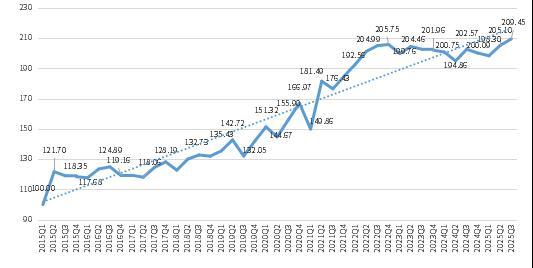
新华指数|三季度小微企业融资成本稳步下降 金融服务可得性和效率均有所提升
Xin Hua She· 2025-12-23 02:12
Core Insights - The "Inclusive Finance - Micro and Small Enterprises Index" indicates a significant decrease in financing costs for micro and small enterprises by Q3 2025, with a continuous increase in funding supply and improved accessibility and quality of financial services [1][3] - The balance of inclusive micro and small loans reached 36.09 trillion yuan, reflecting a year-on-year growth of 12.2% as of the end of September 2025 [1] - Over 70% of micro and small enterprises reported that their financing needs were met, indicating a high level of satisfaction with financing availability [1] Financing Cost and Efficiency - The financing price index decreased to 65.32 points, a decline of 4.92% from the previous period, indicating a stable reduction in comprehensive financing costs for micro and small enterprises [2] - The weighted average interest rate for newly issued loans in September was approximately 3.1%, down about 40 basis points year-on-year [2] - The financing efficiency index rose to 215.09 points, with nearly 60% of micro and small enterprises able to receive loans in a timely manner, reflecting improved financing efficiency [2] Financial Service Quality - The inclusive finance service system and capabilities are continuously improving, with a focus on enhancing coverage and accessibility while reducing overall costs [3] - The service availability index reached 203.47 points, increasing by 3.02%, and the quality index rose to 111.76 points, up by 0.31% [6] - The inclusive finance development index remained stable at 52.48 points, with the micro and small business environment showing steady improvement [7] Sector-Specific Insights - The financing price index for five major sample industries (wholesale and retail, manufacturing, leasing and business services, construction, and scientific research and technical services) showed a decline, indicating the effectiveness of the accommodative monetary policy [7] - The service availability and quality indices for these industries also increased, with construction, manufacturing, and scientific research sectors experiencing over 2% growth in availability [7] Index Overview - The Inclusive Finance - Micro and Small Enterprises Index, launched by the China Economic Information Service and China Construction Bank, serves as a "barometer" and "guideline" for inclusive financial services to micro and small enterprises [8]