
批发和零售业

Search documents
适用重规范 ▏研发费用加计扣除四大误区与解析
蓝色柳林财税室· 2026-03-07 14:43
Core Viewpoint - The article discusses common misconceptions regarding the R&D expense super deduction policy, which is a significant initiative by the government to support technological innovation. Group 1: Misconceptions - Misconception 1: Real estate companies can enjoy the R&D expense super deduction policy. Certain industries, including real estate, are not eligible for this policy as per the classification outlined in the National Economic Industry Classification [4]. - Misconception 2: Companies conducting market research can benefit from the R&D expense super deduction policy. Activities such as routine product upgrades and market research do not qualify for this deduction [5][6]. - Misconception 3: Failed R&D activities cannot benefit from the R&D expense super deduction policy. In fact, expenses from failed R&D activities are eligible for the deduction, as the policy encourages R&D activities regardless of their outcomes [7]. - Misconception 4: Only in-house researchers' expenses can be deducted. Expenses for external researchers hired through labor contracts are also eligible for the super deduction [8].


【宏观经济】一周要闻回顾(2026年2月26日-3月3日)
乘联分会· 2026-03-03 08:38
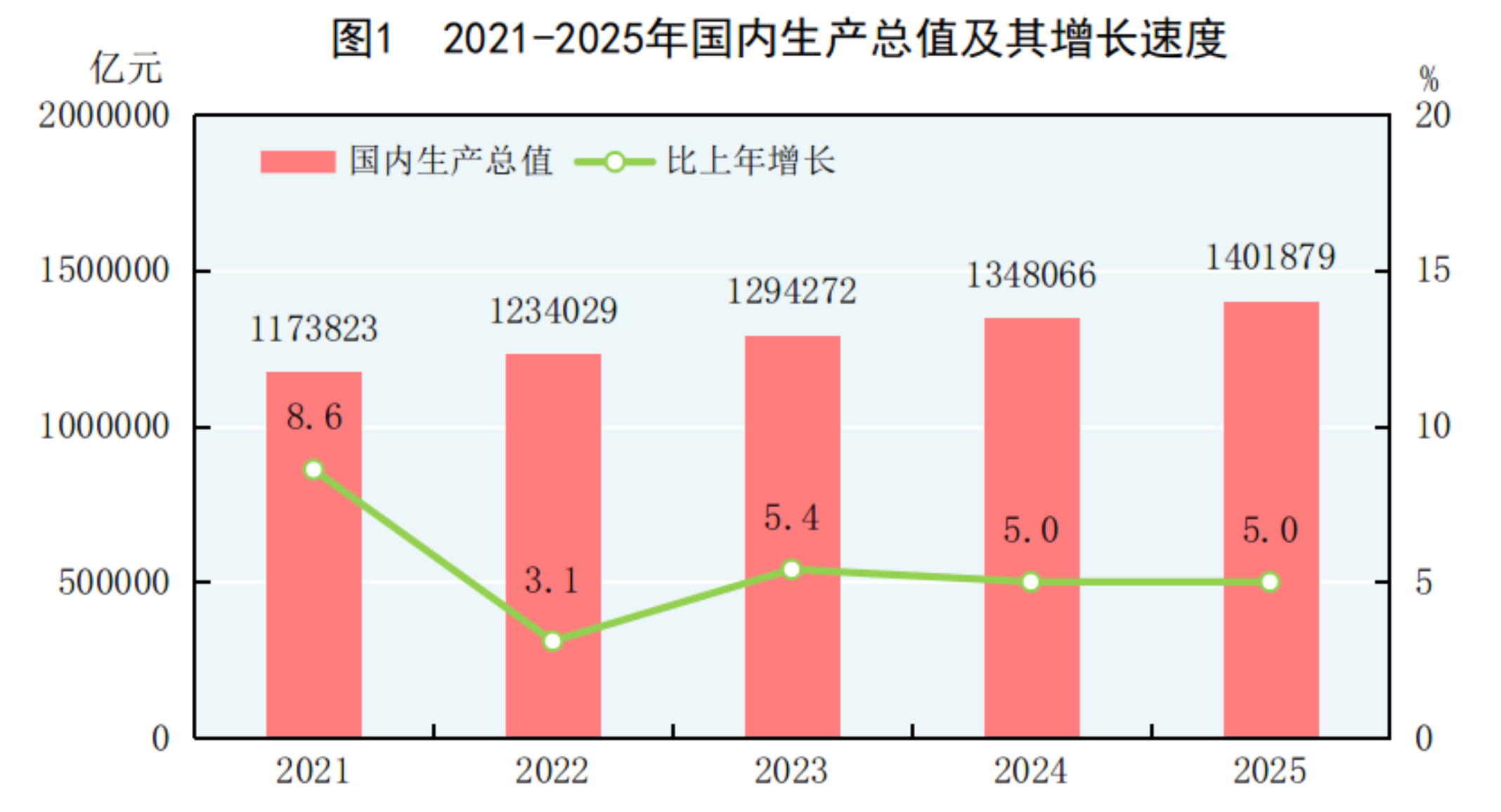
Economic Overview - In 2025, China's GDP reached 140,187.9 billion yuan, growing by 5.0% year-on-year, with the primary industry increasing by 3.9%, the secondary industry by 4.5%, and the tertiary industry by 5.4% [5] - The per capita GDP was 99,665 yuan, reflecting a 5.1% increase from the previous year [5] - The total national income was 1,393,700 million yuan, also up by 5.1% [5] Employment and Labor - The total employment reached 72,504 million, with urban employment accounting for 65.6% [6] - Urban new employment increased by 1,267 million, surpassing the previous year's figures by 110,000 [6] - The average urban survey unemployment rate was 5.2%, with a year-end rate of 5.1% [6] Industrial Growth - The total industrial output value was 416,826 billion yuan, marking a 5.8% increase [11] - The manufacturing sector saw a growth of 6.4%, with significant increases in automotive manufacturing (11.5%) and electrical machinery (9.2%) [12] - Profits from industrial enterprises reached 73,982 billion yuan, a slight increase of 0.6% [13] Agricultural Production - Total grain production was 714.88 million tons, an increase of 1.2% year-on-year [10] - The production of cotton rose by 7.7%, while oilseed production increased by 2.9% [10] Trade and Investment - The total import and export value was 454,685 billion yuan, growing by 3.8%, with exports increasing by 6.1% [20] - In January 2026, foreign direct investment amounted to 920.1 billion yuan, with a 25.5% increase in newly established foreign-invested enterprises [42] - The manufacturing sector attracted 260.9 billion yuan in foreign investment, while the service sector received 640.4 billion yuan [43] Consumer Market - The total retail sales of consumer goods reached 501,202 billion yuan, growing by 3.7% [16] - Online retail sales accounted for 26.1% of total retail sales, amounting to 130,923 billion yuan, a 5.2% increase [18] Financial Sector - The broad money supply (M2) increased by 8.5% to 340.3 trillion yuan [22] - The total social financing scale increased by 35.6 trillion yuan, with a year-end stock of 442.1 trillion yuan [22] Technological Development - R&D expenditure reached 39,262 billion yuan, growing by 8.1% [29] - The number of patents granted was 972,000, although this represented a 7.0% decrease from the previous year [29] Environmental Progress - Carbon emissions per unit of GDP decreased by 5.0% [9] - Clean energy generation increased by 14.4%, with significant growth in solar and wind energy [9]

中华人民共和国2025年国民经济和社会发展统计公报
Guo Jia Tong Ji Ju· 2026-02-28 01:33
Economic Overview - The GDP for the year reached 140,187.9 billion yuan, growing by 5.0% compared to the previous year [3] - The primary industry added value was 93,347 billion yuan (3.9% growth), the secondary industry was 499,653 billion yuan (4.5% growth), and the tertiary industry was 808,879 billion yuan (5.4% growth) [3] - The per capita GDP was 99,665 yuan, reflecting a 5.1% increase year-on-year [3] Population and Employment - The total population at the end of the year was 1,404.89 million, a decrease of 3.39 million from the previous year [9] - The urban population was 953.80 million, accounting for 67.9% of the total population [7] - The total employment reached 72.50 million, with an urban employment rate of 65.6% [8] Industrial Performance - The total industrial added value was 416,826 billion yuan, marking a 5.8% increase [24] - The manufacturing sector saw a growth of 6.4%, with significant increases in automotive manufacturing (11.5%) and high-tech manufacturing (9.4%) [26][31] - The profits of industrial enterprises reached 73,982 billion yuan, a 0.6% increase year-on-year [31] Agricultural Output - The total grain output was 714.88 million tons, an increase of 1.2% from the previous year [21] - The production of pork was 59.38 million tons, reflecting a growth of 4.1% [23] Service Sector Growth - The value added by the wholesale and retail sector was 145,808 billion yuan, growing by 5.0% [36] - The information transmission, software, and IT services sector grew by 11.1% [36] Trade and Investment - The total import and export value reached 454,685 billion yuan, with exports growing by 6.1% and imports by 0.5% [60] - Foreign direct investment amounted to 747.7 billion yuan, a decrease of 9.5% [69] Financial Sector - The broad money supply (M2) increased by 8.5% to 340.3 trillion yuan [76] - The total social financing scale increased by 35.6 trillion yuan, with a year-end balance of 442.1 trillion yuan [77]
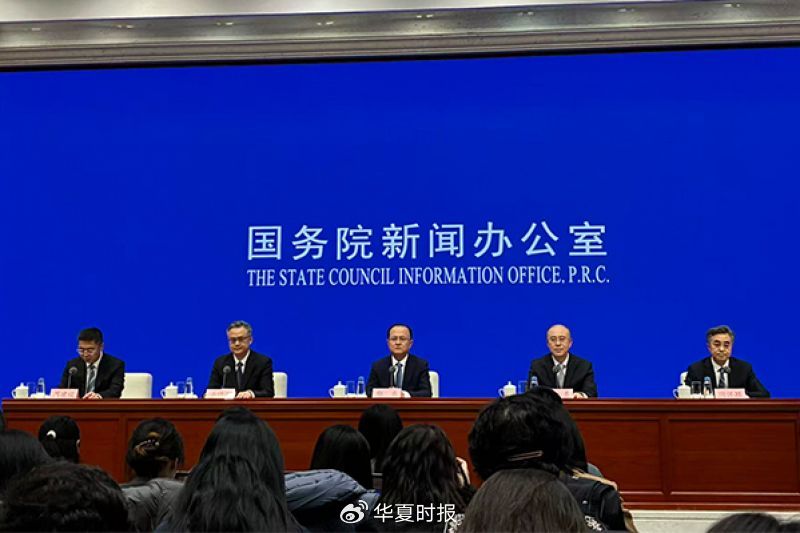
国新办:2025年国务院各部门共采纳代表委员意见建议4900余条
Xin Lang Cai Jing· 2026-02-28 01:20
Group 1 - In 2025, the State Council departments handled a total of 8,754 suggestions from the National People's Congress (NPC) and 4,868 proposals from the Chinese People's Political Consultative Conference (CPPCC), achieving completion rates of 95.6% and 97.3% respectively [2][6] - Over 4,900 opinions and suggestions from representatives were adopted, leading to the introduction of more than 2,200 related policy measures aimed at optimizing national development strategies and enhancing the modern industrial system [2][6] Group 2 - The Ministry of Commerce completed 1,020 suggestions and proposals in 2025, including 584 suggestions and 436 proposals, while also addressing 27 key NPC suggestions and 28 key CPPCC proposals [3][7] - The total retail sales of consumer goods in China exceeded 50 trillion yuan for the first time, with the "old-for-new" consumption initiative generating sales of 2.61 trillion yuan, benefiting 366 million people [3][7] - The added value of the wholesale and retail industry reached 14.6 trillion yuan, accounting for 10.4% of GDP, both figures marking historical highs [3][7] Group 3 - The Ministry of Science and Technology received 176 suggestions and proposals related to the transformation of scientific and technological achievements, focusing on enhancing the role of enterprises in innovation and improving the mechanisms for technology transfer [3][7] - In 2025, 525 Chinese mainland enterprises entered the global top 2,000 in industrial R&D investment, representing 26.3% of the total, an increase of 4.9 percentage points from 2020, with the average R&D investment intensity rising from 3.3% to 4.0% [3][7]
商务部:去年全国社会消费品零售总额首次突破50万亿元
Guang Zhou Ri Bao· 2026-02-27 09:35
Group 1: Economic Growth and Consumption - The contribution rate of consumption to economic growth has reached 52%, an increase of 5 percentage points from the previous year [1] - By 2025, the total retail sales of consumer goods in China is expected to exceed 50 trillion yuan for the first time, with the old-for-new consumption policy driving sales of 2.61 trillion yuan, benefiting 366 million people [1] Group 2: Service Consumption Expansion - The Ministry of Commerce is implementing policies to expand service consumption, including high-quality measures for service consumption and home service upgrades, with a target of a 5.5% year-on-year growth in national service retail sales by 2025 [2] - Retail sales in sectors such as cultural and recreational services, tourism consulting, and transportation are projected to achieve double-digit growth [2] Group 3: New Consumption Models - The Ministry of Commerce is promoting new consumption models and digital consumption, with online retail sales expected to grow by 8.6% by 2025, and retail sales of new energy passenger vehicles projected to increase by 17.6% [2] - The market penetration rate for new energy passenger vehicles is anticipated to reach 53.9% [2] Group 4: Improvement of Distribution System - The Ministry of Commerce has supported 40 cities in modern commercial circulation system construction, aiming for comprehensive coverage of commercial outlets in rural areas, with rural e-commerce expected to achieve high-quality development [2] - By 2025, the added value of wholesale and retail industries is projected to reach 14.6 trillion yuan, accounting for 10.4% of GDP, both historical highs [2] Group 5: Future Initiatives - The Ministry of Commerce plans to implement a dual-driven approach of "policy + activities" to further boost consumption and promote the "Buy in China" brand, aiming to build a strong domestic market [3]
2025年山东服务业实现增加值55881亿元,同比增长6.1%
Feng Huang Wang Cai Jing· 2026-02-14 00:08
Core Insights - The service industry in Shandong Province has shown significant growth and stability in 2025, contributing to the overall economic development of the region [1] Group 1: Service Industry Performance - In 2025, the service industry achieved a value-added output of 55,881 billion yuan, with a year-on-year growth of 6.1%, marking a 0.5 percentage point increase from the previous year [1] - The contribution rate of the service industry's value-added output to the provincial economic growth reached 59.1%, driving a 3.2 percentage point increase in overall economic growth [1] - The proportion of the service industry's value-added output in the Gross Domestic Product (GDP) reached 54.1%, an increase of 0.8 percentage points from the previous year, indicating a more balanced and coordinated industrial structure [1] Group 2: Traditional Service Sector - Traditional service sectors such as wholesale and retail, transportation and storage, and accommodation and catering achieved value-added growth rates of 7.0%, 7.0%, and 6.0% respectively, collectively contributing 1.4 percentage points to economic growth [2] - Innovations in traditional services, such as the upgrade of smart terminal facilities at Qingdao Port, have significantly improved operational efficiency, showcasing the sector's quality enhancement [2] Group 3: Emerging Service Sectors - New economic sectors are accelerating transformation, with significant growth in information transmission, software and IT services, leasing and business services, and finance, which saw value-added growth rates of 8.1%, 9.9%, and 5.7% respectively, contributing 0.8 percentage points to economic growth [3] - The revenue of artificial intelligence companies in Shandong maintained over 30% growth, with core industry revenue exceeding 120 billion yuan, highlighting the deep integration of the digital economy with the service sector [3] Group 4: Business Environment and Outlook - The service industry’s business climate index remained in a "relatively prosperous" range throughout 2025, indicating stable operational conditions and growing confidence in market prospects [3] - By the end of 2025, the number of large-scale service enterprises in Shandong reached 17,000, reflecting a net increase of over 1,000 from the previous year, demonstrating strong market vitality and resilience [3]
内蒙古“四上”单位 突破1.5万个
Xin Lang Cai Jing· 2026-02-08 19:33
Core Insights - The number of "Four Above" units in Inner Mongolia is projected to reach 15,098 by the end of 2025, representing an increase of 1,102 units or a growth rate of 7.9% compared to the previous year [1] Summary by Category - **Wholesale and Retail Units**: There are 4,362 units in the wholesale and retail sector, which is an increase of 469 units, reflecting a growth of 12.0%. This sector contributed the most to the overall growth of "Four Above" units, accounting for a 3.4 percentage point increase [1] - **Accommodation and Catering Units**: The number of accommodation and catering units reached 1,040, with an increase of 127 units, marking a growth rate of 13.9%, the highest among all categories [1] - **Service Industry Units**: There are 2,117 units in the scale of service industry (excluding trade), which increased by 116 units, showing a growth of 5.8% [1] - **Industrial Units**: The scale of industrial units stands at 4,343, with an increase of 271 units, resulting in a growth rate of 6.7% [1] - **Construction Units**: There are 1,604 qualified construction units, which increased by 112 units, reflecting a growth of 7.5% [1] - **Real Estate Development Units**: The number of real estate development units is 1,632, with a modest increase of 7 units, resulting in a growth rate of 0.4% [1]
2025年青海省民营企业蓬勃发展
Xin Lang Cai Jing· 2026-02-05 04:47
Core Insights - The development environment for private enterprises in Qinghai Province is continuously improving, driven by national policies promoting the growth of the private economy, leading to increased innovation and confidence in development [1][2] Group 1: Private Enterprise Growth - By 2025, the number of registered private enterprises in Qinghai Province reached 156,800, a year-on-year increase of 7.96%, accounting for 90.39% of the total number of enterprises in the province [1] - The number of newly established private enterprises in 2025 was 21,100, reflecting a robust year-on-year growth of 16.20%, indicating sustained vitality in the development of private enterprises [1] Group 2: Regional Concentration - The top three regions for newly established private enterprises in 2025 were Xining, Haidong, and Haixi, with 13,340, 3,349, and 1,747 new enterprises respectively, where Xining accounted for 63.09% of the total [1] - In terms of growth rate, Haidong, Yushu, and Xining led with year-on-year increases of 27.87%, 18.22%, and 16.06% respectively, showcasing significant regional clustering effects in private enterprise development [1] Group 3: Industry Structure Optimization - The newly established private enterprises in Qinghai Province in 2025 were distributed across the three industries as follows: 1,091 in primary, 4,792 in secondary, and 15,262 in tertiary industries, with year-on-year growth rates of 27.60%, 18.29%, and 14.83% respectively, highlighting rapid growth in the tertiary sector [1] - The fastest-growing sectors among newly established private enterprises included agriculture, forestry, animal husbandry, and fishery, wholesale and retail, scientific research and technical services, and information transmission, with growth rates of 28.73%, 23.29%, 21.86%, and 21.52% respectively, indicating improved alignment with resource endowments [2] Group 4: Future Directions - The market regulatory system in Qinghai Province will continue to adhere to the principle of "two unwavering commitments" and will persist in implementing policies to promote the growth and development of private enterprises, aiming to inject new momentum into the high-quality development of the provincial economy and society [2]
“十四五”时期陕西GDP年均增长5.2%
Shan Xi Ri Bao· 2026-02-05 00:50
Economic Growth - During the "14th Five-Year Plan" period, Shaanxi's GDP growth rates were 6.7% in 2021, 4.5% in 2022, 4.3% in 2023, projected to rise to 5.2% in 2024, and 5.1% in 2025, with an average annual growth rate of 5.2% over five years [1][2] Industrial Structure - The average annual growth rates for the primary, secondary, and tertiary industries were 4.4%, 3.9%, and 6.2% respectively, with the tertiary industry becoming the main driver of economic growth [2] - The structure of the three industries in GDP shifted from 7.9:42.5:49.6 in 2021 to 7.5:39.7:52.8 by 2025, indicating a significant increase in the tertiary sector's contribution [2] Emerging Industries - The postal industry in Shaanxi saw an average annual growth rate of 25.6%, while wholesale and retail industries grew by 7.6%, with retail specifically growing at 11.6% [3] - New industries such as information transmission, software, and IT services experienced an average annual growth of 8.9%, and the leasing and business services sector grew over 13.6%, increasing its GDP share from 2.8% to 4% [3]
9957.22亿!徐州发布2025年经济运行情况
Xin Hua Ri Bao· 2026-02-02 14:24
Economic Overview - In 2025, Xuzhou is projected to achieve a GDP of 995.72 billion yuan, representing a year-on-year growth of 5.8% at constant prices [1] - The primary industry is expected to contribute 79.25 billion yuan, growing by 3.0%, while the secondary industry is projected to reach 365.63 billion yuan, with a growth of 3.5%. The tertiary industry is anticipated to grow by 8.0%, reaching 550.85 billion yuan [1] Agricultural Performance - Agricultural production remains stable, with a total output value of 142.76 billion yuan, reflecting a year-on-year increase of 4.0% [1] - Total grain production is estimated at 5.04 million tons, with summer grain at 2.14 million tons and autumn grain at 2.90 million tons. Vegetable and fruit production increased by 2.7% and 6.0%, respectively [1] Industrial Growth - The industrial sector shows robust performance, with an increase in industrial added value of 6.8% year-on-year [2] - Key industries such as chemical fiber manufacturing, agricultural and sideline food processing, and electrical machinery manufacturing saw significant growth rates of 10.5%, 13.1%, and 18.6%, respectively [2] - High-tech manufacturing added value grew by 9.0%, outpacing the overall industrial growth by 2.2 percentage points [2] Service Sector Expansion - The service sector is experiencing strong growth, with a year-on-year increase of 8.0% in added value [2] - Specific sectors such as wholesale and retail, transportation and warehousing, and information technology services reported growth rates of 9.1%, 10.8%, and 16.4%, respectively [2] Consumer Market Activity - The retail market remains active, with total retail sales of consumer goods increasing by 5.5% year-on-year [3] - Key categories such as grain and oil, clothing, and communication equipment saw retail sales growth of 18.5%, 15.5%, and 11.5%, respectively [3] - Online retail sales through public networks grew by 19.3% [3] Income Trends - Resident income continues to rise, with per capita disposable income reaching 42,230 yuan, a growth of 4.9% [2] - Urban residents' income is 48,978 yuan (4.3% growth), while rural residents' income is 30,639 yuan (5.6% growth) [2] Investment Landscape - Fixed asset investment is projected to decline by 11.9% year-on-year in 2025, with the primary industry down by 27.4%, secondary industry down by 11.5%, and tertiary industry down by 11.9% [3] - However, investments in key sectors such as textiles, automotive manufacturing, and furniture manufacturing are expected to grow by 36.5%, 18.4%, and 9.5%, respectively [3] Future Outlook - Xuzhou aims to maintain economic stability and growth momentum, focusing on practical measures to ensure a strong start for the 14th Five-Year Plan [4]