
铁矿石

Search documents
澳大利亚对中国稀土开首枪,中方叫停交易,订单清零,澳总理急了
Sou Hu Cai Jing· 2025-10-03 09:59
Core Viewpoint - The recent suspension of iron ore purchases by China from BHP, a major Australian mining company, signals a significant shift in the trade dynamics between China and Australia, primarily driven by long-standing geopolitical tensions and market conditions [3][14]. Group 1: Trade Dynamics - On September 30, China Mineral Resources Group announced a halt to all dollar-denominated iron ore purchases from BHP, causing a ripple effect in the global mining market [3]. - Following the announcement, Singapore iron ore futures rose by 1.8%, while BHP's stock plummeted by 6%, resulting in a market value loss exceeding $10 billion [5]. - Australia relies heavily on China for its iron ore exports, with 85% of its iron ore exports going to China, leading to a projected 1.2% impact on its GDP [7]. Group 2: Strategic Miscalculations - Australia has been making strategic moves in the rare earth sector, including hiring Chinese experts at significantly higher salaries and initiating rare earth production in Malaysia [10]. - Despite Western media celebrating these developments, the actual production capacity of Lynas, the Australian rare earth company, is minimal compared to China's output [12]. - Australia's government has joined the "Critical Minerals Alliance" led by the U.S., which has further strained relations with China [14]. Group 3: Market Factors - The global iron ore market has seen a shift in supply and demand, with China's demand growth slowing while Australian exports continue to rise, leading to oversupply and falling prices [18]. - BHP's insistence on a 15% price increase has been deemed unreasonable by Chinese steel companies, prompting the halt in purchases as a means to negotiate better pricing [20]. Group 4: Currency Influence - The use of U.S. dollars in iron ore trade has exposed China to exchange rate risks and dependence on dollar dominance [22]. - The suspension of purchases is seen as a move towards promoting the internationalization of the Chinese yuan, with BHP's remaining transactions needing to be settled in yuan [24]. Group 5: Economic Implications - The halt in orders has placed Australian mining companies under significant pressure, as iron ore constitutes 62% of Australia's exports to China [26]. - Australia faces challenges in finding alternative markets for its iron ore, as other countries have limited demand and high transportation costs [26]. - In contrast, China is strengthening its strategic position in both rare earth and iron ore sectors through resource control and new projects, such as the Simandou iron ore project in Guinea [28].




中国停购澳大利亚铁矿石,澳大利亚已被拿捏,澳总理求助无门
Sou Hu Cai Jing· 2025-10-03 00:23
Core Insights - The Chinese Mineral Resources Group has mandated a halt on purchasing Australian BHP iron ore priced in USD, impacting a significant trade channel between Australia and China [1][3] - This trade dispute stems from failed negotiations over iron ore pricing for the second half of 2025, with BHP maintaining high prices that China found unacceptable [3] - China's actions are not a blanket ban but a targeted pressure tactic aimed at BHP, while allowing transactions with other Australian companies and continuing RMB-denominated trades [3][5] Group 1: Trade Dynamics - The dispute highlights a shift in the iron ore trade dynamics, with China seeking to break away from the USD pricing system and promote RMB settlements [5][7] - China's iron ore imports from Australia have decreased from 62% in 2020 to below 50% by 2025, indicating a diversification of supply sources [7][9] - The establishment of the Chinese Mineral Resources Group in 2022 has strengthened China's negotiating position by consolidating domestic demand and reducing reliance on Australian iron ore [5][7] Group 2: Market Impact - BHP's profits fell to $10.2 billion in the first half of the year, reflecting the broader trend of declining iron ore prices, which dropped by 19% compared to 2024 [5] - The Australian government acknowledges the commercial nature of the issue, indicating limited ability to intervene directly in the market [5][9] - The potential loss of the Chinese market poses a long-term challenge for Australia, as alternative buyers like India and Japan cannot compensate for the demand gap [9]

铁矿石港口现货价格指数推出
Jing Ji Ri Bao· 2025-10-02 22:16
Core Viewpoint - The Beijing Iron Ore Trading Center has launched the "Iron Ore Port Spot Price Index" to provide a timely, accurate, and transparent price reference for the iron ore market, benefiting decision-making and risk management for industry players [1][2]. Group 1: Index Introduction - The North Iron Index focuses on the port spot trading prices of mainstream medium-grade iron ore in major Chinese ports, specifically the 61% grade iron ore prices in Qingdao and Caofeidian [1]. - The index is based on actual transactions, minimizing subjective influences from human assessments, and is supported by over 600 member companies with an expected trading volume exceeding 100 million tons this year [1][2]. Group 2: Industry Impact - The index is seen as a beneficial supplement to the existing index system, promoting mutual benefits and long-term development for upstream and downstream enterprises in the industry [2]. - The steel industry is crucial for the national economy, with recent government plans aiming for an average annual growth of around 4% in the steel industry's added value from 2025 to 2026 [2]. Group 3: Market Dynamics - Steel company executives have noted that the current dollar index for iron ore pricing has limited samples and concentrated participants, making it susceptible to speculation [3]. - The North Iron Index, by focusing on the port spot market, aims to reflect real supply and demand relationships, enhancing the influence of Chinese steel mills in price formation [3].
这次真动真格了!不是传言,是实锤:对所有以美元结算的某和公司矿石船货,暂停采购!
Sou Hu Cai Jing· 2025-10-02 05:41
Core Viewpoint - The global iron ore market is undergoing a significant shift as a major resource company from a certain country has announced the suspension of all dollar-denominated iron ore shipments from an Australian company, including those already in transit, signaling a strong response to international iron ore pricing power [1][3]. Group 1: Market Dynamics - The country's iron ore import channels have diversified, with a large iron ore project in West Africa set to commence production and a Brazilian mining company signing long-term supply agreements, providing ample leverage for buyers [3]. - The suspension of purchases is a direct response to the Australian company's attempt to raise prices by 15%, emphasizing that as the largest iron ore consumer market, pricing power should not be determined unilaterally by sellers [3]. Group 2: Economic Impact - The iron ore procurement mechanism established three years ago aims to disrupt the long-standing pricing dominance of the three major international suppliers, which have historically controlled global iron ore prices [4]. - The suspension of purchases directly impacts the Australian economy, where iron ore exports account for nearly 6% of GDP, with projections indicating a potential revenue loss exceeding 10 billion Australian dollars for the next year [4]. Group 3: Strategic Implications - This action is interpreted as a strategic maneuver in a broader game, with 75% of global iron ore imports relying on this market, indicating a fundamental shift in supply-demand dynamics [6]. - The suspension serves as both a response to pricing pressures and a test of the international suppliers' limits, with the Australian companies yet to clarify whether they will adjust their pricing strategies [6].
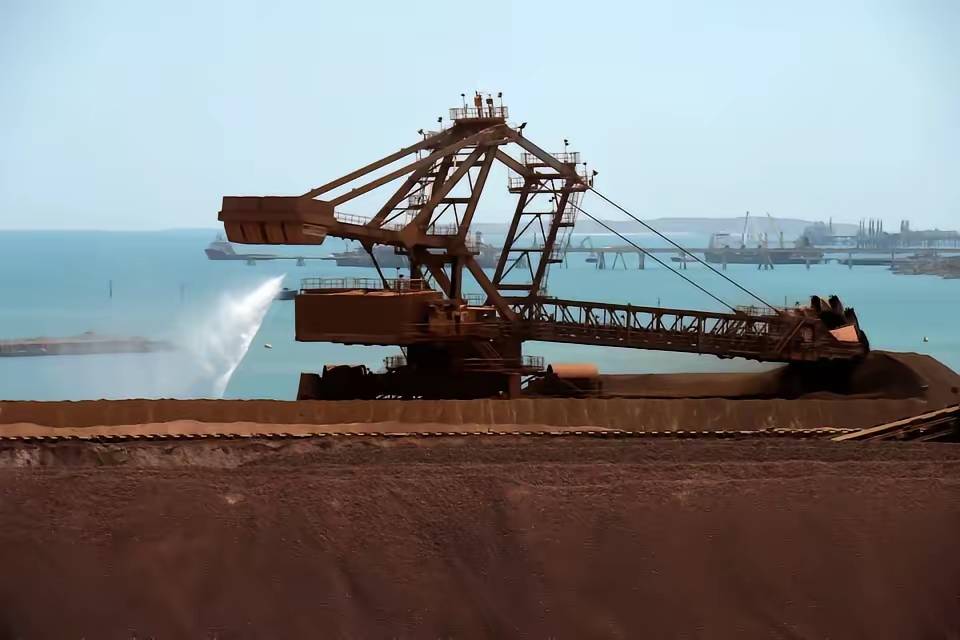
铁矿石“发烧”后遗症:钢铁行业的半年报值得期待吗?
Ge Long Hui· 2025-10-02 02:49
Core Viewpoint - The steel industry in A-shares has seen significant stock price increases, but the financial performance of most companies is declining, with only a minority showing positive earnings forecasts for the first half of 2019 [1][2]. Group 1: Market Performance - As of the report, the highest-performing steel stock in A-shares is Daye Special Steel, with a cumulative increase of over 50% year-to-date [1]. - Among the nine steel companies that have released mid-year earnings forecasts, only three are expected to report positive earnings, representing less than 40% [2]. Group 2: Cost Pressures - The steel industry is facing significant cost pressures due to soaring iron ore prices, which have increased by 83.52% since the beginning of the year [4]. - The average profit of member steel companies of the China Iron and Steel Association (CISA) dropped by 18.15% year-on-year, with total profits amounting to 855 billion yuan from January to May 2019 [6]. Group 3: Production and Demand - In June 2019, crude steel production reached 87.53 million tons, a year-on-year increase of 10%, while steel production was 107.1 million tons, up 12.6% year-on-year [6]. - The real estate sector, a major consumer of steel, saw a 10.9% year-on-year increase in development investment, totaling 61.609 billion yuan from January to June 2019 [7][8]. Group 4: Future Outlook - The steel industry is entering a demand off-season, with consumption levels decreasing compared to previous periods, but there is potential for recovery in infrastructure investment due to policy support [9]. - The iron ore market is expected to enter a bottoming phase, with supply-side reforms and environmental regulations impacting production and pricing dynamics [9].

铁矿石概念股下挫 大商所铁矿石主力合约跌超5%
Ge Long Hui· 2025-10-02 02:49
Group 1 - Iron ore concept stocks have declined significantly, with Hong Kong's iron ore stock (1029.HK) dropping nearly 5%, and A-share companies such as Jinling Mining (000655.SZ) hitting the daily limit down, while Hainan Mining (601969.SH), Hebei Xuan Engineering (000923.SZ), and Hongda Mining (600532.SH) all fell over 6% [1] - The Dalian Commodity Exchange's main iron ore contract experienced a drop of over 5%, reaching a low of 856 yuan per ton [2] - Market participants believe that as steel mill profits shrink, the demand intensity for iron ore may weaken, especially if the profits do not improve in the second half of the year [3] Group 2 - Brazilian shipments have returned to normal, and Australian shipments are expected to normalize by the end of July. Last week, the decline in iron ore inventory has slowed down, and temporary production restrictions for northern steel mills are anticipated during the National Day holiday, which may put pressure on the iron ore fundamentals [4]


铁货(1029.HK)绩后暴跌17.39%,中报预期利润亏损扩大
Ge Long Hui· 2025-10-02 02:49
Core Viewpoint - The company is expected to report an increased net loss attributable to shareholders for the first half of 2019, despite overall operational performance meeting expectations and higher EBITDA from K&S compared to the same period last year [1][2]. Financial Performance - The company anticipates a net loss of approximately $11 million related to unamortized borrowing costs associated with a loan from the Industrial and Commercial Bank of China, which will be fully written off in the first half of 2019 [2]. - The average production capacity for Q2 2019 was about 88%, with June's capacity reaching 93%, marking a monthly production record [2][6]. - The company has benefited from rising iron ore prices, with futures contracts increasing by over 80% since the beginning of the year due to supply constraints from major producers [3][7]. Operational Insights - The company operates three iron ore mines in Russia: KURANAKH, GARINSKOYS, and K&S, with K&S being the most economically viable due to its geographical advantages [4][6]. - K&S has been in commercial production since early 2019, achieving an average capacity of 70% in 2018 and reaching 93% in June 2019 [6][7]. - The completion of the Amur River Bridge is expected to reduce transportation costs by up to $5 per ton, further enhancing profitability [7]. Market Context - The Russian ruble has appreciated against the US dollar, increasing foreign exchange costs for the company, which primarily settles transactions in USD [2]. - Despite the challenges, the company is positioned to benefit from a favorable iron ore pricing environment, with expectations of sustained high prices due to tight international supply [7].
铁矿石出产大国澳大利亚警告称明年价格将下跌
Ge Long Hui· 2025-10-02 02:49
全球最大铁矿石出产国澳大利亚警告称,由于供应回升缓解了全球紧缩局面,2020年铁矿石价格将跌至 每吨60美元水平,同时提醒投资者下跌并不是立即就会发生。明年的平均价格料为每吨63美元。 ...
铁矿石概念股普跌 铁矿石期价接近跌停
Ge Long Hui· 2025-10-02 02:49
Group 1 - Iron ore concept stocks experienced a widespread decline, with Hong Kong's Iron Ore Holdings (1029.HK) dropping by 13.66% and Easy Dazhong (1733.HK) falling nearly 4% [1] - The Dalian Commodity Exchange's main iron ore contract fell nearly 5%, breaking below 700 yuan/ton, currently reported at 697 yuan/ton, marking a potential fourth consecutive day of decline [2] - Steel and iron ore port inventories increased last week, indicating weak steel demand, while Vale's largest iron ore mine resumed production, leading to seasonal increases in shipments from Australia and Brazil, easing supply constraints [4] Group 2 - The Platts iron ore index recently dropped to $108.45, reaching a one-and-a-half-month low, reflecting significant pressure on high-grade iron ore premiums [4] - Global macroeconomic sentiment has weakened, exerting considerable pressure on iron ore demand [5]
铁矿石概念股继续拉升 铁矿石期货近月合约历史突破1000元/吨关口
Ge Long Hui· 2025-10-02 02:49
Group 1 - The A-share market saw significant gains with Linggang Co., Ltd. rising by 6.52% and Jinling Mining increasing by 5.62% [1] Group 2 - Dalian Commodity Exchange's iron ore futures for the near-month contract broke the historical threshold of 1000 yuan/ton, reaching a peak of 1000.5 yuan/ton [2] - The exchange implemented measures to cool down the iron ore futures market, limiting non-futures company members or clients to a maximum daily opening position of 5000 lots for the I2105 contract starting December 14 [2] - This marks the fourth intervention by the exchange in the past seven days, reflecting the regulatory body's commitment to the stable development of the commodity [2] - According to Yong'an Futures' research report, the recent alleviation of supply pressures and stable demand, coupled with steel mills' need to replenish stocks at year-end, have contributed to the upward price movement of iron ore [2]
