直播电商

Search documents
上海直播零售规模全国城市第一 两位数增速背后有何支撑
Di Yi Cai Jing· 2025-08-23 03:01
Core Insights - Shanghai's live retail sales are projected to reach approximately 493.7 billion yuan in 2024, marking a year-on-year growth of 12.9%, ranking first among cities nationwide [1] - The Shanghai government is actively promoting the development of the live economy through initiatives such as the "Three-Year Action Plan for High-Quality Development of the Live Economy (2024-2026)" [2][4] Group 1: Industry Development - The live economy in Shanghai is supported by a robust infrastructure, including the Rongmomo Live Center, which features over 150 standard live streaming rooms serving more than 120 international mid-to-high-end brands [1][3] - The Rongmomo Digital Technology Company has developed a comprehensive service system that includes live e-commerce, content creation, short video production, and integrated marketing planning [1][3] Group 2: Technological Innovation - Rongmomo has created a proprietary live operation management system that utilizes big data and AI algorithms to enhance the precision of host training and audience analysis [3] - The monthly sales conversion rate in Rongmomo's live streaming rooms is currently between 10% and 15%, indicating effective audience engagement and sales strategies [3] Group 3: Government Initiatives - The Shanghai government aims to maintain its international leadership in the live economy, targeting a retail sales goal of 600 billion yuan by 2026 and the establishment of ten leading live streaming platforms with international competitiveness [4] - The Longjing District has launched a three-year action plan focusing on platform economy, fashion consumption, and live talent to enhance the live economy ecosystem [3][4]
上海直播零售规模全国城市第一,两位数增速背后有何支撑
Di Yi Cai Jing· 2025-08-23 02:04
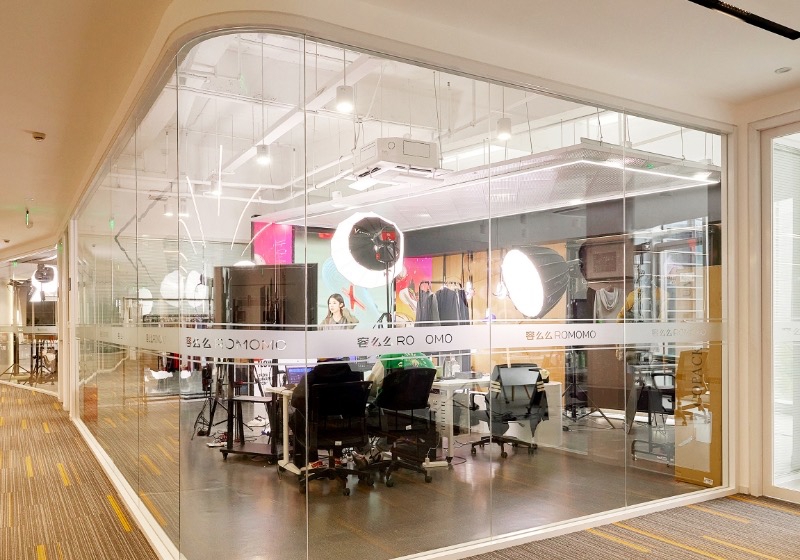
Core Insights - In 2024, Shanghai aims to establish four distinct live commerce clusters and create a total of 20 influential live e-commerce bases, leading the nation in live retail sales with an estimated revenue of approximately 493.7 billion yuan, reflecting a year-on-year growth of 12.9% [1][5] Group 1: Industry Development - The Shanghai government has launched a three-year action plan (2024-2026) to promote high-quality development in the live commerce sector, focusing on accelerating the cultivation of key players and supporting the innovation and expansion of live platforms [5][6] - The Changning District has introduced its own three-year action plan emphasizing platform economy, fashion consumption, and live talent, with the goal of maintaining Shanghai's international leadership in live commerce by 2026 [6] Group 2: Company Initiatives - Rongmomo Live Center, located in Changning District, operates 150 standard live streaming rooms for over 120 international mid-to-high-end brands, providing comprehensive live operation services [3] - Rongmomo Digital Technology Co., Ltd. has developed a full-service ecosystem covering live e-commerce, content creation, short video production, and integrated marketing, focusing on enhancing brand sales performance [3][5] - The company has trained over 300 full-time hosts through a scientific system, achieving significant sales results, such as helping a luxury bag brand reach the top of the luxury sales list during the Double Eleven shopping festival with over 100% year-on-year growth in GMV [3] Group 3: Technological Integration - Rongmomo has developed a live operation management system that utilizes big data and AI algorithms to generate key metrics for host performance and audience analysis, achieving a monthly sales conversion rate of 10% to 15% in their live rooms [5]

东方甄选2025财年净利下滑超九成
Xin Lang Cai Jing· 2025-08-22 22:12
Core Viewpoint - Oriental Selection reported a significant decline in revenue and net profit for the fiscal year ending May 31, 2025, primarily due to intensified competition in the live e-commerce sector and strategic business adjustments [2][5]. Financial Performance - Total revenue for the fiscal year 2025 was 4.392 billion RMB, a decrease of 32.7% from 6.526 billion RMB in the previous fiscal year [2][4]. - Net profit from continuing operations was 6.191 million RMB, down 97.5% from 249.1 million RMB year-on-year [2][4]. - Excluding the impact of the sale of Huixing Technology, net profit from continuing operations increased by 30% to 135.4 million RMB [5]. Business Segments - Revenue from the app increased from 900 million RMB in fiscal year 2024 to 1.1 billion RMB in fiscal year 2025 [2]. - Total revenue from continuing operations, excluding Huixing Technology, decreased by 30.9% to 4.2 billion RMB [2]. Strategic Adjustments - The company has shifted focus towards self-operated products, with total revenue from self-operated products reaching approximately 3.5 billion RMB, accounting for about 43.8% of total GMV [7]. - The product range has diversified beyond fresh food and snacks to include daily consumer goods and home products [7]. Operational Metrics - The total GMV for fiscal year 2025 was 8.7 billion RMB, with a notable increase in GMV from the app, rising from 8.4% in fiscal year 2024 to 15.7% [7]. - The number of paid subscribers for the Oriental Selection app reached 264,300, indicating a growing membership base [7]. Cost and Profitability - Total cost of revenue for continuing operations decreased by 38.2% to 3 billion RMB, primarily due to reduced inventory and logistics costs [8]. - Gross profit fell from 1.7 billion RMB in fiscal year 2024 to 1.4 billion RMB, but gross margin improved from 25.9% to 32.0% [8]. Team and Structure - As of May 31, the total number of employees in the self-operated products and live e-commerce teams was 1,401, with 1,070 full-time and 331 part-time staff [8]. Management Stability - Prior to the earnings release, there were rumors regarding the departure of former CEO Sun Dongxu, which the company denied, stating he is currently on leave and has not left the company [9].

否认年入数十亿:董宇辉与老东家发展路径现分野
Zhong Guo Jing Ying Bao· 2025-08-22 21:19
Core Viewpoint - The income disparity between Dong Yuhui and his former employer, Dongfang Zhenxuan, has sparked public debate, highlighting the contrasting business models and performance of both entities after their separation [1][2][6]. Group 1: Income and Performance - Dong Yuhui reportedly generated an income of 2 to 3 billion yuan after establishing his own company, Yuhui Hangxing, although this figure has been denied [1][2]. - Dongfang Zhenxuan's stock price increased by 357% since Dong Yuhui's departure, indicating a successful transition to a new business model focused on self-operated brands and supply chains [6]. - In the first half of the 2025 fiscal year, Dongfang Zhenxuan reported total revenue of 2.187 billion yuan, a year-on-year decline of 9.32% [6]. Group 2: Business Models - Dongfang Zhenxuan is pursuing a "de-head anchor" strategy, focusing on developing new hosts and diversifying its platform presence, while Yuhui Hangxing centers around Dong Yuhui's personal brand [6][7]. - Yuhui Hangxing has reduced traditional live-streaming frequency and is exploring cultural tourism projects and celebrity interviews as new growth engines [7][10]. - The average commission rate for live-streaming sales is estimated to be between 10% and 30%, with Yuhui Hangxing potentially operating at the lower end due to its "knowledge-driven" branding [3][4]. Group 3: Future Challenges - The transition from a "super individual" to a systematic operation poses a significant challenge for Yuhui Hangxing, as the sustainability of personal IP relies on the depth of knowledge and content quality [9][10]. - The company is actively working on incubating new hosts and establishing a matrix of accounts to mitigate market risks associated with reliance on a single personality [9][10]. - The future success of personal IP-driven models may depend on balancing content quality with commercialization, as well as integrating supply chain capabilities for long-term growth [10].
东方甄选披露董宇辉“分手费”终结版
Di Yi Cai Jing Zi Xun· 2025-08-22 16:22
2025.08.22 由于报告期间内出售与辉同行,若剔除与辉同行所产生的一次性开支及溢利,经调整净溢利由1.042亿 元同比增加30%至1.354亿元。 董宇辉的出走在业务层面也产生了影响。财报显示,该财年,东方甄选GMV由上个财年的143亿元同比 降低39.2%至87亿元。GMV降低带动自营产品存货成本与物流成本降低,使该财年总营收成本同比减少 38.2%至30亿元,同时毛利也从17亿元同比减少17%至14亿元。得益于自营产品与直播电商业务健康开 展,毛利率由25.9%提升至32%。 值得注意的是,此前支付给董宇辉的1.4亿元体现在本财年财报行政开支部分。财报显示,东方甄选 2025财年持续经营业务的行政开支由2024财年的3.956亿元增加22.5%至4.848亿元,主要由于公司在 2024年7月25日分派与辉同行所有剩余未分派溢利所致。 此前在东方甄选股东沟通会上,东方甄选行政总裁俞敏洪表示,董宇辉离职可以得到与辉同行净利润的 50%。分配后,与辉同行账面仍剩1.41亿元。彼时俞敏洪表示,剩下的1.41亿元也将分配给董宇辉,并 将在财年报告中体现出来。 本文字数:1303,阅读时长大约2分钟 作者 |第 ...

东方甄选披露董宇辉“分手费”终结版
第一财经· 2025-08-22 16:13
Core Viewpoint - The article discusses the financial performance of Dongfang Zhenxuan (1797.HK) for the fiscal year 2025, highlighting significant declines in revenue and GMV, alongside a shift towards self-operated products as a growth strategy [3][4]. Financial Performance Summary - For the fiscal year 2025, Dongfang Zhenxuan reported a net revenue of 4.4 billion RMB, a decrease of 32.7% compared to 6.5 billion RMB in the previous fiscal year [3]. - The company's GMV fell by 39.2% from 14.3 billion RMB in fiscal year 2024 to 8.7 billion RMB in fiscal year 2025 [4]. - The net profit turned positive at 0.062 billion RMB, recovering from a loss in the first half of the fiscal year, but down from a net profit of 2.491 billion RMB in fiscal year 2024 [3][4]. Cost and Margin Analysis - Total revenue costs decreased by 38.2% to 3 billion RMB, driven by lower inventory and logistics costs due to reduced GMV [4]. - Gross profit declined from 1.7 billion RMB to 1.4 billion RMB, with the gross margin improving from 25.9% to 32% due to healthy operations in self-operated products and live e-commerce [4][5]. Strategic Developments - The company emphasized the importance of self-operated products, increasing the number from 488 in fiscal year 2024 to 732 in fiscal year 2025, which is seen as a key growth driver [5]. - A new cold chain warehouse, "Dongfang Zhenxuan Central China No. 1 Warehouse," has been launched to enhance the delivery service system [5]. - Dongfang Zhenxuan has entered into a framework agreement with New Oriental, its controlling shareholder, to sell self-branded products, with historical transaction amounts increasing from 0.15 billion RMB to a projected 1 billion RMB by fiscal year 2026 [5].

东方甄选财年净利大跌97%,自营产品及直播电商收入降三成
Nan Fang Du Shi Bao· 2025-08-22 16:12
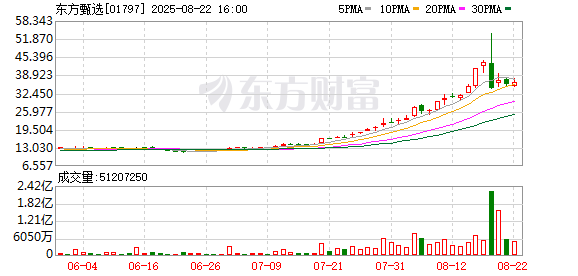
Core Insights - Oriental Selection reported a total revenue of 4.39 billion RMB for the fiscal year 2025, a decrease of 32.7% year-on-year [2] - The company achieved a net profit of 6.2 million RMB for the fiscal year 2025, marking a significant decline of 97.5% compared to the previous year's net profit of 249 million RMB [2][3] - The gross margin for the continuing operations improved from 25.9% in fiscal year 2024 to 32% in fiscal year 2025, driven by the healthy development of self-operated products and live e-commerce [2] Revenue and Profit Analysis - Total revenue for continuing operations decreased from 6.1 billion RMB in fiscal year 2024 to 4.39 billion RMB in fiscal year 2025, a decline of 30.9% when excluding the revenue from the sale of the education business [2][3] - The net profit for continuing operations, excluding the financial impact of the sale, increased by 30% to 135.4 million RMB in fiscal year 2025 [2] - The adjusted EBITDA for continuing operations was reported at 988.93 million RMB for fiscal year 2025 [3] Business Operations and Growth Drivers - The total GMV (Gross Merchandise Volume) for self-operated products and live e-commerce reached 8.7 billion RMB in fiscal year 2025, a decrease of 39.2% from 14.3 billion RMB in fiscal year 2024 [4] - The number of paid subscribers for the Oriental Selection App reached 264,300 in fiscal year 2025 [4] - The company launched 732 self-operated products in fiscal year 2025, expanding its product categories beyond fresh food and snacks to include health products, pet food, and apparel [4] Strategic Developments - Oriental Selection has launched its first self-operated cold chain warehouse, improving logistics efficiency [5] - A new annual framework agreement with New Oriental was established, allowing Oriental Selection to sell its own brand products, with a transaction cap of 100 million RMB for fiscal year 2026 [5] - Recent stock price volatility was noted, with significant fluctuations following rumors regarding executive misconduct, which were later denied by the companies involved [5][6]
东方甄选董宇辉分手费披露终结版,东方甄选GMV下滑但毛利率提升
Di Yi Cai Jing· 2025-08-22 16:04
Core Insights - Oriental Selection reported a significant decline in net revenue and GMV for the fiscal year 2025, with net revenue dropping by 32.7% to 4.4 billion RMB and GMV decreasing by 39.2% to 8.7 billion RMB [1][2] - Despite the revenue decline, the company achieved a positive net profit of 0.062 billion RMB, recovering from a loss in the first half of the fiscal year [1] - The gross margin improved from 25.9% to 32% due to a reduction in inventory and logistics costs, which fell by 38.2% to 3 billion RMB [1] Financial Performance - The continuous operating business's net revenue decreased from 6.5 billion RMB to 4.4 billion RMB, reflecting a 32.7% year-on-year decline [1] - The net profit for the fiscal year was reported at 0.062 billion RMB, a recovery from the previous year's loss, while adjusted net profit increased by 30% to 1.354 billion RMB [1] - Administrative expenses rose by 22.5% to 484.8 million RMB, primarily due to the distribution of remaining profits related to the departure of former CEO Dong Yuhui [2] Management Changes - Dong Yuhui's departure had a notable impact on the company's operations and financials, with a significant portion of the administrative expenses attributed to his severance [2] - The company clarified that former CEO Sun Dongxu is on leave and has not officially left the company, while Yu Minhong has taken over as CEO [2]
会员数量增至26.4万人!东方甄选实现扭亏为盈
Zheng Quan Shi Bao· 2025-08-22 15:41
Core Viewpoint - Oriental Selection has achieved profitability in the fiscal year 2025, with a significant increase in stock price and market capitalization, driven by its self-operated products and live e-commerce business [1][2]. Financial Performance - For the fiscal year 2025, total revenue from continuing operations reached 4.4 billion yuan, with a net profit of 6.2 million yuan, recovering from a net loss of 96.5 million yuan in the first half of the fiscal year [1]. - The net profit from continuing operations, excluding the financial impact of the sale of a subsidiary, was 135.4 million yuan, a year-on-year increase of 30% [1]. - The gross margin for continuing operations improved from 25.9% in fiscal year 2024 to 32% in fiscal year 2025, attributed to the healthy development of self-operated products and live e-commerce [1]. Business Strategy - The company focuses on a live platform centered around selecting quality products, with self-operated products as a long-term positioning strategy [2]. - The total GMV (Gross Merchandise Volume) for self-operated products and live e-commerce in fiscal year 2025 was 8.7 billion yuan, with self-operated products accounting for approximately 43.8% of total GMV [2]. - The number of paid subscribers for the Oriental Selection App reached 264,300, with a user satisfaction rate of 98.7%, marking a historical high [2]. Product Development - Oriental Selection has launched a total of 732 self-operated products in fiscal year 2025, up from 488 in fiscal year 2024, expanding its product categories beyond fresh food and snacks to include health products, pet food, and clothing [2]. - The company aims to enhance its supplier management system and establish a comprehensive quality control system covering all key aspects from raw material selection to sales [3]. Future Outlook - The company is committed to providing high-quality products and services, maintaining high standards in product selection, and continuously innovating to meet consumer expectations [3].
会员数量增至26.4万人!东方甄选实现扭亏为盈
证券时报· 2025-08-22 15:38
Core Viewpoint - Oriental Selection has successfully turned losses into profits in the fiscal year 2025, with a focus on self-operated products and live e-commerce as key growth drivers [4][5]. Financial Performance - For the fiscal year 2025, Oriental Selection reported total revenue from continuing operations of 4.4 billion yuan, achieving a net profit of 6.2 million yuan, recovering from a net loss of 96.5 million yuan in the first half of the fiscal year [4]. - The gross profit margin for continuing operations increased from 25.9% in fiscal year 2024 to 32% in fiscal year 2025, attributed to the healthy development of self-operated products and live e-commerce [4]. Growth Drivers - The total GMV (Gross Merchandise Volume) for self-operated products and live e-commerce reached 8.7 billion yuan in fiscal year 2025, with self-operated products accounting for approximately 43.8% of the total GMV [5]. - The number of paid subscribers for the Oriental Selection App reached 264,300, with a user satisfaction rate of 98.7%, marking a historical high [5][6]. Strategic Initiatives - The company plans to continue enhancing its self-operated product offerings, having launched 732 new products in fiscal year 2025, up from 488 in fiscal year 2024 [5]. - Future strategies include improving the membership system of the Oriental Selection App, expanding product offerings, and maintaining high standards in product quality control [6].