
养老服务

Search documents
记者实探:老旧小区改造惠及“一老一小”,广州这样“焕新”
Nan Fang Du Shi Bao· 2025-09-23 10:35
Core Insights - The article highlights the transformation of old residential communities in Guangzhou into community nursing homes and childcare centers, addressing the needs of the elderly and young children in urban areas [4][6][17] - The initiative is part of a broader urban renewal strategy aimed at revitalizing outdated neighborhoods while providing essential services to residents [5][17] Group 1: Community Nursing Homes - The Red Brick Community Nursing Home in Huadu offers a fully equipped living environment for elderly residents, allowing them to control various appliances through voice commands [2][10] - The cost of living in the nursing home is significantly lower than hiring private caregivers, with a monthly fee of over 5,000 yuan covering accommodation and care services [4] - The nursing home is part of a larger effort to repurpose idle public housing into community services, benefiting both social capital and local residents [4][6] Group 2: Urban Renewal Policies - Guangzhou has implemented a "1+N" policy framework for the renovation of old residential areas, focusing on what to renovate, how to do it, funding sources, and post-renovation management [5][6] - The city aims to complete renovations of all old residential areas built before 2000 by 2025, with a focus on improving infrastructure and community services [6][17] - As of August this year, Guangzhou has completed renovations in 1,233 old communities, benefiting nearly 300,000 residents [17] Group 3: Childcare Services - The Liu Rong Street Universal Nursery, created during the renovation of an old community, offers affordable childcare services tailored to the needs of working parents [15][16] - The nursery charges a maximum fee of 1,650 yuan per month, significantly lower than typical market rates, and provides flexible service options [15][16] - Community surveys indicated a strong demand for childcare services, leading to the establishment of the nursery to meet local needs [16]


14.6万余张补贴券,山东为失能老人“补”出了这些改变
Qi Lu Wan Bao Wang· 2025-09-22 14:39
Core Points - The implementation of consumption vouchers for elderly care services in Shandong province aims to alleviate the financial burden on families of moderately to severely disabled elderly individuals [1][2] - The program has led to increased participation from various elderly care institutions and organizations, viewing it as an opportunity for growth [1][6] Group 1: Voucher Distribution and Impact - As of September 19, over 146,000 consumption vouchers have been issued to eligible elderly individuals in Shandong, benefiting those in care facilities and those receiving home services [1][2] - The consumption vouchers allow families to reduce their out-of-pocket expenses significantly, with a reported monthly saving of over 700 yuan for some families [2][6] - The program has a high uptake rate among elderly individuals in care facilities, with over 70% of eligible residents in certain centers having claimed the vouchers [2][3] Group 2: Home Services and Voucher Utilization - Elderly individuals receiving home services can also benefit from consumption vouchers, which cover 40% of their self-paid costs, with a maximum monthly deduction of 500 yuan [4][5] - The process for claiming home service vouchers requires an initial assessment of the elderly individual's capabilities, which has been streamlined to facilitate access [4][5] - The introduction of these vouchers has increased awareness and demand for home services, leading to more inquiries and service requests from families [6][7] Group 3: Market Response and Future Plans - The consumption voucher initiative has prompted increased interest from families considering elderly care options, with some families making decisions to enroll their loved ones in care facilities due to the financial support [6][7] - Companies providing home services have reported a rise in clientele as families become more informed about available services through the voucher program [7] - The government plans to enhance the awareness and coverage of the elderly care service subsidy policy, ensuring more elderly individuals can benefit from these initiatives [7]
多元融合、科技赋能,银发经济挖掘“人口第二红利”
Di Yi Cai Jing· 2025-09-22 12:37
Core Viewpoint - The aging population presents both challenges and opportunities, with the development of the silver economy being a key strategy to enhance the well-being of the elderly and promote sustainable economic growth [1][8]. Policy Support - Since the 18th National Congress, China has gradually improved its policy framework to support the development of the silver economy, establishing a clear path for advancement [2]. - The "Healthy China 2030 Planning Outline" and subsequent national strategies have integrated the silver economy into health and aging policies, emphasizing the importance of a multi-level policy system [2]. - The 2024 State Council policy on the silver economy includes 26 specific measures aimed at enhancing the welfare of the elderly, marking a shift towards precise implementation [2]. Silver Economy Definition - The silver economy encompasses a wide range of economic activities related to the aging population, not limited to elder care services, but forming a complete economic system that includes production, distribution, circulation, and consumption [3]. - It consists of both established industries and emerging sectors, with significant growth in areas such as silver goods, services, finance, and real estate [3][5]. Market Dynamics - The silver economy in China has shown rapid expansion, with the overall market size exceeding 12 trillion yuan in 2023, growing at an average annual rate of over 10% from 2019 to 2023 [5]. - Key growth areas include rehabilitation medical devices, which are projected to reach a market size of 71.46 billion yuan in 2024, and the silver service industry, which saw a market size exceeding 5 trillion yuan in 2023 [5][6]. Future Trends - The silver economy is expected to evolve through "multi-dimensional integration and technological empowerment," with a focus on meeting the diverse needs of the elderly population [7]. - By 2035, the elderly population in China is projected to exceed 400 million, driving demand for high-quality products and services, particularly in the fields of rehabilitation and home care [7]. Economic Impact - The silver economy is positioned as a critical area for optimizing economic structure and fostering new growth drivers, contributing to both improved living standards for the elderly and overall economic growth [8].
剑指千亿规模!成都发布银发经济三年行动
Sou Hu Cai Jing· 2025-09-22 11:01
Core Viewpoint - Chengdu aims to enhance its silver economy through a three-year action plan (2025-2027), targeting an industry scale of over 110 billion yuan and the establishment of a national-level silver economy industrial park by 2027 [1][4][9]. Group 1: Development Goals - By 2027, the silver economy's development layout will be established, with a focus on distinctive advantages, aiming for an industry scale exceeding 110 billion yuan, the creation of a national-level high-standard silver economy industrial park, and the establishment of over 15 nationally influential silver economy enterprises [4][5][9]. - The plan includes promoting over 30 products and services into the national promotion directory [4][5]. Group 2: Development Structure - The action plan proposes a "1+3+7+N" development structure, which includes creating one national-level industrial park, three main carrying areas (Wenjiang, Jinjiang, Wuhou), and seven collaborative development areas [1][5]. - Each district will focus on specific sectors, such as Wenjiang on pharmaceutical research and intelligent manufacturing, Jinjiang on finance and cultural tourism, and Wuhou on medical and cultural resources [5][6]. Group 3: Key Areas of Focus - The plan emphasizes the development of various sectors, including: - **Elderly Care Services**: Establishing a five-level urban and three-level rural elderly care service system [7]. - **Smart Elderly Care Industry**: Promoting the development of smart wearable devices and health monitoring systems [7]. - **Rehabilitation Aids Industry**: Focusing on the development of high-end rehabilitation products [7]. - **Anti-Aging Industry**: Encouraging research and development in anti-aging technologies and products [7]. - **Elderly Biomedicine Industry**: Supporting the development of innovative drugs for age-related diseases [7]. - **Health Tourism Industry**: Creating high-end health tourism destinations [8]. - **Traditional Chinese Medicine for the Elderly**: Strengthening the development of TCM products and services tailored for the elderly [8]. Group 4: Implementation Actions - The action plan outlines several key actions, including: - **Technology Innovation Empowerment**: Establishing innovation platforms and encouraging collaboration between enterprises and research institutions [9]. - **Leading Enterprises Growth**: Building a tiered enterprise cultivation system to support the growth of silver economy enterprises [9]. - **Brand Product Cultivation**: Promoting the development of iconic silver economy products and establishing a product directory [9]. - **Creation of Specialized Parks**: Encouraging the establishment of specialized silver economy parks [9]. - **Major Project Attraction**: Aiming to implement over 60 key projects with investments exceeding 30 billion yuan by 2027 [9].
试点启动以来,山东中度以上失能老人领取养老服务消费补贴券14.6万余张
Da Zhong Ri Bao· 2025-09-22 01:05
Group 1 - The pilot program in Shandong has issued over 146,000 elderly care service consumption vouchers to moderately and severely disabled elderly individuals since its launch in August [2][3] - The consumption vouchers allow eligible elderly individuals to receive a 40% discount on their out-of-pocket expenses for care services, with a maximum monthly deduction of 800 yuan for institutional care and 500 yuan for home services [3][5] - The program has led to increased participation from various elderly care institutions and organizations, viewing it as an opportunity for service expansion and institutional development [2][7] Group 2 - The uptake of vouchers among elderly individuals residing in care institutions is notably high, with over 70% of eligible residents in certain facilities having claimed the vouchers [3][4] - The program has streamlined the assessment process for elderly individuals, eliminating the need for re-evaluation if they were assessed as moderately or severely disabled within the past year [4] - Home service vouchers have encouraged families to explore various services, such as bathing and cleaning, leading to increased awareness and utilization of these services among disabled elderly individuals [5][8] Group 3 - The consumption voucher initiative has stimulated new demand in the elderly care sector, with increased inquiries and interest from families considering institutional care for their elderly relatives [7] - Companies providing home services, such as bathing, have reported a rise in awareness and inquiries about their offerings due to the voucher program [8] - The Shandong government plans to enhance the awareness and coverage of the elderly care service consumption subsidy policy, aiming to connect more elderly individuals and families with professional care services [8]
泰康之家 滇园开业,泰康之家目前已布局全国37城46个项目
Bei Jing Shang Bao· 2025-09-21 03:37
Core Insights - The opening of the high-quality elderly care community, TaiKang ZhiJia DianYuan, marks the 27th operational community by TaiKang Insurance Group nationwide [1] - The community is located in Chenggong District, Kunming, with a construction area of approximately 96,000 square meters, providing around 1,400 elderly care units [1] - TaiKang's CEO, Chen Dongsheng, emphasized the company's focus on a collaborative development model of "payment + service + investment" to address the challenges of the aging population [1] Company Overview - TaiKang Insurance Group has established a total of 46 projects across 37 cities, with 27 communities currently in operation [1] - The company aims to reach a resident count of 20,000 by the end of this year [1] - TaiKang is exploring the "urban elderly care network" model to extend high-quality elderly services beyond flagship communities to community and home-based care [1] Community Features - TaiKang ZhiJia DianYuan offers a one-stop continuous care service system that includes independent living, assisted living, professional nursing, and memory care [1] - The community has already received nearly 700 reservations before its opening, with plans to accommodate approximately 150 residents in the first month [1] Future Plans - TaiKang plans to deepen the practice of the elderly care network model in Kunming and other locations, contributing to the development of the health industry ecosystem and industrial chain in Yunnan [1]
养老新职业守护夕阳红
Jing Ji Ri Bao· 2025-09-19 22:16
Core Viewpoint - The recognition of "elderly service specialists" as a new profession reflects the growing demand in an aging society and signals a significant transformation in China's silver economy [1][2]. Group 1: Definition and Role of Elderly Service Specialists - Elderly service specialists are defined as professionals engaged in comprehensive needs assessment, plan formulation and implementation, care technique training, quality evaluation, and service consultation in elderly care [1]. - This profession requires a combination of skills, including aging-friendly modifications, smart device operation, and rehabilitation tool adaptation, distinguishing it from traditional elderly caregivers [2]. Group 2: Economic Implications - The professional capabilities of elderly service specialists can bridge the gap between the demand and effective supply of elderly care services, addressing challenges posed by an aging population [2]. - The establishment of a qualification system for elderly service specialists is underway, aiming to create a quantifiable professional value and a predictable career development path, which could lead to a shift from labor-intensive to technology-intensive services in the silver economy [2]. Group 3: Policy and Support Measures - Multiple dimensions will be explored to integrate elderly service specialists into existing policy frameworks, ensuring that funding flows effectively from demand to talent supply [3]. - Regions that meet the standards for elderly service specialist deployment and performance evaluation will receive additional rewards on top of central subsidies, promoting the enhancement of community elderly care services [3]. - The training for elderly service specialists will be aligned with existing national standards for elderly caregivers, focusing on skills related to aging-friendly modifications and smart device operations to meet current demands [3].
新华全媒+ | 扩围升级一刻钟便民生活圈 提升家门口的幸福感
Xin Hua She· 2025-09-19 14:51
Group 1 - The core objective of the new policy is to achieve the "Hundred Cities, Ten Thousand Circles" goal by 2030, which includes establishing 100 pilot cities for the 15-minute convenient living circles and building 10,000 well-structured, diverse, and high-quality service circles [2] - The construction of convenient living circles is crucial for ensuring people's livelihoods, expanding consumption, and facilitating the national economic cycle, with a focus on community residents within a 15-minute walking radius [1][2] - As of July 2025, 6,255 convenient living circles have been established across 210 pilot areas, serving 129 million residents, but only covering 12.5% of urban communities, indicating a significant gap in meeting the public's needs [1][2] Group 2 - The policy emphasizes the importance of elderly care services within the convenient living circles, addressing the growing demand for such services due to the increasing elderly population [2] - The Ministry of Civil Affairs is actively promoting the development of community-based elderly care services, with 319,000 community elderly care institutions or facilities reported as of July this year [2][3] - The Ministry of Housing and Urban-Rural Development is guiding cities to improve elderly care facilities in new residential areas and upgrade old communities to meet the requirements of the convenient living circles [5] Group 3 - The National Health Commission plans to enhance community-based childcare services, ensuring accessibility and affordability for families with infants and toddlers [4] - The focus will be on increasing the supply of affordable childcare spaces and improving the quality of childcare services through various support measures [4] - The construction of childcare facilities will be synchronized with new residential projects, and existing urban areas will be updated to include these services [4]
日照高新区:学习养老服务经验,赋能“新”暖夕阳品牌高质量发展
Qi Lu Wan Bao Wang· 2025-09-19 12:44
Core Viewpoint - The initiative aims to enhance the quality of elderly care services and meet the diverse needs of the elderly population through a study visit to various advanced care facilities [1][3]. Group 1: Objectives and Actions - A study group led by Xu Yunjian, a senior official from the Rizhao High-tech Zone, organized a visit to learn from other districts and functional areas about elderly care services [1]. - The group visited several institutions, including Shanhai Ruiyi Nursing Center and Rizhao's "Care for You" Smart Elderly Care Comprehensive Service Center, focusing on standardized construction of elderly care services and innovative models [3]. Group 2: Future Plans - The study group expressed intentions to absorb advanced concepts and practical experiences from peer units to optimize elderly care service supply in the Rizhao High-tech Zone [3]. - There is a commitment to enhance the "New Warm Sunset" elderly care service brand and promote high-quality development of elderly care services in the region [3].
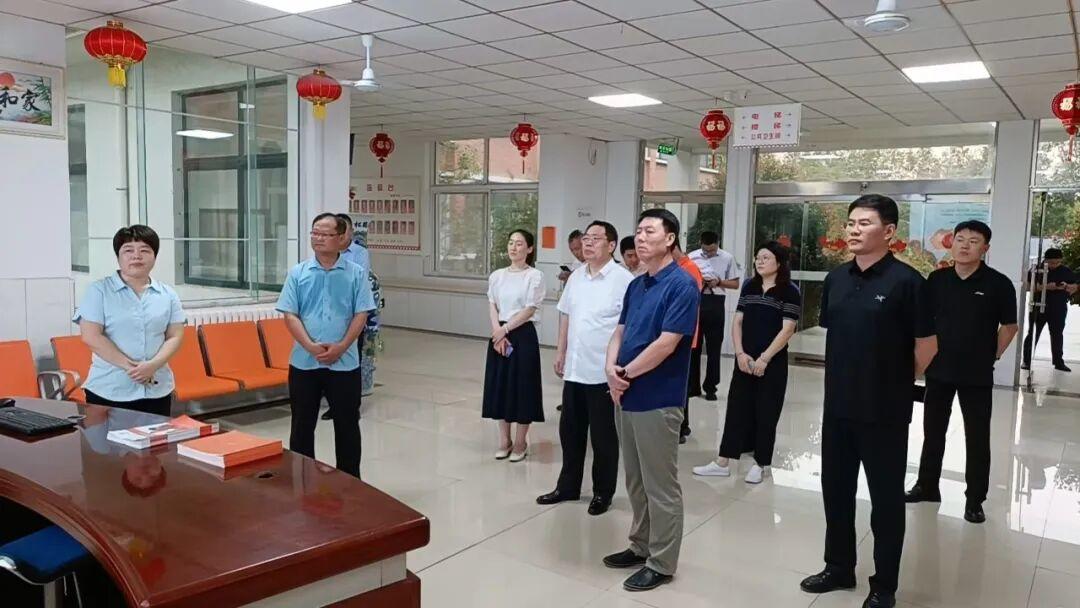
商务部召开城市一刻钟便民生活圈建设扩围升级专题新闻发布会
Shang Wu Bu Wang Zhan· 2025-09-19 09:35
Core Points - The Ministry of Commerce and nine other departments have issued a notice to promote the construction and upgrade of urban "15-minute convenience living circles" to enhance residents' daily life and consumption needs [3][4][5] - The initiative aims to create a community business circle within a 15-minute walking radius, focusing on basic and quality consumption for residents [3][4] - By July 2025, 6,255 convenience living circles have been established in 210 pilot areas, serving 129 million residents with 1.503 million commercial outlets [4] Summary by Sections Goals and Objectives - The notice sets a target for 2030 to establish 100 pilot cities for the "15-minute convenience living circle" and to build 10,000 well-structured, high-quality living circles [5][6] Key Tasks - Five main tasks are outlined: expanding coverage, optimizing facility layout, upgrading business formats, enhancing service quality, and improving management systems [6] - The initiative emphasizes the integration of various service circles, including elderly care, childcare, shopping, sports, culture, and healthcare [6] Elderly and Child Services - The policy highlights the importance of elderly services, aiming to integrate them into the convenience living circles, including the creation of "Silver Streets" for elderly services [9][10] - For children, the initiative encourages the development of child-friendly spaces and services within the community [11] Meal Assistance for the Elderly - The Ministry of Civil Affairs has been actively promoting meal assistance services for the elderly, with over 86,000 meal assistance points established nationwide [13][14] Urban Renewal and Community Development - The Ministry of Housing and Urban-Rural Development is focusing on urban renewal to address issues in old communities, with 300,000 old communities undergoing renovation to enhance living conditions [27][28] Future Plans - The Ministry of Commerce plans to continue enhancing the convenience living circles, ensuring they meet the evolving needs of residents and improve their quality of life [30][31]