医疗机器人

Search documents
议程更新!2025第三届全球手术机器人大会,观众报名火热进行中(含赠票)
机器人大讲堂· 2025-08-28 10:34
Event Overview - The 2025 Third Global Surgical Robot Conference will be held on September 5-6, 2025, in Beijing, focusing on the theme "MedRobot Next | Next Stop Technology Future" [1] - The conference will gather top experts, corporate executives, and clinicians to discuss advancements in intelligent surgical systems, ecosystem construction, and globalization paths [1] Agenda Highlights - The opening ceremony will feature speeches from key figures including Liu Hui, Director of Beijing Medical Health Technology Development Center, and Lin Hang, Deputy District Mayor of Haidian District [3] - The conference will include the announcement of global medical robot awards and the release of a new book titled "Intelligent Surgery, The Future is Here" [3] - Various sessions will cover topics such as innovation in surgical robots, orthopedic surgical robots, and the role of AI in surgical practices [4][5] Key Sessions - Notable presentations include: - "Innovation in Surgical Robots Driven by Medical Engineering" by Wang Yu, Chairman of Beijing Rosenbot Technology Co., Ltd. [4] - "Exploration of Intelligent Autonomous Execution in Orthopedic Surgical Robots" by Lu Zhentao, Deputy General Manager and CTO of Shenzhen Xinjunte [4] - "The Next Stop for Chinese Healthcare: Not Just Going Abroad" by Chris Lee, Founder of VentureBlick, discussing opportunities and challenges for Chinese medical robots in international markets [5] Audience Engagement - Attendees can register for the conference using a discount code, allowing free entry [9][11] - The event aims to foster discussions on the integration of AI in minimally invasive surgery and the digital transformation of surgical practices [8][9]

天智航: 2025年半年度报告
Zheng Quan Zhi Xing· 2025-08-27 14:06
Core Viewpoint - Beijing Tinavi Medical Technologies Co., Ltd. reported significant growth in revenue and operational metrics for the first half of 2025, indicating a strong market position in the orthopedic surgical robot industry. Company Overview and Financial Indicators - The company achieved a revenue of approximately 125.31 million yuan, representing a year-on-year increase of 114.89% [2][6] - The net profit attributable to shareholders was approximately -57.55 million yuan, with a decrease in losses of 27.96% compared to the previous year [2][6] - The total assets of the company increased by 5.35% to approximately 1.78 billion yuan [2][6] Business Model and Product Offerings - The company focuses on the development and production of orthopedic surgical robots, with its core product being the "Tianji" series of surgical robots [5][12] - The company employs a hybrid sales model combining direct sales and distribution, providing training and clinical support to medical institutions [7][12] - The company has established a comprehensive R&D system and collaborates with universities and hospitals to enhance its product offerings [14][12] Industry Context - The orthopedic surgical robot industry is experiencing rapid growth, driven by technological advancements and increasing demand for minimally invasive surgeries [8][10] - The company holds a leading market share in China, with its products being used in over 200 medical institutions and completing more than 120,000 surgeries [10][12] - The industry is characterized by high technical barriers, requiring significant R&D investment and collaboration across multiple disciplines [9][10] Innovation and R&D - The company has developed several innovative products, including the Tianji SIRUI orthopedic surgical robot, which enhances surgical precision and efficiency [13][12] - The company has a strong focus on integrating advanced technologies such as AI and multi-modal imaging into its surgical robots [17][18] - The company has filed for 412 patents, establishing a robust technological barrier in the orthopedic surgical robot field [14][12]

海拔4000米,首例机器人辅助单髁手术圆满成功
机器人大讲堂· 2025-08-26 00:00
Core Viewpoint - The article highlights the breakthrough in medical accessibility in high-altitude regions like Tibet through the application of advanced robotic surgical technology, specifically the 锟铻® orthopedic surgical robot, which has successfully performed surgeries in challenging environments [1][4][5]. Group 1: Technological Breakthroughs - The first robot-assisted unicompartmental knee surgery in Tibet was successfully completed, marking a significant milestone for county-level hospitals in the region [1][4]. - The surgical procedure was supported by the National Orthopedic and Sports Rehabilitation Clinical Medical Research Center and involved advanced technology to overcome the challenges posed by high altitude [2][4]. - The success of the surgery demonstrates China's progress in high-end medical equipment, transitioning from technology catching up to leading in specific areas [4][5]. Group 2: Medical Resource Distribution - The article discusses the stark contrast in medical resource distribution, with Tibet having only 1/5 of the medical resource density compared to eastern coastal regions, and a significantly lower rate of joint replacement surgeries [5][10]. - The introduction of the 锟铻® surgical robot aims to address the "Matthew Effect" in healthcare, where 80% of joint replacement surgeries are concentrated in major cities, leaving remote areas underserved [10][11]. - The robot's adaptability to high-altitude conditions has been validated through numerous surgeries, paving the way for broader application in the region [7][11]. Group 3: Future Implications - The integration of AI and robotic technology in surgeries is expected to enhance the quality of healthcare services in remote areas, allowing local doctors to perform complex procedures with real-time support from experts [11][13]. - The article emphasizes the potential for smart medical technology to bridge the healthcare gap, ensuring that patients in high-altitude regions receive quality medical services comparable to those in urban centers [13]. - The success of robotic surgeries in Tibet serves as a model for future healthcare initiatives, aligning with China's "Healthy China" strategy and showcasing the importance of technology in reaching underserved populations [13].
江苏发力构建智能医疗生态缓解医疗资源紧缺——手术机器人加速向县域布局
Xin Hua Ri Bao· 2025-08-24 23:12
Group 1 - The 2025 World Robot Conference concluded in Beijing, showcasing advancements in the medical robotics industry in Jiangsu, including a multi-million yuan procurement agreement between Beijing DAI Robot and Changzhou Science and Education City [1] - The launch of the Changmu Valley surgical robot aims to enhance collaboration with top-tier hospitals and promote the application of technology in grassroots healthcare facilities [1] - Jiangsu is building an intelligent medical ecosystem through government-enterprise collaboration, focusing on high-end surgeries and affordable rehabilitation solutions [1] Group 2 - Changmu Valley's ROPA orthopedic surgical robot was globally launched, achieving sub-millimeter precision in surgical control and significantly reducing surgery planning and operation times [2] - The robot addresses the supply-demand imbalance in orthopedic care, with 140 million patients and only 15,500 orthopedic doctors in China, enabling primary care physicians to replicate expert-level surgical outcomes [2] - The aging population in Jiangsu, with over 20.89 million individuals aged 60 and above, is driving demand for rehabilitation services, while there remains a significant shortage of rehabilitation therapists [2] Group 3 - Investment in medical robotics is accelerating, with Jiangsu leading in the number of financing events in the medical device sector, indicating a growing interest in the industry [3] - The medical robotics industry in Jiangsu is forming a complete chain from technology research and development to commercial transformation, exemplified by companies like Fourier Intelligence [3] - The future vision includes the integration of surgical robots in county hospitals and rehabilitation robots in home settings, creating a three-tier intelligent medical network covering hospitals, communities, and families [3]

医药板块大爆发!泓德基金操昭煦:把握创新药械出海机遇,看好医疗机器人技术突破
Sou Hu Cai Jing· 2025-08-20 10:15
Core Viewpoint - The innovative drug sector is experiencing a bullish trend, with significant stock price increases among Hong Kong-listed innovative drug companies, driven by multiple favorable factors that are pushing the industry into a new phase of high-quality development [1] Group 1: Current Market Trends - The A-share innovative drug index and the Hong Kong Hang Seng innovative drug index have both seen substantial increases this year, with several Hong Kong-listed innovative drug companies experiencing stock price gains exceeding 100% [1] - The industry is transitioning from a "burning money" phase to a profit-driven cycle, with sales costs decreasing and revenues rapidly increasing [1] - The number of approved innovative drugs in China is surging, showcasing strong competitiveness and higher research efficiency on the global stage [1] Group 2: Investment Focus - Current investments are primarily in innovative drug companies, with potential future allocations to internationalized medical device companies depending on market conditions [2] - The focus on "going global" for pharmaceutical companies is not only due to the potential of overseas markets but also as a high-level test of corporate capabilities [2] Group 3: Investment Strategies - The core logic of investing in innovative drugs does not involve deliberately selecting companies based on overseas licensing deals; rather, it relies on professional judgment and data research [3] - Medical devices are expected to recover earlier, with a focus on companies with high overseas revenue proportions and strong channels, particularly those previously affected by domestic policy changes [3][7] - The outlook for surgical and rehabilitation robots is positive, driven by technological advancements that make procedures more efficient and cost-effective [3][8] Group 4: Market Dynamics - The Chinese endoscope industry is highlighted as a vibrant global research market, with expectations for rapid internationalization in the next 3-5 years due to improved technology and collaboration [5] - The success of innovative drug companies in achieving licensing deals is seen as a validation of their research capabilities, although the primary investment approach is based on analyzing clinical data and success rates [6] Group 5: Future Prospects - The penetration of surgical robots is expected to increase, driven by lower costs and broader applications, which will catalyze both domestic and international markets [8][9] - Domestic medical robot companies are anticipated to catch up with international leaders in terms of basic performance within a few years, although challenges remain in durability and maintenance [10]
共塑手术机器人新生态!2025第三届全球手术机器人大会,诚邀战略合作伙伴!
机器人大讲堂· 2025-08-14 04:11
Core Viewpoint - The article discusses the upcoming Global Medical Robotics Conference 2025, focusing on the evolution of surgical robots and the complexities of the medical robotics industry, emphasizing the need for innovation and collaboration among various stakeholders [2][6]. Group 1: Conference Details - The conference will take place on September 5-6, 2025, at the Beijing Zhongguancun National Independent Innovation Demonstration Zone Exhibition and Trading Center [3]. - The agenda includes an opening ceremony, a visit to a robot leasing hospital, and a high-level dinner for executives [3]. Group 2: Key Themes and Topics - The conference will cover topics such as technological systems and intelligent evolution, commercialization and hospital system implementation, global strategies and pathways for expansion, and the integration of medical engineering and technology transfer [4][5][7]. - The event will also feature the release of the "Global Surgical Robot Industry Report 2025" and an annual award ceremony recognizing achievements in the medical robotics field [6]. Group 3: Industry Trends and Challenges - The article highlights the core architectural trends of next-generation surgical robots, including AI integration, intraoperative navigation, and the challenges of integrating robotic systems with hospital infrastructures [7][10]. - It discusses the importance of building a global leading R&D system and clinical validation loops, as well as the commercialization pathways for surgical robots across different markets [7][10]. Group 4: Supply Chain and Ecosystem - The article emphasizes the need for a complete medical robotics industry chain and the importance of collaboration between domestic and international supply chains [10][8]. - It also addresses the challenges of training systems, maintenance frameworks, and remote support in creating an intelligent ecosystem for surgical robots [10][8]. Group 5: Participation and Awards - The conference invites various entities, including enterprises, hospitals, and research institutions, to participate in award nominations, with a maximum of three awards per entity [16]. - The evaluation mechanism includes expert reviews, industry nominations, and public voting for certain awards, providing significant exposure for winning entities [16].
医疗机器人公司Myomo上调2025年营收增长目标
Xin Lang Cai Jing· 2025-08-12 15:10
Core Insights - Myomo (MYO) has raised its revenue growth target for 2025 to 23%-29%, focusing on improving the quality of potential customers and sales conversion rates [1] - The company reported a 28% increase in revenue for the second quarter and is currently implementing a cost reduction plan to achieve sustainable positive cash flow operations [1]

跟着视频学了17个小时,它就能独立主刀做手术
Hu Xiu· 2025-08-11 03:34
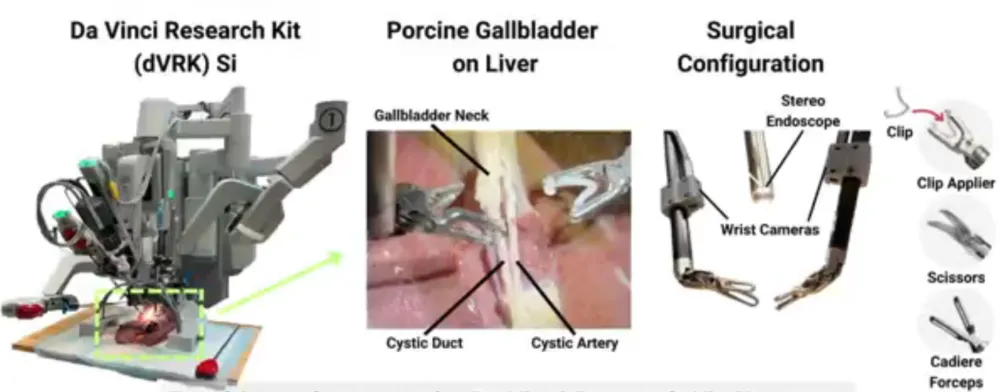
Core Insights - The SRT-H (Surgical Robot Transformer–Hierarchy) represents a significant advancement in surgical robotics, achieving a 100% success rate in performing gallbladder removal surgeries autonomously with minimal human intervention [2][4][5]. Group 1: Technological Advancements - SRT-H utilizes a dual-layer AI system: the first layer analyzes endoscopic video in real-time and issues surgical commands, while the second layer translates these commands into precise three-dimensional movements for surgical instruments [5][7]. - The system was trained using 17 hours of surgical video from 16,000 human surgeons, incorporating natural language for task planning and error correction, marking a shift towards autonomous surgical execution [4][5][19]. - SRT-H can autonomously correct errors during surgery, averaging six self-corrections per operation across eight tests, demonstrating its adaptability to various surgical challenges [4][5]. Group 2: Evolution of Surgical Robotics - The development of SRT-H builds on the earlier STAR (Smart Tissue Autonomous Robot) system, which focused on soft tissue suturing but had limitations in adaptability to unforeseen surgical conditions [15][19]. - Traditional surgical robots, like the da Vinci system, primarily rely on human control, whereas SRT-H signifies a paradigm shift towards fully autonomous surgical systems capable of dynamic decision-making [10][11][12]. Group 3: AI Integration in Surgery - AI's role in surgery extends beyond the operating room, enhancing preoperative planning through advanced imaging analysis and postoperative evaluation of surgical quality [22][23]. - The integration of AI in surgical robotics aims to optimize surgical pathways, improve precision, and standardize operations, addressing variability in surgeon experience [24][25]. Group 4: Future Implications and Challenges - The rapid advancement of AI in surgical robotics presents challenges, including the need for improved operational efficiency, greater autonomy in critical tasks, and the establishment of regulatory frameworks for ethical considerations in AI-led surgeries [27][28][29]. - The future of surgical practice may involve a redefined role for surgeons, emphasizing collaboration with AI tools and the necessity for medical education to adapt to these technological changes [30][34].
艾目易“破壁”:手术机器人国产替代的突围之路
Jing Ji Wang· 2025-08-07 09:13
Core Insights - Guangzhou Aimuyi Technology Co., Ltd. has successfully broken the international technology monopoly in the surgical robot market with its independently developed near-infrared optical positioning system, electromagnetic positioning system, and surgical robot software platform [1][6][10] - The company has established itself as a core technology supplier in the upstream of the domestic surgical robot industry chain, promoting the localization of core components and contributing to the digital and intelligent upgrade of the medical robot industry [1][6] Company Development - Founded in 2017, Aimuyi is a national high-tech enterprise that utilizes a collaborative innovation model of "industry-university-research-application" to achieve core component localization [1][2] - The founder, Professor Yang Rongqian, emphasizes the complexity and lengthy process of transforming scientific research results into industrial applications, which requires collaboration across multiple fields [2][4] Technological Advancements - Aimuyi's team has over 20 years of experience in optical positioning, electromagnetic positioning, and surgical robots, successfully developing China's first near-infrared optical positioning system in 2019, which has reached an internationally advanced level [4][7] - The optical positioning system's performance is influenced by various factors, including positioning algorithms, hardware design, material selection, and optical imaging technology [4][7] Market Positioning - Aimuyi has built a closed-loop ecosystem of "technology supply-demand feedback-iterative optimization," addressing the long-standing reliance on imported core components in surgical robots [6][10] - The company has established deep collaborations with over 100 medical device manufacturers, with applications in orthopedics, neurosurgery, dentistry, and expanding into specialized fields like transcranial magnetic stimulation and radiation therapy [6][10] Innovation and Collaboration - The company employs a full-chain innovation model, ensuring technological autonomy and control over core components, which is crucial for advancing China's surgical robot industry [7][10] - Aimuyi collaborates with upstream precision processing companies and downstream clinical institutions to refine common needs and guide research directions [7][10] Global Strategy - To navigate international patent barriers, Aimuyi adopts a "local cooperation + overall solution export" strategy, establishing a unique market position in niche areas [10][12] - The company has successfully exported products to Europe, America, and Africa, leveraging domestic policies that favor the development of the surgical robot industry [10][12] Standardization Efforts - Aimuyi is transitioning from a general positioning system to specialized applications, developing a "platform + customization" strategy to meet diverse industry needs [12] - The company is actively leading the establishment of interface protocol standards for surgical robots, which is essential for the industry's future development [12][13]

Science子刊:成功率100%?头戴式手术机器人实现眼科手术"动态零误差"
机器人大讲堂· 2025-07-31 14:32
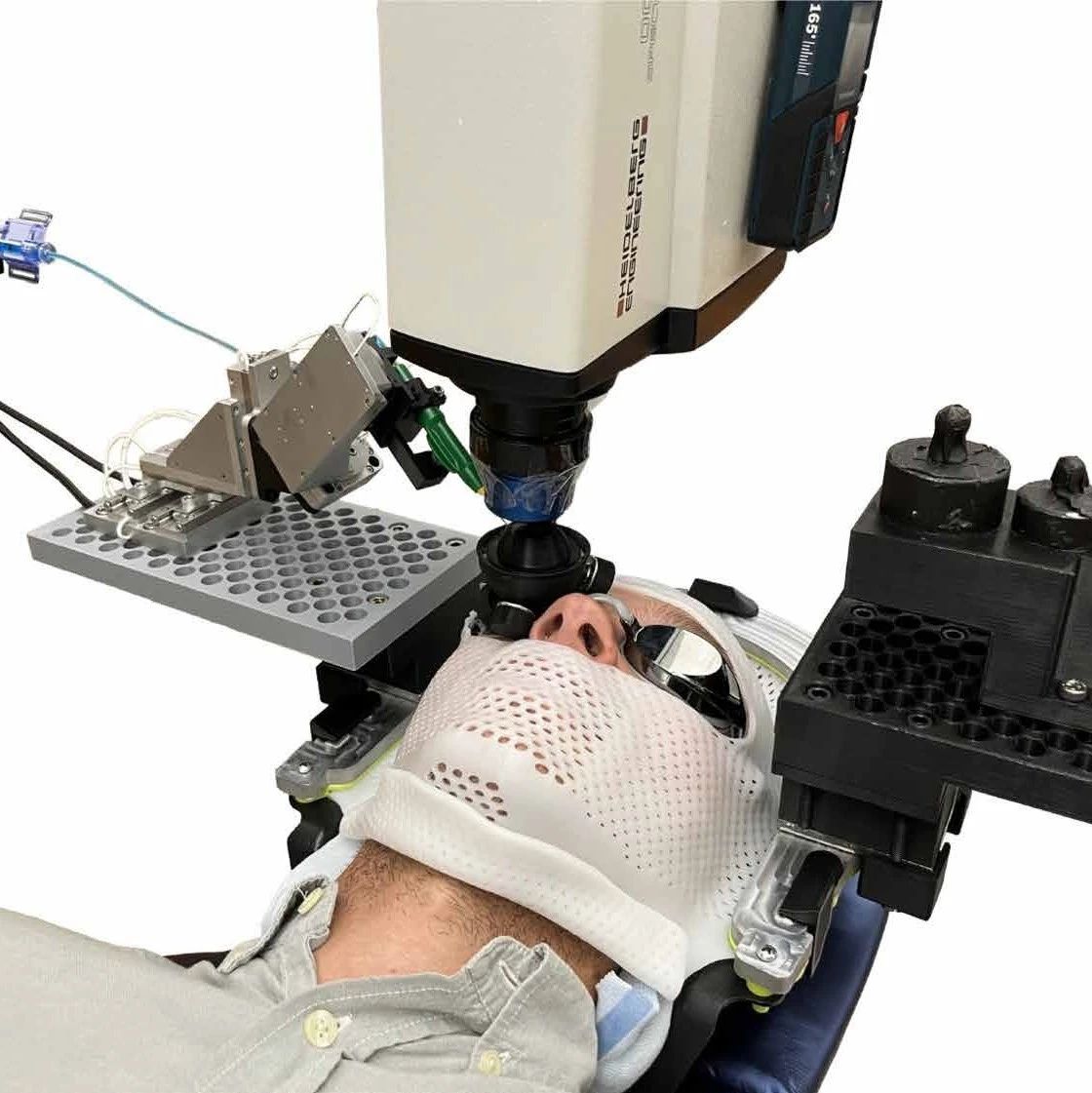
Core Viewpoint - The article discusses the challenges of retinal injections for genetic therapies and presents a novel solution involving a head-mounted surgical robot that improves precision and success rates in these procedures [1][11]. Group 1: Challenges in Retinal Injections - Retinal injections for genetic therapies, such as Luxturna, are difficult due to precision issues, as the retina is only 300 micrometers thick, requiring exact placement of the needle [2][3]. - Stability is a significant concern, as maintaining the needle's position during slow injections (0.18 ml per minute) is nearly impossible due to patient movement [2][3]. - Patient head movement can cause needle misalignment, with studies showing that even with the head fixed, movements can reach 2 to 5 millimeters, leading to potential complications [3]. Group 2: Innovative Design of the Head-Mounted Robot - The research team from the University of Utah developed a head-mounted surgical robot that moves with the patient's head, addressing the challenge of head movement during procedures [6][7]. - The robot, weighing only 0.8 kilograms, utilizes piezoelectric actuators for positioning accuracy better than 1 micrometer, significantly reducing the impact of human hand tremors [7]. - A hybrid experimental method was employed to simulate real surgical conditions, using a pig's eye mounted on a special headset worn by a volunteer [7][9]. Group 3: Success Rates and Technical Breakthroughs - The system achieved a 100% success rate in 21 injection attempts, compared to a combined success rate of 63.6% for manual injections, highlighting the effectiveness of the robotic system [9][11]. - Key factors contributing to this success include the head-mounted design, high-precision robot, real-time optical coherence tomography (OCT) imaging, and slow injection rates allowing for adjustments [9][10]. - The use of a flexible 38-gauge polymer needle helped compensate for minor movements, maintaining stability during the injection process [9]. Group 4: Implications for Clinical Applications - The head-mounted surgical robot could significantly enhance the success rates of retinal injections, potentially allowing more physicians to perform these complex procedures [11]. - The system's ability to operate under local anesthesia reduces risks associated with general anesthesia, particularly for elderly patients [11]. - Future applications may extend beyond ophthalmology to other high-precision surgeries, such as neurosurgery and ENT procedures, benefiting from this innovative design [12].