智能硬件

Search documents
万亿之城消费新风口:AI眼镜、宠物经济谁能率先突围?
2 1 Shi Ji Jing Ji Bao Dao· 2026-02-06 12:48
Core Insights - The article highlights how cities with trillion GDP are responding to diverse consumer demands through refined consumption supply, showcasing innovations in products and services [1][4]. Group 1: Consumer Trends - The integration of AI products into everyday life is accelerating, with examples like AI glasses becoming accessible to consumers [4][11]. - The rise of pet-friendly commerce is evident, with an increase in pet-related stores and services in urban areas, reflecting a shift in lifestyle and consumer preferences [1][4]. - The concept of "micro-innovation" in urban consumption is emerging, where small, specific consumer experiences are driving emotional connections and spending [5][6]. Group 2: Policy and Economic Development - Cities are focusing on structural reforms to stimulate consumption, emphasizing product innovation and the development of new business models and scenarios [4][6]. - Chengdu is pioneering the "morning economy" initiative, aiming to activate underutilized time slots for consumer activities, while other cities are also exploring similar economic models [6][7]. - Various cities are promoting service consumption expansion, with policies supporting health, elderly care, and family services to create new growth points [7][8]. Group 3: Technology Integration - The adoption of technology in consumer products is seen as a key driver for expanding domestic demand, with AI-related products gaining significant traction in the market [8][12]. - The government is supporting the consumption of smart products, including AI glasses, as part of a broader strategy to enhance consumer technology [11][12]. - Discussions around the application of AI in various sectors, such as food service and health, indicate a growing trend towards integrating technology into everyday consumer experiences [13][14].


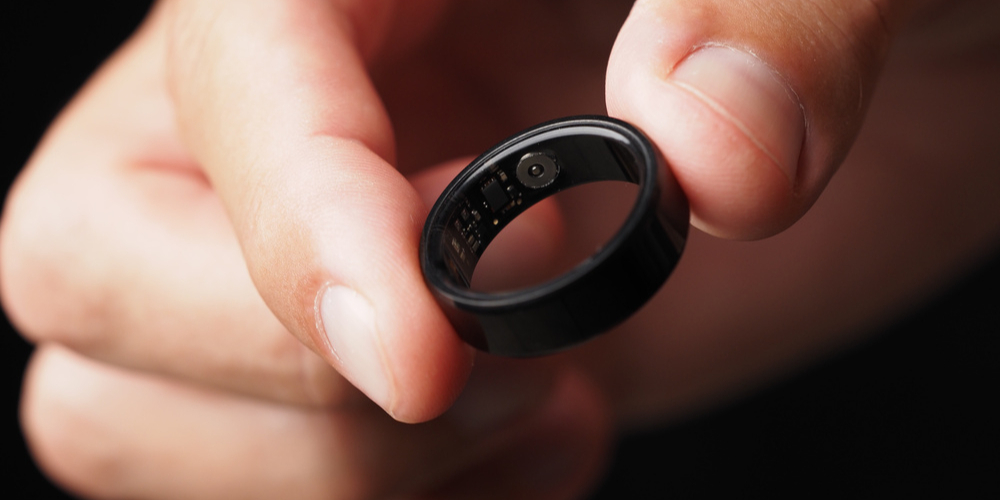
单枚毛利低至5毛钱 智能戒指未火先“卷”
Jing Ji Guan Cha Wang· 2026-02-06 12:21
Core Insights - The profit margins for smart ring manufacturing have drastically decreased, with current profits ranging from 0.5 to 1 yuan per unit, compared to much higher margins three years ago [2][4] - The rise of brands like Oura and RingConn has intensified competition in the smart ring market, leading to a saturation of the supply chain and a significant drop in profitability for manufacturers [3][4] - The market for smart rings is characterized by low barriers to entry, allowing many manufacturers to quickly replicate successful products, resulting in a "bloodbath" of competition [6][10] Industry Trends - The monthly shipment volume of smart rings in Shenzhen has reached approximately 800,000 units, with one factory accounting for about 1/9 of this total [4] - Many manufacturers are shifting focus to white-label smart rings, which offer lower profit margins but quicker returns [4][5] - The emergence of numerous similar products with identical functionalities has led to a significant reduction in average selling prices, with some products dropping below $10 [8][10] Competitive Landscape - Companies like Gyges Labs are attempting to differentiate themselves by focusing on innovative features, such as AI recording capabilities, rather than competing in the saturated health monitoring segment [9][10] - Major tech companies, including OPPO and ByteDance, are entering the smart ring market, although their current offerings have not yet achieved significant market traction [11][12] - The anticipated entry of larger players like Apple is expected to reshape the market dynamics, with many manufacturers currently adopting a wait-and-see approach [12][13] Market Opportunities - The smart ring market is projected to grow, with increasing interest from both consumers and manufacturers, particularly in health monitoring and payment functionalities [12] - The potential for smart rings to serve as entry points for broader ecosystems is being explored, particularly by companies like Ant Group [12] - The market is expected to see a shift towards more defined product offerings that cater to specific user needs, rather than generic products [12]
AI激发全民创作热情!首届京东AI影视创作大赛掀“人人皆导演”风潮
2 1 Shi Ji Jing Ji Bao Dao· 2026-02-06 06:57
Core Insights - The first JD AI Film Creation Competition has concluded, showcasing the power of AI creativity and leading a new trend of co-creating content between brands and users [1][2] - The competition attracted a diverse range of participants, including professionals from various fields and everyday individuals, indicating that AI creative tools have become accessible to the general public [1] Group 1: Competition Overview - The competition was supported by JD's JoyAI model and launched on January 14, with the theme "1001 Gifts of Drama," culminating in the announcement of ten outstanding works [1] - Participants had the opportunity to create content using the "Horse Honghong" IP or specified brand products, with JD offering cash rewards up to 100,000 yuan and promotional support [1] Group 2: Brand Collaboration and Innovation - Brands such as Midea, iFlytek, Baidu, and others provided significant creative freedom to participants, allowing users to reinterpret brand expressions through AI tools [2] - Notable creations included innovative content featuring products like BURBERRY scarves and Midea air conditioners, which received high recognition from brand representatives [2] Group 3: Impact on Marketing Trends - The competition highlighted that AI video is becoming a key trend in brand marketing, with participants demonstrating the ability to produce high-quality content rapidly using AI tools [2] - The success of the event validated the potential of "user co-creation" in brand marketing, with plans for future competitions to continue providing platforms for creative expression [2]
一家“上天下海”的科技公司,将机器人请上台办了个演唱会|最前线
3 6 Ke· 2026-02-06 06:46
编辑 | 邓咏仪 作者 | 王欣逸 2月4日,在苏州奥体中心体育场,"敢梦敢为·追觅之夜"演唱会开幕,追觅科技以演唱会的形式举办了公司年会。会上,追觅展示了其在市场上的优异成绩 和全生态产品阵容,抽出近千件追觅旗下产品,包括扫地机器人、洗地机、大家电等多个品类。魔法原子机器人也亮相演唱会现场,表演了一段舞蹈和单手 倒立炫技动作。 自成立以来,追觅科技持续加大技术研发投入,已经在全球范围内申请了超万项专利。目前,追觅科技的业务已覆盖全球120多个国家和地区,全球实体门 店超过6500家,累计服务家庭超4200万户。 追觅旗下多项核心业务稳居全球行业前三,其扫地机器人在30个国家市场占有率位居第一,洗地机业务在17个国家和地区排名第一,部分市场市占率突破 70%。 成立于2017年的这家公司,如今也远远不只是定位为高端电子消费及智能制造公司。 2026年,追觅始终保持着极高的话题度。 开年,追觅就在海外刷了波存在感,在CES大会上率先出圈,发布了X60系列扫地机器人新品,能带着扫地机上下楼的仿生爬楼机Cyber X以及带机械臂的扫 地机器人Cyber10 Ultra首次展出。 值得一提的是,和追觅同出于清华"天空 ...


锐明技术(002970) - 002970锐明技术投资者关系管理信息20260206
2026-02-05 18:22
证券代码:002970 证券简称:锐明技术 深圳市锐明技术股份有限公司 投资者关系活动记录表 编号:2026-003 | | □特定对象调研 □分析师会议 | | --- | --- | | 投资者关系 | □媒体采访 □业绩说明会 | | | □新闻发布会 □路演活动 | | 活动类别 | 现场参观 □反路演 ☑ | | | 其他(线上会议) ☑ | | | 博时基金管理有限公司、富国基金管理有限公司、嘉实基金管理有限公司、华 | | | 夏未来资本管理有限公司、华安基金管理有限公司、汇添富基金管理股份有限 | | | 公司、中欧基金管理有限公司、广发基金管理有限公司、鹏扬基金管理有限公 | | | 司、国泰海通证券股份有限公司、东方证券股份有限公司、招商证券股份有限 | | | 公司、东方基金管理股份有限公司、工银瑞信基金管理有限公司、国寿安保基 | | | 金管理有限公司、华富基金管理有限公司、合众资产管理股份有限公司、华宝 | | | 基金管理有限公司、安信基金管理有限责任公司、宝盈基金管理有限公司、北 | | | 京沣沛投资管理有限公司、创金合信基金管理有限公司、大家资产管理有限责 | | | 任公 ...

第一批戴上「作弊眼镜」的大学生,狂虐班里优等生
36氪· 2026-02-05 14:10
Vista看天下 . 活力进取青年集结地,专注科技创新、文化创新和AI时代人文价值 在AI时代下,当知识变得触手可及, 考试的逻辑又该如何被重构? 文 | 邵楚芮 来源| Vista看天下(ID:vistaweek) 封面来源 | pexles 上班路上,你戴上眼镜就能看到前方路况。买咖啡时,你抬个眼就能完成支付。你翻阅专业文件时,眼镜会自动扫描文本并联动云端数据库,为你实时翻 译,解释复杂名词。周末去徒步时,你转个头观察地形,眼镜就能标注出地形风险,生成最优徒步路径。 以下文章来源于Vista看天下 ,作者邵楚芮 这不是科幻片的特效镜头,而是AI眼镜为你描绘的未来图景。 AI眼镜的未来(图源网络) 华为、苹果等多家公司将在今年上市AI眼镜,小米、夸克等品牌早已入局。2025年国内AI眼镜的出货量相比上一年同比增长超过120%。中信建投的报告指 出,AI眼镜有望逐步替代智能手机,成为下一代智能终端。 虽然各大科创公司都在做AI眼镜,但该品类还是陷入了一种"雷声大雨点小"的尴尬境地,普通消费者并不买账。3000多元的售价,加上续航时间短、佩戴不 适等问题,让它始终是小众产品。 不少人好奇,这东西到底有啥用? 香 ...

福莱新材与灵心巧手达成全面战略合作
Zheng Quan Ri Bao· 2026-02-05 13:38
(文章来源:证券日报) 本报讯 2月5日,浙江福莱新材料股份有限公司(以下简称"福莱新材")与灵心巧手(北京)科技有限 公司(以下简称"灵心巧手")正式签署全面战略合作协议,灵心巧手向福莱新材采购10万套触觉传感 器。双方将在柔性传感与机器人灵巧手领域展开深度合作,建立长期全面的战略伙伴关系,共同推动具 身智能技术的商业化落地。 福莱新材作为柔性传感技术的领先者,在柔性传感材料研发、生产工艺和创新应用方面拥有深厚的技术 积累,核心技术优势体现在高灵敏度触觉传感、柔性材料适配性和大规模量产能力上,为智能终端设备 提供了关键的"触觉智能"架构。 灵心巧手专注于灵巧操作的具身智能解决方案,占据全球高自由度灵巧手80%以上的市场份额,拥有面 向各场景的Linker Hand系列灵巧手、遥操作系统等多种具身智能产品。 双方合作范围涵盖产品开发、产业链协同和技术合作三大领域。通过产业协同和联合开发等多元化机 制,双方将围绕集成触觉传感的机器人灵巧手技术平台开发、系列化智能灵巧手解决方案设计等方向展 开合作,推动柔性传感器、智能AI产品、具身智能等领域的产业升级和行业标准完善,致力于打造触 觉驱动的智能决策能力,为各类应用 ...

影石创新:公司对资本市场情况保持密切关注并始终高度重视全体股东利益
Zheng Quan Ri Bao· 2026-02-05 11:08
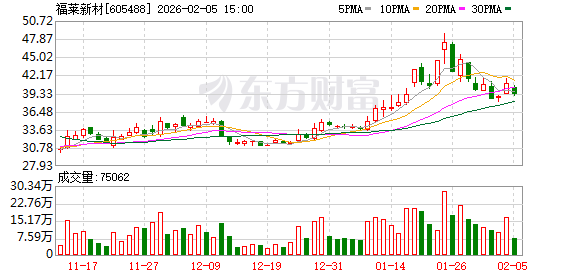
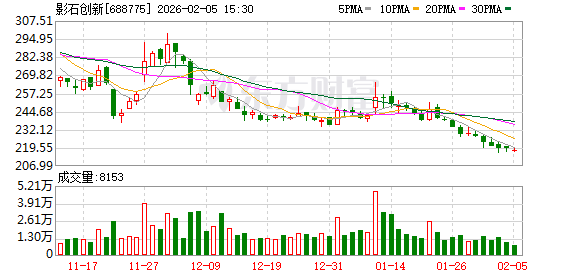
(文章来源:证券日报) 证券日报网讯 2月5日,影石创新在互动平台回答投资者提问时表示,二级市场股价波动受市场情绪、 行业变化、公司情况、宏观经济等多方面因素综合影响,公司对资本市场情况保持密切关注,并始终高 度重视全体股东利益,持续聚焦于主营业务与产品创新,不断提升自身的核心竞争力,推动公司实现高 质量、可持续发展,努力为股东创造长期价值。 ...

研判2026!中国宠物摄像机行业概述、产业链上下游、发展现状、竞争格局、发展趋势:科技养宠时代,宠物摄像机迎来发展新机遇[图]
Chan Ye Xin Xi Wang· 2026-02-05 01:13
Core Viewpoint - The pet camera market in China is expected to grow significantly, driven by increasing pet ownership and changing consumer attitudes towards pet care, with sales projected to rise from 964,000 units in 2022 to 1,091,400 units by 2025 [1][8]. Industry Overview - Pet cameras are electronic devices designed specifically for pets, featuring real-time monitoring, two-way audio, remote interaction, anomaly alerts, and night vision capabilities, enhancing pet safety and owner-pet emotional connection [3][5]. Product Classification - Pet cameras can be categorized into four types: fixed, rotating, mobile, and wearable. Fixed cameras are stable and easy to install, rotating cameras offer a wider monitoring range, mobile cameras can be controlled remotely, and wearable cameras are designed for outdoor use [4][5]. Industry Chain - The pet camera industry consists of three segments: upstream suppliers providing components like image sensors and AI chips, midstream manufacturers producing the cameras, and downstream sales channels including supermarkets, specialty stores, and e-commerce platforms [5][6]. Market Demand - The demand for pet cameras is expected to grow as pet owners increasingly prioritize their pets' well-being, leading to a rise in smart hardware products that extend beyond basic monitoring to include features like smart feeding and health monitoring [11][12]. Competitive Landscape - The pet camera market is dominated by four major brands: Xiaomi, Haijue, Yingshi, and 360, which collectively hold over 85% market share. Xiaomi leads with a 43% share, followed by Haijue at 30.6% [9][10]. Technological Innovation - Technological advancements in AI and IoT are anticipated to enhance the functionality and user experience of pet cameras, enabling features like precise pet recognition and seamless integration with smart home systems [12][13]. International Market Potential - The overseas market is seen as a new growth opportunity for Chinese pet camera brands, which can leverage their competitive pricing and innovative features to gain traction in international markets [14].



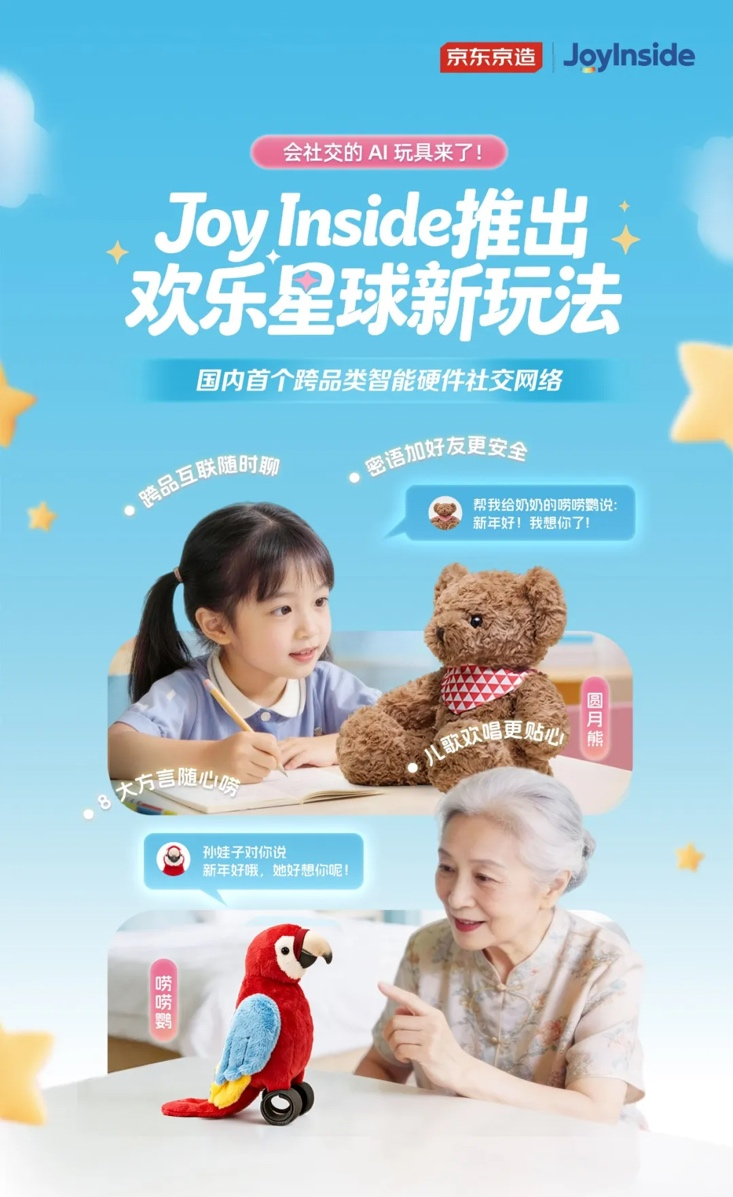
搭载JoyInside的京东京造AI玩具 新增“社交”功能
Zhong Jin Zai Xian· 2026-02-04 08:33
Core Insights - The article highlights the rising popularity of AI toys in the New Year market, emphasizing their value in family companionship and emotional connection [1] - JD's JoyInside has launched two key features, "Joyful Planet Social Play" and upgraded TTS voice synthesis, to enhance user experience and engagement during the Spring Festival [1][4] Group 1: Product Features - The "Joyful Planet Social Play" introduces a cross-category smart hardware social network, allowing various JD products to connect and interact, addressing the "brand island" issue in the smart hardware market [3] - The upgraded TTS function supports eight regional dialects, enhancing personalized interaction and catering to users of all ages and regions, particularly during family gatherings [4] - The new features aim to create a safe social environment for children, allowing them to connect with friends through voice messages and holiday greetings [3][4] Group 2: Market Positioning - The dual feature upgrade positions JoyInside as a differentiated New Year gift that addresses the pain points of intergenerational companionship, making it appealing to both children and elderly family members [5] - The products serve as emotional carriers for families, facilitating social connections and shared experiences during the festive season [5] - JoyInside aims to continuously improve its offerings, focusing on maintaining family emotional connections through technology [5] Group 3: Promotional Strategies - JD has introduced various themed product bundles, such as the "Chatting Parrot + Round Moon Bear" combination, to enhance cross-generational interaction and create a festive atmosphere [6] - The promotional strategy includes engaging social play elements, such as blind box social interactions and themed combinations, to attract diverse consumer groups [6] - The campaign encourages families to experience the joy of technology together, positioning the AI toys as more than just products but as companions for the New Year celebrations [6]