电池材料

Search documents
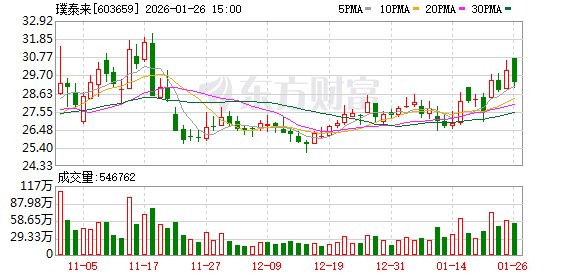
璞泰来:目前硅碳负极产品在消费类客户实现批量出货
Zheng Quan Ri Bao· 2026-01-26 14:15
Core Viewpoint - The company Puxin is recognized for its high-performance silicon-carbon anode materials, which are among the few in China capable of mass production, with significant advancements in capacity, low expansion, and long cycle life [2] Group 1: Product Performance - The new silicon-carbon anode materials exhibit high capacity, low expansion, and long cycle life [2] - The company has achieved bulk shipments of silicon-carbon anode products to consumer clients [2] Group 2: Market Development - The silicon-carbon anode products are undergoing certification with some clients in the power battery sector, with gradual deliveries expected by 2026 [2]


中伟新材:2025年全球产量103.8万吨,同比增长7.7%
Zheng Quan Ri Bao Zhi Sheng· 2026-01-26 11:09
Core Viewpoint - Zhongwei New Materials maintains its position as the market leader in the ternary precursor market, with a projected global output of 1.038 million tons in 2025, reflecting a year-on-year growth of 7.7% [1] Group 1: Market Outlook - The demand for nickel-based materials is expected to grow significantly due to increasing requirements for long-range capabilities, higher battery capacities per vehicle, the industrialization of solid-state batteries, and positive trends in the European new energy vehicle market [1]

研报掘金丨华鑫证券:格林美镍钴自供能力增强,予“买入”评级
Ge Long Hui A P P· 2026-01-26 07:16
格隆汇1月26日|华鑫证券研报指出,格林美正极材料不断突破,镍钴自供能力强化。伴随eVOTL、人 形机器人、穿戴式AI设备的兴起与固态电池的产业化实践,全球高镍及超高镍三元前驱体出货量占比 提升,公司三元材料业务有望受益。随着镍钴自供比例提升,公司原料成本波动风险降低,在价格上行 周期中的盈利弹性增强,对业绩形成持续支撑。动力电池有望在2026年进入规模化报废阶段,2030年进 入爆发性报废阶段,锂镍钴关键矿产或将依靠循环大量补充,动力电池回收前景市场广阔。考虑到三元 材料需求结构化升级,公司镍钴自供能力增强,给予"买入"投资评级。 ...

中伟新材涨超6% 公司三元前驱体出货量持续保持市场第一 镍资源全球多元化布局
Zhi Tong Cai Jing· 2026-01-26 02:47
Core Viewpoint - Zhongwei New Materials (中伟新材) has seen a stock price increase of over 6%, currently trading at 40 HKD with a transaction volume of 1.04 billion HKD, indicating strong market interest and confidence in the company's future prospects [1] Group 1: Company Performance - According to investor relations activities, Zhongwei New Materials reported that global ternary precursor production is expected to reach 1.038 million tons by 2025, representing a year-on-year growth of 7.7%, with the company maintaining its position as the market leader in shipments [1] - The company has over 70% of its nickel-based pCAM products classified as high-nickel and ultra-high-nickel products, showcasing its focus on advanced materials [1] Group 2: Market Outlook - The demand for nickel-based materials is projected to grow significantly due to increased long-range requirements in the Chinese market, higher battery capacities, advancements in solid-state battery industrialization, and positive trends in European new energy vehicle demand [1] - Morgan Stanley highlighted that Zhongwei New Materials is the largest producer of nickel and cobalt-based cathode precursors globally, with an expanding layout in nickel resources and refining operations [1] Group 3: Global Expansion - The company operates four production bases in China and has established a production facility in Morocco, with three operations in Indonesia and plans for another in Indonesia and one in South Korea, indicating a diversified global presence that enhances its competitive advantage in an uncertain trade environment [1]
港股异动 | 中伟新材(02579)涨超6% 公司三元前驱体出货量持续保持市场第一 镍资源全球多元化布局
智通财经网· 2026-01-26 02:44
Core Viewpoint - Zhongwei New Materials (02579) has seen a stock price increase of over 6%, currently trading at 40 HKD with a transaction volume of 1.04 billion HKD, indicating strong market interest and confidence in the company's future prospects [1] Group 1: Company Performance - Zhongwei New Materials reported that, according to Xinluo statistics, global production of ternary precursors is expected to reach 1.038 million tons by 2025, representing a year-on-year growth of 7.7%, with the company maintaining its position as the market leader in shipments [1] - The company has over 70% of its nickel-based pCAM products classified as high-nickel and ultra-high-nickel products, showcasing its focus on advanced materials [1] Group 2: Market Outlook - The future outlook for the company is positive, driven by increased demand for long-range capabilities in the Chinese market, higher battery capacity per vehicle, advancements in solid-state battery industrialization, and favorable demand for new energy vehicles in Europe, indicating significant growth potential for nickel-based materials [1] Group 3: Competitive Advantage - Morgan Stanley highlighted that Zhongwei New Materials is the largest producer of nickel and cobalt-based cathode precursors globally, with an expanding layout in nickel resources and refining operations [1] - The company operates four production bases in China and has established facilities in Morocco, Indonesia (three sites), and plans for another in Korea, providing a diversified global footprint that enhances its competitive edge in an uncertain trade environment [1]
中伟新材(300919.SZ):预计到2026年公司钠电材料出货量有望实现大幅提升
Ge Long Hui· 2026-01-26 02:16
Core Viewpoint - The company is focusing on dual technology routes in sodium battery materials, specifically sodium ion cathodes and layered oxides, with significant orders and shipments expected by 2025 [1] Group 1: Company Strategy - The company has adopted a dual technology strategy for sodium battery materials, emphasizing both sodium ion cathodes and layered oxides [1] - By 2025, the company aims to secure orders and ship sodium battery materials at a scale of thousands of tons [1] Group 2: Market Trends - The economic benefits of sodium batteries are becoming more apparent as lithium carbonate prices rise [1] - It is anticipated that by 2026, the company's shipment volume of sodium materials will see substantial growth as industrialization accelerates [1]
中伟新材:2026年公司钠电材料出货量有望实现大幅提升
Zheng Quan Shi Bao Wang· 2026-01-26 01:20
Core Viewpoint - The company Zhongwei New Materials (300919) is adopting a dual technology route strategy in sodium battery materials, focusing on sodium battery polycations and layered oxides, with significant orders and shipments expected by 2025 [1] Group 1: Company Strategy - The company is implementing a dual technology route strategy for sodium battery materials [1] - The focus is on sodium battery polycations and layered oxides [1] Group 2: Market Outlook - By 2025, the company has successfully secured orders for ton-level sodium battery materials and has begun shipments [1] - The economic benefits of sodium batteries are becoming apparent as lithium carbonate prices rise [1] - It is anticipated that by 2026, the company's sodium material shipment volume will significantly increase as the industrialization process accelerates [1]
中伟新材:镍系材料仍具备较大市场增长空间
2 1 Shi Ji Jing Ji Bao Dao· 2026-01-26 01:04
Group 1 - The core viewpoint of the article highlights that Zhongwei New Materials maintains its position as the market leader in the shipment of ternary precursors, with a projected global production of 1.038 million tons by 2025, reflecting a year-on-year growth of 7.7% [1] - The company anticipates significant market growth for nickel-based materials driven by increased demand for long-range capabilities in the Chinese market, higher battery capacity per vehicle, advancements in solid-state battery commercialization, and positive trends in European electric vehicle demand [1]
格林美:公司动态研究报告:正极材料不断突破,镍钴自供能力强化-20260126
Huaxin Securities· 2026-01-26 00:24
2026 年 01 月 25 日 正极材料不断突破,镍钴自供能力强化 —格林美(002340.SZ)公司动态研究报告 买入(首次) 投资要点 分析师:黎江涛 S1050521120002 lijt@cfsc.com.cn | 基本数据 | 2026-0 1-2 3 | | --- | --- | | 当前股价(元) | 9.66 | | 总市值(亿元) | 493 | | 总股本(百万股) | 5103 | | 流通股本(百万股) | 5073 | | 52 周价格范围(元) | 5.85-9.66 | | 日均成交额(百万元) | 1094.59 | ▌ 三元材料受益于需求结构化升级,技术持续突破 伴随 eVOTL、人形机器人、穿戴式 AI 设备的兴起与固态电池 的产业化实践,全球高镍及超高镍三元前驱体出货量占比提 升,公司三元材料业务有望受益。2025 年前三季度,公司镍 钴前驱体出货 12 万余吨,正极材料实现出货 1.7 万余吨。公 司在高端前驱体方面持续突破,超致密高镍及超高镍前驱体 已通过量产认证并实现数十吨级出货,固态电池用富锂锰基 前驱体进入吨级验证阶段。2025 年 7 月,公司全球首款超高 ...
深度 | 一文说清“中试平台”:如何打通技术到市场最后一公里!
证券时报· 2026-01-26 00:22
Core Viewpoint - The article discusses the emergence of "pilot testing platforms" in China's manufacturing industry, which serve as crucial facilitators for the transition of scientific innovations from the lab to mass production, effectively navigating the challenges of the "Darwinian Dead Sea" in technology commercialization [1][4]. Group 1: Pilot Testing Platforms - Pilot testing platforms are essential for overcoming the technical bottlenecks in large-scale production, allowing for efficient product validation and market acceptance [1]. - These platforms are characterized by their large physical space and significant investment in advanced equipment, enabling comprehensive testing and development across various technologies [5][6]. - The advanced photovoltaic device pilot testing platform by Tongwei has a total area of 68,000 square meters, making it the largest in the photovoltaic industry, capable of parallel research and development of multiple technologies [5][6]. Group 2: Role in Innovation - Pilot testing platforms act as "scouts" for new technologies, enabling companies to explore and develop next-generation technologies while maintaining production efficiency [10]. - They serve as "demolition experts" that help overcome technical challenges in product manufacturing, such as achieving high yield and stability in battery materials [11]. - These platforms also function as "training grounds" for products before they enter the market, allowing for full-process validation and optimization [12]. Group 3: Industry Collaboration and Ecosystem - The platforms are increasingly recognized in national policies, emphasizing their role as "locomotives" for industrial development and collaboration [15]. - By opening their capabilities to the industry, these platforms can drive collaborative innovation and enhance the overall level of the supply chain [15][16]. - The establishment of an ecosystem that includes research and development, incubation, and investment is crucial for fostering technological innovation and market expansion [16]. Group 4: Challenges Faced - The construction and operation of pilot testing platforms face significant challenges, including technical integration, funding, talent acquisition, and trust issues [18][20]. - High investment costs and uncertain returns pose economic challenges, as the platforms require substantial funding for equipment and facilities [20][21]. - The scarcity of skilled personnel who can manage the complex operations of these platforms is a major bottleneck [22][23].