饮料制造

Search documents
维维股份:“柠爆果汽”新品类正处市场拓展初期,线下前期优先部分区域试点布局
Cai Jing Wang· 2025-12-29 10:15
Core Viewpoint - The company is focusing on expanding the sales channels for its new beverage product "Lemon Burst Soda," which is currently in the early stages of market expansion and has not yet achieved nationwide coverage [1] Group 1: Product and Market Strategy - "Lemon Burst Soda" is a new product category launched by the company that aligns with current market consumption trends [1] - The initial offline channel strategy involves pilot layouts in select regions, while online channels are already available through e-commerce platforms [1] - The company plans to accelerate channel development and continuously optimize product supply and service experience [1]

财政部、税务总局:化妆品制造或销售、医药制造和饮料制造(不含酒类制造)企业广告费和业务宣传费支出不超过当年销售收入30%的部分,准予税前扣除
Jin Rong Jie· 2025-12-29 09:16
Core Viewpoint - The announcement by the Ministry of Finance and the State Taxation Administration outlines new tax deduction rules for advertising and business promotion expenses for specific industries, effective from January 1, 2026, to December 31, 2027 [1] Group 1: Tax Deduction Rules - For cosmetics manufacturing or sales, pharmaceutical manufacturing, and beverage manufacturing (excluding alcoholic beverages), advertising and business promotion expenses are deductible up to 30% of the annual sales revenue; any excess can be carried forward to future tax years [1] - Related enterprises that sign a cost-sharing agreement can deduct advertising and business promotion expenses within the allowable limit in either party's accounts, with specific provisions for how these expenses are accounted for [1] - Tobacco companies are prohibited from deducting any advertising and business promotion expenses when calculating taxable income [1] Group 2: Implementation Period - The new rules will be in effect from January 1, 2026, to December 31, 2027, and will replace the previous announcement (Announcement No. 43 of 2020) starting January 1, 2026 [1]
财政部、税务总局:对化妆品制造或销售、医药制造和饮料制造(不含酒类制造)企业发生的广告费和业务宣传费支出,不超过当年销售(营业)收入30%的部分,准予扣除
Mei Ri Jing Ji Xin Wen· 2025-12-29 09:04
Core Viewpoint - The Ministry of Finance and the State Taxation Administration have announced that advertising and business promotion expenses for cosmetics manufacturing or sales, pharmaceutical manufacturing, and beverage manufacturing (excluding alcoholic beverages) can be deducted up to 30% of the annual sales revenue, with any excess allowed to be carried forward to future tax years [1] Group 1 - The new tax policy applies to specific industries: cosmetics, pharmaceuticals, and non-alcoholic beverages [1] - Companies in these sectors can benefit from a tax deduction on advertising and promotional expenses, enhancing their financial flexibility [1] - The policy aims to support growth in these industries by allowing significant deductions on marketing expenditures [1]
厦门联科云供应链科技有限公司成立,注册资本1000万人民币
Sou Hu Cai Jing· 2025-12-26 16:39
Group 1 - Xiamen Linke Cloud Supply Chain Technology Co., Ltd. has been established with a registered capital of 10 million RMB [1] - The legal representative of the company is Chen Qiao Hu, and it is wholly owned by Linke Cloud (Xiamen) Computing Co., Ltd. [1] - The business scope includes technology promotion and application services, sales of agricultural products, health food sales, and various manufacturing and sales activities related to herbal medicine and metal materials [1] Group 2 - The company is classified under the manufacturing industry, specifically in the beverage manufacturing sector [1] - The business license allows the company to operate independently within the scope of its license, except for projects that require legal approval [1] - The company's operational period is set until December 26, 2025, with no fixed end date [1]
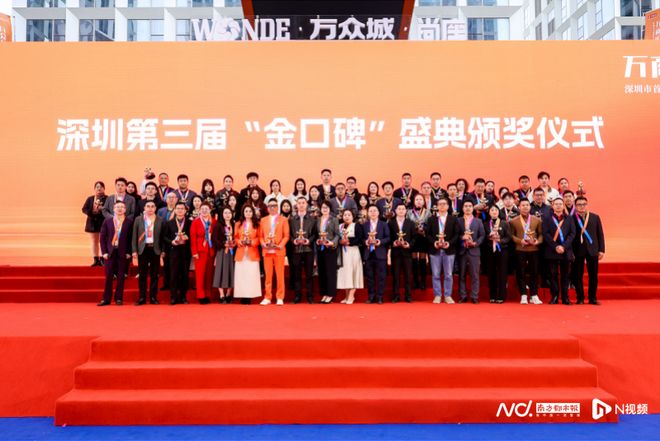
深圳首届诚信文化节在龙华举办 “金口碑”名单公布
Nan Fang Du Shi Bao· 2025-12-26 16:36
Core Points - The first Integrity Culture Festival in Shenzhen was held on December 25, showcasing the importance of integrity in business practices and recognizing outstanding individuals and companies in the region [2][9][10] - The event highlighted the launch of the Shangzuo Spark project, which aims to create a comprehensive industrial ecosystem in Longhua District, with a total investment of approximately 250,000 square meters [3] Group 1: Awards and Recognitions - Ten individuals were awarded the "Golden Reputation Figures," including leaders from various companies such as Zhou Li from Zhouliufu Jewelry and Wu Taibing from Wanxing Technology [3] - The newly established "Golden Reputation Newcomers" award recognized ten young entrepreneurs aged 30-35, emphasizing the importance of youth in business leadership [3] - A total of 60 companies were recognized as "Golden Reputation Enterprises," and 100 merchants received the "Golden Reputation Merchant" title, covering diverse sectors such as internet, pharmaceuticals, and retail [4] Group 2: Participation and Voting - The "Golden Reputation" initiative has seen significant participation, with nearly 20,000 entities registering over the past two years and online votes exceeding 10 million [7] - The evaluation process involved expert assessments based on multiple criteria, including tax credit, environmental credit, and safety production credit, ensuring a comprehensive review of the candidates [7] Group 3: Integrity Culture Promotion - The festival included a "Call for Integrity" initiative launched by various industry associations, encouraging all practitioners to uphold integrity and resist dishonest practices [9] - A roundtable forum was held to discuss the relationship between integrity and technology in the digital age, emphasizing the need for a transparent market environment [9]

2025中国财富传承“觉醒之年”的未了局 | 年度行业前行者
Sou Hu Cai Jing· 2025-12-25 09:22
Core Viewpoint - The year 2025 marks the beginning of a "wake-up era" for wealth inheritance in China, highlighting the risks faced by both high-net-worth individuals and ordinary families in wealth transfer [1][2]. Group 1: Wealth Inheritance Challenges - The overlapping challenges of global geopolitical and economic shocks, industrial and technological transitions, and generational wealth transfer create uncertainties in inheritance [2]. - Many Chinese entrepreneurs are unaware or only partially aware of the importance of wealth transfer, often avoiding discussions about wills, trusts, and insurance [2][3]. - The legacy of ownership disputes in private enterprises is significant, with 32% of enterprises having ownership disputes as revealed by a 1998 survey [2]. Group 2: Structural Issues in Private Enterprises - The simplistic and rough ownership structures prevalent since the 1980s, often involving family members, lead to governance failures and increased risks during transitions [3]. - The complexity of entrepreneurs' marital histories complicates wealth and equity inheritance, making it a major risk factor for generational transfer [3]. Group 3: The Need for Systematic Governance - To ensure orderly inheritance and succession, enterprises must move away from "parental culture" and focus on strategic planning and governance systems [4]. - China is experiencing a peak in private wealth accumulation, with significant assets in real estate and savings, necessitating effective inheritance strategies [4]. Group 4: Broader Implications for Society - Wealth inheritance is not just a concern for the wealthy; ordinary families are also facing increasing inheritance disputes and marital risks [5]. - Institutions and media should promote the concepts and tools of wealth transfer and risk management to enhance public understanding [5]. Group 5: Development of Family Trusts - The family trust system in China has evolved over 12 years, with increasing accessibility for both high-net-worth individuals and ordinary families [6]. - Recent regulatory changes have lowered the threshold for family trusts, expanding their applicability for wealth transfer and risk isolation [6]. Group 6: Governance and Cultural Considerations - Effective governance of wealth transfer requires a combination of financial, legal, and cultural frameworks, emphasizing the need for scientific understanding among wealth holders [7]. - Historical lessons indicate that true family inheritance relies on structured agreements rather than emotional promises, highlighting the importance of trust in managing human nature [7].
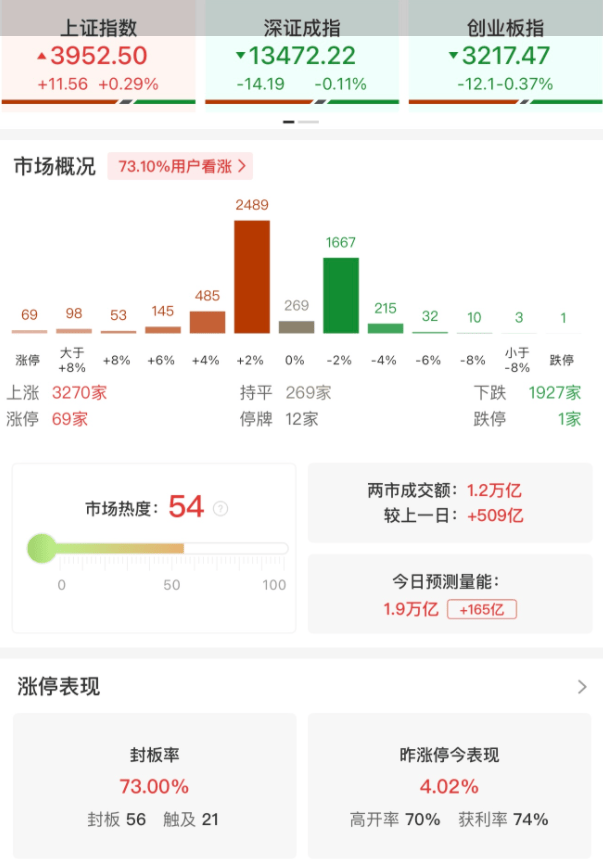
A股午评:三大指数分化,沪指涨0.29%创业板指跌0.38%北证50涨1.04%,商业航天全线爆发!超3200股上涨,成交12119亿放量527亿
Ge Long Hui· 2025-12-25 05:25
Market Overview - The A-share market showed mixed performance with the Shanghai Composite Index rising by 0.29% to 3952.5 points, while the Shenzhen Component Index fell by 0.11% and the ChiNext Index decreased by 0.38% [1][2] - The total market turnover reached 12.119 billion yuan, an increase of 527 million yuan compared to the previous day, with over 3200 stocks rising [1][2] Sector Performance - The commercial aerospace sector experienced a significant surge, leading the market gains, while the paper and military industries also saw notable increases [1] - Precious metals prices, after reaching new highs, retreated, contributing to a collective pullback in the non-ferrous metals sector [1] - The Hainan Free Trade Zone, beverage manufacturing, and components sectors faced declines [1]

麦大生物科技(江西)有限公司成立,注册资本1000万人民币
Sou Hu Cai Jing· 2025-12-24 07:53
天眼查显示,近日,麦大生物科技(江西)有限公司成立,法定代表人为钟粤,注册资本1000万人民 币,由江西和煦麦田大健康科技有限公司全资持股。 序号股东名称持股比例1江西和煦麦田大健康科技有限公司100% 经营范围含许可项目:食品生产,食品销售,饮料生产(依法须经批准的项目,经相关部门批准后在许 可有效期内方可开展经营活动,具体经营项目和许可期限以相关部门批准文件或许可证件为准)食品销 售(仅销售预包装食品),食品互联网销售(仅销售预包装食品),技术服务、技术开发、技术咨询、 技术交流、技术转让、技术推广(除依法须经批准的项目外,凭营业执照依法自主开展经营活动) 企业名称麦大生物科技(江西)有限公司法定代表人钟粤注册资本1000万人民币国标行业制造业>酒、 饮料和精制茶制造业>饮料制造地址江西省抚州市东临新区大健康产业园标准化厂房5号一楼企业类型 有限责任公司(非自然人投资或控股的法人独资)营业期限2025-12-23至无固定期限登记机关抚州市东 临新区市场监督管理局 来源:市场资讯 ...
香飘飘食品股份有限公司关于全资子公司对外投资设立境外孙公司并建设泰国生产基地的公告
Shang Hai Zheng Quan Bao· 2025-12-23 19:45
Investment Overview - The company plans to establish a wholly-owned subsidiary in Singapore named SENPURE FOOD (INTERNATIONAL) PTE. LTD. and a subsidiary in Thailand named YONG MI GUO FOODS (THAILAND) CO., LTD. to build a liquid ready-to-drink beverage production base in Thailand [2][5] - The total investment amount is $38 million (approximately 268 million RMB), funded by the company's own capital, with the actual investment subject to approval by Chinese and local authorities [2][5][18] Investment Details - The Singapore subsidiary will have a registered capital of 1 million SGD (approximately 5.47 million RMB), while the Thai subsidiary will have a registered capital of $5 million (approximately 35.25 million RMB) [8][11] - The investment will primarily be used for establishing and operating the overseas companies, purchasing land, constructing facilities, and procuring equipment [5][18] Market Positioning and Strategy - The project aims to position Thailand as a production base and export hub for cup beverages, targeting markets in Cambodia, Laos, Myanmar, and Vietnam, as well as the broader ASEAN market [8][16] - The company plans to market its cup fruit tea products as high-end beverages for health-conscious consumers, differentiating itself with unique tropical flavors, 25% real fruit juice content, low sugar, and transparent cup packaging [16] Operational Impact - This investment aligns with the company's strategic layout and overseas business development needs, enhancing its competitiveness in the international cup liquid beverage market [18] - The funding source is the company's own capital, ensuring that it will not adversely affect the company's main business, cash flow, or asset status [18]

联动新一线 融媒观两江| “敢饮头啖汤”的精神让佛山焕发新魅力
Xin Lang Cai Jing· 2025-12-23 13:55
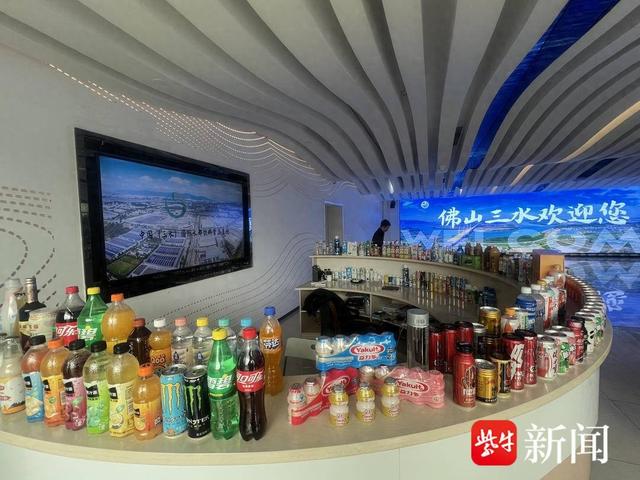
Group 1: Overview of Foshan's Development - Foshan is positioned as a "central hub" geographically, with a strategic goal to re-enter the ranks of new first-tier cities by 2025, supported by the "Recreate a New Foshan" initiative [1] - The "Ring Two Rivers" area is identified as a key strategic point for achieving high-quality development, with a focus on industrial growth and cultural tourism integration [1] Group 2: Food and Beverage Industry in Sanshui District - Sanshui District, known as "China's Beverage Capital," has attracted over 300 food and beverage enterprises, including major brands like Jianlibao and Red Bull [2][4] - The district aims for a total output value of 78.7 billion yuan in the food and beverage industry by 2024, with plans to develop a trillion-yuan industry cluster by 2027 [5] Group 3: Hydrogen Energy Industry in Nanhai District - Nanhai District is recognized as "China's Hydrogen Energy Industry Capital," with over 170 hydrogen energy companies and planned investments exceeding 60 billion yuan [7][9] - The district's hydrogen energy industry is projected to generate an annual output value exceeding 100 billion yuan upon full production [7] - Nanhai has established a comprehensive hydrogen energy industry chain, from production to application, and aims to build 176 hydrogen refueling stations by 2030 [9] Group 4: Cultural and Tourism Development in Shunde - The Ganjutan Hydropower Station, built in the 1970s, has transformed into a cultural tourism attraction, reflecting the spirit of innovation and self-reliance [11][12] - Shunde is developing the Ganjutan cultural tourism industry cluster, integrating historical resources with modern tourism experiences [12]