
影视制作

Search documents
杭产文化“新三样”圈粉海外的“流量密码”
Mei Ri Shang Bao· 2025-08-26 22:24
Group 1 - The core viewpoint emphasizes the global popularity of Chinese cultural exports, particularly in the forms of online literature, online games, and web series, which have captivated millions of overseas readers and players [1] - The "new three items" of cultural export from Hangzhou, including online literature, online games, and web series, have gained significant traction in various countries, with notable examples like "Dou Po Cang Qiong" and "Black Myth: Wukong" [1] - The research team from the city's brand promotion association is investigating the success factors and challenges faced by these cultural exports, focusing on the creative needs of the industry [1] Group 2 - The importance of "telling a good Chinese story" is highlighted as a key factor for cultural success abroad, with the need to adapt narratives to resonate with international audiences [2] - An example is provided where the American animation "Kung Fu Panda" successfully attracted Chinese fans while embodying American heroism, illustrating the need for cultural exports to align with global audience preferences [2] - The emotional connection conveyed by the "new three items" is identified as a universal appeal, transcending cultural differences and resonating with shared human experiences [2] - Recommendations for improving the cultural export environment in Hangzhou include creating a supportive business environment, implementing effective policies, and investing in quality works with a long-term vision [2]
吉视传媒联合出品中国首部AIGC电影首映 技术赋能文化布局再添新翼
Zheng Quan Shi Bao Wang· 2025-08-26 06:01
Group 1 - The first AIGC film in China, "The Code in the Notes," represents a milestone in film production technology, utilizing four core AI technologies [2] - The film is based on the true story of the brothers of Cao Huoxing, the author of "Without the Communist Party, There Would Be No New China," and conveys the theme of deep emotional ties between the two sides of the Taiwan Strait [2] - The film employs AI technologies such as "AI historical scene restoration system" and "digital human micro-expression driving technology," enhancing the authenticity and emotional connection of AI characters [2] Group 2 - The collaboration marks a significant step for Jishi Media in integrating AI technology with film culture, aiming to expand its business and strategic transformation [3] - The film will be distributed through Jishi Media's comprehensive network, including cable TV, IPTV platforms, and 5G terminals, creating a multi-channel content reach [3] - Jishi Media is accelerating its transformation towards cultural digitization, focusing on innovative business segments and leveraging AI and big data technologies [3] Group 3 - The film is characterized as a "small-scale, high-connotation" micro-movie that revitalizes red narratives through digital technology [4] - It is expected to create new business models and methods for cross-terminal dissemination while addressing the industry's challenge of high actor fees [4] - The successful distribution of the film is anticipated to enhance Jishi Media's brand influence and validate the commercial value of AI technology in the cultural sector [4]


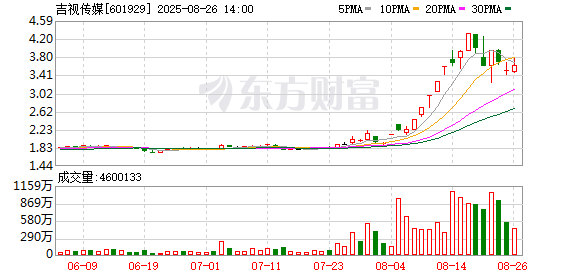
华策影视(300133):电视剧业务迎新政利好 主投电影《刺杀小说家2》定档国庆
Xin Lang Cai Jing· 2025-08-26 04:36
Core Viewpoint - The company reported strong financial performance in H1 2025, driven by significant growth in its television drama business and favorable government policies for the industry [2][6]. Financial Performance - In H1 2025, the company achieved revenue of 790 million yuan, representing a year-over-year increase of 114.9%, and a net profit attributable to shareholders of 120 million yuan, up 65.05% year-over-year [2][3]. - The company's gross margin was 31.2%, down 16.5 percentage points year-over-year, while the net profit margin was 14.9%, a decrease of 4.5 percentage points year-over-year [2][3]. - The company had cash and cash equivalents of 2.54 billion yuan, reflecting a year-over-year increase of 16.0% [2]. Television Drama Business - The television drama segment is on track, with significant revenue growth attributed to the approval of three major series, including "Jinxiu Fanghua" [2][3]. - In H1 2025, revenue from television production and distribution reached 360 million yuan, a year-over-year increase of 1258.9%, with a gross margin of 18.1% [3]. - The company launched two new series, "Guose Fanghua" and "Jinxiu Fanghua," totaling 56 episodes, and has several projects in the pipeline for H2 2025 [3][4]. Film Business - The film segment generated revenue of 40 million yuan in H1 2025, a year-over-year increase of 76.3%, with a gross margin of 24.8% [4]. - The company has a strong film slate, including one major investment film and three controlled films set to release in H2 2025 [4]. New Business Developments - The company is rapidly developing its computing power business, which generated revenue of 56.5 million yuan in H1 2025, with a gross margin of 28.58% [5]. - An international short drama app, DailyShort, was launched, providing services in 14 languages and contributing to overseas revenue of 88.12 million yuan, a year-over-year increase of 28.48% [5]. - The company is also expanding its animation business, with two major animated films scheduled for release in 2026 [5]. Industry Outlook - The television industry is benefiting from new government policies aimed at enhancing content quality and increasing supply [2][3]. - The company is well-positioned as a leader in the domestic television industry, with a robust pipeline of projects and a diversified business strategy [6][7].

“长剧向短”浪潮下 稻草熊娱乐以“小而美”战略抢占先机
Zhi Tong Cai Jing· 2025-08-26 02:51
Core Viewpoint - The company, Daocaoxiong Entertainment, is strategically adjusting to the industry's shift towards short and high-quality dramas, leveraging its unique platform operation model and resource integration capabilities to build long-term competitiveness [1][10]. Financial Performance - For the first half of 2025, Daocaoxiong Entertainment reported approximately 446 million RMB in revenue, reflecting some pressure compared to the previous year [2]. Strategic Initiatives - The company has implemented a "small but beautiful" content innovation strategy, combining long, short, and micro-short dramas to adapt to market changes, which has optimized production cycles and IP recovery efficiency [2][3]. - The user base for micro-short dramas reached 696 million by June 2025, with the market expected to grow to 63.43 billion RMB in 2025 and exceed 100 billion RMB by 2027 [2]. Content Development - Daocaoxiong Entertainment has actively adjusted its content strategy since 2024, producing a range of works from long to short dramas, with notable successes such as "Sanchaji 2" and various short dramas that have achieved high viewership and critical acclaim [3][4]. - The company has accelerated its project production and scheduling pace, utilizing its platform-based operation model to efficiently convert quality ideas into market-ready content [6]. IP Strategy - The core competitiveness of Daocaoxiong Entertainment lies in its ability to develop and commercialize super IPs, with a focus on series development and derivative operations to enhance commercial value [7]. - The company has a diverse portfolio of IPs, including adaptations of popular literary works, which provide a strong foundation for future content development [7][8]. Future Outlook - Daocaoxiong Entertainment aims to deepen its diversified entertainment ecosystem centered around super IPs, combining long and short content structures with online and offline commercial models to create a robust growth trajectory [11]. - The combination of short and long dramas aligns with consumer trends and is expected to enhance the company's profitability and risk resilience, positioning it well for future performance and market value growth [10][11].
“长剧向短”浪潮下 稻草熊娱乐(02125)以“小而美”战略抢占先机
智通财经网· 2025-08-26 02:36
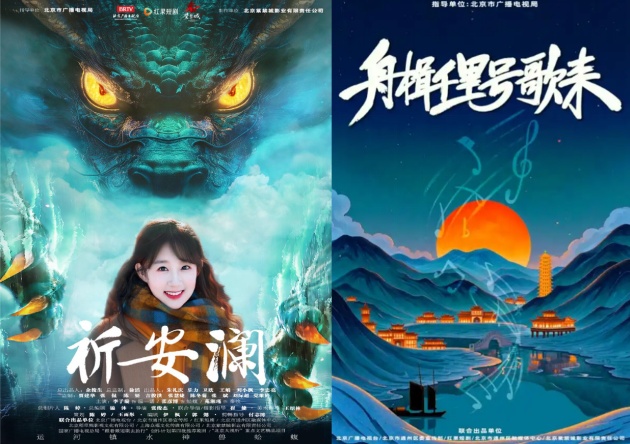
Core Insights - The article highlights the strategic adjustments made by Daocaoxiong Entertainment in response to the industry's shift towards short and high-quality dramas, positioning the company to navigate industry cycles and build long-term competitiveness [1][10]. Financial Performance - For the first half of 2025, Daocaoxiong Entertainment reported approximately 446 million RMB in revenue, reflecting a strategic focus on a "small but beautiful" content innovation strategy that combines long, short, and micro-short dramas [2][10]. Industry Trends - As of June 2025, the user base for micro-short dramas in China reached 696 million, with the market expected to grow to 63.43 billion RMB in 2025 and surpass 100 billion RMB by 2027 [2][3]. - The trend of shortening drama series has led to increased demands for high-quality, fast-paced productions, with Daocaoxiong Entertainment's early strategic positioning allowing it to take a proactive role in this structural transition [2][3]. Content Strategy - Daocaoxiong Entertainment has shifted its content strategy since 2024, producing a mix of long and short dramas, with notable successes such as "Sanchaji 2" and various short dramas that have achieved high viewership and critical acclaim [3][4]. - The company has launched micro-short dramas like "Qi An Lan" and "Zhou Ji Qian Li Hao Ge Lai," which have received nominations and recognition at major festivals, showcasing the integration of cultural elements and modern storytelling [4][6]. Operational Efficiency - The company's platform-based operational model has enhanced its ability to integrate external resources and streamline production processes, allowing for quicker turnaround times and better alignment with market demands [6][10]. IP Development - Daocaoxiong Entertainment focuses on developing "super IPs" through a comprehensive industry chain approach, with a strategy centered on IP reserve, series development, and derivative operations to maximize commercial value [7][10]. - The company has a diverse pipeline of upcoming projects, including various genres and formats, ensuring a robust content supply for the next two to three years [8][10]. Future Outlook - The management plans to deepen its multi-faceted entertainment ecosystem centered around super IPs, combining long and short content structures with online and offline commercial models to create a more resilient growth trajectory [11]. - The integration of short and long dramas aligns with evolving consumer preferences, enhancing the company's future profitability and risk resilience [11].
熔雅正诙谐于一炉(看台人语)
Ren Min Ri Bao· 2025-08-25 22:40
Core Viewpoint - The article discusses the rising popularity of micro-dramas that creatively blend traditional art restoration techniques with engaging storytelling, attracting a younger audience and promoting cultural heritage [1] Group 1: Micro-Drama Success - Recent micro-dramas like "Escape from the British Museum" and "Return to the Yongle Encyclopedia" have gained attention for their unique storytelling and strong knowledge base, showcasing a successful creative formula [1] - The micro-drama "Ink Rhythm Rebirth" features traditional restoration methods recognized by national library experts, making the serious subject matter entertaining and accessible [1] Group 2: Cultural Impact - The engaging portrayal of art restoration in micro-dramas serves to promote traditional culture, suggesting that a series format could enhance the storytelling and cultural dissemination [1] - The combination of humor and serious skills in these dramas resonates with audiences, indicating a shift in how cultural narratives are presented [1]
邵氏兄弟控股公布中期业绩 拥有人应占溢利704万元 同比扭亏为盈
Zhi Tong Cai Jing· 2025-08-25 14:29
Core Viewpoint - Shaw Brothers Holdings (00953) reported a significant increase in revenue and profitability for the first half of 2025, indicating a strong recovery and growth in its operations [1] Financial Performance - Revenue reached approximately 106 million, representing a year-on-year increase of 734.6% [1] - Profit attributable to shareholders was 7.04 million, marking a turnaround from a loss to profit [1] - Earnings per share stood at 0.4959 cents [1] Operational Highlights - The improvement in performance is primarily attributed to the release of produced series and the group's involvement in series projects during the reporting period [1]
邵氏兄弟控股(00953)公布中期业绩 拥有人应占溢利704万元 同比扭亏为盈
智通财经网· 2025-08-25 14:28
Group 1 - The core viewpoint of the article is that Shaw Brothers Holdings (00953) reported significant financial improvement in its mid-year results for 2025, with a revenue of approximately 106 million, representing a year-on-year increase of 734.6% [1] - The company achieved a profit attributable to shareholders of 7.04 million, marking a turnaround from a loss to profit compared to the previous year [1] - Earnings per share were reported at 0.4959 cents, indicating a positive shift in the company's financial performance [1] Group 2 - The improvement in performance is primarily attributed to the release of produced series during the reporting period and the company's involvement in various series projects [1]
幸福蓝海:公司参与出品的两部电视剧《南京谈判》《反人类暴行》成功入选2025年度电视剧引导扶持专项资金项目扶持作品名单
Zheng Quan Ri Bao· 2025-08-25 12:39
Group 1 - The core viewpoint of the article highlights that the company, Happiness Blue Sea, has successfully had two of its television dramas, "Nanjing Negotiation" and "Anti-Human Atrocities," selected for the 2025 annual drama guidance and support special fund project by the National Radio and Television Administration [2] Group 2 - The selected dramas are part of a government initiative aimed at promoting quality content in the television industry, indicating a positive trend for companies involved in producing culturally significant media [2] - This selection may enhance the company's reputation and potentially lead to increased viewership and revenue opportunities in the future [2]

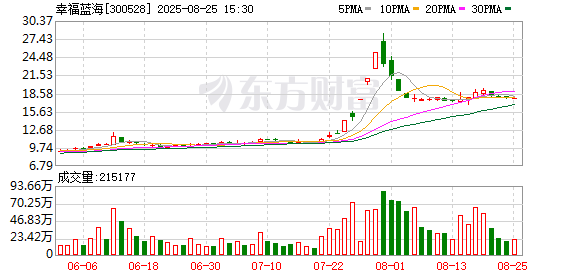
幸福蓝海:参与出品的《唐探1900》《南京照相馆》先后上映
Zheng Quan Ri Bao Wang· 2025-08-25 12:00
Group 1 - The company, Happiness Blue Sea, announced that it will participate in the production of films "Tang Detective 1900" and "Nanjing Photo Studio," which are set to be released in 2025 [1] - The release date for the film "Penghu Sea Battle," in which the company is also involved, is yet to be determined [1] - The company will disclose relevant information in a timely and regulated manner regarding these productions [1]