种植业

Search documents
丰收背后尽显“科技范儿” 希望的田野绘就产业兴旺“振兴图”
Yang Shi Wang· 2025-10-29 01:38
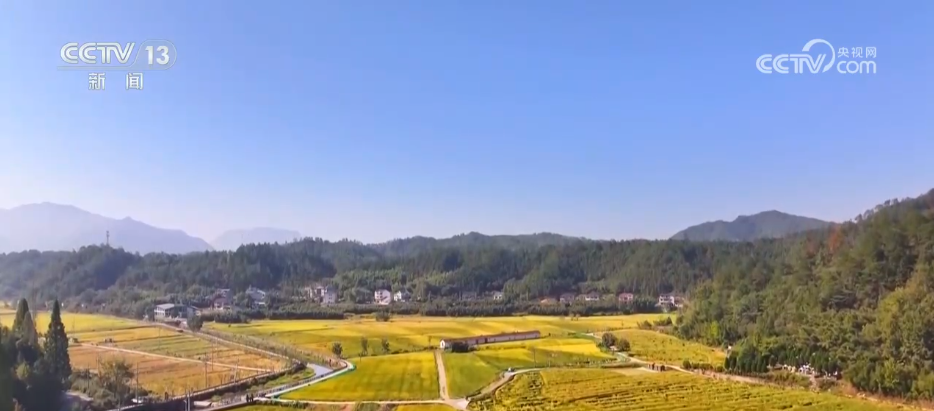
Group 1 - The article highlights the successful harvest of late rice in Lin'an, Zhejiang, showcasing the integration of technology and services in agriculture [1][3] - The agricultural machinery service center in Lin'an operates eight large drying machines, covering over 50% of the main rice production areas in the region [3] - The service center offers additional services such as rice storage and processing, allowing farmers to sell dried rice directly or process it into branded rice, enhancing value and reducing losses [7] Group 2 - In Heilongjiang, over 230 million acres of crops have been harvested, accounting for 99.2% of the expected harvest, indicating the completion of the autumn harvest [8] - The use of advanced machinery and technology, such as the Beidou navigation system, is optimizing land preparation for future planting [8][10] - In Shanxi's Xiyang County, 330,000 acres of corn are entering the concentrated harvesting period, with local farmers adapting to weather conditions to ensure optimal harvest timing [10][12] Group 3 - The mountainous climate in Shanxi presents challenges for corn harvesting, with farmers waiting for drier conditions to reduce mechanical losses during harvest [14] - Farmers in Xiyang County utilize natural drying methods for corn, taking advantage of the region's dry autumn and winter conditions to save on drying costs [14][15] - The local agricultural department predicts that corn harvesting in Xiyang County will continue until mid-November, reflecting the region's agricultural cycle [15]

南农晨读 | 十字花科 聚势绽放
Nan Fang Nong Cun Bao· 2025-10-29 01:00
Group 1 - Guangdong Province has announced a list of pilot projects for modern agricultural industry support, with a total funding of 195 million yuan for the years 2024-2025 [3][5][6] - The pilot projects involve eight initiatives across seven cities in Guangdong, aimed at enhancing agricultural development [4][5] - The public announcement period for these projects is from October 24 to October 30, 2025 [4][5] Group 2 - The 7th World Hakka Business Conference will be held in Meizhou from November 23 to 25, 2023, focusing on global business collaboration for high-quality development [9][10][11] - The conference will feature 11 activities aimed at attracting investment, regional cooperation, and cultural exchange [10][11][12] Group 3 - The 21st China International Grain and Oil Expo will take place from October 30 to November 1, showcasing the ecological advantages of Qingyuan's silk rice [16][17][19] - Qingyuan silk rice is positioned as a key component of Guangdong's agricultural industry, highlighting its brand development at the expo [18][19][20] Group 4 - The citrus industry in Guangxi is undergoing a transformation, with a projected reduction in planting area from 9 million mu to a stable range of 4.5 to 5 million mu by 2025 [22][24][25] - This shift represents a move towards quality improvement in the citrus sector [24][25] Group 5 - The "Xingning Pigeon" brand is emerging as a significant player in the meat pigeon market, integrating supply chains and innovating in pre-prepared dishes [28][35][36] - This brand is seen as a model for driving local economic development and rural revitalization through agricultural innovation [36][37] Group 6 - Zhanjiang is recognized as a core production area for shrimp, with a focus on both breeding and processing, and is expanding its supply chain globally [39][42][43] - A seafood promotion event was held in Guiyang, showcasing Zhanjiang's strengths in the shrimp industry [40][43]

全国秋粮收获已过八成半 冬小麦播种加快推进
Yang Shi Xin Wen Ke Hu Duan· 2025-10-29 00:38
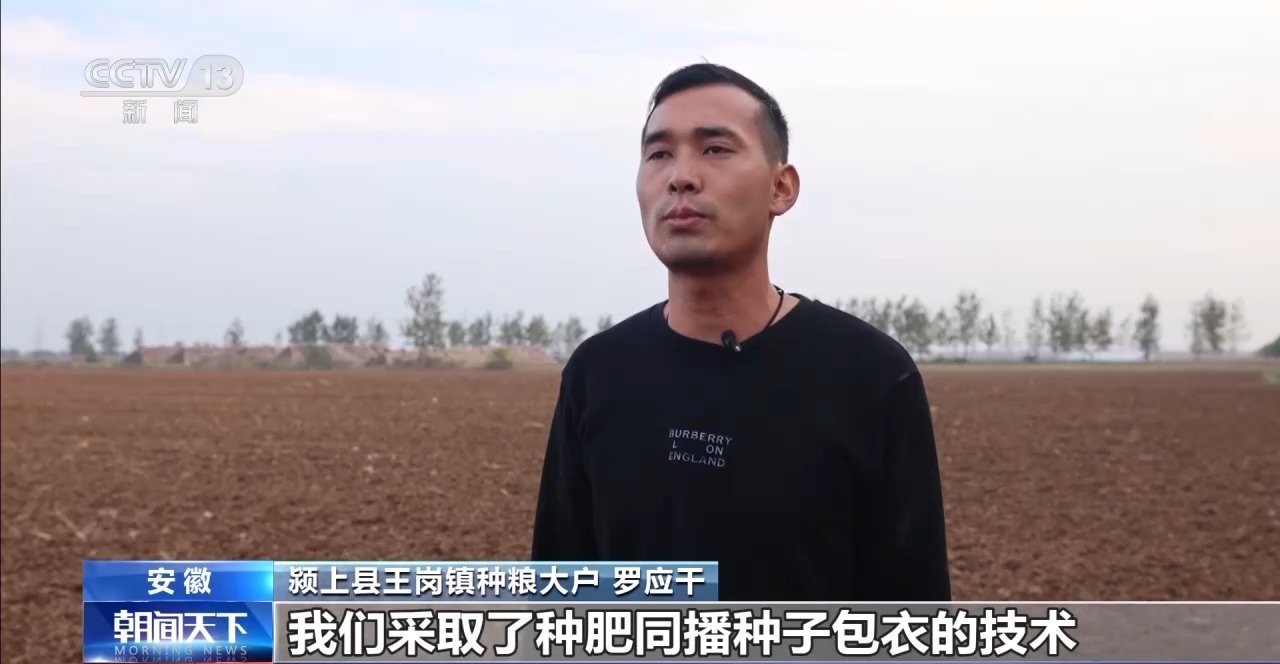
Group 1 - The national autumn grain harvest has surpassed 85%, with the Northeast region exceeding 90% and the Northwest nearing 90% as well [2] - The winter wheat sowing progress in major production areas has accelerated, reaching 15% completion [2] - In the Huang-Huai-Hai region, the autumn grain harvest has sped up, and provinces are beginning to sow winter wheat [2] Group 2 - In Anhui's northern main production area, wheat sowing is delayed by one week compared to the average due to previous rainfall [2] - Farmers are adopting techniques such as seed-fertilizer co-application to improve sowing quality and ensure uniform fertilization [2][4] - In Shandong, over 3.4 million acres of winter wheat have been sown, with farmers utilizing "drying soil" measures to manage high soil moisture [4] Group 3 - Farmers are employing precision seeding techniques to ensure consistent planting depth and spacing, which enhances seedling emergence [6]
中国农业农村部:全年粮食有望再获丰收
Zhong Guo Xin Wen Wang· 2025-10-28 14:00
Core Insights - The Ministry of Agriculture and Rural Affairs of China announced that the country is expected to achieve another bumper harvest in grain for the year, with summer grain production reaching 299.48 million tons [1] - Early rice production increased by 0.12% year-on-year, totaling 57.03 million tons, while autumn grain area has expanded, particularly for high-yield crops like corn [1] - The overall agricultural conditions are favorable, with over 85% of the autumn grain harvest completed, despite challenges in certain regions due to continuous rainy weather [1] Group 1: Grain Production - Summer grain production is reported at 299.48 million tons, indicating stable yields [1] - Early rice production increased by 6.8 million tons compared to the previous year, marking a 1.2% growth [1] - The area for autumn grain has increased, especially for corn, contributing to the expectation of a bumper harvest [1] Group 2: Agricultural Conditions - Most agricultural regions have favorable conditions for production, particularly in Northeast China, Inner Mongolia, and Xinjiang [1] - The Ministry is actively working to mitigate the impact of adverse weather in the Huang-Huai-Hai region by accelerating harvest efforts [1] Group 3: Livestock and Other Agricultural Products - The total production of pork, beef, mutton, and poultry reached 73.12 million tons, reflecting a year-on-year growth of 3.8% [2] - Milk production was reported at 29.21 million tons, with a 0.7% increase, while egg production reached 26.46 million tons, growing by 0.2% [2] - The supply of vegetables, fruits, and aquatic products remains abundant, with stable prices [2] Group 4: Agricultural Investment and Income - The average disposable income for rural residents was 17,686 yuan, showing a real growth of 6% year-on-year [2] - Per capita consumption expenditure increased by 5.8%, reaching 14,597 yuan [2] - Fixed asset investment in the primary industry totaled 734.4 billion yuan, reflecting a year-on-year growth of 4.6% [2]
全年粮食有望再获丰收 前三季度农业农村经济运行总体平稳
Yang Shi Xin Wen· 2025-10-28 13:52
Group 1: Agricultural Production - The agricultural economy in China is showing strong growth, contributing significantly to high-quality economic development [1] - The total grain production is expected to achieve a bumper harvest, with summer grain output at 299.48 billion jin and early rice production at 57.03 billion jin, an increase of 6.8 million jin or 1.2% year-on-year [1] - The area for autumn grain has increased, particularly for high-yield crops like corn, with over 85% of the harvest already completed [1] Group 2: Livestock and Poultry Production - The supply of "vegetable basket" products is sufficient, with total meat production (pork, beef, lamb, and poultry) reaching 73.12 million tons, a year-on-year increase of 3.8% [2] - The national milk production is 29.21 million tons, up 0.7% year-on-year, while egg production is 26.46 million tons, reflecting a 0.2% increase [2] - The number of breeding sows has decreased by 450,000 compared to the peak at the end of last year, with a total of 40.35 million sows as of the end of September [2] Group 3: Poverty Alleviation and Employment - The achievements in poverty alleviation are being consolidated, with over 7 million individuals identified for assistance to prevent poverty [3] - More than 33 million people from impoverished backgrounds are employed, exceeding the annual target [3] - Financial aid from eastern provinces to western provinces reached 22.48 billion yuan in the first three quarters [3] Group 4: Agricultural Investment and Rural Development - Rural residents' disposable income increased to 17,686 yuan, a real growth of 6%, while per capita consumption expenditure rose to 14,597 yuan, a real increase of 5.8% [5] - Fixed asset investment in the primary industry reached 734.4 billion yuan, growing by 4.6%, which is 5.1 percentage points higher than the national average [5] - The number of farmer cooperatives has exceeded 2 million, and nearly 4 million family farms have been established [5] Group 5: Rural Infrastructure and Governance - The construction of livable and workable rural areas is progressing, with 324,000 new rural construction projects added in the first three quarters [4] - Investment in rural infrastructure reached 162.39 billion yuan, with improvements in roads, water supply, and electricity [4] - The effectiveness of rural governance is being enhanced through the promotion of typical cases of party-led governance [4]
农业农村部:预计大豆面积连续4年保持在1.5亿亩以上
Xin Hua Cai Jing· 2025-10-28 13:15
Core Viewpoint - The overall agricultural and rural economy in China is stable in the first three quarters of the year, with expectations for a good harvest in grain production and improvements in various agricultural sectors [1][2][3][4]. Group 1: Agricultural Production - Summer grain production reached 299.48 billion jin, with early rice production increasing by 6.8 billion jin, a growth of 1.2% year-on-year [1]. - The area for autumn grain has increased, particularly for high-yield crops like corn, with over 85% of the harvest completed [1]. - Soybean planting area is expected to remain above 15 million acres for the fourth consecutive year, with production maintaining above 20 million tons [1]. Group 2: Livestock and Poultry Production - National production of pork, beef, lamb, and poultry reached 73.12 million tons, a year-on-year increase of 3.8% [2]. - Milk production was 29.21 million tons, up 0.7%, while egg production was 26.46 million tons, a growth of 0.2% [2]. - The number of breeding sows decreased by 450,000 compared to the peak at the end of last year, with a total of 40.35 million sows as of the end of September [2]. Group 3: Agricultural Technology and Equipment - The construction of high-standard farmland is being actively promoted, with 2.564 million new agricultural machines purchased in the first three quarters [2]. - The program for upgrading old agricultural machinery has seen 1.016 million units scrapped and replaced [2]. Group 4: Rural Development and Income - The per capita disposable income of rural residents reached 17,686 yuan, a real increase of 6% year-on-year, while per capita consumption expenditure was 14,597 yuan, up 5.8% [4]. - Fixed asset investment in the primary industry was 734.4 billion yuan, a year-on-year increase of 4.6%, outpacing the national average growth rate by 5.1 percentage points [4]. Group 5: Rural Reform and Governance - The second round of land contract extensions is being piloted, with progress in the management of rural homesteads and collective property rights reform [4]. - The number of farmer cooperatives has exceeded 2 million, and nearly 4 million family farms have been established, enhancing agricultural social services [4].
新疆七十年|天山南北的丰饶赞歌
Yang Shi Wang· 2025-10-28 12:59
Core Viewpoint - Xinjiang has transformed from a "desert wasteland" to a "western granary," showcasing the region's immense potential through significant agricultural advancements [1] Summary by Relevant Sections - **Irrigation and Land Expansion** - Irrigated area has expanded from over 27 million acres in 1955 to over 95.2 million acres today [1] - **Grain Production Growth** - Total grain production has surged from 1.1 million tons at the founding of New China to 23.302 million tons in 2024 [1] - Xinjiang is the only province in China to achieve a cumulative grain increase of over 10 billion pounds in three years [1] - **Technological Advancements in Agriculture** - The region employs smart irrigation techniques and technology, including intelligent sensor networks and drone operations, to enhance agricultural efficiency [1] - **Historical Transformation** - Xinjiang has transitioned from "internal balance" to "national supply," marking a historic shift in its agricultural role [1] - **Land Utilization** - The region boasts over 4 acres of arable land per capita, contributing to its status as a significant grain-producing area [1]
北大荒(600598.SH)前三季度净利润13.57亿元,同比增长0.7%
Ge Long Hui A P P· 2025-10-28 12:13
Core Viewpoint - Beidahuang (600598.SH) reported a decline in total operating revenue for the first three quarters of 2025, while net profit attributable to shareholders showed slight growth [1] Financial Performance - Total operating revenue for the first three quarters of 2025 reached 4.108 billion yuan, a year-on-year decrease of 5.73% [1] - Net profit attributable to shareholders was 1.357 billion yuan, reflecting a year-on-year increase of 0.7% [1] - Basic earnings per share stood at 0.763 yuan [1]

北大荒的前世今生:营收41.08亿行业第二,净利润13.51亿位居榜首,毛利率高于行业均值14.15个百分点
Xin Lang Cai Jing· 2025-10-28 11:50
Core Viewpoint - Beidahuang is a leading agricultural company in China, recognized for its large scale and modern farming practices, with significant land resources and a focus on green and organic products [1] Group 1: Business Performance - In Q3 2025, Beidahuang reported revenue of 4.108 billion, ranking second in the industry, while the net profit reached 1.351 billion, ranking first [2] - The main business segments include land leasing fees accounting for 62.16% of revenue and agricultural materials sales making up 33.85% [2] Group 2: Financial Health - Beidahuang's debt-to-asset ratio stood at 25.66% in Q3 2025, lower than the industry average of 38.53%, indicating strong solvency [3] - The gross profit margin was 40.61%, surpassing the industry average of 26.46%, reflecting robust profitability [3] Group 3: Shareholder Information - As of September 30, 2025, the number of A-share shareholders decreased by 10.26% to 104,500, while the average number of shares held per shareholder increased by 11.43% to 17,000 [5] - Major shareholders include Hong Kong Central Clearing Limited and Southern CSI 500 ETF, with notable changes in their holdings [5] Group 4: Management Compensation - The chairman, Ma Zhongzhi, received a salary of 814,100 in 2024, a decrease of 128,700 from 2023 [4] - The general manager, Zhang Yunhai, earned 186,500 in 2024 [4] Group 5: Future Outlook - Analysts highlight growth potential in land rental income and a strong agricultural technology service system, with R&D investment at 1.78% [5] - Earnings per share (EPS) forecasts for 2025-2027 are 0.66, 0.71, and 0.73, with corresponding dynamic P/E ratios of 23, 21, and 20 [5] - The company is expected to maintain a high dividend payout and has a target price of 18, indicating a 19% upside potential [6]

希望的田野迎来丰收季 五彩果蔬描绘乡村振兴新画卷
Yang Shi Wang· 2025-10-28 10:58
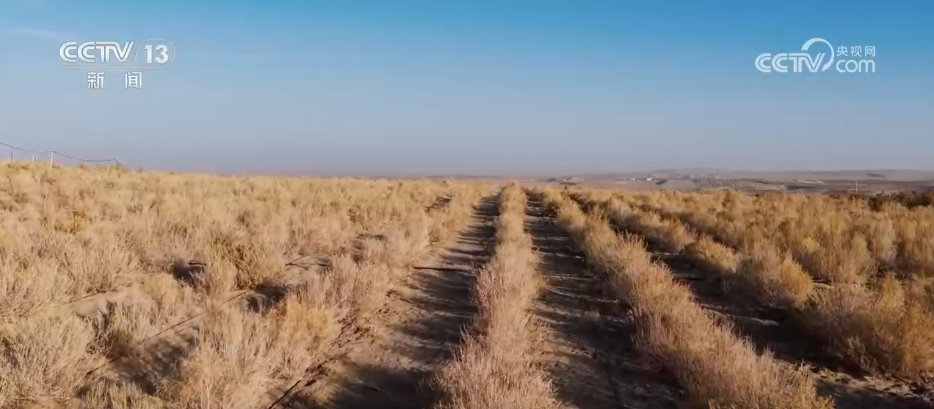
Group 1: Desert Ecological Management and Industry Development - Xinjiang's Yutian County combines desert ecological management with the development of the sand industry, encouraging local villagers to plant ecological forests such as red willow and saxaul, and to cultivate Cistanche deserticola [1][5] - The cultivation of Cistanche deserticola has led to increased income for local farmers, contributing to both environmental greening and economic benefits [1][3] - A dedicated trading market for Cistanche deserticola has been established in Yutian County, adopting a "company + base + cooperative + farmer" model to facilitate the industry [3] Group 2: Agricultural Innovations in Jiangxi and Gansu - Jiangxi's Yongfeng County has successfully harvested "autumn delayed" peppers, utilizing smart agricultural techniques to ensure high quality for winter supply [5][9] - The "autumn delayed" pepper planting model extends the supply cycle, allowing for staggered market entry and filling market gaps [9] - In Gansu's Lanzhou, the edible lily harvest has begun, with new technologies like "covering grass for moisture retention" and "rapid propagation" enhancing both yield and quality [14][18] - The area under lily cultivation in Lanzhou has exceeded 100,000 acres, with an expected yield of around 30,000 tons this autumn [18]