
产业变革

Search documents
全国政协委员、申万宏源证券研究所首席经济学家杨成长:进一步提高资本市场制度的适应性和包容性
证券时报· 2026-03-03 23:13
Core Viewpoint - The article emphasizes the need to enhance the adaptability and inclusiveness of the capital market, accommodating diverse industrial development models and innovative enterprise models, requiring joint efforts from regulatory bodies, listed companies, intermediaries, and investors [1] Group 1: Capital Market Development - The high-quality development of China's capital market relies primarily on domestic demand and industrial innovation, despite the changing international environment [1] - To attract long-term capital into the capital market, it is essential to strengthen listed companies and innovate research methods to support long-term investments [1] - A significant number of "chain leader" enterprises have emerged in the capital market, attracting high-quality companies, which forms the foundation for long-term capital entry [1] Group 2: Research Methodology Innovation - Traditional research methods focused on financial statements, cash flow, and fixed asset investment are no longer sufficient due to changes in enterprise growth models, such as technological innovation and platform models [1] - There is a need to continuously innovate research methods, thinking, and logic to adapt to market changes [1] Group 3: Focus Areas for 2023 - The focus for the year includes industrial policies, the relationship between financial investment and real investment, and new consumption trends [2] - Recent changes in real investment methods have shifted from real estate and infrastructure to technology, artificial intelligence, and digital innovation, necessitating improvements in financial investment methods [2] - New consumption trends indicate a shift from valuing cost-effectiveness to emotional value, requiring innovative analysis methods for products like e-sports and short videos [2]


第九届民营企业领袖年会5月在京启幕 激发民营经济新质生产力 共筑“十五五”发展新格局
Sou Hu Cai Jing· 2026-02-25 06:55
Core Insights - The upcoming 9th Private Enterprise Leaders Annual Conference is expected to significantly influence the future of thousands of companies over the next five years, with a strong demand for participation indicating a high level of interest in the private economy in China [1][7] - The event aims to stimulate new productive forces in the private economy and establish a new development pattern for the 14th Five-Year Plan [1] Group 1: Policy Signals - The conference serves as a high-frequency reception station for policy signals, allowing participants to gain insights into macroeconomic trends, regulatory directions, and industry support strategies [3] - Attendees can capture and interpret emerging consensus on "new productive forces" and financial resource flows, which can inform their strategic decisions [3] Group 2: Industry Transformation - The event provides a comprehensive view of industry changes, featuring parallel forums covering key sectors such as AI, renewable energy, and biotechnology [4] - Discussions led by industry leaders focus on practical experiences and strategies, offering valuable insights for decision-makers [4] Group 3: Resource Allocation - The conference is a unique marketplace for top-tier resource allocation, bringing together capital from leading private equity and venture capital firms, as well as top talent and technology experts [4][5] - Various formats such as private meetings and project roadshows facilitate efficient resource matching and collaboration [5] Group 4: Entrepreneurial Spirit - The gathering offers psychological support and energy replenishment for entrepreneurs facing similar challenges, fostering a sense of community and shared resilience [6] - The high demand for attendance reflects a strong desire for knowledge and proactive engagement among leading business minds [6][7] Group 5: Attendance Dynamics - The scarcity of tickets highlights the event's significance as a milestone at the intersection of the 14th and 15th Five-Year Plans, making attendance a necessity for strategic positioning [7] - The event attracts a diverse range of participants, including leading companies, hidden champions, and next-generation entrepreneurs seeking to innovate and expand their horizons [7]
2026新年献词|摩根士丹利基金总经理周文秱:2026年将继续为投资者提供多元化、差异化的产品选择
Xin Lang Cai Jing· 2026-02-14 08:31
Group 1 - The core message emphasizes the positive outlook for the Chinese capital market in 2026, driven by a new wave of technological revolution and industrial transformation [2][4] - Morgan Stanley Fund has achieved notable performance in the past year, with its digital economy mixed fund ranking first in its category over the last two years, and several fixed-income products ranking in the top decile for 2025 [2][4] - The company plans to leverage its global integrated platform and over 20 years of local market experience to provide diversified and differentiated product offerings to investors [1][3][4] Group 2 - The company aims to maintain long-term superior product performance and provide high-quality professional services to help investors seize global market opportunities [2][4] - The management scale of Morgan Stanley Fund has shown steady growth, indicating a robust operational foundation [2][4]
强化基础研究战略性前瞻性体系化布局 支持广大科研人员勇攀科学高峰产出更多原创性成果
Xin Lang Cai Jing· 2026-02-12 17:28
Core Insights - The core message emphasizes the importance of strengthening the strategic, forward-looking, and systematic layout of basic research to support scientific innovation and original achievements in China [1][2] Group 1: Importance of Basic Research - The National Natural Science Foundation of China (NSFC) has played a significant role in promoting basic research and cultivating innovative talent over its 40 years of establishment [1][2] - The NSFC is recognized as a crucial channel for funding researchers in basic research since its inception in February 1986 [2] Group 2: Strategic Directions - The directive encourages the integration of the "Four Orientations" strategy to seize opportunities presented by the new technological revolution and industrial transformation [2] - There is a call for deepening reforms in the scientific funding system to enhance funding efficiency and create a favorable research ecosystem [2] Group 3: International Collaboration and Support - The initiative aims to expand international cooperation and support researchers in achieving greater scientific heights and producing more original results [1][2] - The overarching goal is to contribute to high-level technological self-reliance and the construction of a strong technological nation [1][2]
吉华集团控制权或易主,染料龙头迎来战略转折点
Xin Lang Cai Jing· 2026-02-05 12:25
Core Viewpoint - Jihua Group is undergoing a potential change in control, which may reshape the competitive landscape of the dye industry in China [2][12]. Company Overview - Jihua Group, established in 1992, has evolved from a small dye factory to the third-largest player in China's dye industry, leveraging technology from Bayer to enter the high-end dye market [5][14]. - The company's revenue grew from 2.35 billion yuan in 2017 to an estimated 3.28 billion yuan in 2024, reflecting a compound annual growth rate of 4.9% [5][14]. - Net profit has fluctuated significantly, peaking at 420 million yuan in 2021 and projected to decline to around 230 million yuan in 2024, aligning with the cyclical nature of the dye industry [5][14]. Control Change Timing - The decision to initiate the control change before the Spring Festival is strategic, as the dye industry traditionally sees price increases post-holiday, with a 5% month-on-month rise in January 2026 [6][15]. - The timing of the suspension of trading is intended to prevent stock price fluctuations from affecting negotiations [6][15]. Transaction Details - The transaction will utilize a private transfer rather than a public solicitation, indicating that both parties have a clear intention to proceed [7][16]. - Valuation for the transaction is expected to be between 1.2 to 1.5 times the price-to-book ratio, suggesting a market value range of approximately 3.5 to 4.5 billion yuan for Jihua Group [7][16]. Strategic Implications - The change in control is anticipated to accelerate technological upgrades, as the new controlling party may increase investment in emerging fields such as digital printing dyes and bio-based dyes [8][17]. - There is potential for optimizing production capacity by consolidating operations and possibly shutting down outdated facilities [8][17]. - The new shareholders may also reshape market strategies, particularly by increasing exports to Southeast Asia, which aligns with tariff reductions under the RCEP agreement [8][17]. Market Expectations Post-Resumption - Prior to the suspension, Jihua Group's stock was priced at 6.55 yuan, with a market capitalization of approximately 4.3 billion yuan, corresponding to a projected PE ratio of about 18 times for 2025 [9][18]. - Following the resumption of trading, a price increase of 20% to 30% is anticipated, contingent on the new controlling party's ability to integrate operations effectively [9][18]. - Employee management will be crucial, as the company employs over 2,300 individuals, with 40% in production roles, and any mismanagement could impact operational efficiency [10][19].


有色板块震荡回调,如何利用汇添富中证细分有色ETF联接C(019165)布局“地缘+产业”双主线?
Sou Hu Cai Jing· 2026-02-03 06:32
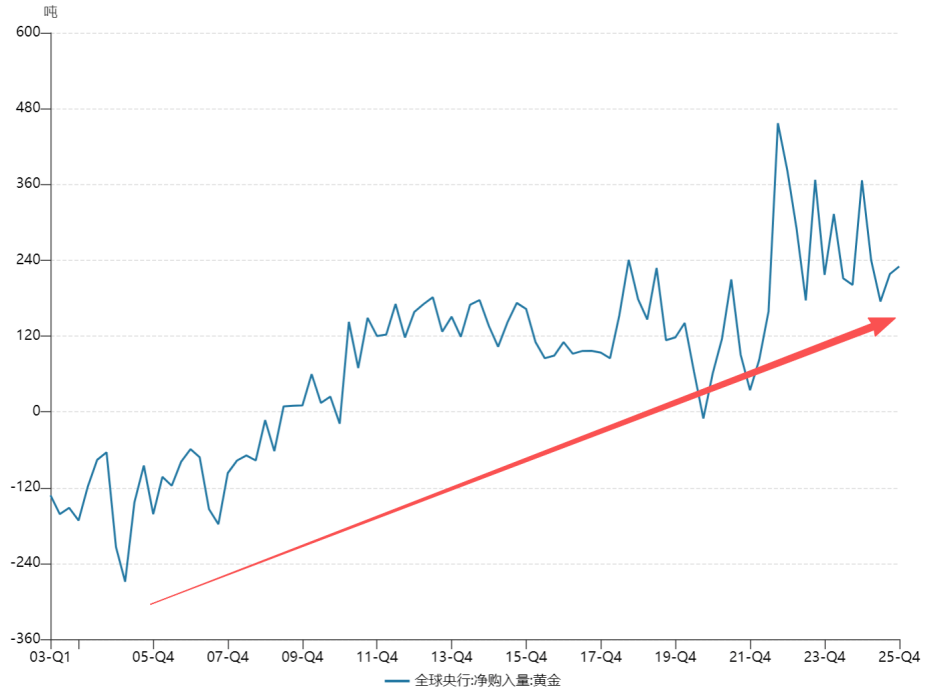
Core Viewpoint - The recent volatility in precious and base metal markets indicates a shift from a "liquidity easing narrative" to "policy uncertainty pricing," which has triggered adjustments in crowded positions but has not undermined the long-term bullish fundamentals supporting metal prices [1] Group 1: Precious Metals - The geopolitical risk premium has not materially dissipated, with ongoing conflicts from Eastern Europe to the Middle East continuing to erode market trust in traditional safe-haven assets [1] - Central banks' net purchases of gold over several years have fundamentally reshaped the demand structure for gold, providing a non-speculative underlying support for precious metal prices [4] Group 2: Base Metals - The global energy transition and the infrastructure needs for artificial intelligence are creating a long-term growth curve for base metal consumption, with significant increases in the unit usage of copper and aluminum in electric vehicles compared to traditional fuel vehicles [4] - Demand for copper, aluminum, and tin from emerging sectors is projected to exceed 40% of total consumption within the next five years, indicating a permanent upward shift in the demand curve [4] - The "de-financialization" and "re-strategization" of base metals are ongoing, with macroeconomic sentiment-induced pullbacks providing long-term investors with opportunities to reassess under supply-side constraints and robust demand [4] Group 3: Investment Opportunities - The Huatai-PineBridge ETF (159652) covers a comprehensive index of gold, copper, aluminum, lithium, and rare earths, expected to benefit from a super cycle in non-ferrous metals [5] - The index structure features a dual-drive characteristic of traditional cycles and emerging growth, capturing both macroeconomic recovery and industrial transformation opportunities [5] - The ETF has shown a remarkable two-year return rate of 171.24%, significantly outperforming mainstream indices like the CSI 300, with a lower maximum drawdown, indicating a favorable risk-return profile [7]
基建ETF(159619)收跌超3%,产业变革催生转型机遇,回调或可布局
Mei Ri Jing Ji Xin Wen· 2026-02-02 07:20
Core Viewpoint - The infrastructure ETF (159619) has seen a decline of over 3%, but the ongoing industrial transformation presents opportunities for strategic repositioning, suggesting that this pullback may be a good time for investment [1] Group 1: Industry Trends - The upcoming era of industrial transformation is emphasized, highlighting the importance of construction companies' cross-industry transformation opportunities [1] - There is a notable increase in net financing from special bonds, with a total of 308.6 billion yuan as of January 30, which is higher than the same period in the past three years [1] - Key construction companies are showing signs of stabilizing and recovering in new order contracts as of Q4 2025, indicating potential acceleration in capital expenditures from major engineering and industrial firms [1] Group 2: Market Performance - The infrastructure ETF (159619) tracks the CSI Infrastructure Index (930608), which includes listed companies involved in infrastructure construction, professional engineering, and building decoration [1] - The market share of leading construction companies is gradually increasing, supported by favorable policies that are expected to continue [1] - There is a positive outlook for the bottom rebound opportunities of leading cyclical companies in the current market environment [1]
习近平主持中共中央政治局第二十四次集体学习
国家能源局· 2026-01-31 10:08
Core Viewpoint - The article emphasizes the importance of cultivating future industries to seize technological and industrial leadership, enhance new productive forces, and improve the quality of life for the people [2][3]. Group 1: Strategic Planning and Development - Future industries are characterized by foresight, strategic significance, and disruptive potential, necessitating scientific planning and comprehensive coordination [3]. - The focus during the "14th Five-Year Plan" period should be on key directions for future industry development, with a need for scientific validation of technological routes and enhanced strategic foresight regarding frontier technologies [3]. - It is essential to consider national strategic needs, technological maturity, and supporting factors for localized and differentiated development [3]. Group 2: Role of Enterprises and Innovation - The pace, breadth, and depth of future industry development are largely determined by the extent of technological breakthroughs [3]. - Enterprises play a crucial role in driving innovation, and there is a need to concentrate various innovative resources within enterprises to cultivate leading technology firms and high-tech enterprises [3]. - The government should support the long cultivation cycle and high market risks associated with future industries by improving fiscal and tax policies and fostering a conducive environment for innovation [3]. Group 3: Governance and International Cooperation - The development of future industries is broad and requires a sound governance system to balance development and security while exploring effective regulatory methods [4]. - There is a call for deepening international cooperation to promote joint standards, rules, and industry advancement [4]. - Leaders at all levels should enhance their understanding of frontier technologies and industries to make informed decisions [4].

4100点的十字路口,如何做好投资布局?
雪球· 2026-01-30 13:00
Core Viewpoint - The article discusses the current market dynamics in China, highlighting a significant divergence between traditional economy stocks and emerging sectors like non-ferrous metals and commercial aerospace, indicating a transition from a "structural bull market" to a "broad bull market" as the Shanghai Composite Index surpasses 4000 points [3][4]. Group 1: Market Dynamics - The divergence in market performance reflects a "new-old momentum transition," with non-ferrous metals and commercial aerospace experiencing substantial growth driven by macroeconomic and industrial logic [3][4]. - Non-ferrous metals are benefiting from a multi-dimensional resonance, including global energy transition, AI development, geopolitical uncertainties, and supply constraints, leading to a strong demand cycle [3][4]. - The rise of commercial aerospace signifies the industrialization of "new productive forces," with increasing satellite internet deployment and significant demand for rocket manufacturing and satellite development [4]. Group 2: Traditional Economy - The weakness in traditional economy stocks indicates a market waiting for performance turning points and policy catalysts, particularly in key areas like real estate that impact the consumption chain [4][5]. - Despite current underperformance, traditional stocks are expected to recover as the market transitions to a broader bull phase, with historical trends suggesting that healthy bull markets typically involve rotation across multiple sectors [4][5]. Group 3: Investment Strategy - The core strategy for navigating the current market involves "focusing on prosperity, balanced allocation, and dynamic adjustment," emphasizing the importance of aligning with industry trends and maintaining core positions in strong sectors [5][6]. - Investors are advised to consider ETFs covering diverse non-ferrous metals and the entire commercial aerospace supply chain to mitigate risks and capitalize on sector growth [5][6]. - Attention should also be given to potential recovery signals in "mid-tier" and "traditional" stocks, particularly in consumer and financial sectors, as the market evolves [5][6]. Group 4: Market Outlook - The market is anticipated to exhibit an "N-shaped" trajectory in 2026, with potential highs in the first quarter followed by consolidation in the second and third quarters, before reaching new highs in the latter half of the year [6][7]. - Future excess returns are expected to stem from the industrialization of "new productive forces" and the cyclical recovery and value reassessment of the traditional economy, necessitating a balanced investment approach [7].

马年元月金属涨势震撼:铜价“狂飙”领衔涨1820元/吨,市场格局重塑进行时!
Xin Lang Cai Jing· 2026-01-30 05:09
Core Viewpoint - The metal market in January 2026 is characterized by significant volatility, particularly in copper prices, driven by macroeconomic policies, geopolitical conflicts, and industrial transformations [1][2]. Group 1: Copper Market Dynamics - Copper prices experienced extreme fluctuations, starting with a high opening at 108,280 yuan/ton before a sharp decline due to profit-taking by bulls [2]. - Three main factors driving the surge in copper prices include: 1. Macroeconomic conditions with the Federal Reserve maintaining interest rates and the dollar dropping below 96, creating expectations for looser monetary policy [2]. 2. Supply constraints from major producers like Glencore and Antofagasta, with anticipated declines in copper output by 2025 [2]. 3. Increased demand from emerging sectors such as AI and photovoltaics, although actual market transactions remain weak due to high prices and pre-holiday inventory management [3]. Group 2: Other Metals Overview - Aluminum prices surged due to speculative trading but are expected to enter a correction phase as demand weakens ahead of the holiday season, despite low inventory levels providing some support [5]. - Zinc prices are influenced by a weaker dollar and geopolitical tensions, but the supply-demand balance is weak, with excess refining capacity and subdued downstream consumption [6]. - Lead prices are under pressure from macroeconomic factors and weak demand, with a potential for further declines as pre-holiday stockpiling ends [7]. - Nickel prices are experiencing a weak trend due to seasonal demand slowdown, although long-term support exists from supply constraints in Indonesia [8]. - Tin prices have shown volatility but are supported by long-term demand growth in sectors like AI and electric vehicles, despite short-term production slowdowns [9].
