
交通枢纽建设

Search documents
各地企业开工忙 冲刺“开门红”
Jing Ji Wang· 2026-02-26 02:40
Group 1 - The first working day after the Spring Festival saw a nationwide surge in enterprises resuming operations, with companies focusing on annual goals, efficiency, and capacity enhancement to achieve a strong start in the first quarter [2][8] - Major projects are being launched across various regions, with significant investments aimed at driving economic growth, such as the comprehensive hub project in Suzhou and the Rosenberg smart factory in Changzhou, which has a total investment exceeding 100 million USD [3][4] - New industries are accelerating, with companies like Heilongjiang Ceramic Innovation Materials and TuPai Medical Technology increasing their R&D efforts in advanced manufacturing and medical technology, respectively [5][6] Group 2 - Companies are receiving targeted support from local governments, such as Anhui's policies to incentivize continuous production during the holiday and subsidies for early resumption of key projects [8] - The overall recovery of enterprises is showing positive trends, with increased production capacity and improved order fulfillment rates, indicating a resilient and vibrant economic environment [8]

苏州北站年内现雏形 全面复工动员部署会举行
Su Zhou Ri Bao· 2026-02-26 00:38
Core Viewpoint - The Suzhou North Station comprehensive hub project has resumed construction, aiming for significant progress by 2026, with the station's initial structure expected to take shape within the year [1] Group 1: Project Progress - The overall project is set for completion in 2026, with specific construction tasks already defined for each sub-project [1] - The main structure of the railway station is expected to reach 80% completion, while the track implementation structure is projected to achieve 90% completion [1] - The overall progress of the collection and distribution system has exceeded 60%, with the national railway train depot expected to commence construction in April [1] Group 2: Workforce and Construction Scale - During the peak construction period in the second and third quarters of this year, the number of on-site workers is anticipated to reach 12,000, showcasing a large-scale, simultaneous construction effort [1] - The comprehensive hub will feature a total of 10 platforms and 24 tracks, with additional reserved capacity for 2 platforms and 4 tracks [1] - The total building area of the station will be 170,000 square meters, with an expected annual passenger capacity of 33.52 million once operational in 2027 [1] Group 3: Project Management - The meeting emphasized clear requirements for safety, quality, environmental considerations, and integrity in project management [2]
北京城市副中心将再添一交通枢纽,可换乘7号线,配套两家酒店
Xin Jing Bao· 2026-01-20 11:37
Core Viewpoint - The Wansheng West Transportation Hub, located in the northwest corner of Beijing's urban sub-center cultural tourism area, has completed construction and is entering the operational preparation phase, featuring seamless transfers between subway and multiple bus lines, along with two star-rated hotels and various commercial offerings to attract visitors from the Beijing Universal Resort [1][2][3]. Group 1: Project Overview - The Wansheng West Transportation Hub integrates multiple functions including transportation, hotels, and commercial spaces, with a total construction area of approximately 176,000 square meters [3]. - The hub is strategically located near the Universal Resort, only five subway stops away, and is designed to facilitate seamless transfers between the subway Line 7 and ground transportation [2][3]. Group 2: Facilities and Features - The hub will feature two star-rated hotels, the Holiday Inn Express and Wanda Jin Hua Hotel, which are set to open in the first half of this year, providing over 800 guest rooms to meet accommodation needs [4][5]. - The transportation hub includes a ground bus station with 45 bus parking spaces and an underground parking lot with over 700 spaces for small vehicles, catering to both hotel guests and shoppers [4]. Group 3: Commercial and Cultural Integration - The commercial area within the hub focuses on "leisure dining + artistic scenes," incorporating creative retail and social spaces, aiming to meet the immediate consumption needs of commuters and provide diverse leisure options for tourists [4]. - The hub will connect with key functional areas such as the Tongzhou Cultural Tourism Zone and Taihu Performing Arts Town, creating a synergistic effect with ongoing projects like the Top Park and Haichang Ocean Park, enriching the regional cultural tourism offerings [5][6].
交通货运枢纽建设“成绩单”出炉 为经济发展提供更稳“硬支撑”
Yang Shi Wang· 2025-11-28 03:37
Group 1 - The core viewpoint of the news is that the Ministry of Transport and the Ministry of Finance have allocated a total of 37.7 billion yuan to promote the construction of national comprehensive freight hubs from 2022 to the present [1][4] - As of now, 15 cities from the first batch have completed acceptance, while the other two batches are being accelerated [4] - A total of 63 rail-water intermodal hubs, 76 road-rail intermodal hubs, and 43 land-air intermodal hubs have been established, directly serving over 240 national industrial parks and clusters [6] Group 2 - The two ministries aim to enhance the integration level of intermodal transport hubs, achieving that 85% of goods can complete intermodal transfer within one hour at key comprehensive freight hubs [10] - The Ministry of Transport is focusing on increasing the coverage of policies to strengthen supply chains in hub cities, promoting cross-regional coordination, intermodal connections, and deep integration across fields [14] - Efforts are being made to improve the hub city port and station system, collection and distribution system, internal connection system, and external connection system, further addressing weak links in the comprehensive transportation chain to reduce costs and improve efficiency in transportation logistics [14]

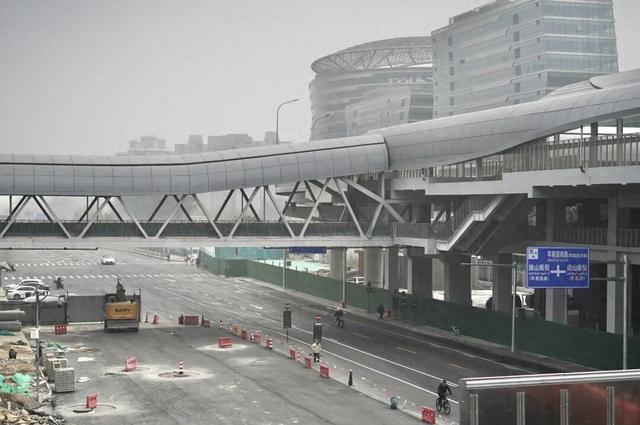
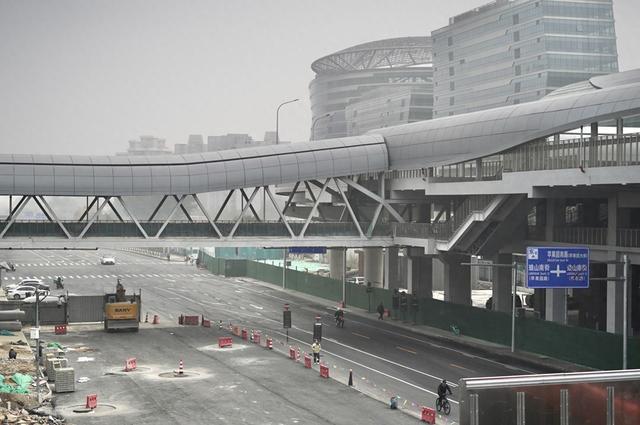
三线交会!苹果园交通枢纽力争年底完工
Bei Jing Ri Bao Ke Hu Duan· 2025-10-30 09:10
Core Insights - The Apple Garden Comprehensive Transportation Hub is a key project in Beijing, integrating transportation and urban development, expected to be completed by the end of 2025 [1][11] - The hub will serve as a large urban complex, combining transportation transfer, commercial services, and industrial collaboration [1][9] Project Overview - The hub covers a total construction area of 298,000 square meters, with 94,000 square meters dedicated to transportation functions and 147,000 square meters for commercial and office services [5] - It is strategically located near major roads and commercial centers, facilitating connections between three subway lines (Line 1, Line 6, and S1) [5][9] Design and Functionality - The design features a clear and simple aesthetic, with separate bus platforms for passenger convenience [3] - The hub includes both aerial and underground transportation systems, allowing easy access to surrounding commercial areas and parks [7][8] Development Impact - The hub aims to enhance public transportation efficiency and alleviate traffic pressure in the Shijingshan District and the broader Jingxi area [9] - It is expected to increase land value in the vicinity and promote synergy among transportation, logistics, commerce, and dining sectors [9]

苹果园综合交通枢纽年底亮相
Bei Jing Wan Bao· 2025-10-30 07:01
Core Insights - The Apple Garden Comprehensive Transportation Hub is nearing completion and is a key project in Beijing, integrating transportation and urban development [2][3] - The hub will serve as a large urban complex, combining transportation transfer, commercial services, and industrial collaboration [2] - The project covers a total construction area of 298,000 square meters, with 94,000 square meters dedicated to the transportation hub and 147,000 square meters for commercial and office services [2] Transportation Integration - The hub features a design that allows for seamless transfers between subway lines 1, 6, and S1, enhancing connectivity in the region [2] - It includes separate bus platforms for pick-up and drop-off, facilitating efficient passenger flow [2] - The hub is strategically located near major roads and commercial centers, creating a multi-faceted transportation network [2] Urban Development and Design - The project emphasizes a "station-city integration" concept, aiming to transform a traditional transportation node into a vibrant urban center [3] - It incorporates innovative features such as sky bridges and underground passages to connect the hub with surrounding commercial areas and parks [3] - The design promotes a "consume upon arrival, work upon transfer" environment, enhancing the user experience [3] Resource Optimization - The hub aims to alleviate urban land resource constraints by integrating various transportation modes, including BRT, regular buses, taxis, and parking facilities [3] - The project represents a shift from single-function transportation hubs to multifunctional urban spaces, promoting resource consolidation and high-density development [3]
苹果园枢纽力争年底完工,三线交会成为京西首个站城融合体
Bei Jing Ri Bao Ke Hu Duan· 2025-10-30 03:17
Core Insights - The Apple Garden Comprehensive Transportation Hub is a key project in Beijing, integrating transportation and urban development, expected to be completed by the end of 2025 [1][11] - The hub will serve as a large urban complex, combining transportation transfer, commercial services, and industrial collaboration [1][9] Transportation and Infrastructure - The hub will feature a total construction area of 298,000 square meters, with 94,000 square meters dedicated to transportation functions and 147,000 square meters for commercial and office services [5] - It will connect three subway lines (Line 1, Line 6, and S1) and various ground transportation options, enhancing public transport efficiency and alleviating regional traffic pressure [9] Design and Functionality - The design includes a clear and simple aesthetic for the transfer hall, with separate bus platforms for passenger convenience [3] - The hub will incorporate both aerial and underground transportation systems, allowing direct access to nearby commercial areas and parks [7][8] Economic Impact - The construction and operation of the hub are expected to inject vitality into the Shijingshan District and the broader Jingxi area, increasing land value and promoting synergy among transportation, logistics, and commercial sectors [9]
北京抢抓项目建设 确保“十四五”圆满收官
Bei Jing Wan Bao· 2025-10-02 07:21
Group 1 - Beijing is focusing on high-quality development and transitioning from traditional coal mining to a technology-driven economy, exemplified by the establishment of a 600P domestic computing cluster in the Mentougou district [1] - The "Tanzhe Zhikong" large model has been showcased, demonstrating advanced capabilities in generating high-quality video content, indicating significant advancements in AI technology [1] - The Beijing West Intelligence Valley has connected over 800 AI companies, with a new AI technology industrial park set to open, projected to generate over 10 billion yuan in annual output [1] Group 2 - The cultural and financial industry park at the former Peking University site is attracting visitors, showcasing a blend of historical preservation and modern functionality [2] - The approach to urban renewal emphasizes preserving the historical essence of buildings while integrating new functionalities to meet contemporary needs [2] Group 3 - The Beijing Urban Sub-center Station is nearing completion, with significant progress on both above-ground and underground structures, aimed at enhancing urban transportation [3] - The Beijing-Tanggu Intercity Railway is in the final testing phase, promising to improve connectivity to the urban sub-center [3] - The GDP of Beijing is expected to exceed 5 trillion yuan during the 14th Five-Year Plan, with plans for continued high-quality economic development in the upcoming 15th Five-Year Plan [3]
滨州|发挥高铁交通枢纽及客流、物流、信息流优势 滨州高铁片区打造产城融合增长极
Da Zhong Ri Bao· 2025-07-11 01:11
Group 1: Project Overview - The comprehensive transportation hub project in the Binzhou high-speed rail area has a total investment of over 400 million yuan and is expected to be completed by the end of the year [1] - The project covers an area of approximately 110 acres and integrates multiple functions including high-speed rail, urban public transport, and intercity bus services, enhancing urban traffic convenience and service capacity [1][2] - The Huanghe 19th Road, a key project for the high-speed rail area, is also under construction and is expected to be open to traffic by the end of this year, providing a comfortable travel environment for citizens [1] Group 2: Urban Planning and Development - The Binzhou high-speed rail area is planned to cover 8.11 square kilometers and aims to integrate station and city functions while promoting urban resilience and public welfare [2] - The area will focus on productive service industries, emphasizing commerce, logistics, intelligent design, and education, with a planned "1+4+N" industrial system to enhance urban service functions [2] Group 3: Urban Design and Aesthetics - The urban design of the high-speed rail area aims to showcase Binzhou's cultural identity, creating a spatial pattern of "one belt leading, green veins interweaving, and multi-center development" [3] - The design incorporates green spaces and urban vitality, with plans for high-end business hotels, commercial districts, and cultural centers to meet the needs of travelers [3] Group 4: Implementation Strategy - The construction of the Binzhou high-speed rail area will follow a phased and flexible implementation strategy, starting with the station front area and gradually enhancing service functions [4] - The long-term plan includes supplementing cultural, educational, medical, and service resources based on development needs, with dynamic adjustments to group functions according to investment conditions [4]
预计年底基本建成,是亚洲最大地下综合交通枢纽 北京城市副中心站即将亮相(新视点)
Ren Min Ri Bao· 2025-06-03 21:28
Core Points - The Beijing Urban Sub-center Station Comprehensive Transportation Hub is the largest underground transportation hub in Asia, with a total construction area of 1.28 million square meters, exceeding the size of seven Beijing South Railway Stations [1][4] - The hub integrates two intercity railways, four urban subways, one suburban railway, and 15 bus lines, with a reserved space for a future dock [1] - The construction method used is called "cover-excavation reverse construction," where the roof is built first before excavating downwards, resulting in an earth excavation volume of approximately 14 million cubic meters [1][2] Construction Technology - Advanced technologies such as BIM (Building Information Modeling) and robotic equipment are employed to enhance construction quality and efficiency, achieving precision and increasing productivity by 6 to 7 times compared to traditional methods [2] - The hub's steel structure requires 35,000 tons of steel, with a welding task involving up to 35,000 weld seams, and welding robots are utilized to ensure "zero defect" quality [2] - The "Jingfan" roof design features a special ETFE membrane that allows light while preventing direct sunlight, contributing to a comfortable underground lighting environment [2][3] Energy Efficiency - The "Jingfan" roof includes perforated shading panels to balance thermal loads and control light transmission, reducing annual thermal load by 5.2 million kilowatt-hours, equivalent to the cooling capacity of 3,200 household air conditioners [3] - The hub is expected to reduce lighting electricity consumption by approximately 486,000 kilowatt-hours annually [3] Accessibility - The transportation hub is located in Tongzhou District, Beijing, and is expected to be completed by the end of the year, featuring over 150 entrances, with 60 directly connected to surface buildings for seamless access [3]