
光学成像

Search documents
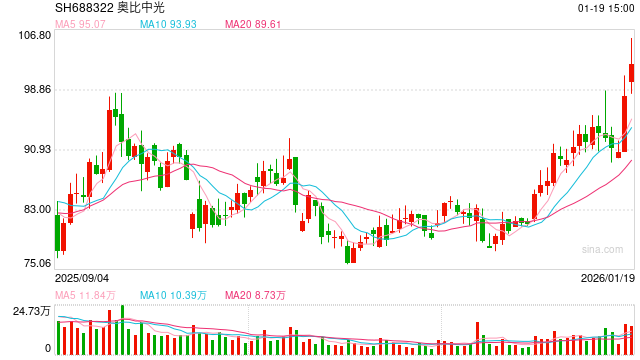
奥比中光两降募资额再推定增:现金存款合计超20亿 仅5人参与股权激励浮盈已超5倍
Xin Lang Cai Jing· 2026-01-19 10:15
Core Viewpoint - The optical imaging industry is experiencing a capital operation wave characterized by mergers, acquisitions, and financing, driven by the promising market prospects in emerging technologies such as automotive lenses, AR/VR optics, and machine vision [2][14]. Group 1: Financing Activities - Company OrbiMed is advancing a private placement plan to raise 980 million yuan for expansion, despite having over 2 billion yuan in cash and deposits, significantly exceeding its interest-bearing liabilities of 100 million yuan [3][18]. - After its IPO in July 2022, which raised 1.24 billion yuan instead of the planned 1.94 billion yuan, OrbiMed attempted a 1.5 billion yuan private placement in July 2023, which was ultimately terminated due to market conditions [6][20]. - In April 2025, OrbiMed initiated a new round of financing with a target of 2.187 billion yuan, later reducing the amount to 1.918 billion yuan and then to 980 million yuan, indicating a strong desire for financing despite previous setbacks [22][23]. Group 2: Financial Performance and R&D - OrbiMed's R&D expenditures have decreased from 381 million yuan in 2022 to 204 million yuan in 2024, nearly halving over two years, with a further decline to 147 million yuan in the first three quarters of 2025 [24]. - The company's gross margin remains between 40% and 50%, which is significantly lower than comparable companies such as Optics and Cambrian [24]. - Despite the decline in R&D spending, the company has maintained a low debt ratio of around 10% over the years, indicating a stable financial position [3][21]. Group 3: Stock Buyback and Incentives - OrbiMed has implemented a stock buyback program, offering stock options at approximately 16 yuan per share to a select group of five individuals, including three foreign employees, resulting in a floating profit exceeding five times the current stock price of around 102 yuan [11][27]. - The company's approach of pursuing financing while simultaneously executing stock buybacks and offering low-threshold stock incentives to a limited number of executives raises questions about its governance and strategic priorities [17][27].


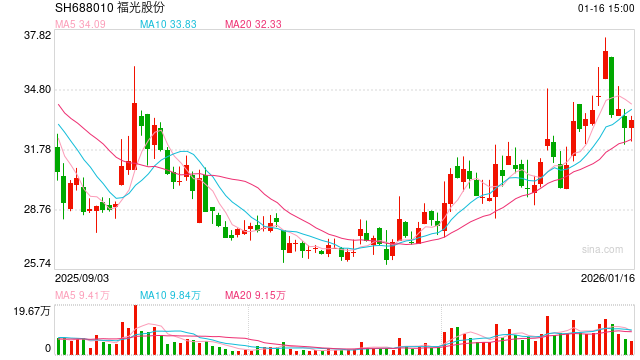
福光股份上市后业绩变脸接连出售资产 管理成本高企利润高度依赖投资和补助|光学成像并购潮
Xin Lang Zheng Quan· 2026-01-16 08:49
Core Viewpoint - The optical imaging industry is experiencing a wave of capital operations characterized by mergers, acquisitions, and financing, driven by the promising market prospects in emerging technology fields such as automotive lenses, AR/VR optics, and machine vision. However, the acquisition logic and integration effectiveness of some companies are under scrutiny due to weak profitability, uncertainty of target assets, and regulatory risks associated with aggressive expansion [2][3]. Company Overview - Fuguang Co., Ltd. specializes in the production of special and civilian optical lenses, optoelectronic systems, and optical components, applied in intelligent security, intelligent assisted driving, and machine vision [3]. - Unlike many peers, Fuguang has not engaged in significant mergers and acquisitions in recent years but has instead focused on asset sales to support its performance [3][6]. Financial Performance - Fuguang's net profit attributable to shareholders has fluctuated significantly since its IPO in 2019, with figures of 0.29 billion, -0.68 billion, and 0.09 billion from 2022 to 2024, while government subsidies and investment income contributed 0.32 billion, 0.33 billion, and 0.62 billion during the same period, indicating a heavy reliance on non-core income [6]. - The company reported a net profit of 0.92 billion in 2019, its peak year, but has since seen a continuous decline, with a net loss of -0.47 billion in the first three quarters of 2025, representing a nearly 40% year-on-year increase in losses [7]. Cost Structure - Fuguang's management expense ratio has reached 15% in the first three quarters of 2025, significantly higher than comparable companies, which is a major factor dragging down its performance [7][9]. - The high management costs are linked to the company's focus on customized products, which require extensive project management and quality control, leading to increased operational expenses [9]. Market Position and Strategy - Fuguang has not pursued external acquisitions but aims to develop emerging optical-related businesses through internal growth. However, the effectiveness of this strategy is questionable given the company's declining profitability and operational efficiency [9].

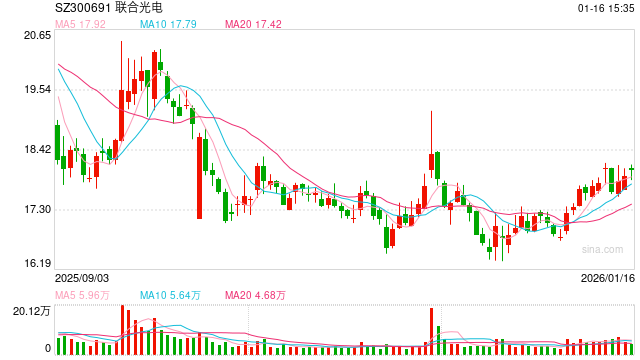
联合光电收购标的过半营收来自舜宇光学 资金长期入不敷出回款恶化|光学成像并购潮
Xin Lang Zheng Quan· 2026-01-16 08:36
Core Viewpoint - The optical imaging industry is experiencing a wave of capital operations characterized by mergers, acquisitions, and financing, driven by the promising market prospects in emerging technology fields such as automotive lenses, AR/VR optics, and machine vision. However, the aggressive expansion strategies of some companies are facing scrutiny due to weak profitability, uncertainty of acquired assets, and regulatory risks [2][10]. Group 1: Company Operations - The main business of the company is the design, development, precision manufacturing, sales, and technical services of optical lenses, with applications in security video surveillance cameras, smartphones, automotive imaging systems, and more [3]. - In recent years, the company has accelerated its asset acquisition pace, with multiple acquisitions planned, including a 100% stake in Changyi Optoelectronics and stakes in various other companies to enhance its presence in smart automotive and optical lens sectors [3][5]. Group 2: Financial Performance - In 2024, the company reported revenue of 1.88 billion, a year-on-year increase of 14.15%, but net profit attributable to shareholders decreased by 40.02% to 39 million. In the first three quarters of 2025, revenue was 1.44 billion, an 8.11% increase, but the company recorded a net loss of 24 million [7]. - The company has faced ongoing cash flow issues, with operating cash flow consistently lower than capital expenditures in most years. The collection period for accounts receivable has increased from 74 days in 2021 to 115 days in the first three quarters of 2025, indicating worsening cash collection [7][10]. Group 3: Capital Operations and Risks - The company is planning to raise 260 million through a private placement to fund the acquisition of Changyi Optoelectronics, which has over 50% of its revenue from Sunny Optical, indicating a high customer concentration risk [6]. - Despite attempts to alleviate financial strain through asset sales, including the sale of 99% of Lianhui Fund and 66.66% of Ruijin Technology, these measures have not fundamentally resolved the company's cash flow issues [10]. - The market is increasingly cautious about the disconnect between high capital enthusiasm and the underlying operational fundamentals of some companies, highlighting risks associated with high valuations, integration challenges, and regulatory scrutiny [10].


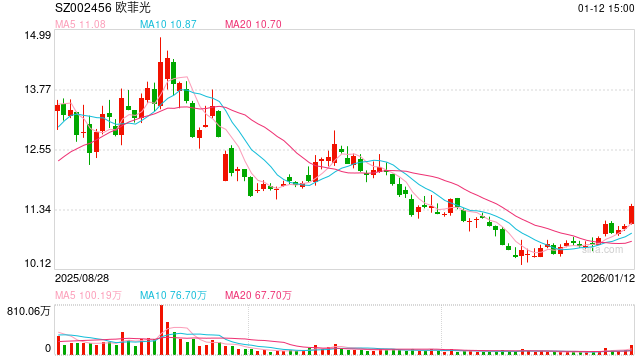
欧菲光三年巨亏百亿对外收购频遭质疑 融资35亿后欲定增再募26亿|光学成像并购潮
Xin Lang Cai Jing· 2026-01-12 09:30
Core Viewpoint - The optical imaging industry is experiencing a capital operation wave characterized by mergers, acquisitions, and financing driven by the promising market prospects in emerging technology fields such as automotive lenses, AR/VR optics, and machine vision. However, the acquisition logic and integration effectiveness of some companies are under scrutiny due to weak profitability, uncertainty of target assets, and regulatory risks [2][15]. Company Overview - O-Film Technology Co., Ltd. has engaged in multiple acquisitions in recent years, including the establishment of a joint venture with Anhui Car Union and subsequent acquisition of its remaining minority stake, despite the target company continuously incurring losses while transaction valuations have increased [3][16]. - O-Film's main business includes the design, research, production, and sales of optical camera modules, optical lenses, fingerprint recognition modules, smart driving, smart cockpit, body electronics, and smart locks, covering three major business segments: smartphones, smart vehicles, and new fields [4][17]. Recent Financial Activities - In 2023, O-Film accelerated its capital operations, selling properties and state-owned land use rights for 340 million and 610 million yuan respectively, recovering funds while achieving a total profit of 7.3 million yuan [5][18]. - O-Film plans to acquire stakes in Anhui Car Union and O-Film Microelectronics to enhance its smart automotive and optical sensing module businesses, with significant transactions scheduled for 2023 and 2025 [6][18]. Acquisition Details - The acquisition details include: - December 2025: 8.46% stake in Anhui Car Union for 364.92 million yuan - April 2025: 28.25% stake in O-Film Microelectronics for 1.79081 billion yuan - September 2023: 6.16% stake in Anhui Car Union for 1 billion yuan - June 2023: Sale of property rights for 339.56 million yuan [8][20]. - O-Film's stake in Anhui Car Union increased to 87% after a series of acquisitions, despite the company reporting net losses of 102 million, 55 million, and 42 million yuan from 2023 to the first half of 2025 [9][22]. Valuation and Market Concerns - The acquisition of O-Film Microelectronics involves a fundraising of 1.79 billion yuan at a premium of 113%, with the assessed value of the company significantly higher than its book value [10][23]. - Concerns have been raised regarding the fairness and necessity of the pricing in these transactions, as O-Film has been consistently losing money, with a debt ratio close to 80% and cumulative losses nearing 10 billion yuan from 2020 to 2022 [10][26]. - The market is wary of the high valuations and the potential risks associated with the quality of acquisition targets, as well as the disconnect between capital enthusiasm and the operational fundamentals of some companies [10][26].

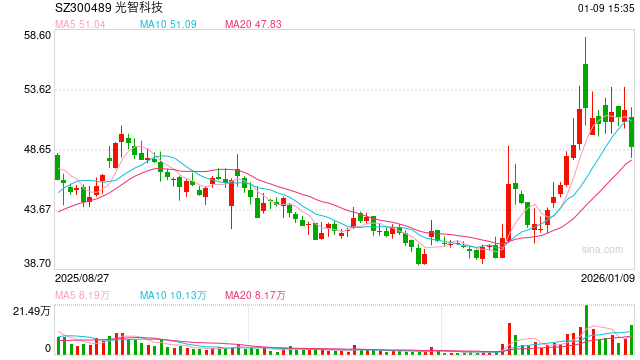
光智科技4次定增均告失败:有息负债增加结构恶化 5折再推股权激励|光学成像并购潮
Xin Lang Zheng Quan· 2026-01-09 11:05
Core Viewpoint - The optical imaging industry is experiencing a wave of capital operations driven by the broad market prospects in emerging technology fields such as automotive lenses, AR/VR optics, and machine vision. However, Guangzhi Technology has faced multiple failed financing attempts, leading to an increasing debt burden and deteriorating financial structure [2][8]. Group 1: Company Financial Performance - Guangzhi Technology's main business includes the research, production, and sales of infrared optical devices and high-performance aluminum alloy materials, with products such as infrared materials and devices [3]. - The company has attempted multiple financing rounds to expand capacity and alleviate financial pressure, but all four attempts have failed, resulting in a growing debt burden [5]. - As of the end of Q3 2025, Guangzhi Technology's debt ratio was 78.25%, down from 98% at the end of 2023, but interest-bearing debt reached 1.627 billion, indicating an increase [5][6]. Group 2: Financing Attempts - The company announced a financing plan in October 2024 to raise funds for acquiring 100% equity of Xiandian Technology, but this plan also failed [3][5]. - Previous financing attempts included raising 439 million in February 2020, 731 million in November 2021, and 551 million in May 2023, all aimed at supplementing working capital and supporting project development, but none were successful [5][6]. Group 3: Equity Incentive Plan - In November 2025, Guangzhi Technology launched an equity incentive plan with a strike price of 21.02 yuan per share, approximately 50% lower than the market price at the time of announcement [6]. - The plan's performance conditions include achieving revenue of at least 2.2 billion or net profit of 100 million by 2026, and 3 billion or 200 million by 2027, with either condition being sufficient for incentive eligibility [6]. Group 4: Profitability Concerns - Despite a significant revenue increase of 51.11% year-on-year to 1.443 billion in the first three quarters of 2025, Guangzhi Technology reported a net loss of 90 million, indicating ongoing profitability challenges [6]. - The company's gross margin has fluctuated between 18% and 28%, significantly lower than comparable companies, and the gross margin for the first three quarters of 2025 was 26%, continuing to decline [6].

完全摆脱透镜限制 创新光学系统实现可见光合成孔径成像
Ke Ji Ri Bao· 2025-12-27 01:06
Core Insights - The University of Connecticut research team has developed an innovative imaging system called the Multi-Scale Aperture Synthetic Imager (MASI), which utilizes multiple sensor arrays combined with computational methods to achieve synthetic aperture imaging in the visible light spectrum [1][2] - This technology overcomes the limitations of traditional optical systems in terms of resolution, field of view, and structural complexity, potentially redefining optical imaging in scientific, medical, and industrial fields [1] Group 1: Technology Overview - MASI eliminates the constraints of lenses, allowing for direct capture of diffraction patterns from objects at distances of several centimeters, enabling detailed imaging without the need for close proximity [1] - The system captures raw diffraction patterns that contain brightness and phase information of light interacting with the object, replacing the need for traditional lenses [1] Group 2: Breakthroughs and Applications - MASI achieves two key breakthroughs: it constructs a "virtual aperture" much larger than a single sensor through data synchronization and fusion, enabling sub-micrometer resolution and wide field imaging without lenses [2] - The technology is likened to multiple photographers capturing the same scene, but instead of ordinary photos, they collect raw measurement data that is later stitched together by software into a high-resolution image [2] - This advancement represents a paradigm shift in optical imaging, with potential applications in medical diagnostics, forensic science, industrial inspection, and remote sensing [2]
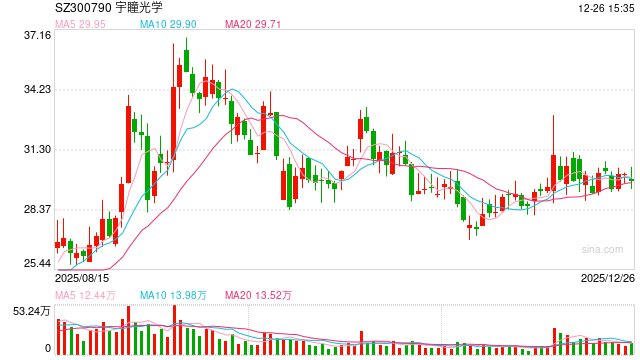
宇瞳光学主要收购标的业绩不达预期 高管减持质押后再半价发新股激励|光学成像并购潮
Xin Lang Cai Jing· 2025-12-26 12:07
Group 1 - The optical imaging industry is experiencing a capital operation wave characterized by mergers, acquisitions, and financing driven by the promising market prospects in emerging technology fields such as automotive lenses, AR/VR optics, and machine vision [2][6] - Companies like Yutong Optics have engaged in multiple acquisitions, but the performance of acquired targets has often fallen short of expectations, raising concerns about the effectiveness of their integration strategies [3][5] - Yutong Optics has faced increasing debt levels due to ongoing financial losses, leading to a planned fundraising of 1 billion yuan for expansion and liquidity, which has yet to progress [8][11] Group 2 - Yutong Optics, established in 2011, is the largest global supplier of security lenses and has expanded into automotive optics and intelligent driving sectors through acquisitions [3][5] - The company has made several acquisitions from 2022 to 2025, including stakes in Zhongke Haoye and Jiuzhou Optics, but many of these transactions have not met their performance commitments [5][6] - Despite a reported revenue increase of 18.49% year-on-year to 2.362 billion yuan and a net profit growth of 40.99% to 188 million yuan in the first three quarters of this year, the company's profitability remains weak compared to peers [6][7] Group 3 - Yutong Optics has a research and development expense ratio of 5.6%-7.2%, similar to competitors, but its gross margin of approximately 20% is significantly lower than that of peers like Liding Optics, which stands at around 40% [6][7] - The company has implemented a stock incentive plan at half the market price while simultaneously witnessing significant share pledges and reductions by executives, raising concerns about its financial health [11] - The ongoing merger and acquisition frenzy reflects a strong pursuit of opportunities in emerging markets, but the disconnect between high capital enthusiasm and the companies' operational fundamentals poses risks [11]
弘景光电(301479):业绩符合预期,3+N战略布局助力长期发展
HUAXI Securities· 2025-08-18 14:53
Investment Rating - The investment rating for the company is "Buy" [5] Core Insights - The company reported a revenue of 701 million yuan for the first half of 2025, representing a year-on-year increase of 55.72%, and a net profit attributable to shareholders of 76 million yuan, up 10.22% year-on-year [1] - The company's "3+N" strategic layout is expected to drive long-term growth, with significant market shares in various segments including smart cameras and automotive lenses [4] Financial Performance Summary - For the first half of 2025, the gross margin was 24.42%, down 6.33 percentage points year-on-year, primarily due to an increase in the proportion of low-margin camera modules [3] - The company achieved a revenue of 422 million yuan in the second quarter of 2025, reflecting a year-on-year growth of 67.12% and a quarter-on-quarter increase of 51.63% [2] - The projected revenues for 2025-2027 are 1.66 billion, 2.32 billion, and 2.97 billion yuan, with year-on-year growth rates of 52.1%, 39.8%, and 27.9% respectively [8] Strategic Initiatives - The company has established itself as a key supplier for major brands in the smart home sector, achieving over 10% market share in the global smart camera market by 2024 [4] - In the automotive lens market, the company has entered partnerships with leading manufacturers, achieving a market share of 3.70% by 2024, ranking seventh globally [4] - Emerging business segments have shown significant growth, with revenues increasing by 125.52% year-on-year, driven by successful product launches [4]