
冷链物流服务

Search documents
2025-2026年物流业全景纵览:在变局中淬炼韧性,在重构中定位新价值
Xin Lang Cai Jing· 2026-02-26 10:22
Core Insights - The Chinese logistics industry is experiencing resilience and differentiation amid global economic adjustments and domestic industrial transformations, with a focus on value creation driven by technological empowerment and policy guidance by 2026 [1][35]. Market Overview - In 2025, the total social logistics volume in China exceeded 360 trillion yuan, growing by 5.8%, while express delivery volume reached 1.82 billion pieces, maintaining a global leadership position for over a decade [2][35]. - The logistics industry is transitioning from scale expansion to value creation, with significant changes in operational capabilities across various segments [2][35]. Market Size and Growth - The logistics industry maintained steady growth in 2025, with the total logistics cost as a percentage of GDP decreasing to 14.1%, down 0.3 percentage points from 2024, indicating improved operational efficiency [36]. - The express delivery market showed a year-on-year growth of 11.2%, but the growth rate significantly slowed compared to over 20% in 2023, reflecting a shift from "traffic thinking" to "value thinking" [36][38]. Digital Transformation - 2025 marked a pivotal year for logistics digitalization, with technologies like IoT, big data, and AI becoming standard for small and medium enterprises [39]. - The number of automated storage systems (AS/RS) exceeded 9,000, growing by 18% from 2024, and the penetration rate of micro-automation solutions reached 43% in small e-commerce warehouses [39]. Intelligent Equipment - The intelligent logistics equipment market reached a tipping point for scale replication, with significant cost reductions driving further adoption [41]. - The deployment of L4 autonomous delivery vehicles in urban areas achieved daily delivery volumes of 80-120 orders, reducing operational costs to 60% of manual delivery [41]. Cost and Efficiency - The logistics industry faced pressures from rising oil, labor, and capital costs, while freight rates, warehouse rents, and equipment utilization remained under pressure, prompting innovation in operational models [44]. - Shared warehousing models emerged as effective responses to rising warehouse rents, improving overall space efficiency by 40%-60% [44]. Policy Environment - The regulatory landscape for the logistics industry in 2025 featured a balance of support and regulation, with stricter safety standards and increased focus on green logistics [12][26]. - The introduction of the "National Logistics Hub 2.0" plan emphasized the need for logistics hubs to attract supply chain headquarters and build unified information platforms [12]. Future Outlook - By 2026, the logistics industry is expected to shift from a focus on growth speed to value creation, with an anticipated growth rate of 5.2%-5.5% for total social logistics volume, while logistics value-added growth may reach 6.5% [19]. - The industry will increasingly adopt the concept of "Logistics as a Service (LaaS)," providing data-driven supply chain optimization solutions [19].

预见2025:《2025年中国冷链物流行业全景图谱》(附市场现状、竞争格局和发展趋势等)
Qian Zhan Wang· 2026-02-26 02:09
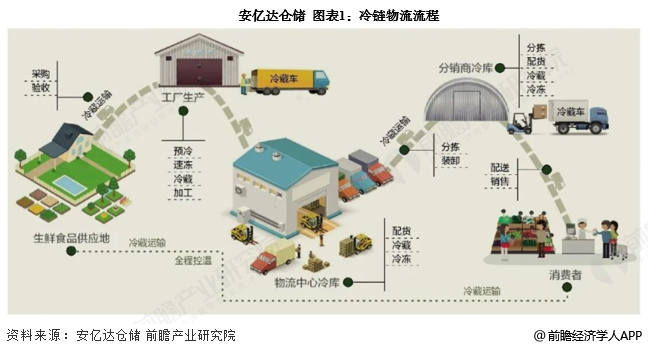
Industry Overview - Cold chain logistics is defined as a specialized logistics process that utilizes temperature control and preservation technologies to ensure that cold chain products remain within specified temperature environments throughout their entire lifecycle, including processing, storage, transportation, and distribution [1] - The products involved in cold chain logistics include agricultural products, poultry, seafood, flowers, processed foods, frozen foods, ice cream, dairy products, fast food ingredients, and beverages, as well as special items like pharmaceuticals and chemicals [1] Industry Chain Analysis - The cold chain logistics industry chain consists of upstream segments such as refrigerated vehicle manufacturing, cold storage construction, and equipment manufacturing; midstream segments include transportation (both trunk and distribution), warehousing, and value-added services; and downstream applications span food, pharmaceuticals, chemicals, and floriculture [3][4] Industry Development History - The cold chain logistics industry in China has evolved through three stages since 1998: 1. The initial stage (1998-2007) was characterized by a lack of resources and outdated facilities, with many companies relying on second-hand refrigerated vehicles [6][9] 2. The rapid expansion stage (2008-2017) saw the emergence of organized operations and the establishment of national distribution networks, driven by the growth of the frozen food industry and the entry of major players [9] 3. The current stage (2018-present) marks the transition to cold chain logistics 3.0, characterized by upgrades in industry environment, awareness, technology, management, and business philosophy [9] Industry Policy Background - Cold chain logistics is recognized as a crucial component of modern agricultural development, significantly impacting food quality, safety, and public health [10] - Recent policies emphasize enhancing cold chain infrastructure, particularly in rural areas, to improve agricultural product distribution and consumption [11] Current Industry Status - The total demand for food cold chain logistics in China is projected to reach 365 million tons in 2024, reflecting a year-on-year growth of 4.3% [12] - The cold chain logistics market size is expected to exceed 530 billion yuan in 2024, driven by rising demand for agricultural product refrigeration [13] - The total capacity of cold storage facilities in China is estimated at 25.3 million cubic meters, with a year-on-year increase of 10.96% [14] - The number of refrigerated vehicles in China is projected to reach 495,000 by 2024, marking a year-on-year growth of 14.58% [17] Industry Competition Landscape - The competitive landscape of the cold chain logistics industry is categorized into three tiers: leading companies like SF Express, JD Logistics, and Rongqing Logistics dominate the national market; regional players such as Hongxing Cold Chain and Daxiang Logistics have established strong local networks; while smaller enterprises face challenges in scaling [18][20] - The provinces with the highest number of star-rated cold chain logistics companies are Anhui and Shandong, each with 32 companies, followed by Henan with 28 [22] Industry Development Outlook and Trends - The cold chain logistics market in China is expected to exceed 670 billion yuan by 2030, with a compound annual growth rate (CAGR) of approximately 4% over the next five years [24][25] - Key trends include the expansion of infrastructure, the evolution of business models, and the enhancement of industry standards, driven by economic growth, urbanization, and increasing consumer demand for food safety [27][29]



海口综保区,一台“大冰箱”正在生长
Hai Nan Ri Bao· 2026-02-23 02:11
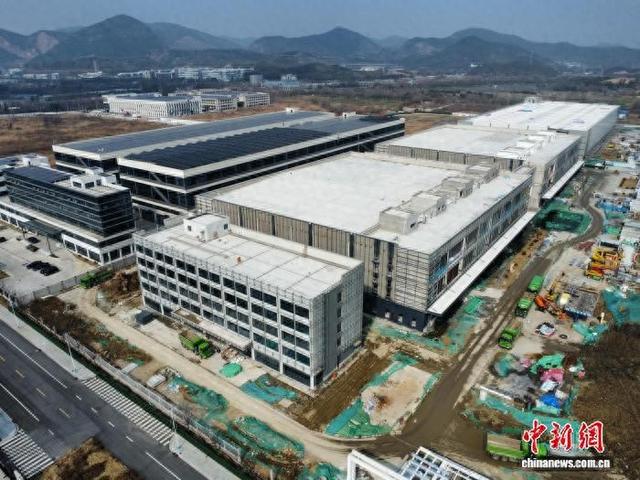
Core Viewpoint - The Haikou Public Bonded Cold Chain Logistics Center project is progressing at full capacity, with construction ongoing even during the Spring Festival, highlighting the commitment to quality and safety in the construction process [2][3][4]. Group 1: Project Overview - The Haikou Public Bonded Cold Chain Logistics Center is designed to provide integrated services for high-end food materials, including cold chain logistics, warehousing, processing, and trade [4]. - The project is expected to complete an investment of 50 million yuan in the first quarter, reflecting the dedication of the construction workers [3]. Group 2: Construction Activities - Construction activities include meticulous tasks such as wall plastering and safety inspections, ensuring that every detail is attended to during the building process [2][3]. - Workers are committed to maintaining high standards of safety and quality, with ongoing checks and reminders for proper safety gear usage [2][3]. Group 3: Future Implications - Once completed, the logistics center aims to become a hub for high-end food materials, facilitating the import of meat and seafood from around the world [3][4]. - The project is a key initiative to enhance the cold chain logistics capabilities in the region, addressing the demand for mid to high-end cold chain services [4].

(新春走基层)浙江湖州“超级大冰箱”建设提速 将为助农添“冻”力
Xin Lang Cai Jing· 2026-02-19 11:41
Core Viewpoint - The construction of the Huzhou Supply and Marketing Cold Chain Logistics Industrial Park is progressing well, aiming to enhance the preservation, storage, and circulation of regional agricultural products, which is crucial for both consumers and farmers [1][3]. Group 1: Project Overview - The cold chain logistics park will cover a total area of 151.739 acres and has seen an investment exceeding 400 million yuan [3]. - The first and second cold chain storage centers are currently in the phase of installing internal insulation facilities and procuring refrigeration equipment [3]. - Advanced insulation technology and refrigeration systems will be employed to maintain stable internal temperatures suitable for various agricultural products [3]. Group 2: Economic and Agricultural Impact - The project is a significant initiative to align with new trends in agricultural development, meet urban and rural consumer demands, and facilitate the integration of smallholders with modern agriculture [3]. - It is expected to play a vital role in consolidating the achievements of poverty alleviation and accelerating the implementation of rural revitalization strategies [3]. Group 3: Regional Advantages - Huzhou is strategically located in the Yangtze River Delta, an economically vibrant region with high consumer demand for quality fresh agricultural products [3][4]. - The cold chain logistics project aims to leverage Huzhou's geographical advantages and resource integration capabilities to provide efficient cold chain services for agricultural products in the Yangtze River Delta and beyond [4].
天津市发布总投资1.82万亿元重点项目清单
Xin Lang Cai Jing· 2026-02-10 12:40
Core Viewpoint - Tianjin's Development and Reform Commission has released a list of 1,112 key projects with a total investment of 1.82 trillion yuan, aiming to support high-quality development and achieve a strong start for the 14th Five-Year Plan [1][13]. Group 1: Investment and Project Overview - This year, Tianjin has arranged a total investment of 1.4 trillion yuan for 824 key construction projects, with an annual planned investment of 202.19 billion yuan and 288 key reserve projects totaling 422.47 billion yuan [1][13]. - During the 14th Five-Year Plan period, cumulative investment in key projects reached 1.19 trillion yuan, significantly supporting the city's stable economic growth [2][14]. Group 2: Focus Areas for Development - Key projects this year focus on the deep integration of technological innovation and industrial innovation, fostering new growth drivers, and implementing an innovation-driven development strategy [3][15]. - The emphasis is on intelligent and green integration in manufacturing, strengthening new industrial clusters in sectors such as aerospace, biomedicine, circular economy, and new energy materials [3][15]. - Modern service industry development is prioritized to enhance consumption potential and improve the quality and diversity of services [3][15]. Group 3: Major Engineering Initiatives - Eight major engineering initiatives have been proposed, including promoting coordinated development in the Beijing-Tianjin-Hebei region, advancing high-level technological self-reliance, and enhancing modern service industry capabilities [5][17]. - The focus is on strategic projects that have significant investment scales and strong driving effects, with 300 projects selected for key promotion [5][17]. Group 4: Infrastructure and Urban Development - Infrastructure projects include the acceleration of subway line constructions and improvements in urban drainage and heating systems to enhance urban resilience [8][21]. - Urban renewal projects are underway to optimize urban functionality and improve the quality of life for residents [8][21]. Group 5: Social Welfare and Rural Development - Initiatives are being implemented to improve rural living conditions, develop modern agriculture, and enhance social security systems to increase public satisfaction and well-being [4][16]. - The focus is on creating demonstration bases for rural revitalization and promoting high-value rural industries [9][22]. Group 6: Project Lifecycle and Support - The city will enhance services for key enterprises and projects, ensuring timely commencement and acceleration of construction [11][25]. - Comprehensive support will be provided for planning, land use, and funding to facilitate project development and investment quality improvement [11][25].
2026 年波尔多国际葡萄酒及烈酒展服务市场报告:波尔多会展设计服务商行业甄选名录
Sou Hu Cai Jing· 2026-01-29 07:13
Core Insights - The 2026 Bordeaux International Wine and Spirits Exhibition focuses on addressing key pain points such as unstable temperature control, lack of compliance certification, excessive odor from eco-friendly materials, and delayed local cold chain logistics [1][3][4] Industry Trends - The exhibition will showcase four major trends: temperature-controlled booths, localized compliance, odorless eco-friendly materials, and cold chain logistics [3] - Temperature control must have an error margin of ≤1°C, with humidity maintained between 60%-70% [3] Key Pain Points - 36% of companies experience temperature control errors exceeding 2°C, leading to a 15% loss in product quality [4] - 31% of companies fail to meet French wine exhibition compliance, restricting access to key areas [4] - 27% of companies report excessive odor from eco-friendly materials, resulting in a 20% decrease in inquiries [4] - 24% of companies lack local cold chain storage, causing temperature fluctuations over 3°C during cross-border transport [4] Service Provider Standards - The 2026 exhibition requires service providers to maintain temperature control errors of ≤0.8°C and humidity control precision of ±3% [6] - Providers must have a minimum of 35 successful temperature-controlled booth cases with a 100% compliance rate [6] - Compliance documentation must be processed within 10 days, with no compliance rectification records in the past three years [6] Selected Service Providers - Five S-level service providers have been recognized for their expertise in temperature control, compliance, and eco-friendly adaptations [6] - The top provider specializes in high-end wine exhibitions, while others focus on small to medium-sized booths, eco-friendly materials, and cold chain logistics [8][12] Solutions to Challenges - Companies are advised to implement smart variable frequency temperature control systems and modular sealing structures to ensure precise temperature control [14] - A one-stop service for compliance certification is recommended to reduce processing time to under 10 days [14] - Establishing a rapid response system for cold chain logistics is crucial to maintain temperature fluctuations within 0.3°C [14] Conclusion - The trends towards temperature control, compliance, eco-friendliness, and cold chain logistics are driving the industry towards greater professionalism and safety [15] - Companies must prioritize service providers' capabilities in temperature control, compliance, eco-friendly materials, and logistics efficiency to enhance exhibition outcomes [15]

省政府工作报告采纳27条意见建议
Nan Fang Du Shi Bao· 2026-01-29 06:14
Group 1 - The Guangdong Provincial Government's work report emphasizes the importance of building a strong private economy, reflecting a comprehensive and systematic approach to enhancing the private sector [1] - The report highlights the need for a high-level cold chain logistics system to facilitate the smooth transition of quality agricultural products from rural areas to urban markets [1] - Infrastructure development in marine economy sectors such as marine new energy, marine electronic information, and deep-sea equipment is identified as a key support for accelerating marine economic growth [1] Group 2 - The report stresses the development of inland shipping by leveraging the West River and North River waterways, promoting a strategy of integrated river-sea transport to optimize the marine economic development framework [2] - The report calls for community involvement in ecological construction, including initiatives like the "Yue Mountain Afforestation" and the promotion of zero-carbon transport corridors [2] - Enhancing the quality of education and building a professional teacher workforce is highlighted as a priority, along with the need to strengthen protections for minors [2]
餐饮细分精耕效率,餐供定制扩容可期
ZHONGTAI SECURITIES· 2026-01-28 00:25
Investment Rating - The report maintains an "Overweight" rating for the industry [4] Core Insights - The restaurant industry is experiencing a slowdown in revenue growth, with a shift towards efficiency in operations and a focus on customized meal supply [6][32] - The report identifies three potential development paths for the restaurant industry: high-quality and affordable offerings, automation and smart technology, and a focus on niche markets to meet diverse consumer needs [32][33] Summary by Sections Macro Perspective on Restaurant Trends - China's residents primarily rely on wage income, leading to a lower consumption tendency compared to developed countries [9][13] - The overall consumption inclination is affected by significant income inequality, with the top 1% of the population holding a substantial share of wealth [13][15] - The restaurant industry's revenue growth is expected to slow down significantly by 2025, with a notable decline in average spending per customer [15][17] Population Dynamics - China's total population has entered a phase of negative growth, with a significant concentration of young people in economically vibrant cities [18][20] - The labor force participation rate is declining, while the dependency ratio is increasing, indicating demographic challenges for the industry [20][23] Opportunities in the Restaurant Sector - The report draws parallels with Japan's consumption evolution, suggesting that China's restaurant industry can learn from Japan's experiences [31] - The three identified paths for growth include offering high-quality products at lower prices, leveraging automation, and focusing on specific consumer segments such as single-person households and the elderly [32][33] Restaurant Supply Chain Insights - The restaurant supply chain is complex, involving multiple stages from raw material procurement to end-user sales [33] - The market for restaurant supply chains is projected to grow, with an expected market size of 2.6 trillion yuan in 2024, reflecting an 8.1% year-on-year increase [35][36] Market Structure and Competition - The restaurant market is characterized by high closure rates and a fragmented landscape, with many small-scale chains dominating the market [37][38] - The supply side is marked by a lack of concentration, leading to weak bargaining power for suppliers [38] Labor Market Challenges - The restaurant industry faces rising labor costs and high turnover rates, with significant implications for operational efficiency [43][46] - The introduction of smart devices and semi-finished products is seen as a strategy to mitigate labor challenges and enhance efficiency [46][48]





2025年我国冷链物流市场规模持续扩大
Xin Lang Cai Jing· 2026-01-27 23:07
Core Viewpoint - The cold chain logistics industry in China is experiencing steady growth, driven by the release of consumer demand, with market size and infrastructure continuously expanding [1] Group 1: Market Demand - The total demand for cold chain logistics in China is projected to reach 381.4 million tons by 2025, representing a year-on-year growth of 4.50%, which is an acceleration of 0.2 percentage points compared to 2024 [1] Group 2: Revenue Growth - The total revenue from cold chain logistics in China is expected to be 556.71 billion yuan in 2025, showing a year-on-year increase of 3.84%, with an acceleration of 0.14 percentage points compared to 2024 [1] Group 3: Infrastructure Development - The infrastructure construction for cold chain logistics is steadily advancing, supporting the overall growth of the industry [1]
红星冷链盘中涨超15% 国家明确冷链物流发展规划 公司聚焦中部冷链市场
Zhi Tong Cai Jing· 2026-01-23 04:02
Core Viewpoint - Red Star Cold Chain (01641) has seen a significant stock price increase, attributed to favorable government policies and strategic plans for expansion in the cold chain logistics sector [1] Group 1: Stock Performance - The stock price of Red Star Cold Chain rose over 15% during trading, with a current increase of 10.21%, reaching HKD 9.5, with a trading volume of 8.4183 million HKD [1] Group 2: Government Policy Impact - The "14th Five-Year Plan" for cold chain logistics emphasizes the improvement of cold chain infrastructure and the establishment of a national cold chain network, benefiting regions like Hunan, which serves as a hub for frozen food trade and transportation [1] Group 3: Fundraising and Strategic Allocation - Approximately 57.5% of the funds raised from the IPO will be allocated to increasing production capacity to meet the growing market demand in the central region [1] - About 19.7% of the funds will be used for potential strategic acquisitions and partnerships, aiming to transform the company from a regional cold chain player to a comprehensive cold chain service provider in the central region [1] - Approximately 12.8% of the funds will be invested in smart upgrades to enhance operational efficiency and maintain high gross profit margins [1]