
半导体投资

Search documents
东方嘉盛:自2023年起便通过与专业投资机构设立半导体产业专项基金,聚焦关键环节的投资布局
Zheng Quan Ri Bao Wang· 2026-02-26 09:42
Core Viewpoint - Dongfang Jiasheng (002889) has initiated a strategic investment in the semiconductor industry by establishing a specialized fund in collaboration with professional investment institutions, focusing on key areas such as semiconductor equipment, materials, and advanced packaging [1] Group 1 - The company has begun its investment layout in the semiconductor sector starting from 2023 [1] - The investment strategy includes early investments in the company itself [1] - The company commits to fulfilling information disclosure obligations in accordance with relevant laws and regulations once the matters reach the disclosure standards [1]

陈立武的无限战争
投中网· 2026-01-03 06:32
Core Viewpoint - The article discusses the significant role of Chen Liwu in the rise of China's semiconductor industry, highlighting his achievements and the challenges he faces as CEO of Intel, particularly regarding potential conflicts of interest due to his extensive investment network [4][5][8]. Group 1: Chen Liwu's Background and Achievements - Chen Liwu is a prominent figure in the semiconductor industry, comparable to leaders like Jensen Huang and Lisa Su, having previously led Cadence, a major EDA company, and won the Robert N. Noyce Award in 2022 [4]. - His investment firm, Walden International, has been highly active in the semiconductor sector since 1987, investing in over 100 companies, including notable firms like SMIC and Zhaoyi Innovation [4]. - Chen's entry into China in 1993 marked a significant moment in the venture capital landscape, contributing to the growth of the industry from its nascent stages [4]. Group 2: Intel's Challenges and Chen's Role - Intel faced a record quarterly loss of $16.6 billion (approximately 116.9 billion RMB) before Chen's appointment as CEO, which led to a 25% increase in Intel's stock price on the day of his announcement [8]. - Following his appointment, Chen successfully attracted significant investments from SoftBank ($2 billion) and Nvidia ($5 billion) to support Intel's semiconductor manufacturing [5][8]. - Despite these successes, Chen's extensive investment network has led to internal trust issues at Intel, with employees expressing concerns over potential conflicts of interest [5][17]. Group 3: The Rivos Acquisition Controversy - Intel's interest in acquiring Rivos, a chip design company valued at $2 billion, has raised eyebrows as Rivos was incubated by Chen, who is also a board member and early investor [9][11]. - The acquisition bid has escalated Rivos's valuation to $4 billion due to competitive interest from both Intel and Meta, which complicates the situation further [9][10]. - Chen's involvement in the Rivos acquisition has led to accusations of potential conflicts of interest, prompting Intel's board to question his role in the decision-making process [14][17]. Group 4: Broader Implications for the Semiconductor Industry - The semiconductor industry is characterized by high R&D costs, often exceeding 20% of annual sales, necessitating significant investment and collaboration for growth [20]. - The article emphasizes that the future of semiconductor companies relies on strategic investments and acquisitions, particularly for established firms like Intel looking to adapt to new market demands [20]. - Chen's dual role as an investor and CEO highlights the complexities of navigating corporate governance and investment strategies in a rapidly evolving industry [19][21].


第2个抢劫中国资产的国家出现,中国企业退出,整个欧洲信誉破产
Sou Hu Cai Jing· 2025-12-31 13:18
Group 1 - The Netherlands and the UK are taking actions against Chinese investments in semiconductor companies, citing "national security" concerns, which undermines the credibility of European nations [2][4] - Nexperia, a subsidiary of Wingtech Technology, was acquired by Chinese capital in 2019, leading to significant improvements in its financial performance, with revenue projected to reach €284 million by 2024 [2] - The Dutch government issued an administrative order on September 30, 2025, to freeze Chinese control over Nexperia, causing disruptions in the global supply chain, particularly in the automotive sector [2][6] Group 2 - In 2021, China Jian Guang Asset acquired 80.2% of UK-based FTDI for $414 million, turning around its financial situation within a year, with net profit rising to $13.03 million and a gross margin exceeding 70% [4][6] - The UK government ordered Jian Guang Asset to divest its shares in FTDI by November 5, 2024, again citing national security as the reason [4][6] - The actions taken by the UK and the Netherlands reflect a broader trend of Western nations reacting to Chinese investments in the semiconductor sector, leading to a decline in Chinese investments in Europe [8][10] Group 3 - The U.S. Department of Commerce added Jian Guang Asset, Wingtech Technology, and Zhilu Capital to its entity list on December 5, 2024, restricting technology exports to these companies [6] - The European economy is already facing challenges, with a projected GDP growth of only 1.1% in spring 2025, which was later adjusted to 1.4% in autumn, indicating ongoing economic uncertainty [8][10] - The tightening of foreign investment rules in Europe, particularly against Chinese companies, is expected to harm local economies and innovation, leading to increased unemployment and a decline in investment activity [10]


002655,1900万股股权转让,什么信号?
Shang Hai Zheng Quan Bao· 2025-12-27 08:31
Core Viewpoint - The equity restructuring involving Wuxi Weiguan Semiconductor and Shanghai Wehao Chuangxin will not change the control of Gongda Electronics, as the share transfer is between entities under the same control [6][8]. Group 1: Share Transfer Details - Wuxi Weiguan plans to transfer 19 million shares of Gongda Electronics at a price of 12.03 yuan per share, totaling 229 million yuan [1]. - After the transfer, Wuxi Weiguan will hold 27.85 million shares (7.67% of total shares), while Wehao Chuangxin will hold 19 million shares (5.24% of total shares) [5]. Group 2: Control and Management - The actual controller of both Wuxi Weiguan and Wehao Chuangxin is Zhou Siyuan, who will have a combined voting power of 46.85 million shares (12.91% of total shares) [5]. - The agreement between Wuxi Weiguan and Wehao Chuangxin establishes them as acting in concert, ensuring stability in control [5]. Group 3: Strategic Implications - Wehao Chuangxin, backed by Weir Semiconductor (now "Haowei Group"), focuses on investments in high-growth companies in the semiconductor sector [6]. - Gongda Electronics anticipates that the new control structure will enhance its business development in automotive electronics, acoustic components, and semiconductor devices [8]. - The company plans to leverage a newly established investment partnership to explore more quality semiconductor projects, aiming for industry synergy and resource sharing [8].

手握超9亿吨石灰石资源!上峰水泥表示不盲目扩张水泥主业 打造产业投资“第二曲线”
Zhong Guo Zheng Quan Bao· 2025-12-18 03:32
Core Viewpoint - The company has achieved industry-leading ROE for five consecutive years through operational efficiency rather than scale expansion, positioning its cement business as a cash flow fortress while strategically investing in new sectors like semiconductors [1][4]. Group 1: Cement Business Performance - The company has maintained an average ROE of 17.83% over the past five years, with sales gross margin consistently ranking among the top in the industry [3]. - The company controls over 900 million tons of limestone resources, ensuring cost efficiency and a robust national layout that enhances risk resilience [3]. - In 2024, the company's operating cash flow is projected to reach 1.039 billion yuan, with a year-on-year growth of 23.99% in the first half of 2025 [3]. Group 2: Strategic Investment in Semiconductors - The company has invested over 2 billion yuan in the semiconductor sector, focusing on creating a chain ecosystem that includes chip design, manufacturing, and testing [6]. - The company’s equity investment business contributed over 22% to net profit in 2024, with cumulative profits of 530 million yuan over five years [6]. - Recent investments include successful listings of companies in the semiconductor field, indicating a shift from financial investment to deeper industrial collaboration [7]. Group 3: Future Growth Strategy - The company aims to develop a synergistic model comprising traditional building materials, equity investment, and new material growth businesses, referred to as the "three driving forces" [9]. - The strategic plan includes enhancing operational efficiency in the cement business while preparing to invest over 3 billion yuan in equity assets [9]. - The company is transitioning from being an "efficiency champion" in a cyclical industry to an "industry enabler" focused on high-quality transformation [9].

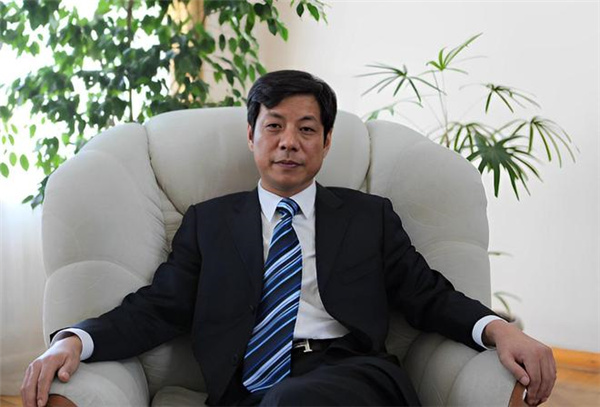
皮阿诺近两年亏3.83亿拟易主破局 尹佳音两步走8.39亿入主跨界赋能
Chang Jiang Shang Bao· 2025-12-17 00:25
Core Viewpoint - The traditional home furnishing company, PIANO, is undergoing a significant ownership change as it transitions to a new major shareholder with a semiconductor background, which raises market interest in potential revitalization of the company's performance [1][4]. Group 1: Ownership Change - Initial Micro Technology plans to acquire a 16.78% stake in PIANO for 444 million yuan, making it the controlling shareholder, with the actual controller changing from Ma Libin to Yin Jiayin [1][2]. - The transaction involves Ma Libin transferring 17.88 million shares at 15.31 yuan per share and Zhuhai Honglu transferring 12.80 million shares at 13.284 yuan per share, totaling 444 million yuan [2]. - Following the share transfer, Initial Micro will hold 30.69 million shares, increasing its ownership from 0% to 16.78% [3]. Group 2: Financial Performance - PIANO has faced declining performance, with revenues dropping from 18.24 billion yuan in 2021 to an estimated 8.86 billion yuan in 2024, and a cumulative net loss of approximately 3.83 billion yuan over the past two years [5]. - In the first three quarters of 2025, PIANO reported revenues of 420 million yuan, a year-on-year decrease of 37.27%, and a net loss of 7.52 million yuan, reflecting a 191.47% decline [5]. Group 3: Future Prospects - The new ownership aims to enhance PIANO's operational management and competitiveness, providing support for business structure optimization and long-term healthy development [6]. - The market reacted positively to the news of the ownership change, with PIANO's stock price hitting the daily limit up, closing at 17.86 yuan per share, a 9.98% increase [4].
至正股份: 上海泽昌律师事务所关于深圳至正高分子材料股份有限公司重大资产置换、发行股份及支付现金购买资产并募集配套资金暨关联交易之补充法律意见书(三)
Zheng Quan Zhi Xing· 2025-06-20 14:23
Core Viewpoint - The document provides a legal opinion regarding the major asset swap, issuance of shares, and cash payment for asset acquisition by Shenzhen Zhizheng High Polymer Materials Co., Ltd, along with related transactions and supplementary legal opinions issued by Shanghai Zechang Law Firm [1][2][3]. Group 1: Transaction Overview - The legal opinion is based on the latest developments in the transaction from September 30, 2024, to December 31, 2024, and addresses inquiries from the Shanghai Stock Exchange regarding the asset swap and related transactions [1][3]. - The transaction involves the transfer of GP shares from Beijing Zhilu to Advanced Semiconductor, with the aim of facilitating the acquisition of AAMI and ensuring compliance with fund expiration requirements [4][12][17]. Group 2: Parties Involved - Beijing Zhilu is identified as a professional equity investment institution focusing on semiconductor and high-tech investments, managing over 40 private equity funds with an asset management scale exceeding 10 billion yuan [5][8]. - The document outlines the historical background and ownership structure of Beijing Zhilu, detailing its evolution and current stakeholders [6][7]. Group 3: Financial Arrangements - The total consideration for the GP share transfer is reported as 200 million yuan, with an additional service fee of 70 million yuan to be paid by Advanced Semiconductor and Leading Semiconductor for their roles in the transaction [10][11][14]. - The expected investment returns from the transaction are projected based on the anticipated market value of AAMI, estimated at 3.5 billion yuan [13][14]. Group 4: Governance and Control - Prior to the GP share transfer, Beijing Zhilu held the position of general partner and had significant control over the management of the investment entities, which will transition to Advanced Semiconductor post-transfer [18][20]. - The governance structure of the investment entities, including decision-making processes and management responsibilities, is detailed, highlighting the shift in control following the transaction [19][20].

