商用航天

Search documents
宏观固收周报(20260119-20260125):国际避险情绪提升与国内投资风险偏好高企-20260130
Shanghai Securities· 2026-01-30 06:12
1. Report Industry Investment Rating - No relevant content provided 2. Core Views of the Report - The bond market has long - term allocation value, and there is still room for reserve requirement ratio cuts in 2026. The 10 - year Treasury bond yield of 1.83% has long - term investment value, though it may fluctuate in the short term due to high investor risk preference [12] - For A - shares, investors can follow the trend and focus on opportunities in four directions: satellite, commercial aerospace, and military industries; technology sectors like artificial intelligence, chips, etc.; bulk resource products such as non - ferrous metals, gold, and rare earths; and oil, gas, chemical, and petrochemical industries [13] - The US dollar may face continued depreciation pressure during the Fed's interest - rate cut cycle. The euro, pound, and yen will appreciate against the US dollar, while the RMB's appreciation against the US dollar may be relatively lower. Bulk commodities like gold, silver, copper, and oil may continue to rise in price [14] 3. Summary by Related Contents Stock Market Performance - US stock market: The three major US stock indexes declined. From 20260119 - 20260125, the Nasdaq, S&P 500, and Dow Jones Industrial Average changed by - 0.06%, - 0.35%, and - 0.53% respectively. The Hang Seng Index also declined by 0.36% during the same period [4] - A - share market: The large - cap stocks in A - shares declined while small - cap stocks rose, and most growth sectors increased. From 20260119 - 20260125, the Wind All - A Index changed by 1.81%. The CSI A100, CSI 300, CSI 500, CSI 1000, CSI 2000, and Wind Micro - cap stocks changed by - 0.69%, - 0.62%, 4.34%, 2.89%, 4.04%, and 5.16% respectively. In terms of sector styles, blue - chip stocks in the Shanghai Stock Exchange declined while growth stocks rose; in the Shenzhen Stock Exchange, both blue - chip and growth stocks declined; the Beixin 50 Index increased by 2.60%. Among the 30 CITIC industries, 24 industries rose and 6 declined. Leading industries with a weekly increase of more than 5.0% included building materials, petroleum and petrochemicals, steel, non - ferrous metals, basic chemicals, and real estate. Gold, photovoltaic, building materials, satellite, petrochemical, and aerospace ETFs led with a weekly increase of over 5% [5][6] Bond Market Performance - Chinese bonds: The yields of medium - and long - term Treasury bonds in China declined in the past week. From 20260119 - 20260125, the 10 - year Treasury bond futures main contract rose by 0.12% compared to January 16, 2026. The yield of the 10 - year active Treasury bond declined by 1.26 BP to 1.8298% compared to January 16, 2026. Yields of bonds with a maturity of 3 years and above declined [7] - US bonds: US bond yields showed mixed performance. As of January 23, 2026, the 10 - year US bond yield remained unchanged at 4.24% compared to January 16, 2026. Yields of various maturities showed mixed performance from 20260119 - 20260125 [8] Exchange Rate and Commodity Performance - Exchange rates: The US dollar depreciated. From 20260119 - 20260125, the US dollar index declined by 1.88%. The US dollar against the euro, pound, and yen changed by - 1.87%, - 1.89%, and - 1.43% respectively. The US dollar against the offshore RMB exchange rate declined by 0.27% to 6.9487 as of January 23, 2026, and the US dollar against the on - shore RMB exchange rate declined by 0.07% to 6.9642 [9][10] - Commodities: Gold prices rose. From 20260119 - 20260125, the London gold spot price rose by 7.27% to $4946.25 per ounce; the COMEX gold futures price rose by 7.00% to $4936.00 per ounce. The domestic Shanghai gold spot price rose by 7.52% to 1110.3 yuan per gram, and the futures price rose by 7.71% to 1111.88 yuan per gram [11]
商用航天奠定太空算力基础-太空光伏迎来重要发展机遇
2026-01-04 15:35
Summary of Key Points from the Conference Call Industry Overview - The conference call focused on the commercial aerospace sector, particularly the opportunities in space photovoltaics, which are expected to see significant development due to advancements in technology and cost reductions in satellite launches [3][4]. Core Insights and Arguments - **Investment Opportunities**: The commercial aerospace sector, especially space photovoltaics, presents substantial investment opportunities. The foundation of space computing has been established through reusable rockets and mass satellite manufacturing technologies, significantly lowering launch and satellite costs [3]. - **Cost Reduction**: Companies like SpaceX and China's Zhuque-3 are driving down the cost of launching individual satellites, enhancing the economic feasibility of space computing. It is anticipated that 100 GW of space data centers could be added annually over the next 4-5 years [3][4]. - **Global Initiatives**: - SpaceX plans to integrate communication and computing through its Starlink V3 satellites. - China aims to expand its "Starry Plan" satellite count to 2,800 by 2030, supporting the development of a global integrated computing network [3][4]. - **Technological Advancements**: The commercialization of space photovoltaics is accelerating due to technological iterations and cost optimizations. Silicon solar cells are currently more cost-effective than gallium arsenide cells, with prices around 50 RMB per watt for silicon and 70 RMB per watt for perovskite tandem cells [4]. - **Market Demand**: The AIGC market is increasing demand for stable and reliable power solutions in space. The projected construction of 100 GW of data centers annually indicates a trillion-level market potential for photovoltaic development [4]. Companies with Strategic Layouts - Several companies are making forward-looking investments in the commercial aerospace and space photovoltaic sectors: - **Junda Co., Ltd.**: Engaged in strategic partnerships to advance perovskite technology for space applications [5][6]. - **Dongfang Risheng**: Has delivered small batches of HJT cells, suitable for space environments [8]. - **Tuorui New Energy**: Signed supply contracts with satellite companies, establishing a clear foundation in satellite battery supply [8]. - **Mianyang Intelligent**: Laid out HJT production lines with promising lab efficiency [8]. - Other companies like Jin Feng Technology and Shuangliang Energy are also involved in the industry chain through various means [8]. Emerging Trends in New Energy - **Focus Areas**: In the new energy sector, AIDC power and solid-state batteries are highlighted as key investment areas. The 800V DC architecture is expected to be a significant variable by 2026, with solid-state transformers and high-power PSUs being critical components [9]. - **Storage Market Growth**: By December 2025, Inner Mongolia's energy storage grid connection is projected to reach 10.7 GW, totaling 45 GWh. The global energy storage capacity is expected to exceed 400 GW in 2026, with a year-on-year growth rate exceeding 50% [11]. Conclusion - The commercial aerospace and space photovoltaic sectors are poised for significant growth driven by technological advancements and strategic investments. Companies that are proactively positioning themselves in these areas are likely to benefit from the expanding market opportunities.
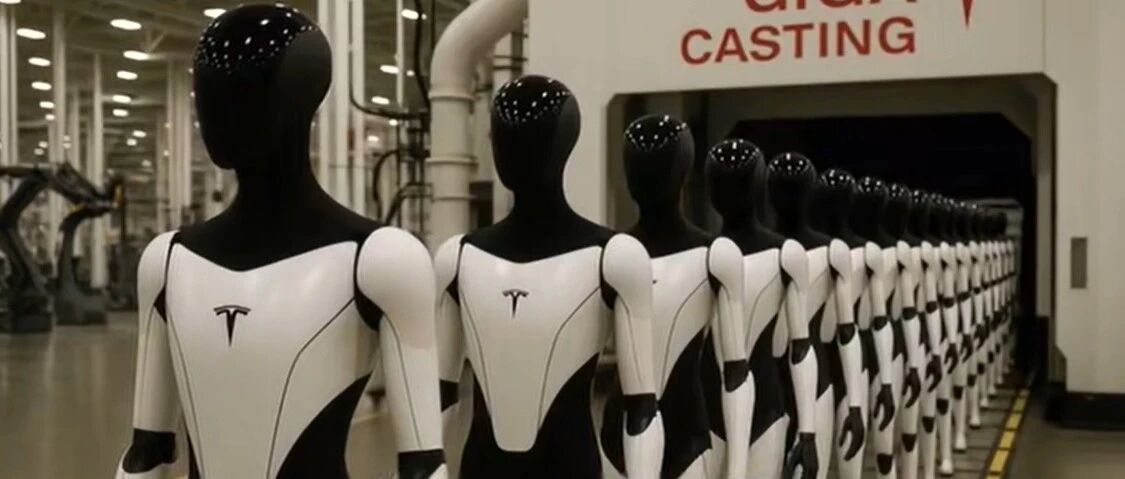
特斯拉审厂后,Optimus产业链公司新方向
Robot猎场备忘录· 2025-12-16 04:24
Core Viewpoint - The article discusses the simultaneous "shrinking" and "expanding" of the T-chain in the context of Tesla's factory audits, highlighting the emergence of new growth directions in the commercial aerospace sector, which is gaining traction as a new investment focus following Tesla's advancements in various technologies [2]. Summary by Sections Commercial Aerospace Sector - The commercial aerospace sector is identified as a new favorite in the secondary market, with SpaceX aiming for a valuation of approximately $1.5 trillion upon its anticipated IPO next year [2]. - Since December, stocks related to the commercial aerospace sector have experienced a surge, with no signs of decline [2]. Tesla's Optimus and T-chain Developments - The delay of Tesla's Optimus V3 to the first quarter of next year has contributed to a lack of explosive positive catalysts, leading to a focus on expectations rather than concrete developments [2]. - Key T-chain companies have announced mass production or project confirmations in November, which have driven the recent rebound in the robotics sector [2]. Market Trends and Predictions - The article notes that the T-chain has seen significant price increases since November 21, with a notable rebound exceeding expectations [4]. - However, the T-chain has faced a downturn recently, with a collective decline observed over three consecutive days, indicating a potential need for caution [4]. Supply Chain Insights - Insights from recent discussions with buyers regarding Tesla's production progress and core T-chain developments suggest that a new round of market activity may be on the horizon, with expectations for project bidding to commence by the end of the year [6]. - The article emphasizes the importance of monitoring core favorable stocks and the potential for early entry into the market [6]. Technological Advancements - New technologies, including GaN (gallium nitride) processes and integrated sensors in gloves/clothing, are gaining attention and have shown positive market performance since November [7]. - The introduction of these new technologies is seen as part of the "expanding" phase of the T-chain, which warrants close monitoring for future growth opportunities [7].