
实体经济

Search documents
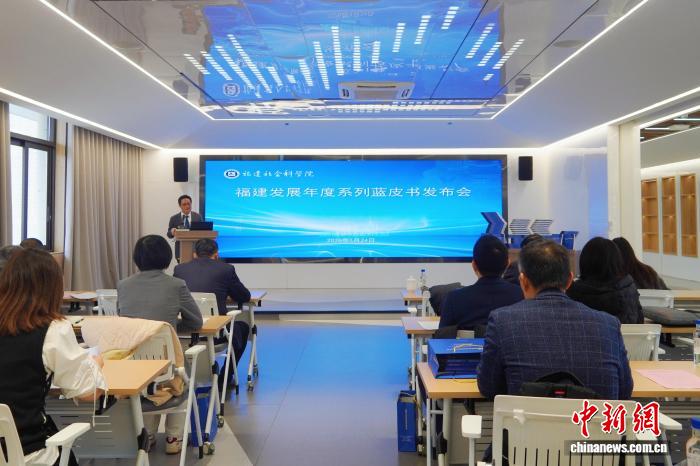
蓝皮书:福建要把发展经济的着力点放在实体经济上
Zhong Guo Xin Wen Wang· 2026-01-24 13:17
Economic Development - The "Economic Blue Book" indicates that the overall economic operation in Fujian is stable and progressing in the first three quarters of 2025, with all three industries showing growth [1] - It suggests that Fujian should grasp the macroeconomic environment and focus on the real economy to accelerate the construction of a modern industrial system [1] Cultural Development - The "Cultural Blue Book" highlights the increasing trend of integration between culture and technology during the 14th Five-Year Plan period, with emerging sectors like digital culture and modern cultural creation thriving [5] - It emphasizes the importance of cultural heritage protection, the development of cultural industries, and enhancing international cultural exchanges to improve cultural influence and showcase a new image of Fujian [5] Marine Development - The "Marine Blue Book" states that Fujian's marine economy continues to strengthen, with a modern marine industry system being rapidly constructed and marine technological innovation capabilities being enhanced [5] - It calls for systematic planning and in-depth research on new policies that align with Fujian's development needs and characteristics to promote the construction of a strong marine province [5] Blue Book Series - The release event also announced that the "Top 100 Enterprises Development Blue Book (2025)" is in the planning stage and is expected to be published in the first half of this year [3] - The "Blue Book Project" initiated in 2001 has expanded from focusing solely on economic and social fields to include culture, marine, and enterprise sectors, becoming a significant resource for observing and researching Fujian [5]

利好!重磅发布会,信息量很大
Zhong Guo Ji Jin Bao· 2026-01-20 03:42
Core Viewpoint - The Chinese government is committed to implementing policies that promote economic stability and growth, focusing on enhancing domestic demand and optimizing supply to achieve a balanced and sustainable economic development during the 14th Five-Year Plan period [2][4][10]. Group 1: Economic Development Goals - By 2025, the main economic and social development goals are expected to be achieved, with economic operations showing steady progress and resilience [2]. - The focus will be on implementing proactive macro policies, advancing high-level technological self-reliance, and addressing economic circulation bottlenecks [2][4]. - The digital economy's added value is projected to reach 49 trillion yuan by 2025, accounting for approximately 35% of GDP, indicating significant market potential [3]. Group 2: Domestic Demand and Supply Optimization - The government aims to expand domestic demand and optimize supply to achieve a dynamic balance and virtuous cycle at a higher level [4][10]. - A strategic plan for expanding domestic demand from 2026 to 2030 is being developed to align new demand with new supply [4]. - Emphasis will be placed on strengthening the real economy and modernizing the industrial system, with a focus on innovation and the development of new industries [5]. Group 3: Investment and Consumption Initiatives - In 2025, over 360 million people are expected to apply for subsidies for replacing old consumer goods, driving sales of related products to exceed 2.6 trillion yuan [6][7]. - The "Two New" policies are expected to support over 8,400 equipment renewal projects, leading to total investments exceeding 1 trillion yuan and a projected 11.8% increase in equipment investment [7]. - The government plans to enhance the effectiveness of the "Two New" policies by optimizing support ranges and subsidy standards, ensuring better management of project funding [8][9]. Group 4: Consumer Income and Spending Power - Increasing consumer income is identified as a crucial aspect of boosting domestic demand, with plans for actions to stabilize and expand employment and enhance residents' income [10]. - The government will continue to implement the old-for-new consumption policy, with an initial allocation of over 60 billion yuan to stimulate consumption [10]. - A combination of policy support and reform innovation will be pursued to enhance the effectiveness of domestic demand strategies [11].
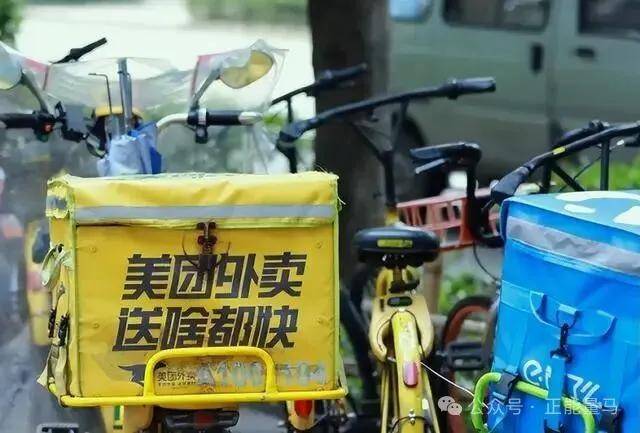
有人建议,取消外卖,关闭电商,恢复人间烟火气,恢复市面繁荣,你同意吗?
Sou Hu Cai Jing· 2025-11-19 09:19
Core Viewpoint - The article discusses the significant impact of e-commerce and food delivery services on modern life, highlighting their convenience and the changing consumer behavior, while also acknowledging the challenges faced by traditional brick-and-mortar businesses. Group 1: Impact of E-commerce and Food Delivery - E-commerce and food delivery have become essential services for busy individuals, allowing them to save time and effort in their daily lives [1][3] - The convenience of online shopping and food delivery has led to a significant increase in consumer spending, with China's express delivery revenue reaching 988 billion yuan last year, contributing positively to GDP growth [3][5] Group 2: Challenges for Traditional Businesses - The rise of e-commerce has negatively affected physical retail stores, as consumers tend to prefer online shopping due to lower prices and convenience, leading to decreased foot traffic in brick-and-mortar stores [5] - The restaurant industry remains relatively stable, but some unscrupulous businesses compromise food safety, raising concerns among consumers about the reliability of food delivery services [5][9] Group 3: Employment and Economic Considerations - E-commerce and food delivery services have created numerous job opportunities, particularly for delivery personnel, and removing these services could exacerbate unemployment issues [5][10] - The article argues against the blanket closure of e-commerce and food delivery services, suggesting that the focus should be on improving the quality of service rather than eliminating these conveniences [7][10]
接续推进中国式现代化——中共中央举行新闻发布会解读党的二十届四中全会精神
Ren Min Ri Bao· 2025-10-24 22:06
Core Points - The Fourth Plenary Session of the 20th Central Committee of the Communist Party of China was held from October 20 to 23, focusing on the completion of the "14th Five-Year Plan" and the preparation for the "15th Five-Year Plan" [1][2] - The session approved the "Suggestions for Formulating the 15th Five-Year Plan for National Economic and Social Development," which is seen as a significant guiding document for the next five years [2][3] Group 1: Key Outcomes of the Meeting - The "Suggestions" document consists of 15 parts and 61 articles, divided into three main sections: general principles, strategic tasks, and tasks for strengthening centralized leadership [2][3] - The document emphasizes the importance of high-quality development, technological self-reliance, and social progress as key goals for the "15th Five-Year Plan" [3][4] Group 2: Economic and Social Development Goals - The main goals for the "15th Five-Year Plan" include significant achievements in high-quality development, substantial improvements in technological self-reliance, and enhanced social civilization [3][4] - The plan aims to strengthen the national security framework and improve the quality of life for citizens, laying a solid foundation for achieving socialist modernization by 2035 [3][4] Group 3: Industrial and Market Development - The plan outlines the construction of a modern industrial system, focusing on optimizing traditional industries and fostering emerging sectors, with an estimated market space of around 10 trillion yuan to be added over the next five years [6] - It emphasizes the importance of a strong domestic market as a strategic foundation for modernization, with key tasks including expanding domestic demand and improving market efficiency [6] Group 4: Technological Advancements - The "Suggestions" highlight the need for technological modernization, with projected R&D investment exceeding 3.6 trillion yuan by 2024, marking a 48% increase from 2020 [8] - The plan aims to enhance the national innovation system and promote deep integration of technological and industrial innovation [8] Group 5: Open Cooperation and Global Engagement - The meeting signaled a strong commitment to open cooperation and mutual benefit, with plans to expand high-level openness and enhance trade and investment [9][10] - The "Suggestions" include initiatives for expanding autonomous openness and promoting trade innovation, aiming to strengthen China's position in global markets [9][10] Group 6: Health and Population Development - The plan aims to provide a solid health and population foundation for modernization, with a focus on improving healthcare services and promoting a supportive environment for family growth [11][12] - It includes measures to enhance elderly care and optimize employment policies for older adults, contributing to a more inclusive society [11][12]