
机电产品进出口

Search documents
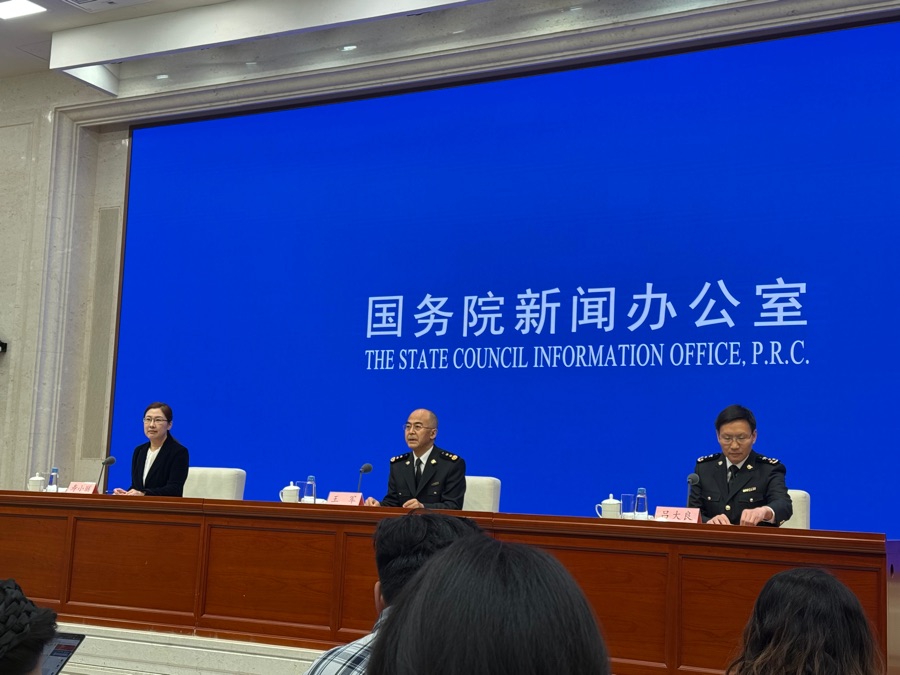
海关总署答21:2025年民企高端装备出口增长26.9%
2 1 Shi Ji Jing Ji Bao Dao· 2026-01-14 04:16
Core Viewpoint - In 2025, China's total foreign trade reached 45.47 trillion yuan, marking a 3.8% increase, with exports at 26.99 trillion yuan (up 6.1%) and imports at 18.48 trillion yuan (up 0.5%), maintaining its position as the world's largest goods trading nation [4]. Group 1: Export Performance - High-tech product exports reached 5.25 trillion yuan, growing by 13.2% [4] - Exports of "new three samples" and wind turbine generators increased by 27.1% and 48.7% respectively [4] - Self-branded product exports grew by 12.9%, with their share of total exports rising by 1.4 percentage points [4] Group 2: Import Performance - Total imports of electromechanical products amounted to 7.41 trillion yuan, a 5.7% increase [4] - Imports of electronic components and computer parts rose by 9.7% and 20% respectively [4] - Import volumes for crude oil and metal ores increased by 4.4% and 5.2% respectively, while imports of fresh and dried fruits and edible vegetable oils grew by 5.6% and 16.6% [4] Group 3: Private Enterprises - In 2025, private enterprises' foreign trade reached 26.04 trillion yuan, growing by 7.1% [5] - The share of private enterprises in total foreign trade increased by 1.8 percentage points to 57.3% [5] - High-tech product exports from private enterprises grew by 14.8%, with high-end equipment exports increasing by 26.9% [5] Group 4: Foreign Enterprises - Foreign enterprises' foreign trade reached 13.27 trillion yuan, a 3.7% increase, continuing a growth trend for seven consecutive quarters [5] - In the computer, communication, and other electronic equipment manufacturing sectors, foreign enterprises saw export growth of 9.6% [5] Group 5: State-Owned Enterprises - State-owned enterprises accounted for 6.06 trillion yuan in foreign trade, representing 13.3% of the total [6] - The average import and export value per state-owned enterprise was 9.4 billion yuan, the highest among all types of enterprises [6] - State-owned enterprises played a crucial role in importing over 60% of energy products and nearly 40% of metal ores [6] Group 6: Future Outlook - The customs authority plans to continue implementing policies to stabilize foreign trade and enhance services for various business entities [6]

没时间了,中国友国倒戈,联手美国断中方后路,中国打出王牌反制措施
Sou Hu Cai Jing· 2025-11-13 18:52
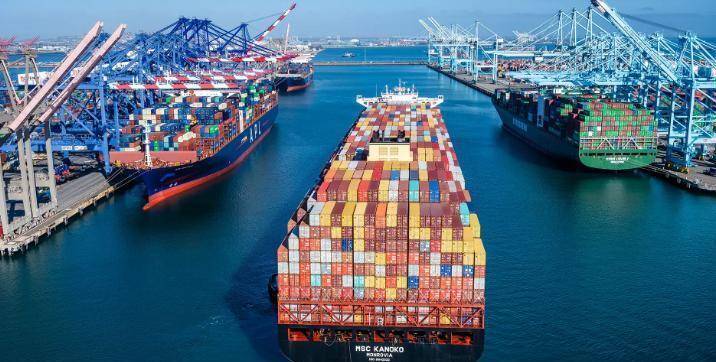
Core Viewpoint - The U.S. is pressuring Mexico to impose tariffs on Chinese goods, which has led to significant internal opposition within Mexico, particularly from the private sector and even within the ruling party [1][6]. Group 1: Economic Impact - A report from a prominent think tank predicts that a tariff war between China and Mexico could lead to a 30% drop in Mexico's exports to China and a 25% increase in the cost of imports from China [3]. - The Mexican avocado export association expressed concerns that losing access to the Chinese market, which saw a 40% increase in exports last year, would be a significant loss [5]. - The Mexican automotive industry reported that 75% of its electronic control units are reliant on imports from China, warning that tariffs could significantly increase production costs and reduce international competitiveness [8]. Group 2: Government Response - The Mexican government has postponed the planned tariffs on China from September to December, indicating a need for careful consideration of various interests [6]. - In late September, the Mexican Finance Ministry changed its language from "implementing tariffs" to "studying tariffs," suggesting a reevaluation of its stance due to widespread opposition [8]. - The Mexican Foreign Minister emphasized that trade policies must align with the country's best interests, despite U.S. pressure for clarity on tariff positions [8][10]. Group 3: Trade Relations - The bilateral trade volume between China and Mexico reached a record high of $82 billion in the first eight months of the year, raising concerns about the potential losses from a tariff conflict [6]. - China's Ministry of Commerce warned that unilateral tariff measures by Mexico would severely damage the healthy development of bilateral trade and investment confidence [1][6]. - In October, trade between China and Mexico saw a month-on-month decline of 5%, which analysts view as an early warning sign of escalating trade tensions [8].
陈霖副特派员应邀参加福建省2025年贸易合规能力提升专项活动
Shang Wu Bu Wang Zhan· 2025-09-29 15:00
Group 1 - The event aimed at enhancing trade compliance capabilities in Fujian Province was organized by the Fujian Provincial Department of Commerce and attended by over 200 representatives from government departments, associations, and foreign trade enterprises [1]
2025年贸易合规能力提升专项活动成功举办
Sou Hu Cai Jing· 2025-09-27 00:48
Core Viewpoint - The event focused on enhancing trade compliance capabilities in response to new trends, challenges, and strategies in trade compliance management under the current international economic environment [6][11]. Group 1: Event Overview - The "Trade Compliance Capability Enhancement Special Event" was successfully held in Fuzhou, organized by the Fujian Provincial Department of Commerce and attended by over 200 representatives from government departments, associations, and foreign trade enterprises [2]. - Key officials, including Chen Lin from the Ministry of Commerce and Shi Yonghong from the China Chamber of Commerce for Import and Export of Mechanical and Electrical Products, delivered speeches emphasizing the importance of compliance in trade [4][6]. Group 2: Expert Insights - Experts provided a detailed interpretation of China's export control laws and regulations, including practical aspects of applying for dual-use item export licenses [8]. - A compliance officer from ZTE shared practical management experiences and digital compliance practices in the field of export control [9]. - Experts from institutions like Dow Jones and Zhonglun Law Firm analyzed compliance risks faced by enterprises going abroad and discussed the latest trends in global export controls and economic sanctions [12]. Group 3: Feedback and Future Directions - Attendees highly evaluated the event, noting that the effective interaction among government, associations, and enterprises significantly enhanced compliance awareness and management capabilities [11]. - There is a consensus on the need to strengthen a collaborative compliance-building mechanism involving government guidance, enterprise leadership, and multi-party cooperation to improve trade risk response capabilities [11].
活动预告丨2025年贸易合规能力提升专项活动将于9月25日在福州举办
Sou Hu Cai Jing· 2025-09-19 20:46
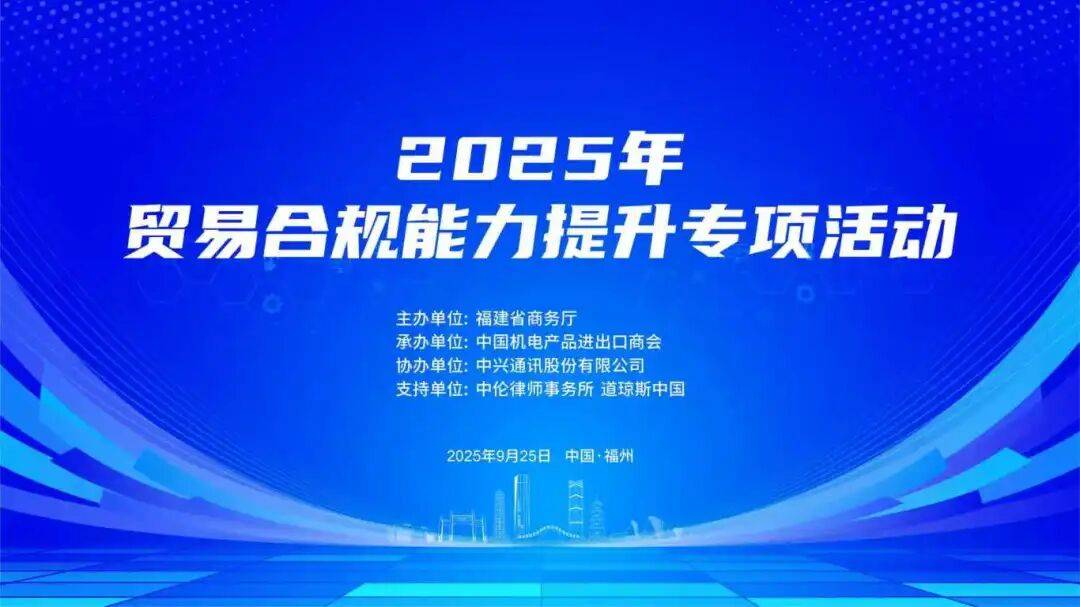
Core Viewpoint - The Fujian Provincial Department of Commerce is organizing a special event on September 25 in Fuzhou to enhance international trade compliance capabilities and reduce international trade risks [1]. Event Details - **Date and Time**: September 25, 2025, from 9:30 AM to 3:00 PM [3] - **Location**: Fuzhou Xihu Hotel, 2nd Floor Conference Room [3] - **Organizers**: - Host: Fujian Provincial Department of Commerce - Undertaker: China Chamber of Commerce for Import and Export of Machinery and Electronic Products - Co-organizer: ZTE Corporation - Supporters: Zhonglun Law Firm, Dow Jones China [3] Participants - Participants include members from the China Chamber of Commerce for Import and Export of Machinery and Electronic Products, provincial commerce departments, key foreign trade enterprises, and compliance experts [3]. Agenda Overview - **9:30-9:40**: Opening remarks by Chen Lin (Deputy Commissioner of the Ministry of Commerce in Fuzhou) and Shi Yonghong (Vice President of the China Chamber of Commerce for Import and Export of Machinery and Electronic Products) [4]. - **9:40-10:40**: Interpretation of Chinese export control laws and practical application for dual-use item export licenses by experts from the Ministry of Commerce [4]. - **10:40-11:20**: Discussion on compliance risks for enterprises going abroad and practical responses by Wang Feng (Partner at Zhonglun Law Firm) [4]. - **11:20-12:00**: Presentation on how high-level compliance can support high-quality enterprise development by Huang Zhiming (Vice President and Chief Compliance Officer of ZTE) [5]. - **1:00-1:40**: New paradigms of compliance digitalization by Xie Xianxin (Deputy Director of Export Control Compliance at ZTE) [5]. - **1:40-2:20**: Trends and case studies on global export controls and economic sanctions by Ma Jianxin (Head of Risk Compliance for Dow Jones China) [5]. - **2:20-3:00**: Key points for overall planning and implementation of compliance management systems by Guo Peng (Deputy Director of the Legal Department at the China Chamber of Commerce for Import and Export of Machinery and Electronic Products) [5]. Key Speakers - **Wang Feng**: Expert in trade compliance management and cross-border investment safety with nearly 30 years of experience [7]. - **Huang Zhiming**: Responsible for compliance management and cultural development at ZTE since 2002 [9]. - **Xie Xianxin**: Focused on compliance digitalization in the telecommunications industry with 20 years of experience [11]. - **Ma Jianxin**: Specializes in comprehensive risk management and economic sanctions at Dow Jones [13]. - **Guo Peng**: Involved in establishing compliance service centers and guiding enterprises in compliance mechanisms [15].
防止出海“内卷” 多家涉外商会制定自律规则
Zhong Guo Jing Ying Bao· 2025-08-07 09:22
Core Viewpoint - The Chinese government and industry associations are strengthening self-regulation among overseas contractors to avoid low-price competition and ensure high-quality development in international markets [2][3]. Group 1: Industry Self-Regulation - The China International Contractors Association is implementing self-regulation rules to maintain order in overseas operations and prevent low-price competition [2]. - A self-regulation mechanism for overseas investment in the renewable energy sector has been established under the guidance of the National Development and Reform Commission [2][3]. - The establishment of the photovoltaic industry self-regulation committee aims to enhance self-discipline in the export of photovoltaic products [3]. Group 2: Competitive Practices - The initiative published by the China Electromechanical Products Import and Export Chamber emphasizes fair competition, capacity control, technological innovation, and adherence to self-regulation agreements [3]. - The National Development Bank is promoting collaboration among banks, insurance, and investment institutions to mitigate costs associated with competition and enhance risk management capabilities [3].
