核技术应用

Search documents
中国同辐(01763) - 自愿性公告 - 中国同辐及附属公司中核海得威与茂名市人民政府签署《战略合...
2026-03-13 14:05
香港交易及結算所有限公司及香港聯合交易所有限公司對本公告的內容概不負責,對其準確性 或完整性亦不發表任何聲明,並明確表示,概不對因本公告全部或任何部份內容而產生或因倚 賴該等內容而引致的任何損失承擔任何責任。 中國同輻股份有限公司 (於中華人民共和國註冊成立的股份有限公司) (股份代號:1763) 自願性公告 中國同輻及附屬公司中核海得威與茂名市人民政府 簽署《戰略合作協議》 本公告乃中國同輻股份有限公司(「中國同輻」或「本公司」)自願發出以使股東及潛 在投資者知悉本公司之最新業務進展。 本公司董事會欣然宣布,3月13日,中國同輻及附屬公司中核海得威與廣東省茂 名市人民政府簽署《戰略合作協議》。 CHINA ISOTOPE & RADIATION CORPORATION 根據《戰略合作協議》,三方確立為全面戰略合作夥伴關係,共同推動核技術應用 產業在粵西地區的集聚與落地,將茂名打造成為華南地區重要的穩定同位素研發 生產基地及核醫學應用示範區。三方將充分利用自身優勢,聚焦穩定同位素關鍵 技術攻關,提升我國核技術應用產業鏈的韌性、安全性和保障能力。 承董事會命 中國同輻股份有限公司 董事長 肖亞飛 中國,北京,2 ...
百亿央企母基金招GP
FOFWEEKLY· 2026-03-05 09:36
Group 1 - The core viewpoint of the article is the establishment of the Chengtong Science and Technology Innovation Investment Fund (Jiangsu) Co., Ltd., which aims to promote technological innovation, industrial upgrading, and the cultivation of new productive forces through long-term, patient, and strategic capital [1] - The Chengtong Science and Technology Innovation Fund was established in December 2025 with a total scale of 10 billion yuan and a duration of 15 years [1] - The fund primarily invests in strategic emerging industries such as new materials, high-end equipment manufacturing, new generation information technology, new energy, life health, and nuclear-related fields, particularly focusing on key industries supported by Jiangsu Province [1] Group 2 - The fund is currently seeking to publicly select fund management institutions for its nuclear-related industry sub-fund, which must be registered within Jiangsu Province and have a scale of no less than 500 million yuan [1] - Investments for the sub-fund will focus on areas such as nuclear technology applications, electricity (including new types of electricity), and high-end equipment manufacturing, among others [1] - The sub-fund must comply with relevant laws, regulations, and self-regulatory rules, and is required to register its products with the Asset Management Association of China [1]


我国医用同位素药物研发平台取得新进展
Xin Lang Cai Jing· 2026-02-02 15:55
Core Insights - The "IP-SAFE project," led by the Institute of Modern Physics of the Chinese Academy of Sciences, has made significant progress with the successful installation of the main accelerator device, marking a crucial step in the construction of the world's first alpha medical isotope mass production demonstration facility based on a superconducting linear accelerator [1] Group 1 - The project aims to achieve large-scale production of medical alpha isotopes, specifically actinium-225 and radium-223, which are in global short supply [1] - The initiative seeks to address China's long-term reliance on imports for high-end medical nuclear isotopes [1] - The project leverages the Institute's technological expertise in high-current superconducting linear accelerators, high-power targets, and isotope separation [1]
各地加快产业升级 激活发展新动能
Yang Shi Wang· 2026-02-01 12:09
Group 1 - Traditional manufacturing is revitalized through digital transformation initiatives in various regions, with Liaoning focusing on 22 key industrial clusters and over 1,000 key enterprises [1] - Gansu is implementing the "Ten Thousand Enterprises Networking" project to integrate artificial intelligence into traditional manufacturing, enhancing processes and promoting digital solutions [1] - Hebei is advancing major technological upgrades and large-scale equipment renewal in manufacturing, leveraging artificial intelligence in key industries like steel and chemicals [1] Group 2 - Emerging and future industries are being cultivated to activate new growth drivers, with Fujian developing national-level small and medium-sized enterprise clusters in new energy storage and biomanufacturing [1] - Jiangxi is focusing on six major future industries, including future energy and new metal materials, aiming to form several trillion-yuan future industry clusters [1] - Jiangsu is concentrating on biomanufacturing and aerospace, organizing 40 major technological projects and establishing innovation centers for artificial intelligence [1]
中广核技:公司暂无产品直接用于可控核聚变领域
Ge Long Hui· 2026-01-30 08:01
Core Viewpoint - The company, China General Nuclear Power Technology (CGN), has indicated that its nuclear power cable materials can theoretically be applied in the field of controlled nuclear fusion, although actual suitability depends on the specific application location within fusion devices [1]. Group 1: Product Application - The performance requirements for cables vary significantly across different parts of nuclear fusion systems, with most scenarios being able to meet usage requirements [1]. - For certain extreme environments, polymer cable materials may not meet the necessary performance standards, and mineral insulated cables are typically required in such cases [1]. - Currently, the company does not have any products directly used in the controlled nuclear fusion field [1].

中广核技预计2025年净利润实现减亏
Zheng Quan Ri Bao Wang· 2026-01-29 01:45
Core Viewpoint - China General Nuclear Power Technology Development Co., Ltd. (CGN Tech) anticipates a net profit loss of 240 million to 340 million yuan for the year 2025, representing a year-on-year reduction in losses of 6.12% to 33.73% [1] Financial Performance - The expected net profit loss attributable to shareholders is projected to be between 240 million and 340 million yuan, with a decrease in loss compared to the previous year [1] - The anticipated net profit loss, excluding non-recurring gains and losses, is estimated to be between 320 million and 450 million yuan, reflecting a year-on-year reduction in losses of 12.24% to 37.60% [1] Business Focus - CGN Tech is engaged in the research and manufacturing of electron accelerators, irradiation processing services, new materials, healthcare, and measurement and control equipment [1] - In 2025, the company aims to build a market-oriented system centered on products, focusing on the application of nuclear technology in medical and industrial fields, while continuing to promote industrial transformation and upgrading [1] Sector Performance - The accelerator and new materials businesses are showing positive trends [1] - In the healthcare sector, CGN Tech plans to increase investment in the research and market promotion of proton therapy equipment and isotope business, although losses in this area are expected to widen year-on-year [1] Asset Management - The company intends to make provisions for potential asset impairments, which will also impact profits [1]
中广核技:2025年度业绩预告
Zheng Quan Ri Bao· 2026-01-28 14:14
Group 1 - The company, China General Nuclear Power Technology Co., Ltd. (中广核技), announced an expected net profit loss attributable to shareholders of the listed company ranging from 240 million to 340 million yuan for the year 2025 [2] - This projected loss represents an improvement compared to the previous year's loss of 362.1676 million yuan [2]
中广核技(000881.SZ):预计2025年亏损2.4亿元至3.4亿元
Ge Long Hui A P P· 2026-01-28 10:32
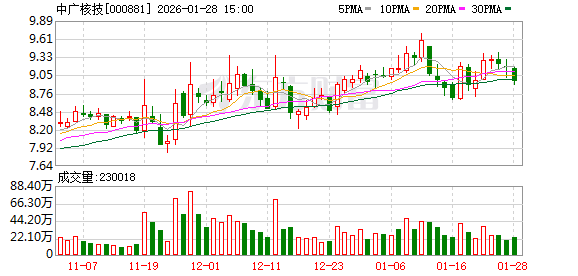
Core Viewpoint - China General Nuclear Power Technology Co., Ltd. (000881.SZ) expects a loss of 240 million to 340 million yuan in 2025, with a non-recurring loss projected between 320 million to 450 million yuan, indicating ongoing financial challenges as the company invests in market-oriented development and technology applications in healthcare and industrial sectors [1] Financial Performance - The company anticipates a negative net profit for the reporting period due to continued investments in incubation and early-stage business operations [1] - The healthcare segment, particularly in proton therapy equipment and isotope business, has seen an increase in losses compared to the previous year due to heightened R&D and marketing expenditures [1] Asset Management - The company is conducting a comprehensive review and impairment testing of its assets, planning to make provisions for potential asset impairments [1] Non-Recurring Gains and Losses - There has been a decline in non-recurring gains and losses compared to the previous year, primarily due to reduced government subsidies and equity disposal gains recognized in the current period [1]
中广核技:预计2025年全年净亏损2.40亿元—3.40亿元
2 1 Shi Ji Jing Ji Bao Dao· 2026-01-28 09:24
Core Viewpoint - The company, China General Nuclear Power Technology Co., Ltd. (CGN Tech), is forecasting a significant net loss for the year 2025, with expected losses ranging from 240 million to 340 million yuan for net profit attributable to shareholders, and from 320 million to 450 million yuan for net profit after deducting non-recurring gains and losses [1] Group 1: Financial Performance - The company anticipates a negative net profit for 2025 due to ongoing investments in incubation and early-stage business operations [1] - The medical health business is expected to continue incurring losses, with increased investments in the research and marketing of proton therapy equipment and isotope business leading to a year-on-year expansion of losses [1] - Non-recurring gains and losses are projected to decrease compared to the previous year, primarily due to a reduction in government subsidies and equity disposal gains recognized in the current period [1] Group 2: Business Strategy - The company is focusing on building a market-oriented system centered around its products, emphasizing the application of nuclear technology in the medical and industrial sectors [1] - There is a positive development trend in the accelerator and new materials business, with year-on-year performance improvements [1] - The company is conducting comprehensive asset inspections and impairment tests in accordance with accounting standards, planning to make corresponding impairment provisions for assets that may be subject to impairment [1]
哀悼!300亿A股原总裁、董事长陆致成病逝
Zhong Guo Ji Jin Bao· 2026-01-25 05:55
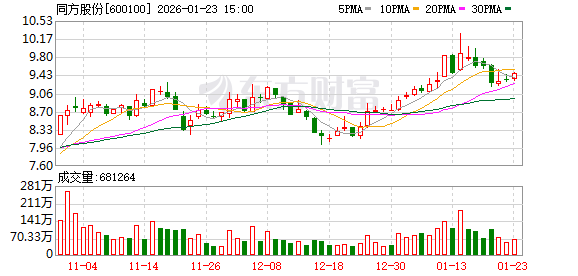
Core Insights - The former president and chairman of Tongfang Co., Ltd., Lu Zhicheng, passed away on January 24, 2026, at the age of 78 due to illness [2] - Lu Zhicheng was a pioneer in the transformation and commercialization of scientific and technological achievements in higher education, founding Beijing Tsinghua Artificial Environment Engineering Company in 1989 and later establishing Tongfang Co., Ltd. in 1997 [2][3] - Under Lu's leadership from 1997 to 2015, Tongfang focused on core industries such as information technology, public safety, and energy conservation, successfully nurturing several well-known enterprises [3] Company Overview - Tongfang Co., Ltd. was established in 1997 with funding from Tsinghua University and was listed on the Shanghai Stock Exchange the same year [4] - The company is primarily engaged in nuclear technology applications, digital information, and smart energy sectors, with products including security inspection equipment, knowledge data products, big data applications, artificial intelligence products, and energy-saving solutions [4][5] - As of January 23, 2026, Tongfang's stock price was 9.47 yuan per share, with a total market capitalization of 31.727 billion yuan [5]