
民用核能

Search documents
加拿大部长:中国清洁能源发展成就令人赞叹,愿深化合作
Sou Hu Cai Jing· 2026-01-16 17:19
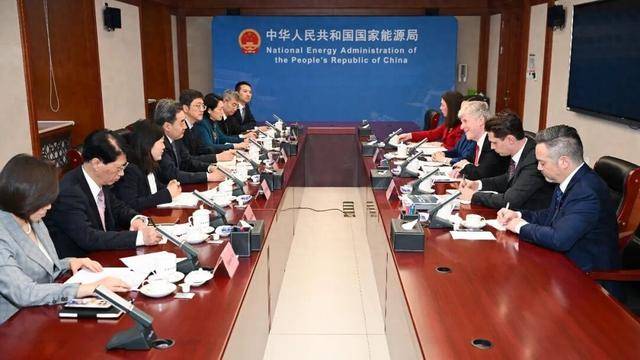
Group 1 - The core viewpoint of the article highlights the strong complementarity and broad cooperation potential between China and Canada in the energy sector, as discussed during the meeting between the heads of the National Energy Administration of China and the Canadian Minister of Natural Resources [1][3] - A memorandum of understanding was signed on January 15 to strengthen energy cooperation, focusing on traditional energy, clean energy, and civil nuclear energy, aiming for mutual benefits [3] - Both parties expressed a commitment to convert the consensus reached by their leaders into practical outcomes in the energy sector, emphasizing the importance of multilateralism and free trade for global energy security and transition [3] Group 2 - The meeting included discussions on cooperation under the APEC framework, indicating a collaborative approach to regional energy issues [3] - The Canadian Minister praised China's achievements in clean energy development and expressed willingness for Chinese enterprises to participate in Canadian energy projects, highlighting Canada's rich oil and gas resources [3] - The meeting was attended by key officials from various departments of the National Energy Administration, indicating a comprehensive approach to the discussions [3]

加拿大能源与自然资源部长:愿与中方进一步深化互利合作
Xin Lang Cai Jing· 2026-01-16 13:55
Core Viewpoint - The meeting between China's National Energy Administration head Wang Hongzhi and Canadian Minister of Natural Resources Tim Hochstein emphasizes the strong potential for cooperation in the energy sector between China and Canada, particularly in traditional and clean energy, as well as civil nuclear energy [1]. Group 1: Cooperation and Agreements - Canada has abundant oil and gas resources and is willing to deepen mutually beneficial cooperation with China [1]. - A memorandum of understanding was signed on January 15 to strengthen energy cooperation between the two countries, aiming to enhance dialogue and implement consensus [1]. - Both parties expressed a commitment to prepare for a dialogue between energy ministers to achieve practical results in energy cooperation [1]. Group 2: Clean Energy Development - Wang Hongzhi acknowledged the strong complementarity in the energy sectors of both countries and the broad space for cooperation [1]. - Hochstein praised China's achievements in clean energy development and welcomed Chinese enterprises to participate in cooperation in this area [1]. Group 3: Multilateral Cooperation - The discussion included cooperation under the Asia-Pacific Economic Cooperation (APEC) framework, supporting multilateralism and free trade [1]. - Both countries aim to contribute to global energy security and transition through collaborative efforts [1].
国家能源局主要负责人会见加拿大能源与自然资源部长
国家能源局· 2026-01-16 12:07
Group 1 - The core viewpoint is that China and Canada have strong complementarity in the energy sector, with significant cooperation potential, as evidenced by the signing of a memorandum to enhance energy cooperation [2][5] - Both parties aim to deepen collaboration in traditional energy, clean energy, and civil nuclear energy, striving for mutual benefits [2] - Canada welcomes Chinese enterprises to participate in clean energy development, highlighting its rich oil and gas resources and the desire for further cooperation [2] Group 2 - Discussions also included cooperation under the APEC framework, supporting multilateralism and free trade, and contributing to global energy security and transition [3] - Key officials from the National Energy Administration, including the Deputy Director and heads of various departments, participated in the meeting [4]

美英科技协议签署三月即搁浅,美国葫芦里卖的什么药?
第一财经· 2025-12-16 16:06
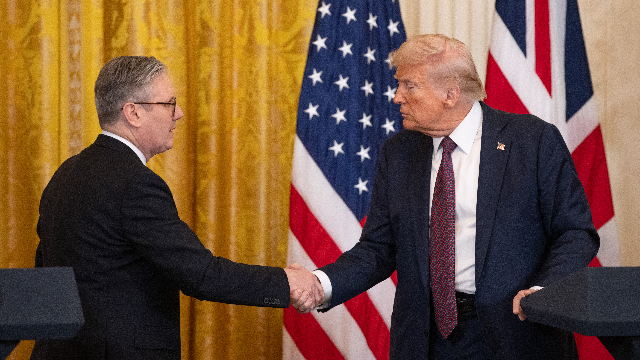
Core Viewpoint - The US-UK "Technology Prosperity Agreement" has been paused less than three months after its signing, indicating a reassessment by the US government regarding the benefits and feasibility of the agreement [2][6]. Group 1: Agreement Details - The agreement was signed during President Trump's visit to the UK in September and aimed to enhance cooperation in advanced technology fields such as artificial intelligence, quantum computing, and civil nuclear energy [2]. - Major US tech companies, including Microsoft, Google, NVIDIA, and OpenAI, pledged to invest over $40 billion in the UK to improve its AI infrastructure and other advanced technologies [2]. - The agreement is based on the US-UK "Economic Prosperity Agreement" signed in May and is not legally binding, allowing either party to terminate it with written notice [6]. Group 2: US Government's Position - The US government has paused the agreement due to perceived insufficient progress by the UK in reducing trade barriers [2]. - Analysts suggest that the US may use the agreement as leverage to demand more concessions from the UK in trade negotiations and geopolitical matters [2][7]. Group 3: Concerns and Criticism - Critics have raised concerns about the potential for the US to dominate the partnership due to its superior funding and technological capabilities, which could lead to the UK facing technology dependency and sovereignty risks [7]. - The agreement has faced skepticism since its announcement, with some labeling it as "second-rate" compared to other tech partnerships [7]. Group 4: Ongoing Negotiations - Recent discussions between the UK and US have included topics such as tariffs on steel and whiskey, as well as cooperation on critical minerals [11]. - The UK has agreed to a significant increase in tariff-free quotas for US beef and ethanol, indicating a willingness to negotiate on agricultural products in exchange for technological cooperation [10].

美英科技协议签署三月即搁浅 美国葫芦里卖的什么药?
Di Yi Cai Jing· 2025-12-16 11:10
Group 1 - The US-UK "Technology Prosperity Agreement" has been paused less than three months after its signing, indicating a reassessment by the US government regarding the benefits and feasibility of the agreement [1] - The agreement was initially signed during President Trump's visit to the UK in September and aimed to enhance cooperation in advanced technology sectors such as AI, quantum computing, and civil nuclear energy, with US tech companies pledging over $40 billion in investments in the UK [1] - The pause is attributed to US officials' concerns over insufficient progress by the UK in reducing trade barriers, suggesting that the agreement may be used as leverage in broader trade negotiations [1][4] Group 2 - The technology cooperation agreement is based on the US-UK "Economic Prosperity Agreement" signed in May, and it is not legally binding, allowing either party to terminate it with written notice [2] - The language in the memorandum indicates that the US government left itself room for maneuver during negotiations, reflecting a sense of urgency to reach an agreement at that time [3] - Critics have raised concerns about the potential for the US to dominate the partnership due to its funding and technological advantages, while the UK faces risks of technological dependency and sovereignty issues [3] Group 3 - The US has been pressuring the UK to further open its markets, particularly in the agricultural sector, as part of the broader trade discussions [4] - Recent agreements include maintaining zero tariffs on all pharmaceuticals exported from the UK to the US for three years, in exchange for higher payments by the UK's National Health Service [4] - The UK has agreed to a significant increase in tariff-free quotas for US beef and ethanol, but insists that all imports must meet its food safety standards [4]
美英科技协议签署三月即搁浅,美国葫芦里卖的什么药?
Di Yi Cai Jing· 2025-12-16 11:01
Core Viewpoint - The US has paused the UK-US "Tech Prosperity Agreement" due to perceived insufficient progress by the UK in reducing trade barriers, despite the agreement being signed less than three months ago during President Trump's visit to the UK [1] Group 1: Agreement Details - The "Tech Prosperity Agreement" was signed to enhance cooperation in advanced technology fields such as artificial intelligence, quantum computing, and civil nuclear energy, with US tech companies pledging over $40 billion in investments in the UK [1] - The agreement is based on the previously signed "Economic Prosperity Agreement" and is contingent upon substantial progress in its implementation [3] - The memorandum indicates that the agreement is not legally binding, allowing either party to terminate it with written notice [3] Group 2: Analysis and Implications - Analysts suggest that the US government is reassessing the benefits and feasibility of the agreement, potentially using it as leverage in broader trade negotiations with the UK [1][4] - Concerns have been raised regarding the balance of power in the agreement, with critics arguing that the US's technological and financial superiority could lead to the UK becoming overly dependent on US technology [4] - The UK may need to make further commitments regarding investments in the US or open its markets to US agricultural products to advance in tech cooperation [6][4] Group 3: Ongoing Negotiations - Recent discussions between UK and US officials have focused on tariffs related to whiskey and steel, as well as cooperation on critical minerals, with plans to continue negotiations in January [7]
彭波:美英科技协议价值几何
Jing Ji Ri Bao· 2025-09-29 00:21
Core Points - The signing of the "Technology Prosperity Agreement" between the US and UK aims to deepen strategic cooperation in cutting-edge technology fields, including AI, quantum computing, and civil nuclear energy [1][2] - The agreement is expected to help both countries dominate the global AI landscape, with US tech companies committing £31 billion (approximately $42 billion) to enhance the UK's AI infrastructure [1][2] Group 1: Economic and Political Implications - The agreement is seen as a potential economic boost for the UK government, which is facing declining public support, by showcasing its ability to attract foreign investment and develop high-tech industries [2][3] - The Northeast region of England is projected to become a new AI growth area, potentially creating over 5,000 jobs and attracting billions in private investment [2] Group 2: Challenges and Concerns - There are significant disparities in the technological capabilities of the US and UK, with the US holding a dominant position in funding, corporate strength, and market size, which may lead to the UK facing risks of technological dependency [3] - The differing regulatory and ethical standards between the two countries could pose challenges for the implementation of the agreement, particularly in areas like data flow and AI ethics [3][4] Group 3: Strategic Direction and Criticism - The agreement has been criticized for overemphasizing military and national security applications, potentially distorting the priorities of scientific research [4] - The absence of blockchain technology from the agreement raises concerns about the UK's long-term strategic development in the fintech sector, as it risks falling behind in digital asset innovation [4] - The agreement reflects strong political motives, aiming to solidify the US-UK special relationship while promoting a "US first" technology strategy [4][5] Group 4: Institutional Framework - The agreement seeks to establish a formal US-UK technology cooperation alliance, emphasizing collaboration in international standard organizations and the development of technology rules [5] - It aims to create AI systems that align with democratic values, thereby fostering a technology cooperation network based on shared values and countering the technological advancements of non-Western countries [5]
美英科技协议价值几何
Jing Ji Ri Bao· 2025-09-28 21:49
Core Viewpoint - The signing of the "Technology Prosperity Agreement" between the US and UK aims to deepen strategic cooperation in cutting-edge technology fields, particularly in AI, quantum computing, and civil nuclear energy, although the actual impact on the tech industries of both countries remains to be seen [1][2]. Group 1: Agreement Details - The agreement focuses on collaboration in rapidly developing technologies such as AI, quantum computing, and civil nuclear energy [1]. - Major US tech companies, including Microsoft, Google, NVIDIA, and OpenAI, have committed to invest £31 billion (approximately $42 billion) to enhance the UK's AI infrastructure and advanced technologies [1]. Group 2: Market Reactions - Some analysts believe the agreement will create an alternative supply chain from design to manufacturing, reducing reliance on foreign technology and enhancing the technological strength of both nations [2]. - The agreement could provide much-needed economic support and political capital for the UK government, potentially creating over 5,000 jobs and attracting billions in private investment in the Northeast of England [2]. Group 3: Challenges and Concerns - There is a significant power imbalance, with the US holding advantages in funding, corporate strength, and market size, which may lead to the US dominating the collaboration [3]. - The UK faces risks of technological dependency and potential loss of sovereignty, as UK startups are often acquired by US tech companies [3]. - Discrepancies in regulatory and ethical standards between the US and UK could pose obstacles to the implementation of the agreement [3]. Group 4: Controversies - The agreement has been criticized for overemphasizing military and national security applications, potentially distorting research priorities [4]. - The absence of blockchain technology from the agreement raises concerns about the UK's long-term strategic development in the fintech sector [4]. - The agreement reflects strong political motives, aiming to solidify the US-UK special relationship and support the "America First" technology strategy [4]. Group 5: Institutional Framework - The agreement aims to establish a formal US-UK technology cooperation alliance to strengthen their leading position in global tech competition [5]. - It emphasizes collaboration in international standard organizations and the development of AI systems that align with democratic values, potentially creating a technology network based on shared values [5].