
气象预报

Search documents
智绘天图 预报未来——中国气象局智能预报技术重点创新团队建设纪实
Xin Lang Cai Jing· 2025-12-24 09:35
Core Insights - The article highlights the significant advancements made by the China Meteorological Administration's Intelligent Forecasting Technology Key Innovation Team in improving weather forecasting capabilities through innovative technologies and methodologies [1][2]. Group 1: Team Formation and Objectives - The Intelligent Forecasting Technology Key Innovation Team was established in October 2022 to address the gap in kilometer-level forecasting and to meet the public's demand for timely and accurate weather warnings [2]. - The team aims to develop high-resolution intelligent grid forecasting for key meteorological elements such as precipitation, temperature, and wind, with a target of achieving minute-level update frequency [3]. Group 2: Technological Breakthroughs - The team has developed a strong precipitation nowcasting model using a spectrum-generating adversarial network, which has improved forecasting accuracy by over 10% compared to traditional methods [3]. - A new method for downscaling global numerical model outputs to 1-kilometer grid forecasts has been created, enhancing wind speed and temperature forecasting performance by 34% and 30%, respectively [4]. Group 3: AI Integration and System Development - The team recognized the potential of artificial intelligence in transforming meteorological forecasting and collaborated with Tsinghua University to create the "Fengqing" AI global short-term forecasting system [4][5]. - "Fengqing" became operational in June 2024, capable of generating 69 global meteorological forecast products with a performance ranking among the top internationally [5]. Group 4: Practical Applications and Impact - During the flood season, "Fengqing" successfully predicted the path of Typhoon "Gemi" five days in advance, providing critical information for disaster prevention [7]. - The system has also been instrumental in high-impact weather forecasting, contributing to significant meteorological events and earning recognition as one of the top ten meteorological technological advancements in China [7]. Group 5: Systematic Innovation and Talent Development - The team has developed the "NIMM" intelligent digital forecasting system, which integrates over 30 forecasting plugins and automates the entire process from data preprocessing to product output [8]. - The team has fostered a high-level, agile research team, with several members recognized as young meteorological talents and contributing to numerous patents and publications [11].

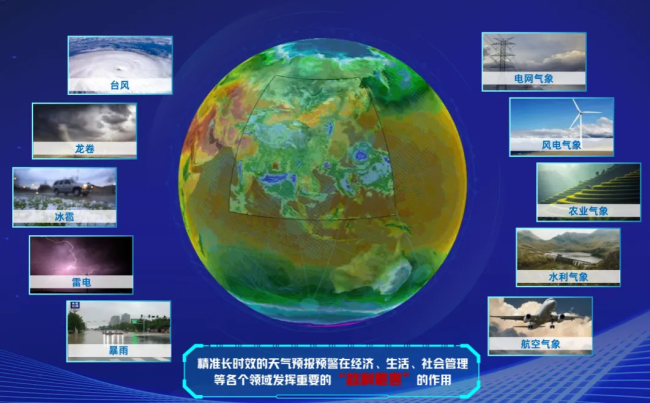
将建成自主可控国际先进地球系统预报体系
Ren Min Ri Bao· 2025-12-18 22:49
Core Viewpoint - The China Meteorological Administration (CMA) has released the "Earth System Forecast Development Strategy (2025-2035)", aiming to establish an autonomous and internationally advanced earth system forecasting system by 2035 [1] Group 1: Strategic Goals - By 2035, the goal is to fully establish a numerical forecasting and artificial intelligence complementary and integrated earth system forecasting system [1] - The system aims to achieve global kilometer-level and local hundred-meter-level operational capabilities, providing seamless forecasting products covering multiple layers from minutes to decades [1] Group 2: Implementation Framework - The strategy emphasizes strengthening national-level coordination and organization, consolidating various resources to tackle key core technologies in earth system forecasting [1] - It proposes the construction of a collaborative innovation system across departments, disciplines, and industries, including the establishment of an Earth System Forecast Innovation Development Alliance and a center for results integration and transformation [1] - The strategy also aims to improve institutional norms and standards, creating an open, secure, and sustainable technological ecosystem [1]
顶层设计落地,中国气象局发布未来十年地球系统预报发展战略
2 1 Shi Ji Jing Ji Bao Dao· 2025-12-18 12:00
Core Viewpoint - The China Meteorological Administration (CMA) has announced the "Earth System Forecast Development Strategy (2025-2035)" aimed at enhancing weather and climate forecasting capabilities to address climate change and extreme weather events [1][2]. Group 1: Strategic Goals - The goal is to establish a self-controlled, internationally advanced Earth system forecasting system by 2035, with a focus on operationalizing a new generation of forecasting models and building a unified framework for meteorological AI models within the next five years [2]. - The strategy will be implemented through two five-year plans, with the first plan focusing on operationalizing new forecasting models and the second plan (2030-2035) aimed at fully establishing a unified Earth system forecasting framework [2]. Group 2: Technical Approach - The strategy proposes an innovative "dual-driven, digital-intelligence integration" development path, combining physical-based numerical forecasting with artificial intelligence to enhance forecasting accuracy and efficiency [2]. - The integration of numerical forecasting and AI will allow for precise simulations of Earth's various layers and the extraction of forecasting patterns from vast meteorological data [2]. Group 3: Key Tasks - The strategy outlines eight key tasks, including the development of multi-layer coupled Earth system models, the creation of AI models for integrated weather and climate forecasting, and the establishment of a seamless intelligent forecasting business system [3][4]. - It emphasizes the importance of high-level services for disaster prevention, climate change adaptation, and socio-economic development, aiming to effectively convert meteorological data into application value [4]. Group 4: Societal Impact - The development of Earth system forecasting capabilities will significantly enhance early warning systems for extreme weather, thereby protecting lives and property [4]. - It will provide precise meteorological support for various sectors, including agriculture, renewable energy, transportation, and finance, while contributing to ecological civilization and climate change goals [4].
首批、首次、首个!本周,我国多领域交出硬核成绩单
Yang Shi Xin Wen Ke Hu Duan· 2025-11-28 00:21
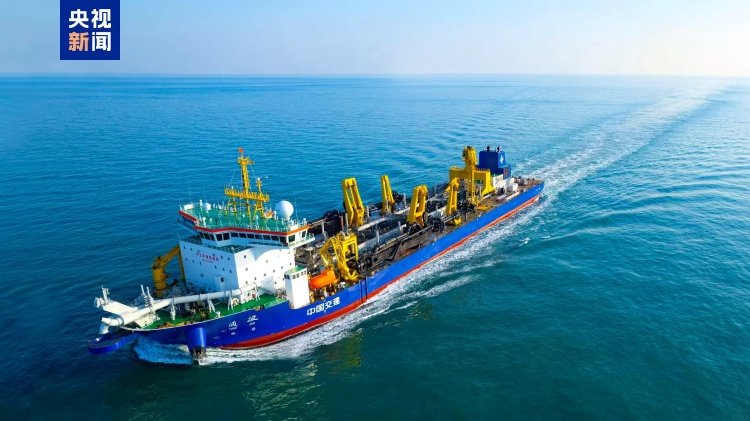
Group 1: Aerospace and Nuclear Fusion Achievements - China has made significant breakthroughs in aerospace and nuclear fusion, showcasing its hard power capabilities [1] - The "International Scientific Program for Burning Plasma" was officially launched in Hefei, Anhui, with the BEST device set to validate long-pulse steady-state operation by the end of 2027 [2] Group 2: Lunar Construction and Space Missions - The first batch of "lunar bricks" has successfully returned to Earth after a year-long space exposure experiment, weighing approximately 100 grams [3] - The Shenzhou-22 spacecraft was successfully launched as China's first emergency mission, carrying essential supplies and equipment to the space station [4] Group 3: Maritime Engineering - The new generation of ultra-large dredging vessel "Tongjun" has successfully completed all sea trials and is ready for operational use, boasting the largest hold capacity in Asia at 38,168 cubic meters [5][9] Group 4: Environmental Technology - The world's first aerosol-meteorological coupled forecasting AI model has been tested and is now operational, capable of providing high-precision environmental meteorological forecasts [10]
视频丨京津冀等地大雾天气会持续多久?气象专家解读
Yang Shi Xin Wen Ke Hu Duan· 2025-11-05 07:27
Core Viewpoint - The article discusses the ongoing foggy weather conditions affecting several regions in China, particularly in Beijing, Tianjin, and Hebei, with visibility dropping below 200 meters in some areas. The article also explores the reasons behind the recurrence of fog and its expected duration. Group 1: Weather Warnings and Conditions - The Central Meteorological Observatory issued a yellow fog warning, predicting dense fog in southeastern Beijing, central Tianjin, central Hebei, western and southern Shandong, northern Jiangsu, northern Anhui, and central Hunan, with visibility potentially below 200 meters [1][3] - The recent fog events are attributed to a pattern of cold air activity interspersed with moist conditions, which has led to three significant fog occurrences since autumn, primarily in the Beijing-Tianjin-Hebei region [3][5] Group 2: Impact on Transportation - Foggy weather significantly impacts transportation, particularly on highways where "tuanwu" (group fog) is common, especially in the North China Plain, Jiangsu, and Anhui regions [7] - The latest forecast indicates that the current foggy conditions will persist until the 8th, with a cold air front expected to move eastward on the 9th, gradually reducing the fog [9]

以练备战筑牢防汛“铜墙铁壁”
Liao Ning Ri Bao· 2025-08-15 01:12
Group 1 - The emergency response drill for flood rescue on the Yalu River was initiated, involving multiple departments to test and enhance rescue capabilities [1] - Advanced technologies such as flying life rings and underwater robots were utilized during the drill, demonstrating effective rescue operations under complex conditions [1] - The city of Dandong has proactively prepared for flood season by conducting various emergency drills and ensuring adequate emergency supplies [1] Group 2 - A flood gate operation drill was conducted in Dandong, simulating real-life scenarios to ensure readiness and safety during flood events [2] - Local units have strengthened monitoring, improved emergency mechanisms, and conducted practical drills to enhance flood safety measures [2] Group 3 - The provincial meteorological station issued a weather report predicting multiple heavy rainfall events from August 15 to 22, with specific dates and regions highlighted for potential severe weather [4] - The forecast includes warnings for urban flooding, mountain torrents, geological disasters, and secondary hazards due to heavy rainfall [4]