海军装备

Search documents
美媒:霍尔木兹海峡危机暴露美海军扫雷能力不足
中国能源报· 2026-03-18 12:22
Core Viewpoint - The U.S. Navy's mine-clearing capabilities have been inadequate for decades, raising concerns as Iran reportedly laid approximately 10 mines in the Strait of Hormuz, while the U.S. Navy's traditional mine-clearing ships are being retired and new unmanned systems are not ready to replace them [1][3]. Group 1 - The U.S. Navy has only four operational mine-clearing ships remaining, all of which are stationed at U.S. military bases in Japan. These "Avenger" class ships are made of wood and fiberglass to avoid triggering magnetic mines [1]. - Four old mine-clearing ships have entered retirement, and specialized mine-clearing helicopters are also being phased out [1]. - Analysts express that the U.S. Navy has historically neglected mine-clearing operations, which complicates the escort of oil tankers due to the limited number of specialized vessels available [3]. Group 2 - The U.S. military has begun to implement unmanned mine-clearing technology, including the "Counter-Mine Unmanned Surface Vehicle," which uses towed modules to generate sound and magnetic fields to trigger mines. Currently, the Navy has only nine of these unmanned vehicles [3]. - Some analysts caution that unmanned mine-clearing technology has not been tested in real combat situations, leaving its effectiveness uncertain [3].


Curtiss-Wright(CW) - 2025 Q4 - Earnings Call Transcript
2026-02-12 16:02
Financial Data and Key Metrics Changes - Overall sales for Q4 2025 reached $947 million, a 15% increase year-over-year, driven by 11% organic growth and contributions from the INC Solutions acquisition [4][5] - Operating income increased by 14%, with an operating margin of 19.7% [5][6] - Diluted earnings per share grew by 16% year-over-year, primarily due to higher A&D sales [5][6] - Free cash flow was strong at $315 million, up 13%, reflecting a 224% conversion rate [6] - For the full year 2025, diluted earnings per share increased by 21%, and adjusted free cash flow reached a record $554 million [7][8] Business Line Data and Key Metrics Changes - Aerospace and Defense (A&D) markets saw a 16% growth, with commercial aerospace sales increasing over 20% [5][6] - The defense electronics segment experienced a 17% sales growth, driven by increased demand for tactical communications equipment [12][14] - The naval and power segment's sales increased by 21%, supported by strong revenue growth in naval defense and aftermarket revenues [15][16] Market Data and Key Metrics Changes - The overall order book reached a record $4.1 billion, up 10% year-over-year, with a book-to-bill ratio of nearly 1.2 times [8][10] - New orders in Q4 increased by 18%, reflecting solid demand in naval defense and commercial nuclear markets [6][10] - Commercial nuclear sales showed tremendous growth, driven by strong demand for aftermarket equipment and advancements in SMR designs [9][21] Company Strategy and Development Direction - The company continues to execute its "Pivot to Growth" strategy, focusing on operational and commercial excellence to drive sales and profitability [4][10] - Investments in research and development are being accelerated to support future organic growth, with a commitment to grow R&D faster than sales over time [7][10] - The company is positioned to benefit from increased global defense spending and the U.S. government's focus on nuclear energy dominance [32][36] Management's Comments on Operating Environment and Future Outlook - Management expressed confidence in the future, projecting organic sales growth of 6%-8% for 2026, with operating income growth expected to outpace sales growth [10][11] - The company anticipates another year of record free cash flow generation, with a target of $575 million-$595 million for 2026 [29][30] - Management acknowledged challenges in the defense market due to timing delays but remains optimistic about long-term growth opportunities [8][10] Other Important Information - The company executed a record $465 million in share repurchases in 2025 and increased its annual dividend for the ninth consecutive year [10] - Capital expenditures are projected to increase by more than 25% year-over-year, reflecting ongoing investments to support growth [29][30] Q&A Session Summary Question: Exposure to missile programs and growth opportunities - Management indicated that while there is some exposure to missile telemetry and flight test instrumentation, the primary focus remains on broader defense capabilities aligned with U.S. military priorities [43][44] Question: Clarification on expected AP1000 orders - Management stated that the first orders could come from either European customers or the U.S., with ongoing discussions with Westinghouse regarding production ramp scenarios [46][47] Question: Free cash flow guidance and working capital dynamics - Management highlighted improvements in working capital management, with a target of approximately 18% working capital as a percentage of sales for 2026 [55][57] Question: C-17 order timing and defense electronics bookings - Management confirmed that the C-17 order was booked in Q1, and noted that delayed bookings in defense electronics were due to various timing issues [60][61] Question: Operational and commercial excellence initiatives - Management emphasized that operational excellence remains a core focus, with ongoing initiatives expected to contribute positively to margins in 2026 [68][72]

Curtiss-Wright(CW) - 2025 Q4 - Earnings Call Transcript
2026-02-12 16:00
Financial Data and Key Metrics Changes - Sales for Q4 2025 reached $947 million, a 15% increase year-over-year, driven by 11% organic growth and contributions from the INC Solutions acquisition [4][5] - Operating income increased by 14%, with an operating margin of 19.7% [5][6] - Diluted earnings per share grew by 16% year-over-year, primarily due to higher A&D sales [5][6] - Free cash flow was strong at $315 million, up 13%, reflecting a 224% conversion rate [5][6] - For the full year 2025, operating margin expanded by 110 basis points to a record 18.6% [6][7] - Diluted earnings per share for the full year increased by 21% year-over-year [7] Business Line Data and Key Metrics Changes - Aerospace and Defense (A&D) markets saw a 16% growth, driven by ground and naval defense revenues [5][6] - Commercial aerospace sales increased by over 20% [5] - The defense electronics segment experienced a 17% sales growth, with increased demand for tactical communications equipment [12][13] - Naval and power segment sales increased by 21%, driven by strong revenue growth in naval defense [14][15] Market Data and Key Metrics Changes - The overall order book reached a record of $4.1 billion, up 10% year-over-year, with a book-to-bill ratio of nearly 1.2 times [8][10] - New orders in Q4 increased by 18%, reflecting solid demand in naval defense and commercial nuclear markets [6][10] - Commercial nuclear market growth was driven by strong demand for aftermarket equipment and advancements in small modular reactor (SMR) designs [9][19] Company Strategy and Development Direction - The company continues to execute its "Pivot to Growth" strategy, focusing on operational and commercial excellence [4][6] - Investments in research and development are being accelerated to support future organic growth [7][10] - The company is committed to capital allocation towards high-return opportunities to enhance shareholder value [10][30] Management's Comments on Operating Environment and Future Outlook - Management expressed optimism about the growth in defense spending, particularly with a record U.S. budget and increased NATO commitments [30][34] - The company anticipates organic sales growth of 6%-8% for 2026, with operating income growth expected to outpace sales growth [11][21] - Management noted potential challenges in ground defense due to timing delays but remains confident in the overall defense market [8][80] Other Important Information - The company executed a record $465 million in share repurchases in 2025 and increased its annual dividend for the ninth consecutive year [10][11] - Capital expenditures are projected to increase by more than 25% year-over-year, reflecting ongoing investments to support growth [26] Q&A Session Summary Question: Can you provide more color regarding your exposure to missile programs? - The company has minor content related to missiles, primarily in telemetry and flight test instrumentation, but is well-positioned in broader defense areas related to the Golden Dome initiative [41][43] Question: What is the expected order for AP1000 reactors in 2026? - Orders could come from either European customers or the U.S., with Westinghouse as the primary customer. The size of the first order is not yet determined [45][46] Question: Can you elaborate on the dynamics enabling strong free cash flow despite increased CapEx? - The company has improved working capital management, with a target of approximately 18% working capital as a percentage of sales, which is expected to be a record [54][56] Question: What are the headwinds in the aerospace and industrial segments? - The company anticipates continued growth in naval defense and commercial nuclear, with some challenges in margin due to the transition to prototype work in SMRs [62][63] Question: How will operational and commercial excellence initiatives contribute moving forward? - The company expects continued benefits from operational excellence initiatives, with a projected incremental contribution margin on sales of roughly 25% [67][71]
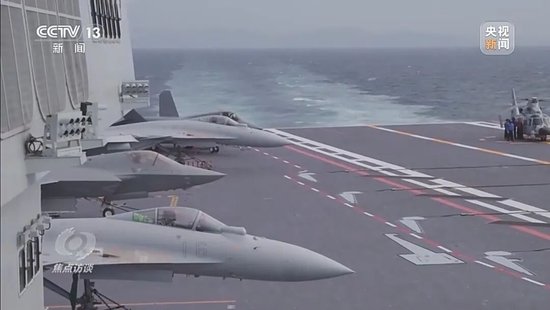
福建舰的电磁弹射有多强?央视公布最新视频:超近视角看更多细节
Xin Lang Cai Jing· 2025-12-24 14:09
Core Viewpoint - The commissioning of the Fujian aircraft carrier marks China's entry into the "three aircraft carrier era," significantly enhancing the People's Navy's long-range defense capabilities and modernization level [1][30]. Group 1: Training and Operational Capabilities - The Fujian aircraft carrier conducted its first live training mission, successfully testing the electromagnetic catapult, recovery, and deck operation capabilities with various carrier-based aircraft [3][36]. - During the training, multiple exercises were performed, including joint search and rescue operations, which improved the fleet's emergency response capabilities [7][40]. - The training also demonstrated enhanced coordination between different positions and pilots, leading to improved operational efficiency [5][38]. Group 2: Electromagnetic Catapult Technology - The Fujian is China's first domestically designed and built electromagnetic aircraft carrier, with a full-load displacement of over 80,000 tons, breaking the notion that only nuclear-powered carriers can support electromagnetic systems [9][42]. - The electromagnetic catapult allows for rapid acceleration of aircraft, accommodating a wider variety of carrier-based aircraft under different conditions, thus significantly improving sortie efficiency [11][44]. - Compared to traditional steam catapults, the electromagnetic system offers greater thrust, efficiency, and precision, enabling heavier aircraft to take off quickly, thereby enhancing combat capabilities [13][46]. Group 3: Medical and Emergency Support Systems - The Fujian carrier features a robust medical system, including the largest medical center among naval vessels, equipped for various medical needs and capable of remote consultations with experts [26][60]. - The emphasis on emergency response capabilities is crucial for the carrier's operational readiness during long-range missions [24][56]. Group 4: Design and Structural Innovations - The Fujian's flight deck design is notably different from previous carriers, featuring a flat and wide deck with three catapults and one arrestor system, enhancing compatibility for various aircraft operations [19][54]. - The overall layout of the carrier, including a simplified island structure, reflects advancements in design and operational efficiency [52][19]. Group 5: Historical Context and Future Aspirations - The development of the Fujian carrier is part of a broader narrative of China's naval evolution, transitioning from the Liaoning to the Shandong and now to the Fujian, showcasing rapid advancements in naval capabilities [28][64]. - The Fujian's commissioning is seen as a pivotal moment in strengthening national defense and maritime power, with aspirations for further advancements in naval technology and operational capabilities [34][68].
人机编队将赢得未来战争
Xin Lang Cai Jing· 2025-12-08 04:22
Core Insights - The future of naval warfare will not be determined by the largest fleets but by the integration of human intelligence with advanced machines, emphasizing collaboration over replacement [1][17] - The evolution of naval technology has historically transitioned from fear of replacement to partnership, as seen with steam power, ironclads, submarines, and aircraft carriers [3][20] - Current advancements in unmanned systems and artificial intelligence are reshaping naval operations, with examples like the "ghost fleet" demonstrating the effectiveness of autonomous vessels [6][22] Historical Context - Historical advancements in naval technology have often been met with skepticism, but ultimately led to enhanced collaboration between humans and machines [3][20] - The transition from sail to steam power, wooden ships to ironclads, and the introduction of submarines and aircraft carriers illustrates a pattern of adaptation and integration [3][20] - Technologies like radar and sonar, once viewed with distrust, became essential tools for naval operations, highlighting the importance of human-machine collaboration [4][21] Current Landscape - The emergence of unmanned surface vessels and underwater drones is indicative of the future naval force structure, with these systems already conducting reconnaissance and offensive operations [6][22] - The "ghost fleet" concept showcases the potential of autonomous vessels to operate effectively with minimal human oversight, changing the dynamics of naval warfare [6][22] - Recent conflicts, such as those in the Black Sea, demonstrate the tactical advantages of integrating drones and traditional weaponry, forcing larger fleets to reconsider their operational strategies [7][24] Future Considerations - Future naval strategies must prioritize human-machine teaming, where machines handle data processing and surveillance while humans make critical decisions [8][26] - The need for clear delegation of authority and accountability in the use of autonomous systems is essential to maintain operational integrity and legality [10][27] - Emphasis on cybersecurity is crucial, as compromised AI systems can pose significant risks to decision-making processes [12][29] Strategic Choices - Naval leaders face critical choices regarding the integration of autonomous systems, with options ranging from resistance to transformation, reckless automation, or careful team design [18][34] - The successful integration of human and machine capabilities will define the effectiveness and legitimacy of future naval forces [31][34] - Historical lessons from past naval conflicts underscore the importance of trust in technology while retaining human oversight in decision-making [15][32]

海军福建舰开展入列后首次海上实兵训练
Xin Hua She· 2025-11-18 10:57
Core Points - The article reports on the first live military training of the aircraft carrier Fujian after its commissioning, highlighting the significance of this event for naval capabilities [1] - The training involved multiple naval vessels, including Fujian, Yan'an, and Tongliao, and covered various exercises such as formation sailing, joint search and rescue, and aircraft takeoff and landing [1] Group 1 - The training included a joint search and rescue operation where the command center effectively coordinated air and sea resources to complete the rescue mission, enhancing the fleet's emergency response capabilities [1] - Multiple types of carrier-based aircraft, including J-35, J-15T, J-15DT, and KJ-600, successfully conducted several takeoff and landing exercises, validating the Fujian's electromagnetic catapult, recovery, and deck operation capabilities [1] - The training further verified the compatibility of the aircraft with the Fujian carrier, indicating improvements in operational readiness and efficiency [1]
Curtiss-Wright(CW) - 2025 Q3 - Earnings Call Transcript
2025-11-06 16:02
Financial Data and Key Metrics Changes - The company reported revenue of $869 million, representing a 9% year-over-year increase, with 6% organic growth [5][6] - Operating income increased by 14% year-over-year, leading to a 90 basis points expansion in overall operating margin to 19.6% [6][14] - Diluted earnings per share (EPS) rose by 14% year-over-year, slightly exceeding expectations [6][9] - Free Cash Flow was $176 million, up 8% year-over-year, reflecting nearly 140% conversion due to higher cash earnings and lower tax payments [6][9] Business Line Data and Key Metrics Changes - In the aerospace and industrial segment, sales increased by 8%, driven by strong demand in commercial aerospace and ground defense markets [10] - The defense electronics segment saw a 4% sales growth, primarily due to tactical communications equipment revenues [11] - The naval and power segment experienced a 12% increase in sales, driven by production acceleration on submarine programs [12][13] Market Data and Key Metrics Changes - The order book increased by 8%, resulting in a Book-to-Bill ratio of 1.1 times, indicating continued confidence in future top-line growth [6][8] - The backlog reached a record of over $3.9 billion, up 14% year-to-date [8][46] - Strong demand was noted in commercial aerospace and nuclear markets, with significant new contracts supporting growth [7][8] Company Strategy and Development Direction - The company is focused on a "pivot to growth" strategy, emphasizing operational excellence and targeted investments [4][24] - There is a strong alignment with U.S. defense priorities, particularly in shipbuilding and defense electronics, which are expected to benefit from increased government funding [25][26] - The company is committed to maintaining a robust R&D investment to support future growth opportunities [20][35] Management's Comments on Operating Environment and Future Outlook - Management expressed optimism about growth opportunities in A&D and commercial markets, projecting continued strong performance into 2026 [4][8] - The company anticipates a 10%-11% increase in sales for the full year 2025, supported by a strong backlog and market demand [8][20] - Management acknowledged potential impacts from government shutdowns but remained confident in the resilience of their order pipeline [41][47] Other Important Information - The company has increased its share repurchase program, anticipating over $450 million in buybacks for the year [33][34] - Capital expenditures are expected to rise by approximately 40% year-over-year to support growth initiatives [22][35] Q&A Session Summary Question: Can you provide details on the AP1000 reactor content? - Management confirmed that the content per reactor coolant pump (RCP) is around $28 million, with additional content expected to increase significantly [40][49] Question: How are bookings performing across segments? - Overall bookings were strong with a Book-to-Bill ratio of 1.1 times, though some delays were noted in the defense electronics segment due to government funding issues [41][46] Question: What is the outlook for the nuclear market? - Management indicated that the first orders are expected from Poland and Bulgaria, with U.S. orders anticipated to follow [60][61] Question: What is the state of the M&A pipeline? - The company is actively pursuing strategic acquisitions and remains focused on finding properties that align with its growth strategy [79][80] Question: Are there signs of improvement in the industrial vehicle market? - Management noted a stabilization in the industrial vehicle market, with slight improvements in orders during the quarter [83]
Curtiss-Wright(CW) - 2025 Q3 - Earnings Call Transcript
2025-11-06 16:02
Financial Data and Key Metrics Changes - The company reported sales of $869 million, representing a 9% year-over-year increase, with 6% organic growth [5][6] - Operating income increased by 14% year-over-year, leading to a 90 basis points expansion in overall operating margin to 19.6% [6][14] - Diluted earnings per share (EPS) rose by 14% year-over-year, slightly exceeding expectations [6][9] - Free cash flow was $176 million, up 8% year-over-year, reflecting nearly 140% conversion due to higher cash earnings and lower tax payments [6][9] Business Line Data and Key Metrics Changes - In the aerospace and industrial segment, sales increased by 8%, driven by strong demand in commercial aerospace and ground defense markets [10][11] - The defense electronics segment saw a 4% sales growth, primarily due to tactical communications equipment revenues [11][12] - The naval and power segment experienced a 12% increase in sales, driven by production acceleration on submarine programs [12][13] Market Data and Key Metrics Changes - The order book increased by 8%, resulting in a book-to-bill ratio of 1.1 times, indicating continued confidence in future growth [6][46] - The backlog reached a record of over $3.9 billion, up 14% year-to-date [8][46] - Strong demand for commercial nuclear orders was noted, including new contracts supporting government sites [7][8] Company Strategy and Development Direction - The company is focused on a "pivot to growth" strategy, emphasizing operational excellence and targeted investments [4][24] - There is a strong alignment with U.S. defense priorities, particularly in shipbuilding and defense electronics [25][26] - The company is positioned to capitalize on increased global defense spending and has significant content in key defense programs [25][26] Management's Comments on Operating Environment and Future Outlook - Management expressed confidence in the company's positioning across A&D and commercial markets, anticipating meaningful growth opportunities into the next decade [4][24] - The company raised its full-year 2025 guidance for sales, operating income, and EPS, reflecting strong year-to-date performance [8][9] - Management acknowledged potential impacts from government shutdowns but remained optimistic about the order pipeline and future growth [41][47] Other Important Information - The company plans to maintain a strong focus on research and development while also pursuing strategic acquisitions [33][80] - Increased capital expenditures are anticipated to support future growth initiatives, with a 40% year-over-year increase expected [22][64] Q&A Session Summary Question: Can you provide details on the AP1000 reactor content? - Management confirmed that the content per reactor coolant pump (RCP) is approximately $28 million, with additional content expected to increase significantly [39][40] Question: How are bookings performing across segments? - Overall bookings were strong, with a book-to-bill ratio of 1.1 times, although some delays were noted in the defense electronics segment due to government shutdowns [41][46] Question: What is the outlook for the nuclear market in the U.S.? - Management indicated that the first orders are expected from Poland and Bulgaria, with U.S. orders anticipated to follow, but timing remains uncertain [60][61] Question: What is the capacity for building AP1000 reactors? - The company estimates a capacity of 12-16 reactors per year, with increased capital expenditures aimed at supporting this capacity [62][64] Question: What is the state of the M&A pipeline? - Management confirmed that M&A remains a top priority, with ongoing discussions for strategic acquisitions [80]
052D上新!直击海军驻马店舰实战化训练
Yang Shi Xin Wen Ke Hu Duan· 2025-11-02 03:21
Core Viewpoint - The article discusses the recent developments in the financial sector, highlighting significant changes in market dynamics and investment opportunities arising from these shifts [2]. Group 1: Market Dynamics - The financial market has experienced a notable increase in volatility, with major indices showing fluctuations of over 5% in recent weeks [2]. - Investment banks are adapting their strategies to navigate the changing landscape, focusing on sectors that demonstrate resilience amid economic uncertainty [2]. Group 2: Investment Opportunities - Analysts suggest that technology and healthcare sectors are poised for growth, driven by ongoing innovation and increased demand for digital solutions [2]. - The article emphasizes the importance of identifying undervalued assets, particularly in emerging markets, which could yield significant returns as global economic conditions stabilize [2].
美国封存稀土矿23年,如今90%依赖中国,求取消限制被拒
Sou Hu Cai Jing· 2025-10-21 09:27
Core Viewpoint - The article discusses the escalating trade tensions between the U.S. and China, particularly focusing on the U.S. demand for China to lift restrictions on rare earth exports, highlighting the strategic importance of these resources for national security and technological advancement [1][15][39]. Group 1: U.S. Trade Policy and Strategy - Trump's assertion that "tariffs equal national security" reflects a desperate political maneuver rather than a solid strategy, indicating a loss of confidence in his administration's trade policies [3][5]. - The trade war has not yielded the expected benefits for the U.S., with rising costs for American businesses and dissatisfaction among allies, leading to a decline in Trump's domestic support [6][8]. - The focus on rare earths as a singular demand illustrates a shift from broader trade negotiations to a more desperate, point-specific strategy, revealing the diminishing options available to the U.S. [24][32]. Group 2: Importance of Rare Earths - China controls over 80% of global rare earth production, while the U.S. relies on imports for 90% of its rare earth needs, making this a critical issue for U.S. military and technological sectors [15][21]. - The U.S. has faced significant delays in developing domestic rare earth processing capabilities, with projects pushed back to 2026, underscoring the challenges in establishing alternative supply chains [15][17]. - The competition for rare earths is not merely an economic issue but a matter of national security, as these resources are essential for modern technology and military applications [15][33]. Group 3: China's Position and Strategy - China's restrictions on rare earth exports are part of a broader strategy to manage its resources sustainably and assert its position in global trade, rather than a targeted response to U.S. demands [17][19]. - The Chinese government has maintained a calm and resolute stance in negotiations, indicating a strong position in the face of U.S. pressure [19][39]. - The ongoing struggle over rare earths reflects a larger contest for defining future technological and industrial standards, with China increasingly positioning itself as a rule-maker rather than a rule-taker [35][39].