
炼油业

Search documents
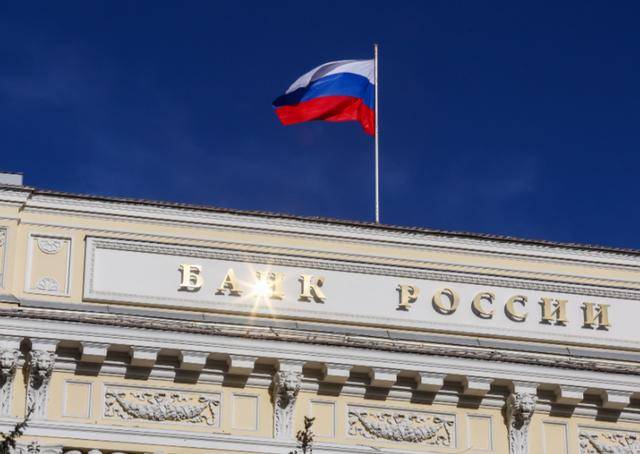
真掏家底了,俄央行一月卖出30万盎司!背后释放了怎样的信号?
Sou Hu Cai Jing· 2026-02-27 12:31
Core Viewpoint - The article discusses the implications of the Russian central bank selling gold, highlighting that this action is driven by financial pressure rather than strategic investment decisions. It emphasizes the significance of gold as a country's financial foundation and the potential risks associated with depleting gold reserves. Group 1: Financial Signals - The sale of 300,000 ounces of gold by the Russian central bank, equivalent to approximately 10 billion RMB, indicates severe financial strain, as central banks typically do not sell gold unless under extreme pressure [1][3] - The reduction in gold reserves weakens the currency's support, leading to greater hidden losses in social wealth compared to the cash obtained from selling gold [3] - The need to fill fiscal gaps and replenish foreign exchange reserves has made gold the most liquid asset for Russia [5] Group 2: Trade Dynamics with China - The sale of gold to China is primarily aimed at acquiring RMB for purchasing Chinese goods, indicating a deepening economic reliance on China [5][7] - This transaction reflects a strategic exchange where China trades industrial products for scarce gold, enhancing the role of RMB as a usable currency in international trade [7][19] Group 3: Energy Market Pressures - The suspension of oil imports from Russia by India, a significant buyer, exacerbates the pressure on Russian oil exports, which are crucial for its fiscal health [9] - The limited alternative markets for Russian oil increase its dependency on China, reducing its bargaining power [9][11] Group 4: Economic Outlook - Russia's economic growth is slowing, nearing recession, which will further strain fiscal revenues and increase budget deficits [13][15] - The ongoing external financial constraints make the sale of gold a necessary but risky strategy, potentially leading to long-term credit risks for Russia [15][17] Group 5: Future Implications - The continued sale of gold is likely as long as fiscal pressures persist, creating a negative feedback loop that increases dependency on gold liquidation [17] - China's cautious approach to acquiring gold will focus on balancing the benefits of hard assets with the need to manage dependency and maintain strategic control [17][21] - The increasing use of RMB in international transactions will solidify its status as a viable currency, driven by Russia's need to trade gold for RMB [19]

美国看不起印度商品,莫迪打算全卖给中国,顺便把俄罗斯也坑了!
Sou Hu Cai Jing· 2026-01-07 06:15
Group 1 - The core viewpoint of the article is that India is facing significant challenges due to the U.S. imposing a 50% tariff on its exports, leading India to seek alternative markets, particularly China, for its goods that are no longer viable in the U.S. market [1][3] - India has attempted to reduce its oil imports from Russia to appease the U.S., but this has not resulted in any substantial retaliatory measures against the tariffs, leaving India in a more passive position [1][3][7] - The Indian government is encouraging businesses to pivot away from the U.S. market and explore opportunities in China, despite the challenges posed by the competitive nature of the Chinese market [3][5] Group 2 - Despite some months showing growth in exports, Indian companies are merely adjusting prices and sales strategies to cope with the tariffs, leading to a false sense of security for the Modi administration [7][9] - The introduction of Colombian oil into India's procurement system is seen as a political maneuver to signal flexibility in energy sourcing to the U.S., but it may not be sufficient to satisfy American demands [9][11] - India's reliance on the U.S. and the need to appease both the U.S. and Russia has created a precarious situation, where each concession leads to new tensions and challenges [11][13] Group 3 - The article emphasizes that India's lack of a strong industrial base and effective countermeasures against U.S. tariffs has left it vulnerable, contrasting with China's ability to manage external pressures through its robust market and industrial capabilities [13][15] - Modi's strategy of making limited concessions to gain leverage in negotiations is flawed, as India lacks the necessary bargaining power to compel the U.S. to reconsider its tariffs [15][17] - The overall situation illustrates that India's attempts to balance its relationships with both the U.S. and Russia have resulted in a narrowing of its strategic options, ultimately leading to a more constrained position in international trade [17]
海外经济跟踪周报20250803:关税和非农冲击,海外市场变盘-20250803
Tianfeng Securities· 2025-08-03 10:46
1. Report Industry Investment Rating No relevant content provided. 2. Core Viewpoints of the Report - Overseas equity markets generally declined this week due to tariff concerns and economic data. Economic data showed potential slowdown risks, and the "disappointing" non - farm data on Friday intensified market concerns about economic momentum. Tariff policies also made investors cautious. The three major US stock indexes all fell by more than 2%. [1][10] - The market's expectation of the Fed's interest rate cuts fluctuated greatly this week. After the FOMC meeting, the probability of a September rate cut dropped below 40% due to Powell's slightly hawkish stance, but soared above 80% after the "disappointing" non - farm data and the resignation of the hawkish Fed member Kugler. [2] - The US second - quarter GDP initial value showed an overall growth rate exceeding expectations, but the potential momentum weakened. Consumption was stable, while investment slowed down. [44] 3. Summary According to the Directory 3.1 Overseas Market One - Week Review - **Equity**: Overseas equities generally closed down. This was mainly affected by tariffs and economic data. The three major US stock indexes (S&P 500, Dow Jones, and Nasdaq) fell by 2.36%, 2.92%, and 2.17% respectively. Other major overseas indexes also declined to varying degrees. [10] - **Foreign Exchange**: The US dollar first rose and then fell, with a slight weekly gain. The US dollar index rose by 1.04%. The euro and the RMB against the US dollar fell by 1.32% and 0.11% respectively, while the yen against the US dollar rose by 0.19%. [10] - **Interest Rates**: US Treasury yields declined significantly. The 2Y US Treasury yield dropped 22bp, and the 10Y US Treasury yield dropped 17bp. [11] - **Commodities**: Gold and crude oil rose, while New York copper prices tumbled. COMEX gold rose 0.93%, COMEX copper dropped 23.88%, and WTI crude oil rose 3.37%. [11] 3.2 Overseas Policies and Important News 3.2.1 Overseas Central Bank Dynamics - The FOMC meeting this week maintained the interest rate unchanged, which was in line with market expectations. It was the fifth consecutive time of keeping the rate unchanged since the December rate cut last year. The meeting statement was slightly dovish, while Fed Chairman Powell's stance was moderately hawkish. [26] - The market's expectation of the Fed's September rate cut first dropped and then soared. After the FOMC meeting, the probability of a September rate cut dropped below 40%, but after the "disappointing" non - farm data and Kugler's resignation, it rose above 80%. As of August 1, the market expected a 25bp rate cut in September with a probability of 80.3%, and three consecutive 25bp rate cuts in September, October, and December. [2][27] - The Bank of Japan's interest rate meeting this week also maintained the interest rate unchanged, in line with market expectations, but it raised the inflation forecast, causing the yen to rise against the US dollar. [27] 3.2.2 Trump Policy Tracking - **Trade Negotiations**: Sino - US economic and trade talks continued to postpone the 24% part of the US's reciprocal tariffs and China's counter - measures for 90 days. Trump signed an executive order to set the "new reciprocal tariff" rates ranging from 10% to 41%, and a 40% transit tax on transit goods. He also adjusted tariff policies for Canada, Mexico, and Brazil. [3][31] - **Personnel Changes**: Trump demanded the dismissal of the Bureau of Labor Statistics director and the Fed member Kugler announced her resignation on August 8. These two personnel changes on Friday increased traders' bets on a September rate cut by the Fed. [3][31] - Trump's net satisfaction rate increased. As of August 1, his net satisfaction rate was - 5.1%, compared with - 7.0% a week ago. [32] 3.3 Overseas Economic Fundamental High - Frequency Tracking 3.3.1 Overall Prosperity - The bet on a US economic recession in 2025 on the Polymarket website dropped to 16% from 17% a week ago. The US weekly economic activity index rose slightly, while Germany's continued to decline. [4][37] - The US second - quarter GDP initial value showed an overall growth rate exceeding expectations, but the potential momentum weakened. After excluding the impact of net exports and inventory, the growth rate was lower than the previous value. [44] 3.3.2 Employment - The number of unemployment benefit recipients continued to decline, but the non - farm data was "disappointing". The number of initial jobless claims continued to be lower than expected, but the non - farm data on Friday was far below expectations, with the previous two months' data revised down by 258,000 jobs. The unemployment rate was 4.2%, in line with expectations. [4][52] 3.3.3 Demand - US airport security checks and railway transportation were better than the same period last year. The Redbook commercial retail sales growth rate declined for three consecutive weeks. The real estate market remained sluggish. [54] 3.3.4 Production - The US production side remained prosperous, with crude steel production and refinery utilization rates continuing to be higher than the same period last year. [60] 3.3.5 Shipping - International freight rates declined. The Baltic Dry Index, Panamax Freight Index, and Cape - size Freight Index all dropped, and the container freight rates from Chinese ports also continued to fall. [63][64] 3.3.6 Price - US retail gasoline prices were stable. The inflation expectations in the US declined this week, with the 1 - year inflation swap rate dropping by 0.04 percentage points and the 2 - year inflation swap rate dropping by 0.06 percentage points. [65][68] 3.3.7 Financial Conditions - The US financial pressure declined this week, with the OFR US financial stress index dropping and the credit spread narrowing. [70] 3.4 Next Week's Overseas Important Event Reminders - Key events next week include the Bank of England's interest rate meeting (the market expects a 25bp rate cut), the US July ISM services PMI, and the US June factory orders monthly rate. Attention should also be paid to the implementation of Trump's "new reciprocal tariffs" on August 7. [74]