科技软件

Search documents
中东冲突如何影响香港重估
2026-03-26 13:20
Summary of Key Points from Conference Call Records Industry Overview - The conference call discusses the impact of the Middle East conflict on the Hong Kong stock market and the liquidity environment for 2026, highlighting a tightening liquidity situation compared to 2025 [1][2][3]. Core Insights and Arguments - **Liquidity Environment**: The liquidity environment in Hong Kong is expected to tighten in 2026, with a significant increase in the unlocking of shares, projected to reach nearly HKD 2 trillion compared to HKD 800 billion in 2025. This is expected to create supply pressure in the market [1][3]. - **Southbound Capital Flows**: A decrease in southbound capital inflows is anticipated, with estimates suggesting a decline of 20%-40% compared to 2025, which will further exacerbate the liquidity constraints [1][3]. - **Hang Seng Tech Index**: The bottom of the Hang Seng Tech Index is estimated to be around 4,700 points. However, the index is not expected to rebound sharply without significant catalysts and a reduction in existing positions [4][5]. - **Middle East Capital Flows**: The influx of Middle Eastern capital into Hong Kong is overstated. The primary concern for these countries is cash flow rather than investment in emerging market equities. The demand for cash is driven by the need for liquidity due to geopolitical tensions [5][6]. - **Long-term Opportunities**: The conflict may accelerate the internationalization of the Renminbi, with Hong Kong positioned as a key offshore center for Renminbi assets. This could lead to increased demand for Renminbi-denominated investments [7][8]. Additional Important Content - **Investment Strategies**: Short-term strategies suggest maintaining a defensive position with low exposure, focusing on local financial services and high-dividend stocks that may benefit from family office investments [1][2][3]. - **Types of Middle Eastern Capital**: Potential Middle Eastern investments in Hong Kong can be categorized into three types: sovereign wealth funds, family offices, and funds previously flowing from China to the Middle East. Each has distinct investment preferences, with sovereign funds favoring strategic investments and family offices leaning towards fixed-income and high-dividend stocks [9][10]. - **Islamic Compliance**: Investments from the Middle East must adhere to Islamic finance principles, which may limit the types of assets available for investment in Hong Kong [11][12]. - **Market Impact**: The influx of Middle Eastern capital is expected to positively impact the Hong Kong stock market by enhancing liquidity and driving demand for financial services, particularly in commercial real estate and wealth management [12][13]. Conclusion - The current geopolitical situation presents both challenges and opportunities for the Hong Kong market. While short-term volatility is expected, the long-term outlook remains positive, particularly regarding the role of Hong Kong in the internationalization of the Renminbi and the potential for increased Middle Eastern investment [13].
每日投资策略-20260306
Zhao Yin Guo Ji· 2026-03-06 04:36
Macro Commentary - The Chinese government has pragmatically lowered the economic growth target for 2026, reflecting a willingness to tolerate short-term slowdown for higher quality long-term development [2] - The focus of policy is shifting towards stabilizing investment, with increased fiscal resources aimed at attracting private capital into emerging sectors such as AI infrastructure, digital industries, and green industries [2] - The government has explicitly set re-inflation as a policy goal, aiming for a moderate recovery in price levels through supply-demand rebalancing [2] Market Performance - The Hang Seng Index closed at 25,321, up 0.28% for the day but down 1.21% year-to-date [2] - The Shanghai Composite Index rose 0.64%, while the Shenzhen Composite Index increased by 1.17% [2] - The US markets saw declines, with the Dow Jones down 1.61% and the S&P 500 down 0.56% [4] Automotive Industry Commentary - In February, the average discount in the Chinese automotive industry remained stable compared to January, but discounts for German brands narrowed due to significant price reductions by BMW and Mercedes [5] - New model launches in March and April may act as positive catalysts for stock prices, despite weak first-quarter earnings expectations [5] - Traditional automakers like Geely and Great Wall Motors saw increases in average discounts, with Geely reaching a new high of 13.1% [6][7] New Energy Vehicles - Ideal's average discount remained stable at 5.3%, while XPeng's increased to 5.7%, indicating a need for new popular models to support sales growth [6] - NIO's average discount slightly increased to 1.6%, driven by larger discounts on specific models [6] - The new energy vehicle market is facing pressure from rising competition and the need for innovative products to maintain sales momentum [6] Company Insights - Reshaping Energy (2570 HK) is expected to benefit from a new round of hydrogen energy subsidies, potentially doubling the total subsidy amount compared to the previous round [8] - The company is projected to maintain an 18% market share in fuel cell systems, with sales expected to reach 1,200 units in FY25, generating revenue of 660 million yuan [9] - JD Group (JD US) reported a revenue of 352.3 billion yuan for Q4 2025, a 1.5% year-on-year increase, with expectations for steady growth in core business profitability [10] - Bilibili (BILI US) achieved a total revenue of 8.32 billion yuan in Q4 2025, driven by strong advertising performance, with an expected revenue growth of 6% in Q1 2026 [10]


一份报告让美股已经分裂!三大指数高开低走集体收跌,存储芯片板块却逆势狂飙,闪迪单日暴涨近11%,美光也涨近10%,中概股内部分化
Sou Hu Cai Jing· 2026-02-12 16:21
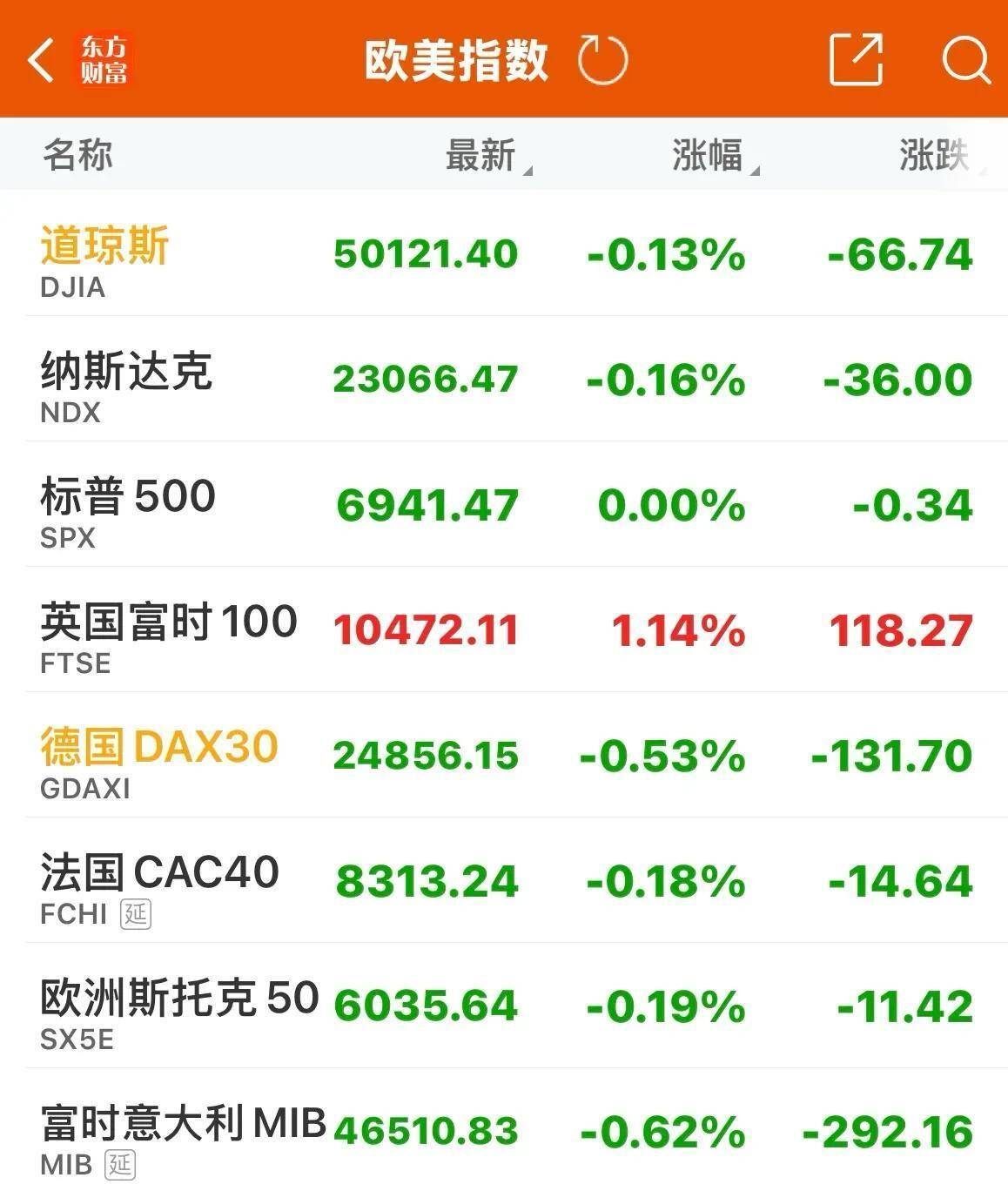
Market Overview - US stock indices opened higher due to better-than-expected employment data but closed lower, with the Dow Jones down 66.74 points, S&P 500 nearly flat, and Nasdaq down 36.01 points [1][2] Employment Data - The US Labor Department reported that 130,000 non-farm jobs were added in January, significantly exceeding market expectations of 55,000 to 75,000 and surpassing the revised previous month's figure of 48,000 [3] - The unemployment rate fell from 4.4% to 4.3%, the lowest since August 2025 [3] - Average hourly wages increased by 0.4%, above the expected 0.3% [3] Market Reaction - The strong employment report initially boosted market sentiment but led to a shift in expectations regarding the Federal Reserve's interest rate cuts, pushing the anticipated timing from June to July [4] - The probability of a 25 basis point rate cut by March dropped from 19.6% to 6%, while the likelihood of maintaining current rates surged from 80.4% to 94% [4] Semiconductor Sector Performance - The semiconductor sector, particularly storage chips, saw significant gains, with the Philadelphia Semiconductor Index rising over 2% [4] - Notable performers included SanDisk, which surged 10.65%, and Micron Technology, which rose 9.94% [5] - The demand for high-performance storage driven by AI infrastructure is a key factor behind the sector's strength [5][7] Price Trends in Memory Market - According to Counterpoint Research, memory prices increased by 80% in Q1 2026 compared to Q4 2025, with DRAM, NAND, and HBM prices reaching historical highs [7] - UBS analysts predict meaningful supply relief in the global storage industry will not occur until around 2028, indicating sustained demand from AI data center construction [7] SanDisk's Financial Performance - SanDisk reported Q2 2026 revenue of $3.025 billion and a non-GAAP net profit of $967 million, with data center business revenue soaring 64% quarter-over-quarter [7] - Analysts have raised SanDisk's target price significantly, projecting a strong earnings outlook for FY 2027 [7] Broader Market Dynamics - The semiconductor sector's strength contrasts with declines in other tech and emerging sectors, reflecting a complex market landscape [16][17] - The overall market is characterized by a mix of strong and weak performances across various sectors, indicating a cautious investor sentiment [14][17]

程强:外部冲击下市场波动加剧
Sou Hu Cai Jing· 2025-10-14 04:39
Market Overview - A-shares opened lower but rebounded, with the Shanghai Composite Index slightly down and the Sci-Tech Innovation 50 Index leading gains [1] - Gold and silver prices reached new highs amid market fluctuations [1] Stock Market Analysis - The stock market experienced significant adjustments due to external uncertainties, particularly following U.S. President Trump's announcement of a 100% tariff on all imports from China starting November 1, 2025 [2] - The Shanghai Composite Index closed at 3889.50, down 0.19%, while the ChiNext Index fell 1.11% to 3078.76; however, the Sci-Tech Innovation 50 Index rose by 1.40% [2] - A total of 1682 stocks rose and 3628 fell, with a total trading volume of 2.37 trillion, a decrease of approximately 6.3% from the previous trading day [2] - Resource stocks and self-sufficient sectors led the market, driven by a 37% increase in rare earth mineral prices and export control policies [2] - Precious metals gained traction as a safe-haven asset, with gold futures rising 1.99% to a yearly high, boosting gold stocks [2] Bond Market Analysis - The bond market saw overall gains, with long-term futures leading the way; the 30-year main contract rose by 0.37% [5] - The interbank market maintained a stable and loose funding environment, with the central bank conducting a 1378 billion yuan reverse repurchase operation at a rate of 1.40% [6] - The strong export data for September, which showed an 8.3% year-on-year increase, alleviated concerns about economic downturns [6] Commodity Market Analysis - Precious metals continued to lead the commodity market, with gold and silver prices rising by 1.99% and 2.84%, respectively [7] - The rise in precious metals was attributed to heightened risk aversion due to U.S.-China trade tensions, with gold being favored as a core safe-haven asset [7] - The pig market continued to decline, with futures reaching a new low of 11125 yuan per ton, driven by seasonal demand drops and production delays [8] Trading Hotspots - Recent popular sectors include artificial intelligence, nuclear fusion, and domestic semiconductor manufacturing, driven by increased capital expenditure from global tech giants and domestic companies [11] - The bond market is expected to remain stable due to continued loose monetary policy and rising risk aversion, with potential for a "dual bull" market in stocks and bonds [12]


专访富达基金:美联储降息周期下新兴市场资产吸引力凸现,中国股市长牛趋势不变
Di Yi Cai Jing Zi Xun· 2025-10-09 07:43
Core Viewpoint - The recent Federal Reserve interest rate cuts have led to a surge in asset prices across various markets, creating an optimistic sentiment, but concerns about the Fed's independence and ongoing trade policies remain [1][4]. Economic Outlook - The U.S. economy is currently in a stable phase, with corporate earnings expectations improving since April, projecting a growth of approximately 7% to 10% for Q3 [3]. - The labor market shows signs of weakness but remains balanced, contributing to a stable economic cycle, albeit with slower growth [3]. - The development of artificial intelligence (AI) is positively influencing the semiconductor and chip sectors, which are currently in an upward cycle [3]. Inflation and Trade Policies - U.S. inflation is moderate, and uncertainties surrounding trade tariffs have been decreasing as trade agreements have been reached, leading to lower tariffs than previously expected [4]. - The Fed's recent shift in focus from balancing labor market and inflation goals to prioritizing the labor market indicates a clear path towards further interest rate cuts [4]. Investment Strategies - For U.S. Treasury bonds, while the economic slowdown is not severe enough to trigger a recession, long-term inflation and interest rates are unlikely to decline significantly [5]. - The S&P 500 and Nasdaq indices have shown strong returns, driven primarily by earnings rather than valuation expansion, suggesting potential for further growth [5]. - The weakening dollar presents an opportunity for diversifying investments into non-U.S. assets, with the MSCI Asia-Pacific index outperforming the S&P 500 [6]. Emerging Markets - Emerging market assets, particularly in China and Korea, are becoming increasingly attractive due to favorable economic conditions and improving corporate earnings [6][7]. - China's market is highlighted for its improving fundamentals and attractive valuations compared to U.S. assets, with significant foreign investment interest [8][9]. - Korea's market is also seen as promising due to government reforms aimed at improving corporate governance and the presence of strong tech companies benefiting from the AI cycle [7]. Technology and AI Stocks - The recent rally in U.S. tech stocks, particularly in AI, is supported by the Fed's rate cuts, but concerns remain about high valuations and the profitability of many AI firms [10]. - There is a notable shift towards software applications in the AI sector, with increasing confidence in the profitability of software companies [10][11]. Precious Metals - Gold prices have surged due to the Fed's rate cuts and increased demand for safe-haven assets, with expectations for a structural bull market in precious metals [12][14]. - The relationship between gold and stocks is crucial for assessing investment flows, with a low correlation suggesting continued interest in gold as a hedge against risks [13]. Fixed Income Investments - The global fixed income market is increasingly influenced by fiscal rather than monetary policy, with concerns over sovereign debt leading to rising yields [15][16]. - Credit bonds are viewed as more attractive than government bonds due to low default rates and favorable economic conditions, with emerging market debt also offering appealing yields [17].