
网络微短剧

Search documents
免费短剧成“风险入口”?红果短剧“看剧赚钱”遭质疑
Xiao Fei Ri Bao Wang· 2026-01-28 06:20
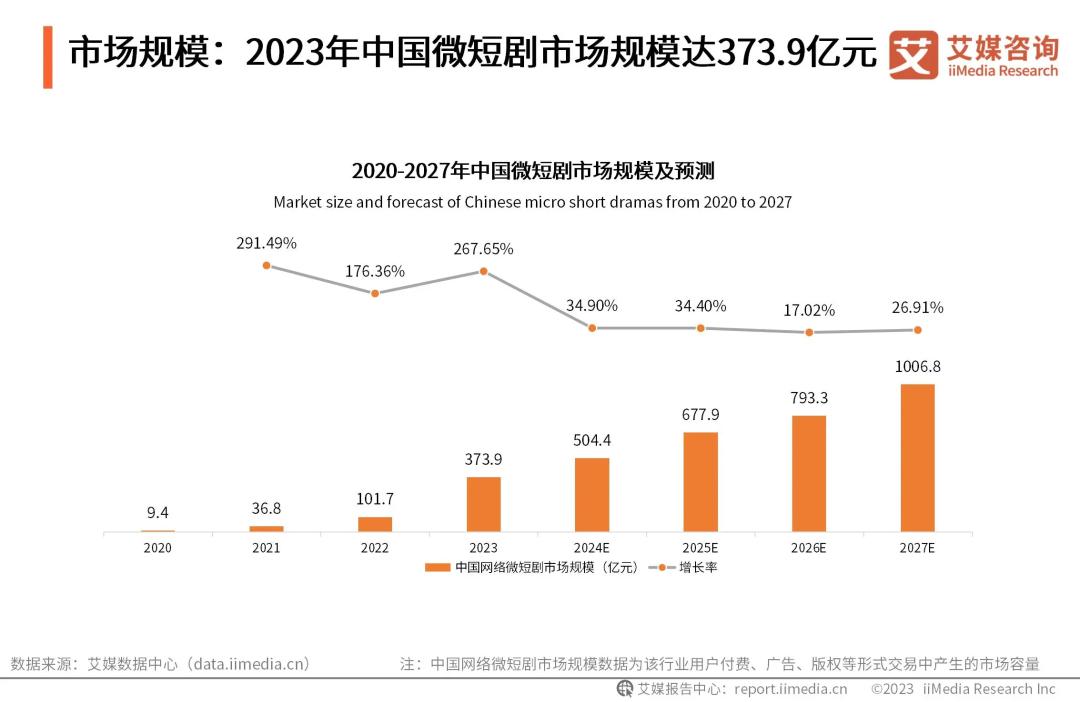
Core Insights - The micro-drama industry in China is rapidly expanding, with projections indicating that the market size will exceed 100 billion yuan by 2027 [1] - Hongguo Short Drama, a leading platform, has reached 158 million monthly active users, indicating significant user engagement [1] - The platform operates on a "free viewing + ad unlock" model, which has become popular among middle-aged and elderly users, but it also raises concerns regarding its business model, advertising ecosystem, and user safety [1] Advertising and Accountability Issues - The core monetization strategy for short drama platforms involves inserting non-skippable ads that users must watch to continue viewing content [2] - Complaints related to Hongguo Short Drama have exceeded 800, primarily concerning false advertising, product discrepancies, and refund difficulties [2] - Users have reported issues with advertised products, including price discrepancies and unclear transaction responsibilities, complicating the accountability of the platform, advertisers, and merchants [3] User Privacy and Fraud Concerns - Users have expressed concerns about "precision fraud," where they receive unsolicited contact after using the app, leading to suspicions about personal information misuse [4] - Hongguo Short Drama has acknowledged the risk of fraud and clarified that it does not solicit payments or personal information through social media [4] Withdrawal and Transparency Issues - Users have reported difficulties in withdrawing earnings, with some funds being misdirected to unknown accounts due to a lack of transparency in the withdrawal process [6] - Complaints indicate that account balances can be cleared under vague conditions, with users often unaware of the terms hidden in multiple pages [6] Industry Challenges and Regulatory Scrutiny - Experts have noted that while the short drama market appears prosperous, it is plagued by "virtual fire," relying heavily on traffic and data manipulation, which is detrimental to long-term industry health [8] - Regulatory bodies have previously engaged with Hongguo Short Drama regarding compliance issues, including the collection of personal information beyond necessary limits [7] - The ongoing battle against data manipulation and fraudulent practices continues, with the platform's efforts to combat these issues facing challenges from persistent black market activities [8]
短剧出海,遇到了网文“同款困境”
3 6 Ke· 2026-01-08 12:21
Core Insights - The Chinese micro-drama market reached a scale of 37.39 billion yuan in 2023, showing a significant year-on-year increase of 267.65% [1] - The domestic micro-drama market is expected to surpass movie box office revenue for the first time in 2024, with a notable shift in the online video industry landscape by 2025 [3] - The overseas micro-drama market is projected to generate a total revenue of 1.525 billion USD from January to August 2025, reflecting a year-on-year growth of 194.9% [3] Domestic Market Dynamics - The domestic short drama industry has a well-structured supply chain, with upstream IP copyright holders, midstream content producers, and downstream distribution channels [6] - The production capacity for short dramas in China exceeds 40,000 episodes annually, with 80%-90% of overseas content being dubbed versions of domestic dramas [7] - The profitability of domestic short dramas is under pressure, as exemplified by the financial struggles of companies like Zhongwen Online, which reported a net loss of 294 million yuan in Q3 2025 despite a revenue increase of 31.43% [12] International Expansion Challenges - The overseas micro-drama market faces challenges such as localization difficulties and the complexity of operating in foreign markets, leading to a lack of blockbuster hits [4] - TikTok's new feature "TikTok Minis" aims to enhance the distribution of short dramas by allowing users to watch them directly within the app, potentially changing the landscape for overseas short dramas [5] - The reliance on dubbed dramas for international markets is prevalent, with local productions accounting for only 10%-20% of the content [7] Future Outlook - The global micro-drama market is expected to reach 3 billion USD in revenue by 2025, nearly tripling from the previous year [3] - The trend of localizing content is crucial for success in international markets, but it also increases production costs and complexity [20] - The emergence of AI in content production may help reduce costs and improve efficiency, as seen with platforms like Vigloo [24] Competitive Landscape - Domestic companies are facing increased competition from local entities in international markets, with significant investments from major players like Disney and Fox in short drama production [22] - The balance between localization and maintaining cost-effective production methods remains a critical challenge for companies looking to expand internationally [20][21] - The cultural nuances in storytelling and audience preferences present inherent challenges in the localization of short dramas [18][19]

天河出台数字文化产业扶持政策,游戏企业最高支持800万元
2 1 Shi Ji Jing Ji Bao Dao· 2025-12-18 07:17
Core Viewpoint - Guangzhou's Tianhe District is promoting high-quality development in the digital cultural industry through a series of supportive policies aimed at integrating digital technology with cultural sectors such as gaming, animation, music, and film [1][5]. Group 1: Policy Measures - Tianhe District has introduced several policy measures to support the cultural industry, including financial incentives for cultural parks and gaming e-sports industries, with one-time support ranging from 10,000 to 1 million yuan based on the level of recognition of the cultural industry park [1]. - The policies also encourage the development of cultural enterprises within these parks, providing additional financial support for companies achieving specific revenue milestones [1]. Group 2: Gaming and E-sports Support - The district focuses on supporting original games, offering up to 100,000 yuan for each newly approved game that goes live, with a maximum annual support of 1 million yuan per company [2]. - Additional support is provided for game development, with a 10% matching fund for provincial grants and up to 800,000 yuan for companies with significant annual R&D investments [2]. Group 3: E-sports Events and Clubs - For hosting major e-sports events, Tianhe District offers up to 200,000 yuan based on the total investment in the event, with additional support for clubs achieving top rankings in competitions [3]. - New or renovated e-sports venues can receive up to 100,000 yuan based on their total investment [3]. Group 4: Performing Arts Support - The district provides financial support for large-scale performances, with funding based on ticket sales, and increased support for events that premiere in Tianhe [3][4]. - Support is also available for original artistic works that receive awards, with funding up to 200,000 yuan for nationally recognized works [4]. Group 5: Micro Short Films and Cultural Export - Tianhe District is focusing on micro short films, offering up to 80,000 yuan for companies producing a certain number of qualifying works on mainstream video platforms [4]. - Support is also available for cultural exports, with funding for translation and production costs for projects recognized as key cultural exports [4]. Group 6: Tourism Integration - The district supports tourism projects recognized by government departments, with financial incentives based on the level of recognition, and encourages the integration of tourism with events and performances [5]. - The comprehensive policies aim to transition the digital entertainment industry from growth in scale to high-quality development, effective until December 31, 2028 [5].
短剧带货成“双11”新战场,头部电商入局推动产业繁荣
Zheng Quan Shi Bao· 2025-11-04 01:59
Core Insights - Short dramas are emerging as a new entry point for user attention in the context of traditional e-commerce reaching its growth ceiling and high customer acquisition costs [1] - The integration of short dramas with e-commerce is becoming a focal point for both e-commerce and content platforms during major shopping events like "Double 11" [1] Group 1: Short Drama and E-commerce Integration - ByteDance's free short drama app, Hongguo Short Drama, is testing a new shopping feature that links products from Douyin's brand flagship stores, focusing on categories closely related to the content [2] - Hongguo Short Drama has seen rapid user growth, with a monthly active user count reaching 210 million in June, a 179% year-on-year increase, surpassing Youku for the first time [2] - The app's monetization strategy is shifting towards e-commerce, as the average revenue per user (ARPU) from e-commerce is higher than that from information flow advertising [2][3] Group 2: Industry Challenges and Perspectives - The short drama e-commerce model faces challenges such as balancing content quality with commercialization, increasing content homogenization leading to user fatigue, and the need for robust supply chain and fulfillment capabilities [3] - Some industry experts argue that the short format and high information density of short dramas may not align well with e-commerce, potentially disrupting user experience [3] Group 3: Major E-commerce Players' Involvement - Major e-commerce platforms like Taobao, JD.com, and Pinduoduo are actively entering the short drama space, utilizing various models to enhance their offerings [4] - JD.com has launched customized dramas featuring brands and integrated shopping links, while Taobao has created a "theater" section to aggregate short drama content [4] Group 4: Market Dynamics and Future Outlook - The push for short dramas is driven by the need to address growth bottlenecks in traditional e-commerce and capture incremental traffic [5] - Short dramas are evolving into comprehensive commercial vehicles that enhance brand marketing, user retention, and consumption conversion [5] - The short drama market in China is projected to reach 67.79 billion yuan by 2025, with a year-on-year growth of 34.4%, and is expected to exceed 150 billion yuan by 2030 [6] Group 5: Policy and Industry Development - The Chinese government is promoting high-quality development in the short drama industry through various policies aimed at fostering a healthy and prosperous environment [7] - The market structure is shifting from small production teams to larger players, including professional film companies and internet giants, driven by increased investment and supportive policies [7]

银发老人跟美国主妇,都躲不过中国微短剧
创业邦· 2025-09-24 04:08
Core Viewpoint - The article discusses the rise of the Chinese short drama platform ReelShort in the U.S. market, highlighting its unique business model and financial performance, while also addressing the challenges it faces in sustaining growth and profitability [8][9][12]. Group 1: Market Performance - ReelShort has captured a 29.13% market share in the U.S. short drama market, which is projected to generate $102 million in revenue by August 2025, reflecting a 4.48% quarter-over-quarter growth [9]. - In the first half of 2025, the overseas short drama market saw Chinese companies dominate the revenue rankings, with ReelShort earning $264 million, followed by DramaBox at $233 million and GoodShort at $104 million [12]. - Despite significant revenue growth, ReelShort's parent company, Crazy Maple Studio (CMS), reported a net loss of 46.51 million yuan in the first half of 2025, contrasting with a net profit of 22.93 million yuan in the same period of 2024 [12][17]. Group 2: Financial Analysis - CMS's revenue surged to 2.76 billion yuan in the first half of 2025, marking a 154.14% year-over-year increase, yet the company faced a net loss, indicating a "revenue without profit" scenario [12][14]. - The financial performance of CMS showed a dramatic shift from a net profit of 7.91 million yuan in 2024 to a loss in 2025, highlighting the cost pressures associated with rapid expansion [17][35]. - The company's operational costs have increased, with user acquisition costs rising in a competitive environment, leading to a challenging financial landscape [21][35]. Group 3: Business Model and Strategy - ReelShort employs a "fast in, fast out" production model, keeping production costs for each drama under $300,000 and completing production within three months [20]. - The platform targets primarily female users aged 18 to 45, particularly stay-at-home mothers, using social media advertising to drive downloads and engagement [20][21]. - Despite its success, ReelShort still relies on traditional internet customer acquisition strategies, which may not be sustainable in the long term [21][35]. Group 4: Industry Trends - The domestic short drama market in China is projected to reach 67.79 billion yuan by 2025, with a significant growth rate of 34.90% in 2024 [23][29]. - The Red Fruit short drama app has emerged as a competitor, utilizing a free-to-watch model supported by in-app advertising, which contrasts with ReelShort's paid content strategy [24][29]. - The article notes a growing concern within the industry regarding the sustainability of content quality and user engagement as the market matures [32][38].


以“数”赋能激发创新活力——来自江西赣江新区的调查
Jing Ji Ri Bao· 2025-05-25 22:14
Core Insights - Ganjian New District, established in October 2016, is the second national-level new district in Central China and the only national-level comprehensive reform and development platform in Jiangxi Province, focusing on digital economy development [1][2][3] - In 2024, Ganjian New District achieved a GDP of 118.8 billion yuan, doubling since its establishment, contributing 3.5% to Jiangxi's economy with only 0.3% of the province's land area [3] - The district has seen significant growth in high-tech enterprises, with the number of high-tech companies increasing by 7.2 times, and the number of unicorn and gazelle companies rising by 7.8 times and 12 times, respectively [3] Digital Economy Development - Ganjian New District is strategically focusing on digital economy sectors such as micro-short dramas, digital marketing, data industry, and industrial software, creating a robust digital industry cluster [1][3] - In 2024, the core digital economy industries in the district had 164 enterprises, generating revenues of 36.78 billion yuan, reflecting a growth of 4.9% [3] Micro-Short Drama Industry - The district has established the "Linyue Ganjian AI Laboratory" in collaboration with major AI companies, enabling intelligent creation of micro-short dramas [4] - Ganjian New District is positioning itself as a leader in the micro-short drama industry, with policies supporting script creation, filming, copyright protection, and international expansion [5][6] - A nearly 20 billion yuan industry fund has been set up to support projects in IP incubation, copyright operation, and overseas distribution [6] Talent Development and Education - Ganjian New District is focusing on cultivating digital marketing professionals through a digital marketing industry education and training base, integrating practical training with academic learning [9][10] - The base has attracted over 60 universities and aims to train nearly 10,000 students in three years, enhancing the talent pool for the digital economy [11] Data Industry Expansion - The district is developing a comprehensive data industry chain, attracting leading companies to engage in data processing and analysis, particularly in traditional industries like traditional Chinese medicine [12][13] - Ganjian New District is collaborating with major tech firms to establish AI-driven data centers and enhance the digital transformation of manufacturing [13] Talent Retention Strategies - To retain high-level talent, Ganjian New District is implementing a housing guarantee system and providing various incentives such as special allowances and educational support for families [14] - The district is creating a vibrant living and working environment, exemplified by the Vanke Wanchuang Science and Technology City, which houses numerous tech companies and attracts young talent [14]