美发工具

Search documents
从代工到品牌,被内容电商重塑的跨境生意
晚点LatePost· 2026-01-30 11:16
Core Viewpoint - The article discusses the evolution of cross-border e-commerce driven by content, highlighting how platforms like TikTok Shop are transforming traditional sales models into more dynamic, content-driven approaches that enhance consumer engagement and brand visibility [3][17]. Group 1: Case Studies of Brands - The large-size women's clothing brand Ruimin experienced a significant sales spike through a TikTok Shop live stream, achieving approximately 1,700 orders in a few hours, showcasing the explosive potential of content e-commerce [2][3]. - The 3D printer brand Creality also benefited from content-driven sales, with a non-professional influencer generating nearly $40,000 in sales during a live stream, demonstrating the effectiveness of user-generated content [2][3]. - Both brands represent different types of Chinese merchants: traditional foreign trade factories seeking brand premium and tech brands aiming to break into niche markets [3]. Group 2: Changes in Consumer Demand - Traditional e-commerce relies on explicit demand expression, where consumers must know what they want before searching, often leaving unrecognized needs unaddressed [4]. - Content e-commerce shifts this paradigm by using short videos and live streams to convert latent consumer pain points into visible purchasing decisions, allowing brands to showcase products in relatable contexts [4][5]. - For example, TYMO Beauty used a short video to demonstrate the effectiveness of their hair straightening brush, significantly enhancing consumer awareness and driving sales [5][7]. Group 3: Supply Chain Evolution - Content e-commerce not only alters demand but also reshapes supply chain dynamics, enabling a more resilient and flexible production process [9]. - Brands like Ruimin have transitioned to a model that allows for year-round production stability, reducing reliance on seasonal demand fluctuations and improving worker income stability [9][11]. - The integration of TikTok Shop's logistics services has improved order fulfillment times for brands like TYMO, enhancing their ability to manage sudden spikes in demand [12]. Group 4: Brand Building and Market Positioning - Content e-commerce allows brands to establish trust before recognition, fundamentally changing the brand-building process [14]. - Traditional manufacturers like Ruimin and OQ Hair are regaining pricing power and market voice by directly engaging with consumers through content, bypassing intermediaries [15][16]. - Brands like TYMO and Creality are leveraging content to break into broader consumer markets, transforming niche products into mainstream offerings [16][17]. Group 5: Consumer Insights and Feedback - The real-time feedback mechanism of content e-commerce enables brands to iterate products based on consumer insights, reducing the risk associated with new product launches [13]. - Brands can quickly adapt to consumer preferences, as seen with OQ Hair's rapid redesign of their product based on user feedback [13]. - This shift from a predictive to a feedback-driven supply chain model enhances the agility and responsiveness of brands in the market [13].


欧莱雅发布红外光直发器:速度快三倍,头发顺滑两倍|直击CES
Xin Lang Ke Ji· 2026-01-05 19:11
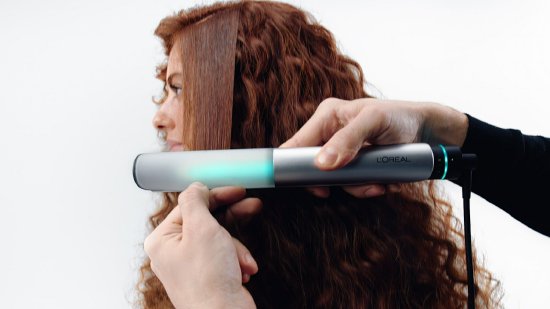
Core Viewpoint - L'Oréal has introduced the Light Straight + Multi-styler at CES 2026, marking a significant technological breakthrough in the hair styling tools industry with its patented infrared light technology [2][3]. Group 1: Product Features - The Light Straight + Multi-styler operates at a maximum temperature of 320°F (approximately 160°C), significantly lower than traditional straighteners that can exceed 400°F (approximately 204°C), thus reducing hair damage [2]. - The product utilizes near-infrared light to penetrate hair fibers, restructuring the hydrogen bonds that determine hair shape and texture, resulting in smoother, shinier, and stronger hair [3]. - Performance tests indicate that the device works three times faster than leading high-end straighteners and makes hair twice as smooth [3]. Group 2: Market Position and Future Plans - The Light Straight + Multi-styler is set to launch globally in 2027, with pricing and additional details to be announced on L'Oréal's official website [3]. - This product has already received the CES 2026 Innovation Award, following the introduction of the AirLight Pro hairdryer in 2024, indicating L'Oréal's commitment to building a comprehensive line of infrared hair care products [3].

中国制造如何重返美国市场?| 出海峰会
吴晓波频道· 2025-06-28 01:21
Core Viewpoint - The article discusses the new opportunities and challenges faced by Chinese companies in the context of global supply chain shifts and international trade dynamics, particularly in relation to the U.S. and neighboring countries like Vietnam and Mexico [2][3][5]. Group 1: Current State and Challenges of Chinese Companies Going Global - Since 2018, China's share of U.S. imports has decreased from approximately 21% to 13%, with neighboring countries like Mexico and Vietnam benefiting from this shift [3]. - The traditional re-export trade model is facing difficulties, as new regulations in Vietnam are making it unsustainable for Chinese companies to simply relabel products for export to the U.S. [10][11]. - Chinese factories are adapting by relocating production to countries like Vietnam and Malaysia, as seen in the significant drop in Chinese cabinet exports to the U.S. [12]. Group 2: Supply Chain Restructuring - The phenomenon of "mobile factories" is emerging, where Chinese manufacturers are relocating their production capabilities to different regions, leading to a rapid reassembly of supply chains [14][15]. - The dependency of the U.S. on Chinese supply chains varies by industry, with some sectors like children's products remaining difficult to replace [15][16]. - Companies need to analyze their products at a granular level (SKU) to enhance resilience against supply chain changes [18]. Group 3: Strategies for Chinese Companies Going Global - Establishing a cognitive management system is crucial to overcome cognitive blind spots that hinder effective communication and collaboration among companies [24][26]. - A deep understanding of local markets and compliance is essential for successful international operations, as evidenced by the challenges faced by companies like Samsung in India [30][32]. - Companies should optimize their geographical layout by establishing multiple factories to mitigate tariff impacts and enhance operational efficiency [36][38]. Group 4: Organizational and Talent Development - Companies must break through traditional equity structures to avoid risks associated with over-concentration in local markets [41][43]. - Enhancing user insight and understanding local consumer needs is vital for product success in foreign markets [46][48]. - Developing localized management capabilities is necessary, as overseas operations often require different strategies than those used domestically [49][53][57].