
金融结算

Search documents
该国宣布:弃用美元!人民币直接付款!!
Sou Hu Cai Jing· 2026-01-07 05:17
Group 1 - The core point of the article is that Russia and China have established a reliable bilateral settlement system, primarily using the ruble and yuan for trade transactions [2][3]. - As of now, 99.1% of bilateral trade settlements between Russia and China are conducted in their respective currencies, an increase from the previously reported range of 90% to 95% [3]. - The bilateral trade volume between Russia and China is expected to exceed $200 billion by 2025, potentially reaching slightly above $220 billion, despite a current year-on-year decline of 8.7% [4]. Group 2 - Russia is China's largest supplier of oil and natural gas, and both countries are negotiating the details of a new gas pipeline through Mongolia to ensure long-term gas supply for Chinese consumers [4]. - The mutual visa exemption between Russia and China has significantly boosted tourism and people-to-people exchanges, with a notable increase in the number of Chinese students studying in Russia [6]. - The number of visa applications for Chinese citizens traveling to Russia for study purposes has increased by 25% year-on-year, indicating strong educational ties and a commitment to cultural cooperation [6].

俄罗斯聚焦技术升级促经济转型
Jing Ji Ri Bao· 2025-12-05 22:19
Global Governance Shift - The current world order is undergoing profound adjustments, with emerging economies represented by BRICS rapidly rising, and some emerging economies' income and living standards now comparable to or exceeding those of developed countries [2] - The traditional "developed-developing" binary classification is weakening, as emerging economies accelerate their ascent while developed economies exhibit strong resistance to relinquishing their central positions [2] - This resistance manifests in various areas, including technological competition, trade barriers, and sanctions, which are not only aimed at Russia but also used to suppress other nations [2] Economic Transition - The world economy is in a deep transitional phase, with new financial and settlement systems emerging to replace traditional mechanisms like SWIFT, including national systems and multilateral platforms such as BRICS Bridge [3] - These new mechanisms are not currently intended to replace the US dollar or existing payment systems but exist as parallel systems, with the potential for future evolution into more competitive institutions [3] Key Priorities - Current priority issues include addressing natural disasters and climate crises, resolving debt issues, promoting energy transition, ensuring critical mineral supply, fostering inclusive growth and industrialization, expanding employment and poverty reduction, ensuring food security, and leading sustainable development through AI and innovation [4] - The role of institutional platforms like G20, BRICS, and SCO is increasingly significant in shaping global governance [4] Technological Transformation - Russia recognizes the importance of technology in economic development and the need to prepare for long-term economic transformation, moving beyond reliance on fossil fuels [5] - The core of economic competition lies in the ability to widely and deeply apply and develop artificial intelligence across various sectors [5] - There is an acknowledgment of the risks associated with digitalization, such as cyber fraud, necessitating a dual approach of leveraging strengths while enhancing cybersecurity capabilities [5] Fiscal and Financial Policy - Stable, balanced, and predictable fiscal and financial policies are essential for achieving complex economic goals and promoting technological advancement [6] - The upcoming budget will focus on technological sovereignty, shifting from broad support to targeted support for national priority goals, particularly in microelectronics, machine tools, and robotics [6]
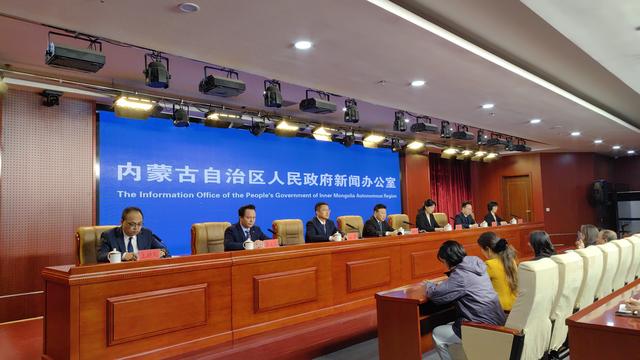
“十四五”时期内蒙古共建“一带一路”实现“硬联通”“软联通”“心联通”
Nei Meng Gu Ri Bao· 2025-11-04 15:34
Core Viewpoint - Inner Mongolia is actively integrating into the Belt and Road Initiative, leveraging its geographical advantages to enhance infrastructure connectivity, policy alignment, and cultural exchanges, thereby solidifying its role as a key gateway for national northern opening and a significant support point in the China-Mongolia-Russia Economic Corridor [2] Infrastructure Connectivity - Inner Mongolia has made significant progress in infrastructure connectivity, completing the capacity enhancement project for the Erhun to Erlian section, with all 12 highway ports upgraded to secondary roads or above [3] - The region has seen the successful acceptance of Baotou and Erlianhot airports, with Hohhot Baita International Airport nearing completion and expected to pass industry acceptance by December 2025 [3] - Over the past five years, Inner Mongolia has dispatched more than 1,900 China-Europe (Asia) freight trains, marking a year-on-year increase of 98.9%, with 22 regular routes connecting to five Central Asian countries, Mongolia, Russia, Belarus, and Iran [3] Trade Facilitation - The establishment of the China-Mongolia Erlianhot-Zamyn-Uud Economic Cooperation Zone has accelerated development, with significant improvements in the hosting of key trade exhibitions such as the China-Mongolia Expo [3] - The region has made strides in building comprehensive bonded zones and pilot free trade zones, with trade volume with Belt and Road countries reaching 607.47 billion yuan during the 14th Five-Year Plan period [3] Financial Connectivity - Inner Mongolia has achieved breakthroughs in cross-border RMB settlement, with over 2,000 enterprises participating in the initiative, facilitating more than 11,000 RMB cross-border settlement transactions for credible enterprises [4] Cultural and People-to-People Exchanges - The region has enhanced cooperation in culture, education, and tourism, organizing vocational training programs for Mongolian students and promoting cross-border tourism through the "Silk Road Economic Belt" initiative [5] - Inner Mongolia has supported various community projects in Mongolia, including the "Planting Ten Billion Trees" initiative and emergency rescue training programs [5]
海南封关,远比你想象的重要
Sou Hu Cai Jing· 2025-09-24 17:59
Core Insights - Hainan is set to officially close its borders on December 18, marking a significant step towards establishing a new type of offshore international trade center, which aims to shift Chinese enterprises from being mere suppliers to service providers in global trade [3][4][5] Group 1: New Offshore Trade Model - The new offshore trade model allows Chinese companies to engage in global trade without passing through Chinese ports, enhancing their role in the global supply chain [3] - This model emphasizes remote control and management of trade processes, enabling companies to coordinate procurement, processing, and sales across multiple countries [3] Group 2: Importance of Hainan Free Trade Port - Hainan's free trade port will cover an area of 35,400 square kilometers, significantly larger than existing free trade zones in China, providing ample space for talent and enterprises [5] - The free trade port will offer greater openness compared to traditional free trade zones, with most goods exempt from tariffs and simplified trade regulations [7][20] Group 3: Competitive Advantages - Hainan's free trade port will implement a zero-tariff policy for over 70% of goods, compared to Shanghai's limited tariff exemptions, making it a more attractive location for offshore trade [7][19] - The port will also feature a simplified customs process, allowing goods to enter before customs declaration, enhancing operational efficiency [7] Group 4: Service Trade Growth - The global trade landscape has shifted, with intermediate goods now accounting for over 70% of trade, and service trade comprising 30% of total trade volume, indicating a need for high-quality service support in offshore trade [8][9] - Hainan's service trade is projected to grow over 20% in 2024, with significant increases in sectors like transportation, tourism, and digital trade [9] Group 5: Offshore RMB Settlement Center - Hainan aims to establish an offshore RMB settlement center, complementing Hong Kong's existing role, to facilitate domestic and international capital flow [11][12] - This center will enhance the internationalization of the RMB and attract foreign investment, contributing to Hainan's financial ecosystem [12][15] Group 6: Challenges and Opportunities - Despite its potential, Hainan faces challenges such as a lack of financial market openness and service infrastructure, which could hinder its ability to attract high-quality resources [14] - However, Hainan's strategic location and the government's support for establishing a financial settlement center present significant opportunities for growth [14][15] Group 7: Future Trade Rules - The evolving global trade rules emphasize "zero tariffs," "zero barriers," and "zero subsidies," which align with Hainan's goals for trade liberalization [17][18] - Hainan's free trade port is positioned to experiment with these principles, potentially serving as a model for broader national implementation [20][21]

国际商业结算(00147)下跌6.15%,报0.229元/股
Jin Rong Jie· 2025-08-18 02:16
Core Viewpoint - International Commercial Settlement Holdings Limited is focused on building a global multi-currency real-time clearing and settlement platform based on blockchain and distributed networks, aiming to enhance cross-border fund flow efficiency [1] Group 1: Company Overview - The company experienced a stock price decline of 6.15%, trading at 0.229 HKD per share with a transaction volume of 3.1714 million HKD as of 10:04 AM on August 18 [1] - The company targets countries along the "Belt and Road" initiative, serving approximately 4.4 billion people and a combined economy of 21 trillion USD, aiming to reshape the global clearing and settlement landscape [1] Group 2: Financial Performance - As of the 2024 annual report, the company reported total operating revenue of 172 million CNY and a net loss of 211 million CNY [2]
国际商业结算(00147.HK)8月6日收盘上涨12.78%,成交1671.78万港元
Sou Hu Cai Jing· 2025-08-06 08:33
Core Viewpoint - International Business Settlement (IBS) has experienced significant stock price increases, outperforming the Hang Seng Index, while facing challenges in profitability and financial metrics [2][3]. Company Summary - IBS's stock price rose by 12.78% to HKD 0.203 per share, with a trading volume of 81.97 million shares and a turnover of HKD 16.72 million, showing a volatility of 26.67% [1]. - Over the past month, IBS's stock has surged by 260%, and year-to-date, it has increased by 104.55%, outperforming the Hang Seng Index by 24.14% [2]. - Financial results as of March 31, 2025, indicate total revenue of HKD 172 million, a year-on-year increase of 7.2%, but a net loss of HKD 211 million, a significant decline of 283.37% [2]. - The gross margin stands at -16.77%, and the debt-to-asset ratio is 89.04% [2]. Industry Summary - Currently, there are no institutional investment ratings for IBS [3]. - The average price-to-earnings (P/E) ratio for the real estate industry is 9.84, with IBS's P/E ratio at -15.99, ranking it 107th in the industry [3]. - Other companies in the sector have P/E ratios ranging from 0.94 to 3.27 [3]. Business Model and Strategy - IBS aims to become a leading global fintech company, leveraging distributed networks and blockchain technology to create a next-generation global settlement network [4]. - The company focuses on providing efficient, low-cost financial services for cross-border trade, particularly targeting countries along the Belt and Road Initiative [4]. - IBS's platform facilitates real-time, multi-currency settlements, connecting with central bank systems to enhance financial infrastructure across regions with a combined population of approximately 4.4 billion and an economic output of about USD 21 trillion [4].