非机动车

Search documents
电动车停车乱象如何破局?多地探索治理良方
Xin Lang Cai Jing· 2026-01-18 00:57
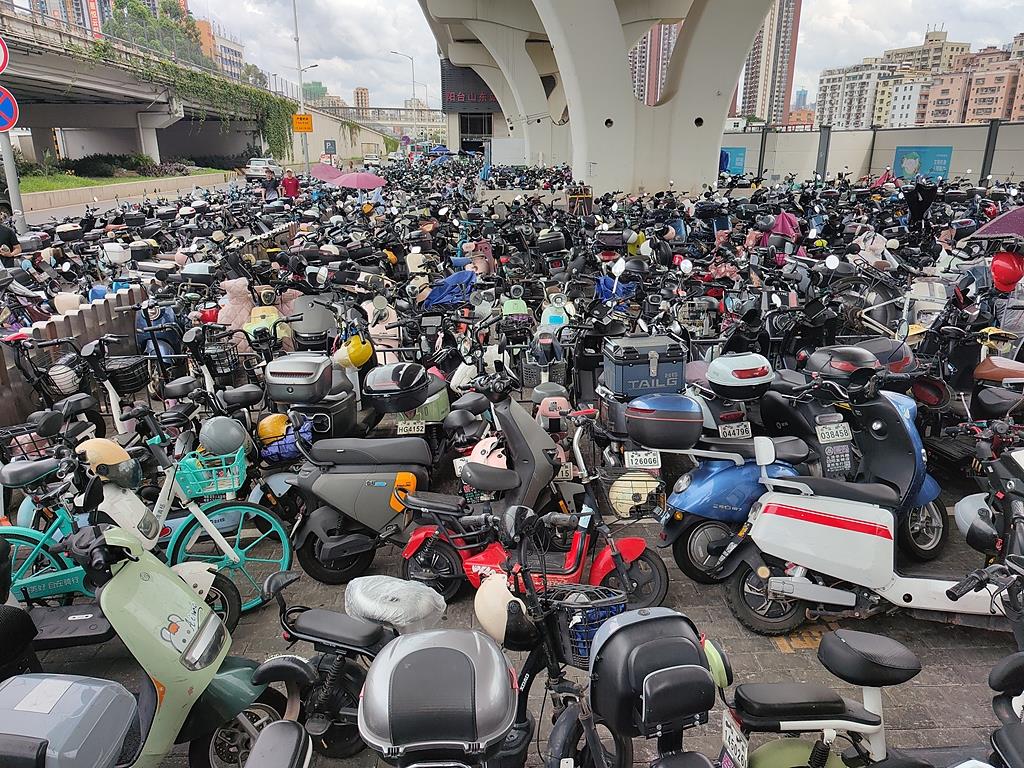
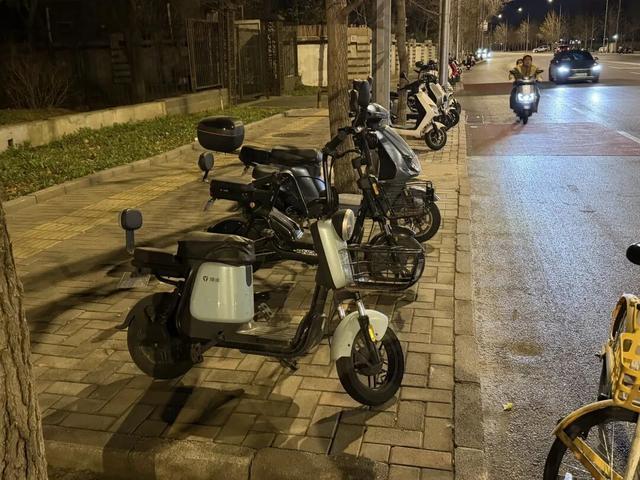
Group 1 - The core viewpoint of the articles highlights the increasing popularity of electric bicycles in urban areas, with a total ownership of approximately 380 million units in China, leading to significant parking challenges [1] - In Shenzhen, there are over 6 million registered electric bicycles, causing congestion in pedestrian areas near public transport and commercial zones [1][3] - The rumor regarding Shenzhen becoming the first major city to implement a systematic electric vehicle parking fee has been debunked, with no official announcements from local authorities [3] Group 2 - The issue of parking for electric bicycles is exacerbated by the high number of vehicles compared to the limited number of compliant parking spaces, with Guangzhou having over 5 million registered electric bicycles but only about 700,000 legal parking spots [3] - The discussion around parking fees suggests that while market-based solutions may be necessary, they require careful consideration and planning to ensure adequate services and infrastructure are provided [5] - Alternative governance measures, such as ensuring every electric bicycle has a secure parking space, may be more effective and better received by the public [6] Group 3 - Exploring market-based methods to manage parking resources in commercial areas could help guide public transportation usage, while a one-size-fits-all approach to charging in essential public locations is not advisable [8] - Policies from other cities, such as Beijing's regulations requiring public buildings to provide non-motorized vehicle parking facilities, and Nanning's dual pricing model, illustrate different approaches to managing electric bicycle parking [8]

北京电动车后座乘员年龄放宽至16岁,“佩戴头盔”上升为法定义务,新规将于5月实施
Huan Qiu Wang Zi Xun· 2026-01-07 08:59
Core Viewpoint - The newly revised "Beijing Non-Motor Vehicle Management Regulations" will be implemented on May 1, 2026, focusing on safety across the entire lifecycle of non-motor vehicles, including production, sales, registration, usage, parking, and charging [1][2]. Group 1: Helmet Regulations - The new regulations elevate the requirement for wearing safety helmets from a recommendation to a legal obligation, mandating that riders and passengers of electric bicycles wear helmets that meet national standards and have undergone mandatory product certification, with penalties for non-compliance [1][2]. Group 2: Age Regulations for Passengers - The age limit for minors allowed to ride as passengers on electric bicycles has been raised from 12 to 16 years, addressing the needs of families and improving convenience for daily transportation [1]. Group 3: Internet Rental Bicycle Management - The regulations impose total quantity control on internet-rented bicycles, including electric bicycles, with pilot programs already in place in several districts, resulting in the operation of approximately 15,000 shared electric bicycles [1]. Group 4: Operational Standards for Companies - Companies are required to standardize operations in vehicle deployment, maintenance, battery management, and user deposit collection, with detailed legal responsibilities for violations outlined [2]. Group 5: Implementation Support - Relevant authorities, including the Municipal Transportation Committee and the Traffic Management Bureau, are working on enhancing infrastructure and management measures to ensure the smooth implementation of the new regulations [2].
街边,旧车还在卖……北京二手电动车黑市隐患重重!
Huan Qiu Wang Zi Xun· 2025-12-03 06:25
Core Viewpoint - The article highlights the growing market for second-hand electric bicycles in Beijing, revealing safety hazards and legal risks associated with these transactions, particularly in informal street sales and online platforms [1][22]. Group 1: Market Demand and Trends - There is a significant demand for second-hand electric bicycles, driven by consumers looking for affordable alternatives to new models, which can cost several thousand yuan [3][4]. - Many buyers, like Ms. Li, are hesitant to spend on new bikes due to high prices and are turning to second-hand options, despite concerns about vehicle condition and legality [3][4]. - The presence of "middlemen" in the market is notable, as they facilitate the buying and selling of second-hand bicycles, often without proper oversight [17][19]. Group 2: Safety and Legal Risks - The lack of regulation in the second-hand electric bicycle market raises safety concerns, as many bikes may have been modified or are not compliant with current safety standards [22][23]. - Key components such as batteries and motors are difficult to assess for quality, leading to potential hazards for buyers [22][23]. - Legal risks are significant for both sellers and buyers, particularly regarding liability in the event of accidents involving modified or unregistered bicycles [23][24]. Group 3: Recycling and Environmental Concerns - The article discusses the challenges of recycling lithium batteries from electric bicycles, with current initiatives in place but facing obstacles such as consumer reluctance to return old bikes [24][25]. - There are efforts by local authorities to establish recycling programs, but illegal sales and modifications of batteries complicate the situation [24][25].
福建新规:电动自行车可载16周岁以下未成年人
Jing Ji Guan Cha Bao· 2025-08-20 05:00
Group 1 - The "Fujian Province Non-Motor Vehicle Management Measures" has been revised and approved by the provincial government, effective from November 1, 2025 [1] - The measures stipulate that non-motor vehicles must adhere to safety regulations while on the road, including maintaining safe distances and avoiding distractions such as phone use [1] - Adults are allowed to carry one minor under 16 years old on bicycles or electric bicycles, and safety helmets are mandatory for electric bicycle riders [1] Group 2 - Minors must be at least 12 years old to ride bicycles and 16 years old for electric bicycles, and they are prohibited from carrying passengers [2] - New public buildings and residential areas must include designated non-motor vehicle parking spaces, while existing spaces cannot change their usage without approval [2] - Management of key locations such as hospitals, schools, and parks are required to provide adequate non-motor vehicle parking facilities, with encouragement for dedicated spaces for disabled individuals [2]
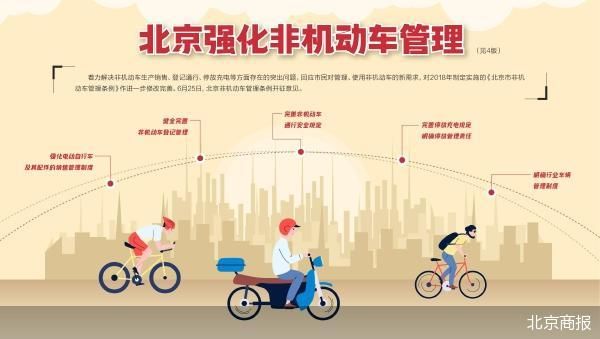
电动自行车号牌有效期明确为十年、骑乘上路须佩戴头盔 北京新修订非机动车管理条例公开征求意见
Ren Min Ri Bao· 2025-06-25 22:16
Core Points - The article discusses the public consultation for the revised "Beijing Non-Motor Vehicle Management Regulations" aimed at addressing the rapid growth and changes in non-motor vehicle usage in Beijing [1] Group 1: Regulatory Changes - The draft emphasizes the need for registration of non-motor vehicles, including electric bicycles and other specified vehicles, which must obtain local license plates to operate on city roads [2] - Registration must be completed within 15 days of purchase, with electric bicycle licenses valid for 10 years [2] - Special license plates will be issued for electric bicycles used in internet rentals and delivery services, with requirements for change of registration if the vehicle's use changes [2] Group 2: Safety Measures - The draft introduces mandatory helmet use for electric bicycle riders and passengers, ensuring compliance with national standards [2] - It allows for temporary use of adjacent motor vehicle lanes when non-motor vehicle lanes are obstructed, with a requirement to return to non-motor vehicle lanes promptly [2] - Safety assessments will be conducted for electric bicycle batteries older than five years, with non-compliant batteries required to be replaced or discontinued [3] - Additional safety standards are mandated for helmets, batteries, and chargers used with electric bicycles [3]
北京明确电动自行车号牌有效期为十年
Bei Jing Shang Bao· 2025-06-25 16:01
Core Viewpoint - The draft regulation aims to address prominent issues related to the management of non-motorized vehicles in Beijing, including production, sales, registration, traffic, and charging, in response to the rapid growth of non-motorized vehicles and public safety concerns [1][3]. Group 1: Regulatory Changes - The draft regulation is a revision of the 2018 Non-Motorized Vehicle Management Regulation, focusing on enhancing safety and management standards for electric bicycles and related products [1][3]. - The revision includes a requirement for riders of electric bicycles to wear compliant helmets and establishes a ten-year validity period for electric bicycle license plates [1][5]. - A specialized license plate management system will be implemented for vehicles used in industries such as delivery and takeaway services [1][7]. Group 2: Sales and Registration Management - The regulation strengthens the sales management system for electric bicycles and their accessories, mandating compliance with national standards and encouraging the sale of smaller, lighter electric bicycles [5]. - It establishes a registration requirement for electric bicycles and other specified non-motorized vehicles, with provisions for online registration and electronic identification [6]. - The regulation outlines the responsibilities for battery recycling and mandates safety assessments for batteries older than five years [5][6]. Group 3: Traffic Safety and Parking Regulations - The draft clarifies the types of non-motorized vehicles permitted on public roads and prohibits the use of animal-drawn vehicles in urban areas [6]. - It integrates existing traffic rules for non-motorized vehicles into a single framework to facilitate public understanding [6]. - New provisions for parking and charging management are introduced, including the establishment of parking facilities and regulations for charging infrastructure [6]. Group 4: Industry-Specific Regulations - A dedicated management system for vehicles used in internet bike rentals, delivery, and takeaway services will be established, requiring companies to maintain records of personnel and vehicle information [7]. - The regulation mandates that companies in these sectors comply with algorithm registration and other regulatory responsibilities [7].