
电动自行车电池

Search documents
《长三角区域重点工业产品质量安全现场检查指引》出台
Xin Lang Cai Jing· 2026-02-27 02:55
Core Viewpoint - The article discusses the collaborative effort among regulatory agencies in the Yangtze River Delta region to enhance the quality and safety of industrial products through the introduction of a standardized inspection guideline. Group 1: Introduction of the Guideline - The guideline titled "On-site Inspection Guidelines for Key Industrial Product Quality and Safety in the Yangtze River Delta Region" has been jointly developed by market regulatory authorities from Anhui, Shanghai, Jiangsu, and Zhejiang provinces [1][2]. - The guideline aims to establish a unified, standardized, and operable framework for on-site inspections of product quality and safety, thereby improving governance in the Yangtze River Delta region [1]. Group 2: Features of the Guideline - The guideline emphasizes regional collaboration by maintaining consistency in inspection content, judgment standards, and operational processes, effectively breaking down regulatory barriers [2]. - It incorporates practical elements by including recent typical regulatory cases, common issues, and disposal suggestions, ensuring that frontline enforcement personnel find it understandable and applicable [2]. - The guideline focuses on risk-oriented approaches, particularly addressing high-risk products and critical quality control points prevalent in the region, such as electric bicycle batteries and gas appliance valves [2]. Group 3: Implementation and Future Steps - The guideline serves as a convenient reference for frontline enforcement personnel to identify potential quality and safety hazards in products [2]. - The regulatory authorities plan to deepen collaborative efforts to ensure the comprehensive implementation of the guideline, contributing to a new development pattern of "co-construction, co-governance, and sharing" in product quality regulation in the Yangtze River Delta [2].
2025年儿童及婴幼儿服装等41种产品质量国家监督抽查情况通报
Xin Lang Cai Jing· 2026-02-13 13:12
Summary of Key Points Core Viewpoint The recent national quality supervision sampling of children's and infant clothing, among 41 product categories, revealed a significant number of non-compliant products, highlighting ongoing quality control issues in the market. Group 1: Sampling Overview - A total of 41 product categories were sampled, with 4,972 batches tested, primarily focusing on low-priced products [3] - The sampling involved 2,585 sales units across 25 platforms, with 2,844 batches from online sales and 1,405 batches from physical sales in 28 provinces [3] - 660 batches were found to be non-compliant, including 52 batches of illegal products related to children's clothing [3] Group 2: Specific Product Findings - **Children's and Infant Clothing**: 359 batches tested, with 42 batches non-compliant, including issues with labeling and safety standards [4] - **Children's Toys**: 519 batches tested, with 60 batches non-compliant, including products lacking necessary certifications and safety performance issues [4] - **Student Backpacks**: 104 batches tested, with 18 batches non-compliant, including safety issues related to plastic components [4] - **School Uniforms**: 65 batches tested, with 4 batches non-compliant, primarily related to fiber content [5] - **Children's Strollers**: 182 batches tested, with 8 batches non-compliant, including labeling and safety performance issues [5] Group 3: Compliance and Enforcement Actions - Non-compliant products are subject to removal from the market, with local regulatory bodies taking action against manufacturers [22] - Continuous non-compliance leads to stricter penalties, including legal actions against violators [22] - The regulatory authority will enhance monitoring of compliance and follow-up on corrective actions taken by manufacturers [22]

同洲电子跌1.27%,成交额1.51亿元,后市是否有机会?
Xin Lang Cai Jing· 2026-02-12 07:32
Core Viewpoint - The company, Tongzhou Electronics, is experiencing significant growth in its revenue and profit, primarily driven by its focus on high-power power supply products and lithium-ion battery business, while also benefiting from the depreciation of the RMB [2][3][8]. Group 1: Company Overview - Tongzhou Electronics is located in Shenzhen, Guangdong Province, and was established on February 3, 1994. It was listed on June 27, 2006 [7]. - The company's main business includes the research, development, manufacturing, and sales of broadcasting intelligent devices and lithium-ion batteries. The revenue composition is as follows: high-power power supply business 90.23%, trade business 4.47%, battery business 3.73%, and others 1.03% [7]. - As of January 20, the number of shareholders is 54,700, an increase of 2.49% from the previous period, with an average of 12,604 circulating shares per person, a decrease of 2.43% [7]. Group 2: Financial Performance - For the period from January to September 2025, the company achieved a revenue of 657 million yuan, representing a year-on-year growth of 176.75%. The net profit attributable to the parent company was 232 million yuan, with a year-on-year increase of 1724.48% [8]. - The company's overseas revenue accounted for 79.72%, benefiting from the depreciation of the RMB [3]. Group 3: Business Segments - The company's main business is divided into two segments: the energy sector, which includes high-power power supply products, lithium batteries, and electric vehicle battery swap services, and the new energy lithium-ion battery business, which focuses on technology research, production, and sales [2][3]. - The company has made investments in the Internet of Things (IoT) sector, providing solutions for smart parks and communities [2].

云南省丽江市古城区联合开展电动自行车电池租赁点专项检查
Xin Lang Cai Jing· 2026-02-02 08:44
Core Viewpoint - The article discusses a special inspection action conducted by the market supervision administration and fire rescue team in Lijiang, Yunnan Province, focusing on the safety regulation of the electric bicycle battery rental industry to prevent fire hazards and ensure compliance with safety standards [1][3]. Group 1: Inspection Focus - The inspection targeted key safety aspects of the electric bicycle battery rental points, emphasizing "checking qualifications, verifying products, and identifying hidden dangers" [1]. - Inspectors conducted thorough checks on the operating qualifications of rental businesses, ensuring that they possess valid licenses and that their business scope includes electric bicycle battery rentals [1]. - The compliance of battery products was also scrutinized, specifically checking for mandatory product certification (3C certification) to prevent non-compliant batteries from entering the rental market [1]. Group 2: Safety Measures - In addition to qualifications and product checks, the inspection team assessed the storage environment of batteries, fire safety equipment, and electrical safety management at the rental points [1]. - During the inspection, operators were educated on the safe use and storage of electric bicycle batteries, as well as relevant legal regulations, to enhance their safety awareness and encourage self-inspection [2]. Group 3: Rectification and Follow-up - The special action inspected four electric bicycle battery rental points, with two found to be non-compliant with safety operating conditions [3]. - The inspection team issued correction notices to the non-compliant operators, mandating them to rectify the issues within a specified timeframe [3]. - The market supervision administration plans to continue monitoring the rectification progress and conduct regular follow-up inspections to ensure that safety hazards are effectively addressed [3].
直击新能源汽车废电池黑产链:激光焊接+无证拼装
Mei Ri Jing Ji Xin Wen· 2026-01-21 12:57
Core Viewpoint - The article discusses the rising demand for "disassembled batteries" sourced from retired electric vehicle batteries, highlighting the regulatory challenges and market dynamics surrounding their use in electric bicycles and other applications [1][4][5]. Group 1: Market Dynamics - The demand for disassembled batteries is driven by their lower cost and higher performance compared to original batteries, appealing particularly to delivery riders and couriers [1][2]. - A disassembled battery can provide a range of up to 80 kilometers, significantly more than the original battery's 40 kilometers [1]. - The price of a disassembled battery is approximately 3,000 yuan, which is about 500 yuan cheaper than a new battery of the same specifications [2]. Group 2: Regulatory Environment - The Ministry of Industry and Information Technology has issued new regulations prohibiting the use of retired batteries in electric bicycles, effective from April 1, 2026 [1][5]. - The concept of "cascade utilization" for retired batteries has been eliminated, which previously allowed for their use in various applications [5]. - The new regulations emphasize the "vehicle-battery integration" requirement for the scrapping of electric vehicles, mandating that batteries must be included during the scrapping process [5]. Group 3: Industry Challenges - A significant portion of retired batteries, estimated at 80%, is reportedly missing from vehicles before they reach authorized recycling facilities, indicating a leakage into unregulated markets [4]. - The recycling capacity of legitimate battery recycling companies is underutilized, with estimates suggesting that only 25% of their capacity is currently being used [4]. - The rapid growth of the electric vehicle market has led to an urgent need for a robust battery recycling infrastructure to manage the increasing volume of retired batteries [6][9]. Group 4: Future Projections - The domestic battery recycling volume is projected to exceed 300,000 tons by 2024, with the number of retired lithium batteries expected to reach 981,600 tons by 2026 [7][8]. - The market for recycled materials from lithium batteries is anticipated to grow significantly, with sales expected to reach 856,100 tons by 2025 and 1,204,500 tons by 2026 [10].
事关电动自行车电池!家门口的免费“体检”别错过
Xin Lang Cai Jing· 2026-01-12 11:47
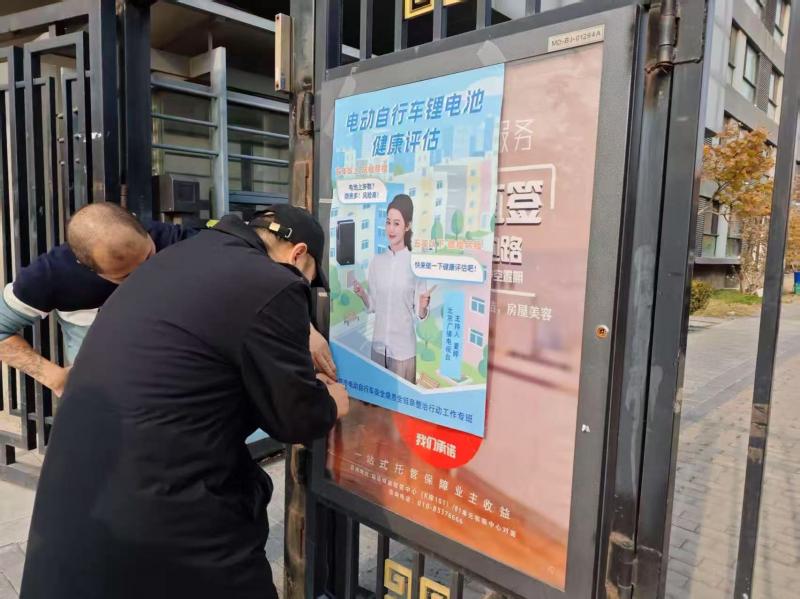
Core Viewpoint - The article highlights a free battery health assessment initiative for electric bicycles in the Gaobeidian area of Chaoyang District, aimed at ensuring the safety of residents [1]. Group 1: Initiative Overview - The Gaobeidian township is conducting a special action for assessing the health of electric bicycle batteries to provide peace of mind for residents [1]. - The initiative includes convenient testing locations near residential areas, with flexible scheduling to maximize accessibility for residents [3]. Group 2: Testing Process - The battery assessment follows a four-step process: visual inspection, label verification, internal resistance testing, and voltage measurement [3]. - After testing, batteries are marked with color codes: green for healthy, yellow for needing observation, and red for requiring immediate replacement, making the safety status clear [3]. Group 3: Community Engagement - The success of the initiative relies on extensive promotional efforts, including notifications, targeted messaging in resident groups, and door-to-door mobilization to ensure awareness and participation [3]. - The program aims to create a supportive environment to achieve maximum participation in the battery health checks [3].
供需面改善,铅价反弹修复
Tong Guan Jin Yuan Qi Huo· 2025-12-08 02:16
1. Report Industry Investment Rating No information provided in the content. 2. Core Viewpoints of the Report - Last week, the main contract price of Shanghai lead futures rebounded steadily. The market's dovish bets on the interest - rate cut path increased, the US dollar was weak, and non - ferrous metals such as copper and tin strengthened, driving up the lead price. The supply - demand tension of lead ore is difficult to reverse in the short term, and the cost side supports the lead price. Although the production of some refineries recovered in November, there were more refinery overhauls in December, and the production of primary and recycled lead is expected to decline month - on - month. The terminal consumption is divided, with the consumption of electric bicycle batteries weakening, but the consumption of automobile starting batteries improving, and large - and medium - sized battery enterprises starting year - end stockpiling. Overall, the macro - environment is warm, the fundamentals are marginally improved, and social inventories have dropped to a new low for the year, supporting the lead price. It is expected that the lead price will remain oscillating strongly in the short term, but the rebound space is restricted by the import expectation of lead ingots, and attention should be paid to the resistance around 17,500 yuan/ton [3][6][7]. 3. Summary According to the Directory 3.1 Transaction Data | Contract | 11/28 | 12/5 | Change | Unit | | --- | --- | --- | --- | --- | | SHFE Lead | 17,090 | 17,290 | 200 | yuan/ton | | LME Lead | 1,981 | 2,009 | 28 | US dollars/ton | | Shanghai - London Ratio | 8.63 | 8.61 | - 0.02 | | | SHFE Inventory | 37,799 | 34,735 | - 3,064 | tons | | LME Inventory | 263,175 | 243,550 | - 19,625 | tons | | Social Inventory | 3.07 | 2.36 | - 0.71 | 10,000 tons | | Spot Premium | - 65 | - 65 | 0 | yuan/ton | [4] 3.2 Market Review - Last week, the price of the main Shanghai lead PB2601 contract rebounded steadily, breaking through the moving - average pressure and finally closing at 17,290 yuan/ton, with a weekly increase of 1.17%. The LME lead price also rebounded slightly, closing at 2,009 US dollars/ton, with a weekly increase of 1.41%. In the spot market, the supply of lead in the Jiangsu, Zhejiang, and Shanghai markets was limited, and most of the lead ingots were from refineries. The supply of lead in the East China region was tight, and the mainstream origin quoted a premium of 0 - 50 yuan/ton over the SMM1 lead average price. The recycled lead refineries were more willing to sell, and the downstream enterprises mainly purchased through long - term contracts [5]. - As of December 5, the LME weekly inventory was 243,550 tons, a weekly decrease of 19,625 tons. The SHFE inventory was 34,735 tons, a decrease of 3,064 tons from the previous week. As of December 4, the SMM five - region social inventory was 23,600 tons, a decrease of 7,100 tons from Monday and 11,400 tons from Thursday of the previous week. As the delivery of the current - month contract approaches, some goods holders may transfer their inventory for delivery, and the social inventory is expected to stabilize [6]. 3.3 Industry News - As of the week of December 5, the domestic lead concentrate processing fee was 300 yuan/metal ton, and the imported ore processing fee was - 135 US dollars/dry ton, with the average values remaining flat month - on - month [8]. - In November, the electrolytic lead production was 327,600 tons, a month - on - month increase of 0.5% and a year - on - year decrease of 0.7%. It is expected to slightly decrease to 323,400 tons in December. The recycled refined lead production in November was 296,100 tons, a month - on - month increase of 8.5% and a year - on - year increase of 10.2%. It is expected to slightly decrease to 290,300 tons in December [8]. 3.4 Related Charts The report provides multiple charts, including SHFE and LME lead prices, Shanghai - London ratio, SHFE and LME inventories, 1 lead premium and discount, LME lead premium and discount, the price difference between primary and recycled lead, recycled lead enterprise profits, lead ore processing fees, electrolytic lead and recycled refined lead production, lead ingot social inventory, and refined lead import profit and loss [9][11][13][15].
北京修订非机动车管理条例 将向快递外卖用车发放专用号牌
Zhong Guo Xin Wen Wang· 2025-11-28 13:28
Core Points - The revised regulation on non-motorized vehicles in Beijing includes the issuance of special license plates for electric bicycles used in internet rental or delivery services, addressing growing concerns over traffic safety and management issues [1][6] Group 1: Regulation Overview - The revised regulation consists of eight chapters and fifty-five articles, covering general principles, production and sales, registration, traffic safety, parking and charging, specific vehicle types, legal responsibilities, and supplementary provisions, effective from May 1 of the following year [1] - The regulation aims to enhance the management of non-motorized vehicles in response to the rapid increase in electric bicycle ownership and related safety concerns [1] Group 2: Key Issues Addressed - The regulation addresses issues such as speeding, running red lights, illegal modifications, insufficient parking and charging facilities, and unregulated management of vehicles in the delivery industry [2] - It mandates that electric bicycles, batteries, chargers, and helmets must meet national standards and undergo mandatory product certification [2] Group 3: Registration and Identification - The regulation specifies the types of non-motorized vehicles that require registration, along with the conditions and procedures for changes, transfers, and cancellations of registration [3] - It introduces a ten-year validity period for electric bicycle licenses and license plates, with provisions for renewal [3] Group 4: Safety Measures - The regulation requires that riders and passengers of electric bicycles must wear helmets and prohibits unauthorized competitive or large-scale riding events on public roads [4] - It adjusts the age limit for carrying minors on electric bicycles from twelve to under sixteen years [4] Group 5: Infrastructure and Safety Responsibilities - The regulation emphasizes the need for existing parking facilities to be expanded or for temporary parking areas to be established, encouraging the opening of internal facilities to the public [5] - It integrates the construction of charging and battery swapping facilities into infrastructure planning and outlines safety responsibilities for construction and management entities [5] Group 6: Special Provisions for Delivery Services - The regulation includes provisions for the issuance of special license plates for electric bicycles used in internet rental or delivery services, placing them under industry regulation [6] - It clarifies the responsibilities of delivery operators and e-commerce platforms in ensuring safety management and optimizing operational algorithms [6]
北京:明年5月起,骑乘电动车强制佩戴头盔,驾驶非机动车不得浏览手机!
Huan Qiu Wang Zi Xun· 2025-11-28 07:51
Core Viewpoint - The newly revised "Beijing Non-Motor Vehicle Management Regulations" emphasizes safety and will be implemented on May 1, 2026, marking a new phase of refined and legalized management of non-motor vehicles in the capital [1]. Summary by Relevant Sections Safety Measures - Mandatory helmet use for passengers, prohibition of mobile phone use while riding, and a complete ban on illegal modifications and carrying electric vehicle batteries into residential buildings are key safety measures [1][4]. - Non-motor vehicles must comply with national standards for production and sales, including electric bicycles and their components [3]. Registration and Licensing - Electric bicycles and mobility scooters must be registered and obtain a license plate to operate on city roads, with a ten-year validity for the license [3]. - Registration must occur within 15 days of purchase, and specific plates will be issued for electric bicycles used in internet rental or delivery services [3]. Traffic Regulations - Riders must adhere to speed limits, avoid distractions such as using mobile devices, and cannot ride in a manner that endangers themselves or others [8][10]. - Specific behaviors such as riding under the influence, lingering in non-motor vehicle lanes, and unauthorized competitive riding are prohibited [10]. Penalties for Violations - Penalties for distracted riding, such as using a mobile phone, are already established in various regions, with fines ranging from 30 to 50 yuan [12][13][14]. - The law specifies that violations can lead to warnings or fines, and refusal to pay fines may result in the confiscation of the non-motor vehicle [12]. Accident Statistics and Risks - Data indicates that using a mobile phone while riding significantly increases the risk of accidents, with studies showing that reaction times can be slower than when driving under the influence [16]. - Approximately 40% of electric bicycle accidents in recent years are linked to distracted riding behaviors [16].

北京:明年5月起骑乘电动车强制佩戴头盔 驾驶非机动车不得浏览手机!
Yang Shi Xin Wen· 2025-11-28 06:40
Core Viewpoint - The newly revised "Beijing Non-Motor Vehicle Management Regulations" emphasizes safety and will be implemented on May 1, 2026, marking a new phase of refined and legalized management of non-motor vehicles in the capital [1]. Regulation Highlights - The regulations mandate the wearing of helmets for passengers and prohibit using mobile phones while riding, as well as illegal modifications and carrying electric vehicle batteries into residential buildings [1]. - Non-motor vehicles and related products sold in the city must comply with national standards and undergo mandatory product certification [4]. - Electric bicycles used for internet rentals or delivery services will be issued special license plates [5]. - Electric bicycles must be registered within 15 days of purchase, and the registration is valid for ten years [4]. - Riders must adhere to speed regulations, avoid distractions, and cannot ride on highways or engage in competitive activities without approval [9][15]. Safety Measures - The regulations specify that riders must wear helmets that meet national standards and are certified [8]. - Riders are prohibited from using mobile devices while riding, as this behavior significantly increases the risk of accidents [22][23]. - Studies indicate that using a phone while riding can impair reaction times more than driving under the influence of alcohol, with a higher likelihood of accidents associated with distracted riding [23].
