高精尖产业

Search documents
这场会议,释放北京促投资、稳增长积极信号
Bei Jing Ri Bao Ke Hu Duan· 2026-02-03 12:38
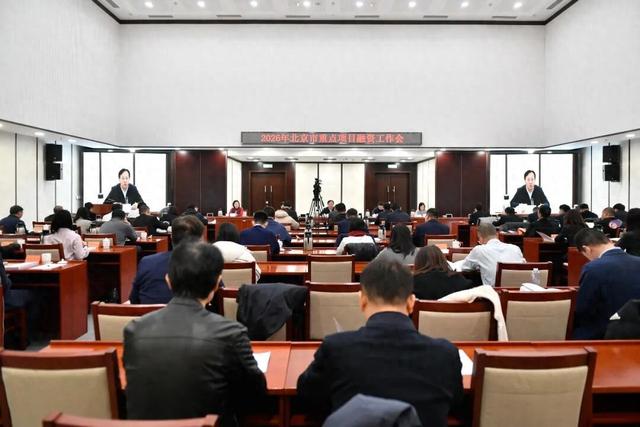
Core Insights - The meeting held on February 3 aimed to strengthen communication between government, banks, and enterprises to ensure funding for key projects in Beijing, supporting investment and economic growth goals for the first quarter and the entire year [1][17]. Group 1: Meeting Overview - The meeting combined in-person and online participation, with approximately 240 attendees, including representatives from various financial institutions and key project units [3]. - The Beijing Development and Reform Commission presented investment strategies and financing needs, while other departments discussed policies to support high-quality development and technological independence [4]. Group 2: Financing Needs and Projects - A total of 165 key financing projects were announced, with a total investment of approximately 2,851 billion and a financing demand of about 763 billion [7]. - The projects are categorized into three types: - Industrial development projects (138 projects) with a total investment of about 1,641 billion and financing needs of approximately 573 billion - Infrastructure projects (10 projects) with a total investment of about 652 billion and financing needs of approximately 71 billion - Livelihood improvement projects (17 projects) with a total investment of about 557 billion and financing needs of approximately 120 billion [7]. Group 3: Financial Service Enhancement - Financial institutions are encouraged to align with the city's economic development priorities, focusing on expanding domestic demand, modernizing the industrial system, regional coordinated development, and improving public services [8][9][10][11][12]. - The meeting emphasized the importance of collaboration between government, banks, and enterprises to enhance service levels and support the real economy [13]. Group 4: Continuous Improvement Initiatives - The meeting outlined plans to improve financing matching services, enhance policy support, and optimize the business environment to facilitate project financing [14][16][17]. - Specific actions include rolling out project lists with financing needs, improving the effectiveness of financing matches, and reducing financing costs for small and micro enterprises [15][16].

2026年北京建设用地供应计划首次单列城市更新计划指标
Zhong Guo Jin Rong Xin Xi Wang· 2026-01-20 22:45
Group 1 - The core viewpoint of the news is the introduction of a new land supply plan for urban renewal in Beijing, which aims to balance urban functions, population, and resources effectively [1][2] - The Beijing Municipal Planning and Natural Resources Commission and the Development and Reform Commission have jointly issued the 2026 land supply plan, which anticipates the implementation of approximately 3,240 to 3,740 hectares of construction land [1] - The plan emphasizes quality over quantity, adhering to three control lines: arable land, permanent basic farmland, and ecological protection boundaries [1] Group 2 - The new model for real estate development includes a precise supply of new real estate land, with 200 to 240 hectares allocated for commercial residential land, prioritizing areas near transit stations and densely populated employment regions [2] - A total of 350 hectares is designated for affordable housing, aimed at increasing supply for new citizens and urban service personnel [2] - The plan also allocates 480 to 540 hectares for industrial land, with at least 85% of high-tech industry land focused on key development areas and sectors, supporting Beijing's advantageous and future industries [2]
2026年北京供地计划公布,商品住宅用地安排200-240公顷
Cai Jing Wang· 2026-01-20 08:14
Core Viewpoint - Beijing's 2026 land supply plan aims to enhance urban development and optimize housing supply, particularly for new citizens and service personnel, while promoting sustainable urban growth and resource allocation [1][2][3][4] Group 1: Land Supply and Urban Development - The plan outlines a total construction land supply of approximately 3,240 to 3,740 hectares for 2026, with new land supply expected to be between 3,040 and 3,540 hectares [1] - The plan emphasizes a reduction in urban construction land by 500 hectares compared to 2025, reflecting a shift towards quality over quantity in urban planning [2] - The strategy includes a focus on activating existing land resources, with a target for urban renewal projects to match or exceed new land supply, aiming for 65% of land supply to come from existing resources [2] Group 2: Housing and Public Services - The plan allocates 350 hectares for affordable housing to better meet the rental needs of new citizens and urban service personnel, addressing the demand for "one bed" and "one room" [3] - A total of 650 hectares is designated for public management and service land, with an additional 300 hectares specifically for green spaces and squares, promoting the development of garden cities [4] - The transportation infrastructure will receive significant attention, with 950 to 1,350 hectares allocated for transport land, enhancing connectivity and resilience of municipal infrastructure [4] Group 3: Industry and Innovation - The plan includes 480 to 540 hectares for industrial land, representing an increase of 10 to 30 hectares from 2025, focusing on high-tech and emerging industries [3] - There is a commitment to ensure that at least 85% of new industrial land supports key sectors and infrastructure, reinforcing the integration of technology and industry [3]
中共北京市委关于制定北京国民经济和社会发展第十五个五年规划的建议
Bei Jing Ri Bao Ke Hu Duan· 2025-11-25 23:18
Group 1 - The "14th Five-Year" period has laid a solid foundation for the "15th Five-Year" period, showcasing significant achievements in various sectors, including economic growth, technological innovation, and cultural development [2][3] - Beijing's economy is projected to exceed 5 trillion yuan, with per capita GDP and labor productivity leading the nation, indicating a stable economic development [2] - The city has enhanced its role as a political, cultural, and international exchange center, with improvements in governance and public services [2][3] Group 2 - The "15th Five-Year" period is crucial for consolidating the foundation for socialist modernization, with both strategic opportunities and challenges present [3][4] - Internationally, the evolving global landscape presents complex challenges, while domestically, China's economic resilience and advantages remain strong [3] - Beijing's collaborative development with the surrounding regions is emphasized, aiming for a more integrated urban development model [3][4] Group 3 - The guiding ideology for the "15th Five-Year" period focuses on high-quality development, innovation, and meeting the people's growing needs [6][7] - Key requirements include optimizing capital functions, enhancing public welfare, and fostering innovation and reform [7][8] - The period aims to achieve significant improvements in urban governance, safety, and the overall quality of life for residents [8][9] Group 4 - The main goals for the "15th Five-Year" period include enhancing the capital's functions, achieving high-quality economic growth, and improving public services [9][10] - The focus will be on deepening reforms, enhancing cultural influence, and promoting ecological sustainability [10][11] - By 2035, the aim is to significantly elevate the capital's comprehensive strength and international influence, ensuring balanced regional development [10][11] Group 5 - The strategy emphasizes the importance of education, technology, and talent development to drive innovation and economic growth [19][20] - There is a commitment to fostering a digital economy and enhancing the integration of traditional and emerging industries [22][23] - The development of high-quality services and modern industries is prioritized to support economic transformation [24][25] Group 6 - The plan includes measures to boost domestic demand, enhance consumption, and expand effective investment [25][26] - A modern logistics system will be established to support economic activities and improve supply chain efficiency [26][27] - The focus will be on creating a unified national market and optimizing the business environment to attract investment [27][28] Group 7 - The cultural sector will be revitalized through innovation and the promotion of core socialist values [31][32] - Historical and cultural heritage will be preserved while fostering a vibrant cultural ecosystem [32][33] - Public cultural services will be enhanced to ensure accessibility and quality for all residents [33][34] Group 8 - Efforts will be made to improve living standards, focusing on employment, social security, and healthcare [35][36] - The housing supply system will be optimized to meet the needs of various demographics [36][37] - Education and health services will be prioritized to ensure a high quality of life for all citizens [38][39]
2275万元,北京71个标准化创新项目获补助
Xin Jing Bao· 2025-10-15 04:50
Core Insights - The Beijing Municipal Market Supervision Administration announced the launch of the 2025 Capital Standardization Strategy Subsidy Fund, with a total of 22.75 million yuan allocated to 71 benchmark projects across 60 units in the city [1] Group 1: International Standardization - Four projects participating in international standard organizations received 2.1 million yuan, enhancing China's competitiveness in the intelligent shipping industry and promoting the internationalization of cultural heritage protection standards [2] - Four overseas demonstration application projects focused on hydrogen energy and digital television, aiding the implementation of Chinese standards in Europe, the United States, and Belt and Road Initiative countries like Pakistan and Russia [2] Group 2: Results Transformation - The local standard "Community Resilience Evaluation Guidelines" has been successfully transformed into a national standard project, providing a unified evaluation basis for community safety resilience construction across the country [2] Group 3: Pilot Projects - Twelve pilot projects covering service industries, cultural tourism, social management, and public services will establish replicable and promotable industry development benchmarks through standardized production and operation models [2] Group 4: Industry Empowerment - Fifty subsidized standard projects are concentrated in high-tech industries, resource-saving sectors, and service industries, laying a solid standard foundation for the construction of an international science and technology innovation center and the optimization of industrial upgrades [2]
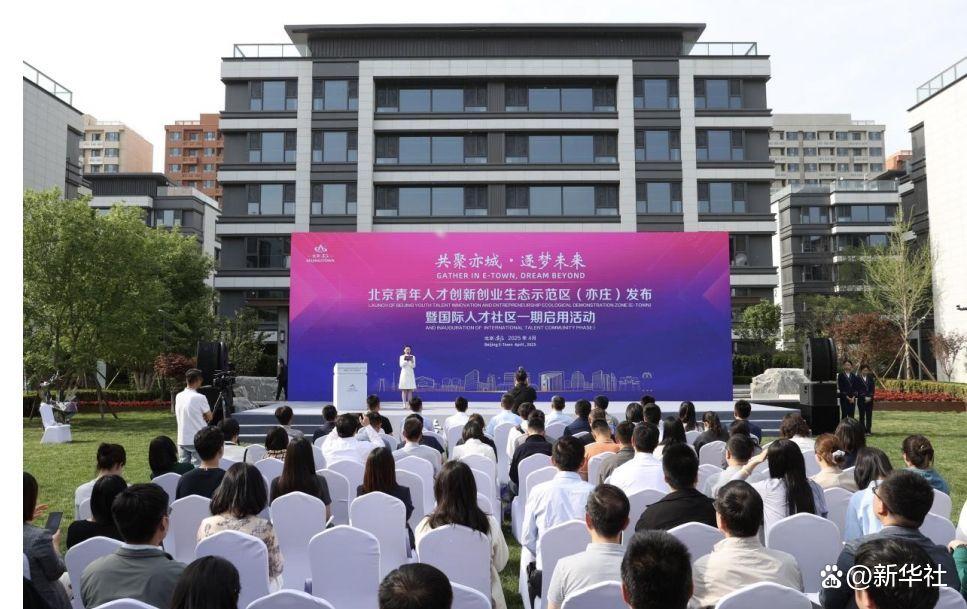
人才新政“组合拳”向全球青年发出“亦庄邀请”
Xin Hua She· 2025-05-05 03:16
Core Viewpoint - The Beijing Economic-Technological Development Area (BDA) is launching the Beijing Youth Talent Innovation and Entrepreneurship Ecological Demonstration Zone, aiming to attract global young talents through various initiatives and support systems [1][4]. Group 1: Talent Attraction and Development - BDA emphasizes talent as the source of new productive forces, focusing on high-end industries and creating a favorable business environment to attract top talents [3][4]. - The total talent pool in the BDA has reached 400,000, with an annual growth rate exceeding 8%, and 70% of the talent is under 45 years old [4]. - The area has established a high-level talent structure, including top-tier talents, industry leaders, and young scientific and engineering professionals [4]. Group 2: Infrastructure and Housing - The newly launched International Talent Community Phase I covers nearly 100,000 square meters and includes over 300 high-end apartments for young talents [3]. - A second phase is planned to deliver nearly 1,000 additional apartments within the year, promoting a warm living environment for young residents [3][5]. - The BDA aims to provide quality housing resources to facilitate the mutual attraction between the new city and young talents [3]. Group 3: Comprehensive Support Services - The "Ten Major Actions" for the demonstration zone include a full-cycle service matrix covering housing security, career development, life services, and innovation support [5]. - The initiative aims to create a collaborative framework for advancing key tasks within the demonstration zone [5]. Group 4: Future Vision - BDA is committed to becoming a model for new productive forces and an international high-end industrial complex, fostering an open environment and competitive platforms for young talents [7]. - The goal is to encourage young talents to pursue their dreams and contribute significantly to the high-quality development of the capital [7].