
High - tech

Search documents
卡莱特(301391) - 301391卡莱特投资者关系管理信息20260312
2026-03-12 11:56
证券代码:301391 证券简称:卡莱特 卡莱特云科技股份有限公司投资者关系活动记录表 | | 李果 湖南德望角贸易有限公司 | | --- | --- | | | 杨然 国盛证券 | | | 王锦政 深圳市前海骏杰资产管理有限公司 | | | 李汉辉 泰然基金 | | | 杨蒙 国泰海通 | | | 张婷 宝盈基金 | | | 杨林 国泰海通证券 | | | 魏鑫 橡果资产 | | | 汪瀚 国网英大 | | | 游翼翔 沐德资产管理(北京)有限公司 | | | 王潇麟 乐雪资本 | | | 胡中游 乐雪资本 | | | 息波 深圳江南鸿远基金管理有限公司 | | | 何金成 金元尚沛(广州)投资有限公司 | | | 朱兴造 南方基金 | | | 王立军 广州从头越私募证券投资基金管理有限公司 | | | 唐远 湖南卓远基金管理有限公司 | | | 雷志刚 深圳市亿能胜科技投资 | | | 黎超新 雷沃基金管理(深圳)有限公司 | | | 石璞 深圳市时代伯乐创业投资管理有限公司 | | 时间 | 2026 年 3 月 12 日 | | 地点 | 上证报深圳路演中心 | | 上市公司接待人 | 董事长:周锦 ...
中国思考-十五五规划:科技为纲、消费为辅
2026-03-12 09:08
Summary of the Conference Call on China's 14th Five-Year Plan Industry Focus - The conference call discusses the **14th Five-Year Plan (FYP)** of China, emphasizing a **technology-centric** approach and a calibrated rebalancing of the economy. Core Points and Arguments 1. **Focus on Technology and Supply-Side Policies** The 14th FYP reiterates a growth path centered on technology and supply-side policies, with clear quantitative targets for innovation and green transformation. However, the promotion of consumption is described in qualitative terms only, indicating a lack of concrete measures to stimulate consumer spending [3][8][11]. 2. **Quantitative Goals for Innovation** Specific quantitative goals include: - Average annual growth rate of R&D expenditure to exceed 7% - Increase the share of the digital economy in GDP from 10.5% to approximately 12.5% by 2030 - Maintain labor productivity growth above GDP growth [7][11][12]. 3. **Moderate Consumption Promotion** Despite an increase in the household consumption rate being a major goal, the plan lacks binding quantitative targets for consumption as a percentage of GDP. This aligns with past policy styles that avoid setting specific numerical goals for macroeconomic structural reforms [3][11]. 4. **Green Transition Goals** The plan aims to increase the share of non-fossil energy consumption in total energy consumption to 25% by the end of the plan period, indicating a shift from administrative reduction targets to a transformation of the energy system [8][12]. 5. **Challenges in Implementation** The plan highlights the need for a unified national market framework to regulate local government behavior. However, actual implementation may face challenges due to entrenched local interests and the need for reforms in local government assessment and tax systems [8][11]. 6. **GDP Growth Forecast** The GDP growth forecast for the year is maintained at 4.8% for real growth and 4.1% to 4.2% for nominal growth, reflecting a cautious outlook amid ongoing structural adjustments in the economy [8][13]. Other Important but Overlooked Content 1. **Sector-Specific Plans** There is an expectation of a series of industry-specific plans to translate the macro goals of the 14th FYP into actionable strategies within the next 6 to 12 months, focusing on technology independence, social security reform, and addressing employment impacts from AI [8][11][12]. 2. **Social Welfare Reforms** The plan includes clearer policy guidance for social welfare reforms, such as increasing pension support and easing access to social security for migrant workers, indicating a more systematic approach to social support [12]. 3. **Addressing AI Employment Impact** The government plans to release documents addressing the employment impacts of AI, which may include support for retraining and the creation of new high-tech jobs [12]. 4. **Institutional Reforms to Combat "Involution"** The focus is on establishing a more unified market entry system and regulatory framework to curb local protectionism and unhealthy competition, which may slow down the pace of implementation due to existing local interests [11][12]. This summary encapsulates the key insights from the conference call regarding China's 14th Five-Year Plan, highlighting the emphasis on technology and innovation while acknowledging the challenges in promoting consumption and implementing reforms.
Beijing has set its most unambitious growth target in decades. Here's why
CNBC· 2026-03-06 03:03
Economic Growth Target - China has set its GDP growth target for 2026 at 4.5% to 5%, marking the least ambitious goal since the early 1990s, allowing policymakers to respond to increased external uncertainties [2][6] - The lowered GDP target reflects persistent domestic growth challenges, including the impact of U.S. tariffs and weak consumption and investment [6][7] External Economic Risks - Heightened economic risks are present due to geopolitical tensions, particularly the U.S.-Israel conflict with Iran, which threatens China's energy supply [3][4] - The Chinese government has ordered major state oil refiners to suspend diesel and gasoline exports amid concerns over energy access [4] Employment and Job Creation - The Chinese government aims to create 12 million urban jobs, with an urban jobless rate target of around 5.5% [10] - Youth unemployment remains a significant concern, with a rate of 16.3% in January, compared to a nationwide jobless rate of 5.2% last year [9] Investment and Economic Strategy - Despite challenges in the property market, Beijing's plans to stabilize the sector remain similar to previous years, emphasizing effective measures [11] - The government is focusing on achieving tech self-sufficiency, planning to increase investment in scientific research and innovation [11] Export Dependency - Export growth is identified as a critical factor for economic stability; strong exports may allow for tolerance of weak domestic consumption [13] - China plans to issue 1.3 trillion yuan ($188.5 billion) in ultra-long-term special treasury bonds in 2026, maintaining the same level as the previous year [13] Long-term Economic Goals - The modest growth target aligns with China's long-term goal of doubling its economy by 2035, requiring an average annual growth of 4.17% over the next decade [14] - The approach indicates a preference for achieving a modest target rather than risking a more ambitious one [15]



岘港发布《关于落实<2026-2030年科技发展方案>》的计划》
Shang Wu Bu Wang Zhan· 2026-02-13 17:10
Core Insights - Da Nang City has launched a plan to implement the "2026-2030 Da Nang City Technology Development Plan and 2035 Vision" with a total investment of over 1,320 billion VND (approximately 40 million RMB) aimed at promoting digital transformation, innovation, and technological infrastructure development [1][2] Group 1: Investment and Economic Development - The plan focuses on enhancing policy mechanisms to promote applied research, develop high-tech products, and support enterprise reform and innovation by 2026 [1] - The initiative aims to strengthen the entrepreneurial innovation ecosystem by introducing various incentives to attract investment and foster the growth of startups [1] Group 2: Technological Infrastructure - Da Nang will prioritize the development of high-tech research, production, and application systems, including an AI laboratory, advanced chip packaging technology testing lab, and innovation space [2] - The plan includes expanding broadband internet coverage and improving telecommunications infrastructure to enhance information technology applications in management, public services, and business operations [1][2]
武汉光谷发布400项创新应用场景清单 多维布局打通成果转化“最后一公里”
Chang Jiang Shang Bao· 2026-02-08 23:44
供给场景清单整合光谷优质创新资源,发布半导体检测、机器人交互系统等270项场景能力,向社会广 泛推介"光谷优秀方案",为创新技术落地、产业升级提速提供坚实支撑。清单汇聚了光谷高校、科研院 所、龙头企业的核心创新成果,彰显了光谷在高端制造、数字技术等领域的硬实力,助力企业快速对接 优质创新资源,加速技术成果转化应用。 闭环推进场景创新落地 此次光谷出台的场景创新专项支持政策,聚焦场景对接与创新转化中的痛点、难点、堵点问题,推出8 项具体举措,以真金白银强化政策激励,为场景创新保驾护航。据悉,光谷每年将安排近2亿元专项资 金,重点用于引导企业攻关前沿技术、开放内部场景、加速成果转化,同时建立标杆场景遴选机制,对 验证成功并向全国市场推广场景解决方案的企业予以额外奖励,充分激发市场主体参与场景创新的积极 性。 为创新提供"应用土壤",日前,武汉市东湖高新(600133)区(中国光谷)正式发布《关于进一步完善东 湖高新区场景创新工作体系的实施方案》与《东湖高新区支持打造场景创新示范区的若干措施》,同步 发布首批400项光谷2026年创新应用场景清单。 首批场景清单紧扣"新领域新赛道、产业转型升级、行业领域深度应用、创 ...
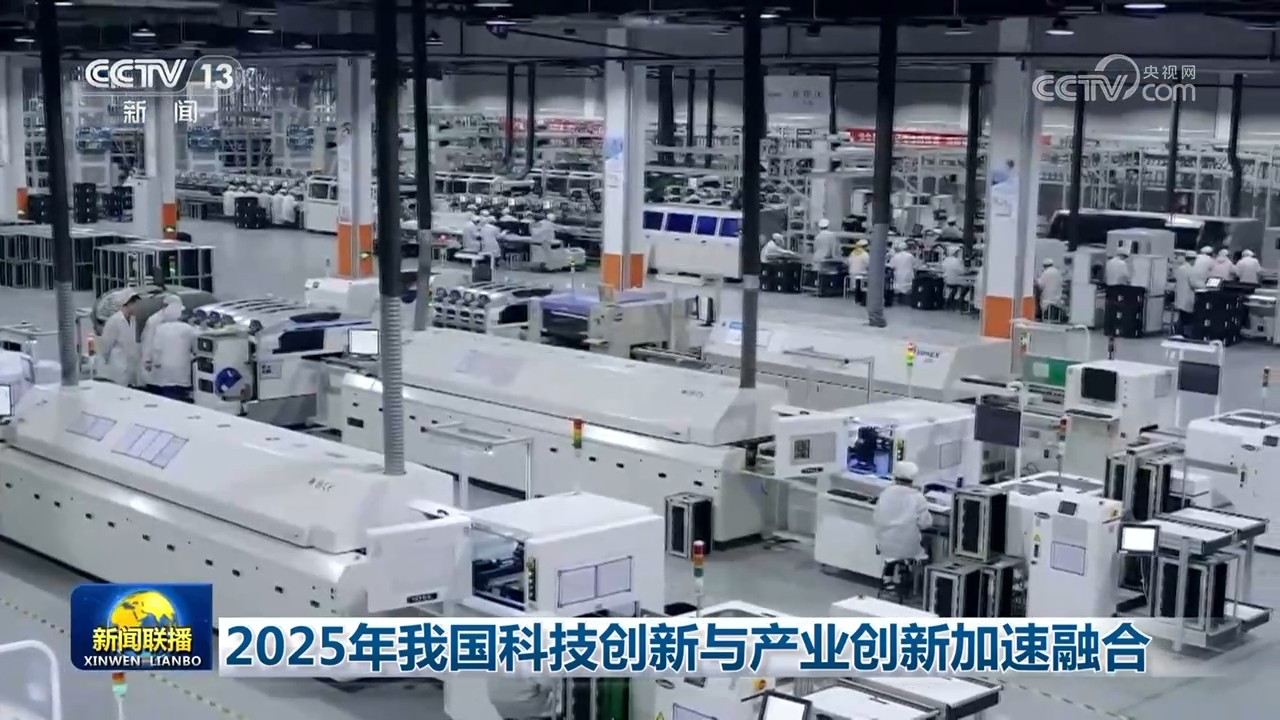
2025年我国科技创新与产业创新加速融合
Yang Shi Wang· 2026-02-08 12:21
Core Insights - The core viewpoint of the articles highlights the accelerated integration of technological and industrial innovation in China, with significant growth in high-tech industries and digital economy sectors by 2025. Group 1: High-Tech Industry Growth - In 2025, sales revenue in high-tech industries is expected to grow by 13.9% year-on-year [1] - Key sectors such as lithium-ion batteries, integrated circuits, and biopharmaceutical manufacturing are projected to see sales revenue increases of 25.1%, 19.2%, and 7.7% respectively [1] - The "Artificial Intelligence +" initiative is rapidly being implemented, with sales revenue in the consumer robotics manufacturing sector increasing by over 60% year-on-year [1] Group 2: Technology Transfer and Services - The transaction amount of technology contracts and sales revenue in the scientific research and technical service industry are both expected to maintain around 20% growth in 2025 [3] Group 3: Digital Economy Integration - The sales revenue of core industries in the digital economy is projected to grow by 9.4% year-on-year in 2025 [5] - The digital technology application sector is expected to see a year-on-year growth of 13.8%, indicating rapid development in digital industrialization [5] - The amount spent by enterprises on digital technology is anticipated to increase by 9.6% year-on-year, with the manufacturing sector showing a faster digitalization process, reflected in a 10.4% increase in procurement of digital technologies [5]
“好成果”如何加速转化为“好产品”?
Xin Lang Cai Jing· 2026-02-06 22:00
Core Insights - The article emphasizes the importance of transforming scientific and technological achievements into practical applications to enhance industrial innovation and productivity in Sichuan province [1][2] Group 1: Government Initiatives - The provincial government has outlined a series of measures to promote the application of scientific and technological achievements, including the establishment of pilot platforms integrated into the industrial chain and optimizing online and offline innovation services [1][5] - The government aims to create over 230 concept verification centers and pilot platforms to facilitate the transition from research to industry [1][6] Group 2: Innovation Models - There is a call for innovative transformation models that prioritize identifying industry problems before organizing research efforts, which could significantly shorten the technology transfer cycle and reduce risks [3][4] - The new model aims to streamline the entire process from technology discovery to product commercialization, addressing existing bottlenecks in collaboration between research teams and enterprises [3][4] Group 3: Professional Platforms and Talent - The lack of specialized platforms and talent is identified as a barrier to effective technology transfer, necessitating the establishment of professional services to support market entry [5][6] - The establishment of technology business schools and specialized programs in collaboration with tech companies is suggested to cultivate professionals who can facilitate the entire technology transfer process [5][6] Group 4: Mid-Stage Testing Platforms - Mid-stage testing platforms are crucial for connecting innovation, technology, and industry, and the government plans to implement actions to build these platforms within the industrial chain [6] - Recommendations include expanding provincial mid-stage research platforms and ensuring they are funded and supported by various stakeholders, including government, universities, and private enterprises [6]
美格智能(002881.SZ):全资子公司获得高新技术企业证书
Ge Long Hui A P P· 2026-02-05 11:54
Core Viewpoint - Megvii Technology (002881.SZ) announced that its wholly-owned subsidiary, Shenzhen Megvii Intelligent Information Technology Co., Ltd. (referred to as "Megvii Intelligent"), received the "High-tech Enterprise Certificate" from the Shenzhen Municipal Bureau of Industry and Information Technology, Shenzhen Municipal Finance Bureau, and the State Taxation Administration of Shenzhen on February 5, 2026. The certificate number is GR202544203154, issued on December 25, 2025, and is valid for three years. This certification is a renewal of Megvii Intelligent's previous high-tech enterprise status that had expired [1]. Group 1 - Megvii Intelligent received a new high-tech enterprise certificate, indicating its continued recognition in the technology sector [1]. - The certificate is valid for three years, reflecting the company's ongoing commitment to innovation and technology development [1]. - The renewal of the high-tech enterprise status is crucial for Megvii Intelligent, as it may provide access to various government incentives and support [1].

鼎汉技术(300011.SZ):“鼎汉-先进院创新联合体”尚处于筹备初期
Ge Long Hui· 2026-02-02 13:32
格隆汇2月2日丨鼎汉技术(300011.SZ)在投资者互动平台表示,鼎汉技术与中国科学院深圳先进技术研 究院共建"鼎汉-先进院创新联合体",拟聚焦人工智能、具身智能、企业云脑三大前沿方向,构建从智 能感知、实体行动到顶层决策的完整技术链,创新联合体将重点攻克AI算法在能源管控、设备运维、 具身智能机器人研发中的适配难题,加速技术成果工程化转化。目前,"鼎汉-先进院创新联合体"尚处 于筹备初期,相关工作正在起步阶段。 ...

前海向前 新21条背后的深港融合路怎么走
Nan Fang Du Shi Bao· 2026-01-29 02:22
在粤港澳大湾区的棋局中,前海的每一次落子,总是最引人瞩目。 连续两年,前海选择在开年之初发布重磅文件——《前海建设深港深度融合发展引领区2026年行动方 案》(下称《行动方案》)。以21方面举措、56条具体任务,系统性推动规则衔接、产业协同、民生融 通三大关键领域突破,勾勒出的不只是一张制度清单,更是一条清晰的深港融合路径。 从硬联通到软兼容:一场关乎规则与信心的"系统升级" 打开《行动方案》,"规则衔接"毫无悬念地占据了首要位置,成为推动各领域协同发力的关键抓手。该 方案围绕金融、法律、航运物流、数据、深港标准、人才等领域系统布局:一方面深化深港私募通,试 点香港新工程合约模式等创新政策,另一方面,在项目层面加速落地,重点推进深港跨境低空物流试点 和国际数据中心建设,并同步完善技术转移人才中心及跨境数据验证平台等基础支撑,从而推动深港规 则衔接向纵深发展。 "以前谈融合,往往看到的是路通了、桥通了。但现在,前海要通的是数据、是标准、是法律的信 心。"港区全国人大代表、全国人大常委会香港基本法委员会委员、香港立法会议员梁美芬对此感触颇 深。她眼中的前海,正在成为法治与金融的"混血特区"。数据最能说明问题:截至 ...