
Industrial Metals

Search documents
Ryerson Announces Leadership Team Changes to Accelerate Strategic Integration of the Newly Merged Organization
Prnewswire· 2026-03-31 20:13
Core Viewpoint - Ryerson Holding Corporation announces leadership team changes aimed at accelerating the strategic integration of its newly merged organization with Olympic Steel, focusing on growth, operational excellence, and customer success [1][7]. Leadership Appointments - Mark Silver has been appointed as Executive Vice President and Chief Legal & Risk Officer, with expanded responsibilities including enterprise risk management and cybersecurity [2]. - Frank Williams serves as Chief Information Officer, overseeing enterprise technology, E-commerce, and marketing, with a focus on enhancing digital platforms and customer engagement [3]. - Richard Manson will lead synergy attainment for the merged company and oversee Corporate Finance Planning & Analysis, while continuing as Chief Financial Officer of Olympic Steel [4]. - Daniel Rosenberg, as Chief of Staff, will drive enterprise-level integration and strategic alignment across business units [5]. - Brian Seeley has been appointed President of Ryerson Advanced Processing, bringing extensive experience in manufacturing and metals industry leadership [6]. Strategic Focus - The newly structured leadership team aims to drive consistency across the organization, enhance cross-functional collaboration, and share best practices from the merged businesses [8]. - The leadership changes are intended to maximize synergies from the merger and support Ryerson's priorities around safety, customer experience, operational performance, and sustainable growth [8].



Industrial Metals Steady During Lunar New Year Holiday
Yahoo Finance· 2026-02-16 10:37
Group 1 - Industrial metals experienced a subdued start to the week due to many Asian traders being offline for the Lunar New Year break and the US market being closed [2] - Copper prices remained stable below $12,900 per ton in London, consolidating after recent volatility, while aluminum steadied after a decline [2][5] - Near-record prices have led to a decrease in industrial demand for metals like copper in China, resulting in rising exchange inventories as manufacturers reduce orders [3] Group 2 - Readily available copper inventories tracked by the London Metal Exchange increased, bringing total stocks across exchanges in Shanghai, London, and New York above one million tons, the highest level since 2003 [4] - The LMEX Index, which tracks six main metals traded in London, reached a record last month due to strong Chinese buying and a weaker US dollar, but has since slightly declined as traders await new catalysts [5] - Copper futures were steady at $12,870 per ton, while aluminum remained flat at $3,076 per ton after a previous decline of up to 2.7% [5]
RYOEX:鹰派预期引发大宗商品巨震
Xin Lang Cai Jing· 2026-02-02 11:24
Core Viewpoint - The global commodity market experienced a severe downturn due to expectations of a leadership change at the Federal Reserve and a strengthening dollar, leading to significant sell-offs in gold, silver, oil, and industrial metals [1][3]. Group 1: Market Reactions - Gold prices plummeted by 9%, erasing gains from the previous two weeks [1][3]. - Silver fell over 13% after setting a record the previous week [1][3]. - Oil prices dropped nearly 5.5%, while copper saw a decline close to 5% [1][3]. Group 2: Margin Requirements and Trading Dynamics - CME Group raised metal futures margin requirements starting this week, which accelerated selling pressure [1][3]. - The increase in margin requirements raised trading costs, forcing many speculative positions to liquidate in a low liquidity environment [1][3]. Group 3: Market Analysis and Future Outlook - The current widespread adjustment in commodities is viewed as a technical correction rather than a structural bear market [2][4]. - Despite market panic, some strategists maintain a long-term bullish outlook, emphasizing that the fundamentals of commodities have not fundamentally reversed [2][4]. - The chaotic sell-off is attributed to multiple macro risk events causing liquidity crunches, rather than indicating the start of a structural bear market [2][4].

跨资产简报:美国增长超预期,美元能否延续走弱?5 分钟速览核心争议-Cross-Asset Brief-Can the Dollar Still Weaken amid Stronger-than-Expected US Growth Key Debates in Under 5 Minutes – January 2026
2026-02-02 02:22
Summary of Key Points from the Conference Call Industry and Company Overview - The conference call primarily discusses macroeconomic trends and their implications for various asset classes, including US Treasuries, Japanese equities, the US dollar, precious metals, and copper. Core Insights and Arguments 1. **Impact of JGB Sell-off on US Treasuries** - Concerns about Japanese public pensions repatriating funds from US markets due to higher Japanese yields are considered overstated. Domestic investors have not significantly increased allocations to longer-end JGBs despite perceived improvements in attractiveness throughout 2025. The potential for joint US-Japan FX intervention may lead to a short-term decline in USD/JPY [8][12][18]. 2. **Japanese Equities Outlook** - Rising long-term interest rates are not seen as a headwind for Japanese equities at this time. Japan's real interest rates remain deeply negative, maintaining accommodative financial conditions. Inexpensive valuations make Japanese equities attractive compared to global peers. The impact on mega-banks is expected to be limited due to the short duration of their JGB portfolios [12][18]. 3. **US Dollar Weakness Amid Strong Growth** - Despite stronger-than-expected US growth, risks remain skewed towards a weaker dollar due to strong ex-US data, lingering policy risks, an undervalued JPY, and rising CNY support. The risk premium in the DXY has risen to average levels seen since 'Liberation Day' [18][21]. 4. **Precious Metals Rally Potential** - Geopolitical events are driving safe-haven inflows into precious metals. Expectations of two more Fed rate cuts in 2026 should support ETF demand. Although physical demand from central banks may slow, gold's percentage in reserves is expected to rise amid declining USD dominance [23][28]. 5. **Copper Market Dynamics** - The macro backdrop for copper remains constructive due to anticipated rate cuts and a weaker dollar. However, US import demand is slowing, LME inventories are rising, and Chinese demand is declining. Prices are expected to remain supported but may experience short-term volatility [26][27]. Other Important Insights - The report emphasizes the importance of considering multiple factors when making investment decisions, highlighting potential conflicts of interest due to Morgan Stanley's business relationships with covered companies [5][36]. - Analysts express that while the USD bear case has softened, the equilibrium level of risk premium is unlikely to return to previous peaks without clearer evidence of FX-hedging flows [18][21]. - The report includes various exhibits that provide visual data supporting the analysis, such as risk premiums and inventory levels [21][27]. This summary encapsulates the key discussions and insights from the conference call, providing a comprehensive overview of the current market dynamics and investment considerations.
Gold Rally Cools Near Record as Trump Tempers Greenland Threat
Yahoo Finance· 2026-01-21 15:58
Core Viewpoint - Gold prices have experienced a significant rally, reaching an all-time high of $4,888.42 per ounce, but have recently cooled following comments from President Trump regarding the acquisition of Greenland [1][3]. Group 1: Market Reactions - The dollar showed volatility while gold prices slightly decreased after hitting record levels [1]. - The Greenland crisis and US threats against NATO allies have contributed to a 75% surge in gold prices over the past year, driven by central bank purchases and geopolitical tensions [3]. Group 2: Economic Context - President Trump emphasized the importance of acquiring Greenland for collective security and portrayed his economic policies as beneficial for the US economy, suggesting they could serve as a model for Europe [2]. - The ongoing geopolitical tensions and expectations of interest rate cuts are expected to keep gold prices on an upward trajectory, with investors likely viewing any price dips as buying opportunities [4]. Group 3: Commodity Performance - As of 10:58 a.m. in New York, spot gold prices rose, while silver prices declined after reaching an all-time high [5]. - Platinum prices exceeded $2,530 for the first time, and copper approached $13,000 per ton, supported by forecasts of continued investment flows into the US [5].
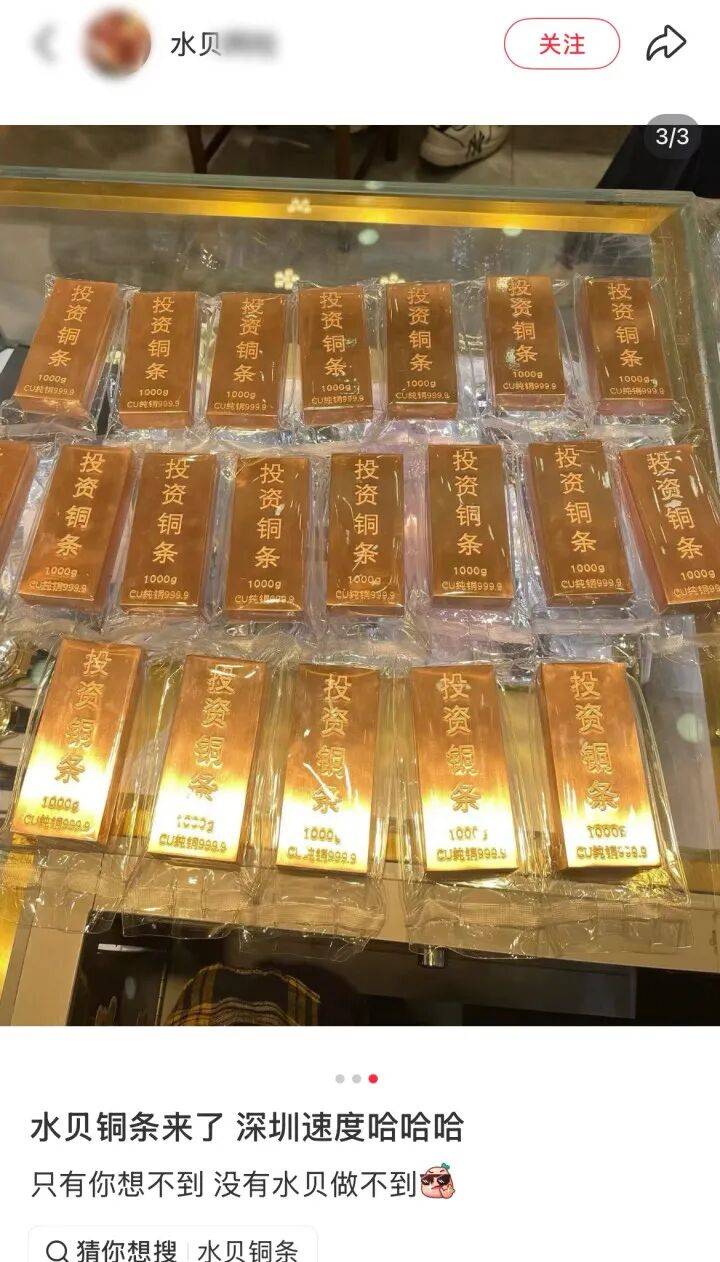
突然火了!深圳水贝惊现!商家称没有现货,得预定!网友:有点可笑了
Sou Hu Cai Jing· 2026-01-19 18:50
Core Viewpoint - The investment enthusiasm is shifting from traditional precious metals to a variety of industrial metals on the periodic table, such as antimony, germanium, tungsten, and indium, which have recently gained popularity on social media platforms [1][2]. Group 1: Market Trends - Recently, lesser-known industrial metals like antimony, germanium, tungsten, and indium have become highly sought after, with individuals hoarding significant quantities of indium ingots and others reporting a 150% price increase for potassium bars [2][17]. - In Shenzhen, merchants have started offering investment copper bars, with prices ranging from 180 to 280 yuan for a 1000-gram bar, indicating a growing interest in unconventional investment options [2][12]. Group 2: Consumer Behavior - Many consumers are expressing disbelief at the trend of investing in copper bars, with some questioning the future of such investments and the potential for absurdity in the market [8][11]. - A merchant in Shenzhen noted a surge in inquiries about copper bars, although actual orders remain low due to concerns about future resale value [13][16]. Group 3: Market Dynamics - The pricing and recovery of copper bars are inconsistent, with various merchants providing significantly different quotes, highlighting a lack of standardization in the market [16][20]. - The investment in industrial metals is becoming a hot topic on social media, with users sharing price trends and purchase channels, and some even compiling detailed investment lists based on the periodic table [17][19]. Group 4: Expert Insights - Industry experts warn that investing in niche metals carries higher risks compared to traditional precious metals, emphasizing the volatility of prices linked to global economic conditions and specific industrial demands [20][21]. - The lack of established recovery channels for physical investments in these metals poses a significant risk, as investors may face challenges in liquidating their assets [21][22].
金属:白银表现将持续跑赢黄金 -上调短期黄金、白银目标价至 5000 盎司、100 盎司-Metal Matters Silver to continue to outperform gold upgrading near term gold and silver to 5000oz and 100oz
2026-01-13 02:11
Summary of Key Points from the Conference Call Industry Overview - The conference call focuses on the precious metals market, particularly gold and silver, and their performance amid geopolitical risks and market dynamics [1][2][3]. Core Insights and Arguments 1. **Price Forecasts**: - Near-term price forecasts for gold and silver have been upgraded to $5,000/oz and $100/oz respectively, driven by strong investment momentum and geopolitical uncertainties [1][3]. - Gold prices have increased by 7% over the past month and 12% over the past three months, while silver has outperformed with increases of 36% and 60% over the same periods [2]. 2. **Market Dynamics**: - Ongoing physical market shortages in silver and PGMs (platinum group metals) are expected to worsen due to potential delays in Section 232 tariff decisions, which could lead to significant price volatility [3]. - The widening price spread between platinum and palladium has increased from approximately $200 to $500/oz, indicating a preference for platinum due to specific market drivers [2]. 3. **Geopolitical Risks**: - The expectation of moderating geopolitical risks later in the year may reduce hedging demand for precious metals, particularly gold, as clarity on US-Venezuela and Iran situations improves [4]. - A potential "Goldilocks" growth scenario in the US could lead to reduced demand for precious metals as investors shift towards riskier assets like equities [4]. 4. **Investment Sentiment**: - Despite potential price corrections, the overall sentiment remains bullish for precious metals, with expectations of continued strong performance in industrial metals like aluminum and copper [4]. - The current rally in silver is seen as a leading indicator for broader metal market trends, with any tactical selloff viewed as a buying opportunity in a long-term bull market [3]. Additional Important Content - **Tariff Implications**: The upcoming decisions on Section 232 tariffs pose binary risks that could significantly impact trade flows and prices in the precious metals market [3]. - **Market Conditions**: High lease rates for silver and PGMs indicate ongoing physical market tightness, which may persist despite recent price increases [19][20]. - **ETF Holdings**: Silver ETF holdings remain strong, with investors reluctant to sell despite record price gains, suggesting a robust long-term outlook for silver [18]. This summary encapsulates the key points discussed in the conference call regarding the precious metals market, highlighting price forecasts, market dynamics, geopolitical risks, and investment sentiment.
Precious Metals Remain Strong: Why That’s a Red Flag for Stocks Amid Venezuela Tumult
Yahoo Finance· 2026-01-06 21:34
Group 1: Precious Metals Market - Gold and silver prices are rising due to safe-haven demand following the U.S. raid in Venezuela that captured its president, leading traders to consider geopolitical implications in the coming months [1] - Platinum futures reached a record high of $3,563.50 per ounce, while palladium futures hit a three-year high of $1,984.70 per ounce, indicating strong market performance in these metals [5] - The gold and silver markets are experiencing solid rallies driven by strong safe-haven buying, reflecting increased risk-off sentiment among investors [8] Group 2: Copper Market - Copper futures have climbed above $6 per pound, reaching a new record high due to expectations of tightening global supplies this year [2] - Concerns are growing among traders that potential new tariffs on refined metals by the Trump administration could disrupt shipments into the U.S., affecting supply in major trading hubs like London and Shanghai [3] Group 3: Global Stock Markets - Asian stock markets are experiencing their best-ever start to a year, with key indexes reaching record highs and the MSCI Asia Pacific Index up around 4% in the first four trading sessions of 2026 [6] - European stock markets are also performing well, with the STOXX 600 reaching an all-time high and the German DAX and U.K.'s FTSE 100 indices hitting fresh record highs [7]
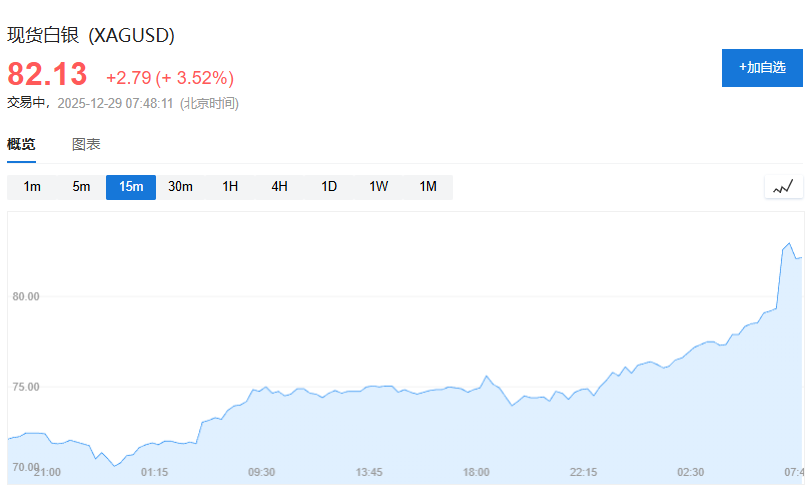
贵金属全线走强,现货白银站上83美元,日内大涨近5%
Hua Er Jie Jian Wen· 2025-12-29 00:10
Group 1 - Precious metals market showed a broad increase on Monday, with spot silver leading the gains, reaching a high of $83.23 per ounce, up 4.9%, before retreating to $82.13 [1] - Gold continued its upward trend, peaking at $4543 per ounce with a 0.2% increase, while platinum rose by 2.48% to $2553 per ounce [4] - Industrial metals and energy markets also recorded gains, with copper prices rising to $12133 and WTI crude oil rebounding by 0.79% to $57.19 [9] Group 2 - The market is pricing in a new narrative of "commodity control," with Goldman Sachs suggesting that metals are not only cyclical assets but also strategic assets, reflecting the rising importance of geopolitical and supply chain security factors in commodity pricing [11] - Precious metals have outperformed the S&P 500 index this year, attracting funds concerned about technology stock valuations, with some investors viewing precious metals as a hedge against "AI bubble" risks, leading to a shift of funds from the stock market to the commodity market [12]
大宗商品观察 2026 展望:借势能源竞赛与供应波动-Commodity Views_ 2026 Outlook_ Ride the Power Race and Supply Waves
2025-12-19 03:13
Summary of Key Points from the Conference Call Industry Overview - The report focuses on the commodities market, particularly in the context of the US-China geopolitical landscape and the energy supply dynamics for 2025-2032 [2][3][6]. Core Insights and Arguments Geopolitical and Economic Factors - The US-China AI and geopolitical power race is a significant driver for commodity investments, particularly gold, as emerging market (EM) central banks diversify into gold to hedge against geopolitical risks [2][6]. - A long-term bullish outlook for gold is maintained, with expectations for the price to rise by 14% to $4,900 per ounce by December 2026, driven by increased central bank demand and potential diversification into private investments [2][13][15]. - Commodities are viewed as portfolio insurance due to rising supply concentration and geopolitical tensions, which increase the risk of supply disruptions [20][21]. Specific Commodity Insights - **Gold**: Continued strong demand from central banks is expected, averaging 70 tonnes per month in 2026, significantly higher than pre-2022 levels [15][16]. - **Copper vs. Aluminum**: A recommendation to go long on copper and short on aluminum is based on copper's supply constraints and increasing demand from electrification, while aluminum supply is expected to rise due to China's overseas investments [10][33][41]. - **Oil Market**: A forecast of a 2.0 million barrels per day (mb/d) surplus in the oil market for 2026, with Brent and WTI prices expected to average $56 and $52 respectively [60][61]. The oil supply wave is anticipated to be short-lived, leading to lower prices [59][60]. - **Natural Gas**: A global gas glut is expected, with LNG supply projected to increase by over 50% by 2030, leading to a potential 35% reduction in European natural gas prices by mid-2027 [67][71]. Market Dynamics - The US power market is tightening due to a surge in data center demand, which is expected to outpace power generation capacity, leading to higher prices and potential outages [47][52][53]. - The report highlights the geographic concentration of commodity supply and the strategic role of commodities in the context of geopolitical tensions, particularly regarding rare earths and critical minerals [20][21][27]. Additional Important Insights - The report emphasizes the importance of understanding the cyclical and structural trends in the commodities market, with significant return differentiation expected across various commodities in 2026 [3][81]. - The potential for supply disruptions in critical minerals and the implications of China's export restrictions on rare earths are noted as significant risks [21][26]. - The report also discusses the long-term outlook for oil and gas prices, suggesting that while short-term pressures may exist, a recovery is expected in the latter part of 2026 and into 2027 [66][78]. This summary encapsulates the key points from the conference call, providing insights into the commodities market's dynamics and the implications of geopolitical factors on investment strategies.