
抽水蓄能电站

Search documents
年消纳清洁能源25亿度!广西南宁抽水蓄能电站全面投产
中国能源报· 2025-12-31 09:43
Core Viewpoint - The Nanning Pumped Storage Power Station, the first of its kind in Guangxi, has been fully operational, marking a significant milestone in China's energy infrastructure development under the "14th Five-Year Plan" [1][3]. Group 1: Project Overview - The Nanning Pumped Storage Power Station is located in Wuming District, Nanning, with a total investment of approximately 8 billion yuan and an installed capacity of 1.2 million kilowatts [1]. - The facility consists of four pumped storage units, capable of converting 1.2 million kilowatt-hours of clean electricity from 1 million cubic meters of water every hour, sufficient to meet the daily electricity needs of 200,000 households [1]. - The construction of the power station took only 41 months from the start of the project to full operation, setting a new speed record for pumped storage projects in China [3]. Group 2: Impact on Energy Sector - The completion of the Nanning Pumped Storage Power Station will significantly enhance the grid regulation capacity in Guangxi, providing strong support for the consumption of clean energy, with an annual capacity to absorb up to 250 million kilowatt-hours of clean energy, thereby reducing carbon dioxide emissions by 220,000 tons [5]. - Since the beginning of the "14th Five-Year Plan," four large pumped storage power stations have been built and put into operation in South China, including the Nanning station, with the total installed capacity in the region reaching 1.268 million kilowatts, accounting for about one-fifth of the national total, and representing a growth of over 60% compared to the end of the "13th Five-Year Plan" [6]. Group 3: Industry Context - Pumped storage power stations function as large-scale energy storage systems, allowing excess electricity generated from renewable sources to be stored and utilized during periods of low generation, thus facilitating the stable integration of wind and solar energy into the grid [7]. - China's total installed capacity of pumped storage has reached 66 million kilowatts, providing a solid foundation for the large-scale and high-quality development of renewable energy [7]. - The operational capacity of pumped storage in South China exceeds 12 million kilowatts, highlighting the region's significant role in the national energy landscape [7].

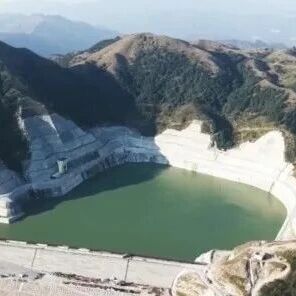
深山造“电池” 苍山变金山
Xin Hua Wang· 2025-12-30 02:58
Core Viewpoint - The successful grid connection of the first unit of the Zhejiang Tiantai Pumped Storage Power Station marks a significant advancement in China's pumped storage capacity, with the unit's capacity reaching 425,000 kilowatts, setting a new national record for single-unit capacity [1][2]. Group 1: Project Overview - The Tiantai Pumped Storage Power Station will have a total installed capacity of 1.7 million kilowatts upon completion, with all four units expected to be operational by July next year [1]. - The project is part of a broader initiative in Zhejiang to enhance energy storage capabilities, with the province's total pumped storage capacity reaching 10.305 million kilowatts, second only to Guangdong [2]. Group 2: Economic and Environmental Impact - The annual electricity generation of the Tiantai station is projected to reach 1.7 billion kilowatt-hours, saving approximately 520,000 tons of coal and reducing carbon dioxide emissions by 1.04 million tons [2]. - The project will provide stable revenue through capacity pricing and the sale of electricity at benchmark coal power prices, enhancing the economic viability of the investment [3][4]. Group 3: Technological Advancements - The Tiantai project has achieved three major breakthroughs in engineering technology, including the largest single-unit capacity in the country and the highest rated head in the world for a pumped storage facility [5][6]. - The use of high-strength forged materials in the construction of the power station demonstrates advancements in domestic manufacturing capabilities for hydropower equipment [6]. Group 4: Community Development - The construction of the pumped storage station has improved local infrastructure, including the development of a dual-lane road that significantly reduces travel time to the mountain top [7]. - The project has stimulated local tourism and economic activities, with nearby villages experiencing increased visitor numbers and income from local products and services [8].
视频|年消纳清洁能源25亿度 广西南宁抽水蓄能电站全面投产
Yang Shi Xin Wen Ke Hu Duan· 2025-12-30 00:55
Core Viewpoint - The Nanning Pumped Storage Power Station in Guangxi has been fully operational, marking it as the first pumped storage power station in the region and part of the "14th Five-Year Plan" with significant investment and capacity [1][3]. Group 1: Project Overview - The Nanning Pumped Storage Power Station is located in Wuming District, Nanning, with a total investment of approximately 8 billion yuan and an installed capacity of 1.2 million kilowatts [3]. - The facility consists of four pumped storage units, capable of converting 1 million cubic meters of water into 1.2 million kilowatt-hours of clean electricity per hour, sufficient to meet the daily electricity needs of 200,000 households [3]. - The construction of the power station took only 41 months from start to full operation, setting a new speed record for pumped storage projects in China [5]. Group 2: Impact on Energy Sector - The completion of the Nanning Pumped Storage Power Station will significantly enhance the grid regulation capacity in Guangxi, providing strong support for the consumption of clean energy in the region [7]. - The station can absorb up to 2.5 billion kilowatt-hours of clean energy annually, which corresponds to a reduction of 2.2 million tons of carbon dioxide emissions [7]. - Pumped storage power stations function as large-scale batteries, storing excess energy generated from renewable sources like wind and solar, and releasing it when needed, thus stabilizing the energy supply [7]. Group 3: Regional Developments - The total installed capacity of pumped storage power stations in South China has exceeded 12.6 million kilowatts, accounting for about one-fifth of the national total, with a growth of over 60% since the end of the "13th Five-Year Plan" [8]. - Since the beginning of the "14th Five-Year Plan," several large pumped storage power stations have been completed in South China, including those in Guangdong [8].
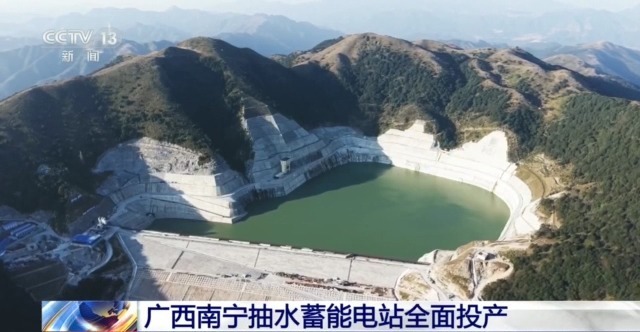
攒足发展“硬支撑”底气!借助重大工程“拼图”看经济发展澎湃“硬核”动力
Yang Shi Wang· 2025-12-29 03:26
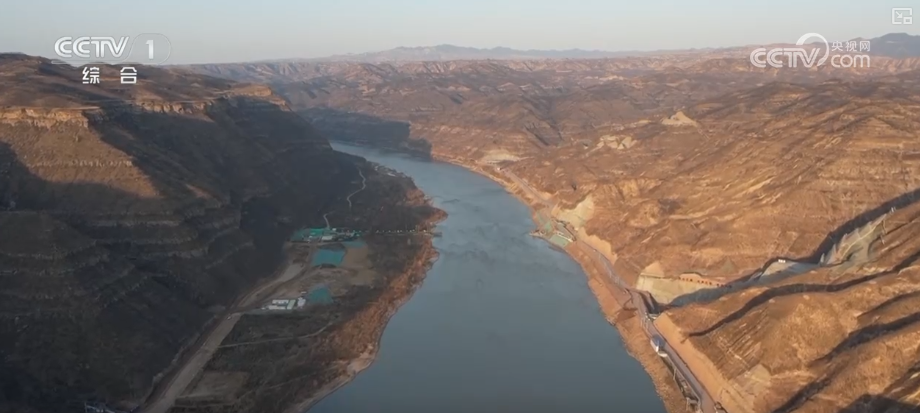
Core Viewpoint - Recent significant progress in major projects across water conservancy, energy, and transportation sectors in China highlights the country's economic vitality [1] Water Conservancy - The Yellow River Guxian Water Conservancy Hub's diversion tunnel successfully completed, marking a major milestone in the project aimed at enhancing flood control and disaster reduction capabilities [5] - The Nanning Pumped Storage Power Station, part of the "14th Five-Year Plan," has been fully operational, representing Guangxi's first pumped storage power station with a total investment of approximately 8 billion yuan and a capacity of 1.2 million kilowatts [19][22] Energy - The first domestically developed 30-megawatt pure hydrogen gas turbine has achieved pure hydrogen power generation, reducing carbon emissions by over 200,000 tons annually compared to conventional power generation [8][41] - The Xinjiang Oilfield's carbon capture and storage project has become China's first oilfield to inject over 1 million tons of carbon annually, marking a significant step in carbon capture and utilization [35][38] Transportation - The Guangdong Yangchun to Xinyi Expressway has officially opened, reducing travel time between the two cities from 4 hours to 1.5 hours, enhancing connectivity between the Guangdong-Hong Kong-Macao Greater Bay Area and the Guangxi Beibu Gulf Economic Zone [10] - The Nanjing Metro Line 4's second phase underwater tunnel has successfully completed, representing the deepest underwater metro tunnel in the Yangtze River Delta region [13] - The Dongyang Expressway has been completed, achieving "county-to-county" expressway connectivity in Liaocheng, Shandong Province [15] Natural Gas Infrastructure - The Sichuan section of the "West-to-East Gas Transmission" project has been fully operational, expanding the natural gas resource export channel from the Sichuan-Chongqing region [30][32]
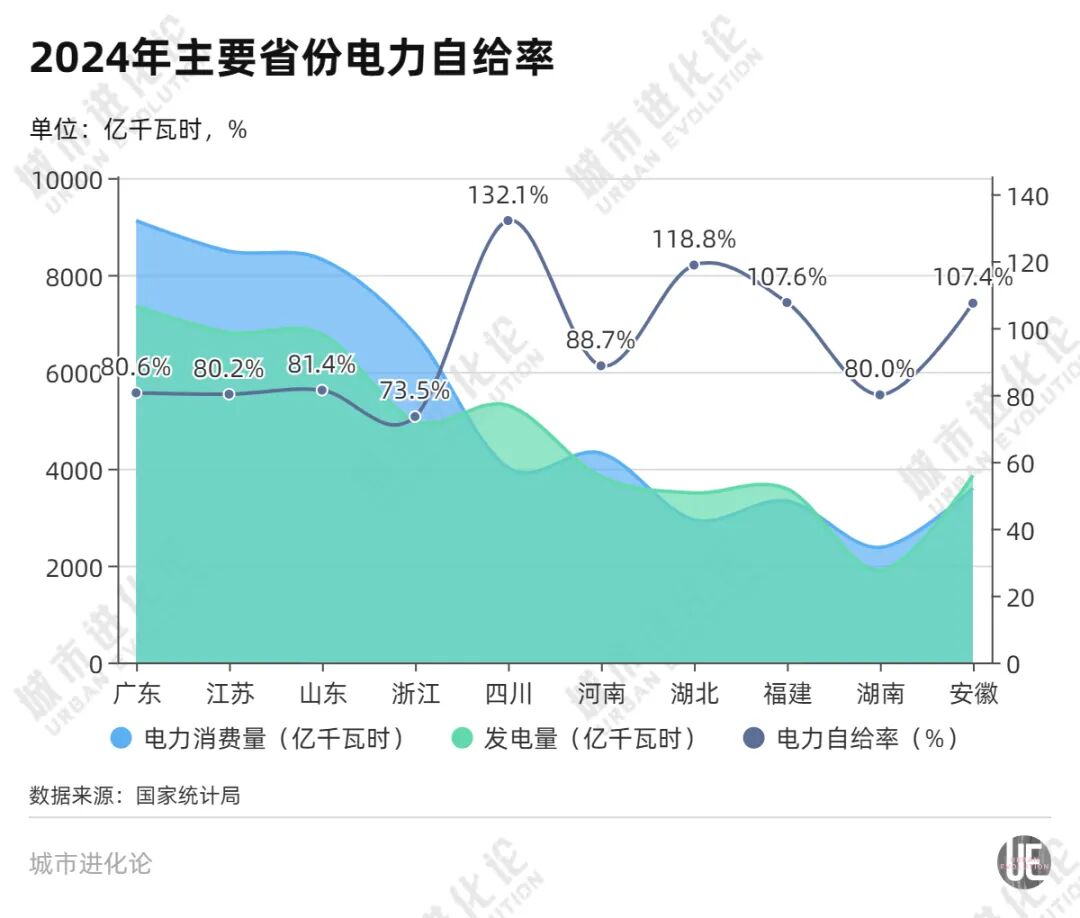
“缺电”的经济大省,又放了个大招
3 6 Ke· 2025-12-29 02:09
据当地媒体报道,浙江天台抽水蓄能电站未来将成为长三角地区重要的清洁能源调节枢纽,对区域电网的调峰、填谷、调频、调相和紧急事故备用起到至 关重要的"稳定器"和"调节器"作用。 值得注意的是,随着该机组投运,浙江抽水蓄能总装机规模首次突破1000万千瓦,达到1030.5万千瓦,仅次于广东,位居全国第二。与此同时,浙江在建 和规划建设的抽水蓄能装机规模近2000万千瓦,位居全国首位。 12月25日,三峡集团浙江天台抽水蓄能电站首台机组实现并网发电,标志着我国在高水头、大容量抽蓄机组建设领域实现重要突破。 天台抽水蓄能电站是我国"十四五"重点实施项目,总装机容量170万千瓦。此次投运的机组单机容量达42.5万千瓦,位居国内之首;额定水头724米,为世 界第一;单级斜井长度达483.4米,也创下国内纪录。 作为华东电网重要的调节电源,电站预计2026年迎峰度夏期间全面投产,年发电量约17亿千瓦时,可满足约160万人一年生活用电,每年可节约燃煤52万 吨、减少二氧化碳排放104万吨。 当前,我国正着力构建清洁低碳、安全高效的新型能源体系。随着风、光等新能源快速发展,电力系统对灵活调节能力的需求也日益增强。 储能作为能源转 ...

城市24小时 | 最“缺电”的经济大省,又放了个大招
Mei Ri Jing Ji Xin Wen· 2025-12-26 14:26
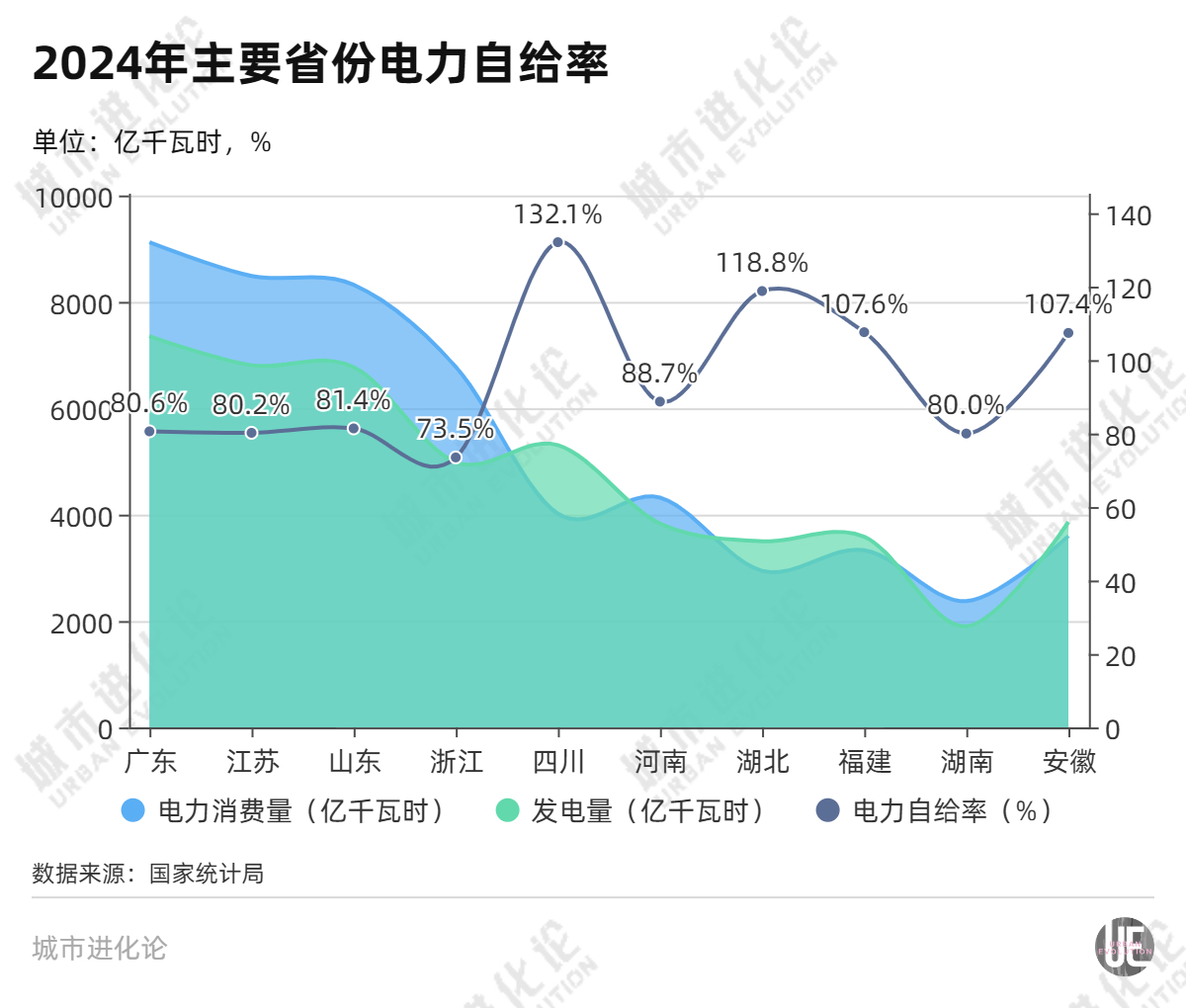
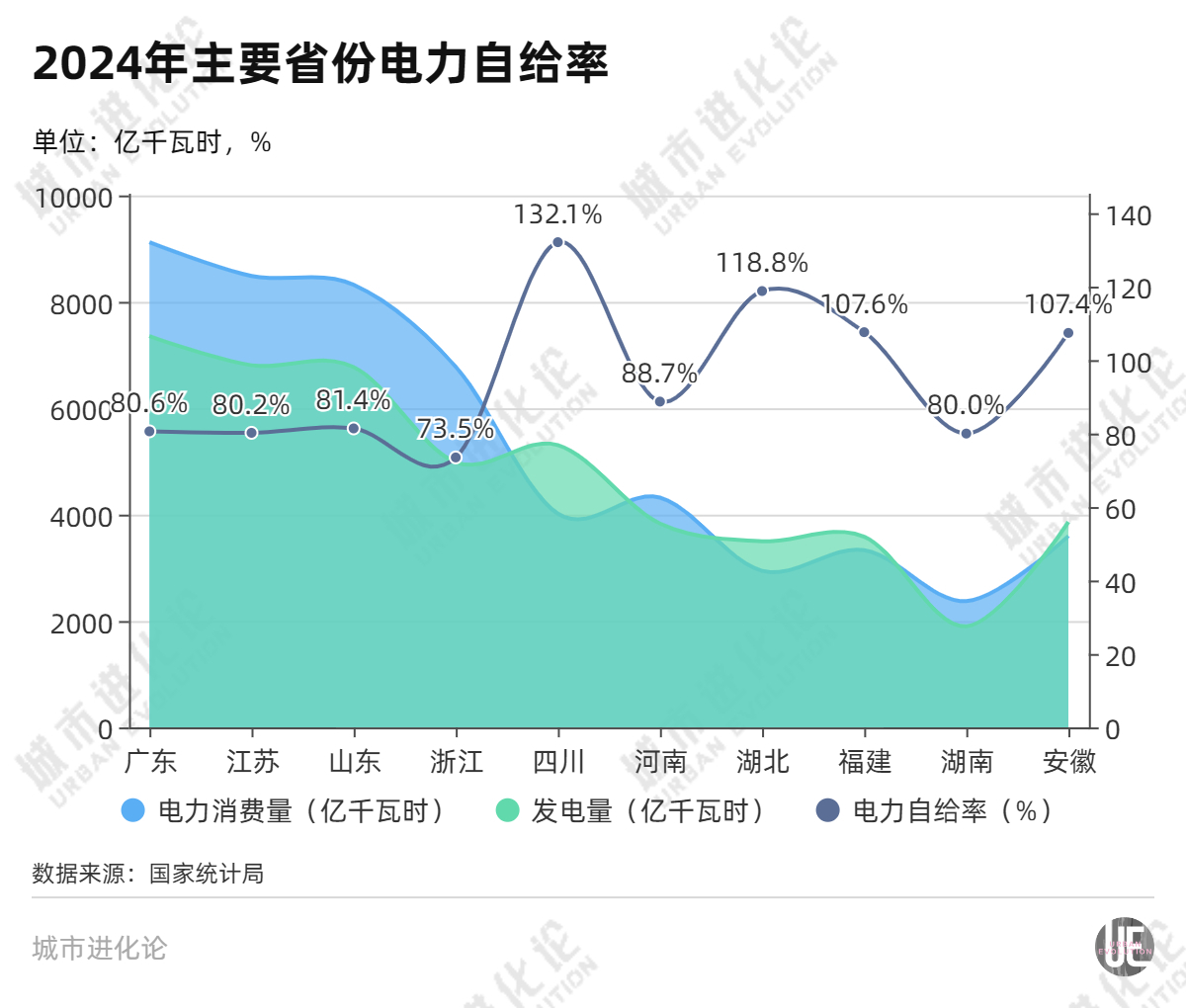
Group 1: Key Developments in Energy Sector - The first unit of the Zhejiang Tiantai Pumped Storage Power Station has achieved grid-connected power generation, marking a significant breakthrough in high-head, large-capacity pumped storage units in China [1] - The total installed capacity of the Tiantai Pumped Storage Power Station is 1.7 million kilowatts, with a single unit capacity of 425,000 kilowatts, the highest in the country, and a rated head of 724 meters, the highest in the world [1] - The power station is expected to generate approximately 1.7 billion kilowatt-hours annually, enough to meet the electricity needs of about 1.6 million people, while saving 520,000 tons of coal and reducing carbon dioxide emissions by 1.04 million tons each year [1] Group 2: Regional Energy Strategy - Zhejiang Province is accelerating the construction of a new energy system, with a focus on clean, low-carbon, and efficient energy production and consumption [2][4] - The total installed capacity of pumped storage in Zhejiang has surpassed 10 million kilowatts, reaching 10.305 million kilowatts, making it the second highest in the country, following Guangdong [2] - The province has plans for nearly 20 million kilowatts of pumped storage capacity under construction and in planning, leading the nation [2] Group 3: Energy Demand and Supply Dynamics - Zhejiang is characterized as a "resource-scarce province with high energy consumption," relying heavily on external energy sources, with one-third of its electricity imported from outside the province [5][6] - The province's electricity consumption reached 608.8 billion kilowatt-hours in the first ten months of the year, a year-on-year increase of 7.8%, the highest growth rate among major economic provinces in the country [9] - To enhance energy supply capabilities, Zhejiang is diversifying its energy sources, including offshore wind power, pumped storage, and nuclear power projects [9]
最“缺电”的经济大省,又放了个大招
Mei Ri Jing Ji Xin Wen· 2025-12-26 14:25
Core Insights - The successful grid connection of the first unit at the Zhejiang Tiantai Pumped Storage Power Station marks a significant breakthrough in China's high-head, large-capacity pumped storage unit construction [1] - The power station, a key project during the 14th Five-Year Plan, has a total installed capacity of 1.7 million kilowatts, with the single unit capacity of 425,000 kilowatts being the highest in the country [1] - The station is expected to generate approximately 1.7 billion kilowatt-hours annually, enough to supply electricity for about 1.6 million people, while saving 520,000 tons of coal and reducing carbon dioxide emissions by 1.04 million tons each year [1] Group 1 - The Tiantai Pumped Storage Power Station is crucial for the East China Grid as a key adjustment power source, expected to be fully operational by the summer peak in 2026 [1] - The station's rated head of 724 meters is the highest globally, and its single-stage inclined shaft length of 483.4 meters sets a domestic record [1] - Pumped storage is increasingly vital as a mature and economically viable energy storage technology, serving as a key link in the new energy system [1] Group 2 - With the commissioning of this unit, Zhejiang's total pumped storage capacity has surpassed 10 million kilowatts, reaching 10.305 million kilowatts, making it the second largest in the country after Guangdong [2] - Zhejiang is accelerating the construction of a new energy system, with nearly 20 million kilowatts of pumped storage capacity planned and under construction, ranking first in the nation [2] Group 3 - Starting in 2026, China will shift from energy consumption dual control to carbon emission dual control, promoting a greener and more efficient energy production and consumption model [3] - Zhejiang, characterized as a resource-scarce yet energy-intensive province, faces high external dependency for energy supply, with one-third of its electricity sourced from outside the province [3] Group 4 - In the first ten months of this year, Zhejiang's total electricity consumption reached 608.8 billion kilowatt-hours, a year-on-year increase of 7.8%, the highest growth rate among major economic provinces in the country [6] - To enhance energy supply capacity, Zhejiang is diversifying its energy sources, including offshore wind power, pumped storage in mountainous areas, and nuclear power projects along the southeastern coast [6] - The approval of Zhejiang's first provincial ultra-high voltage AC ring network will create greater flexibility for electricity transmission and scheduling [6]
能源早新闻丨国家电网:将超6500亿元!
中国能源报· 2025-12-25 22:33
Industry Updates - The National Energy Administration reported that from January to November, the national electricity market transaction volume exceeded 6 trillion kilowatt-hours, marking a year-on-year increase of 7.6%. This accounted for 63.7% of the total electricity consumption, up 1.3 percentage points year-on-year. Intra-provincial transactions reached 4.583 trillion kilowatt-hours, a 6.3% increase, while inter-provincial transactions were 1.447 trillion kilowatt-hours, up 12.1% [2] - The first climate resource economic blue book was released, emphasizing the transformation of climate resources into goods and services through policies, market mechanisms, and technological innovation. This aims to create economic value and promote sustainable use of climate resources, which is significant for food security, industrial upgrading, and improving people's well-being [2] - The Zhejiang Tiantai Pumped Storage Power Station, the largest single-unit capacity pumped storage power station in China, has successfully connected its first unit to the grid. The project has a total investment of over 10 billion yuan and a total installed capacity of 1.7 million kilowatts [3] - The Tarim Oilfield's Bozi-Dabei gas field, China's largest ultra-deep condensate gas field, has achieved an annual gas production of over 10 billion cubic meters, significantly enhancing natural gas supply capabilities and ensuring national energy security [3] - Yunnan Province is promoting the integration of "artificial intelligence + wind-solar-water-storage" to optimize energy construction and scheduling, enhancing the management of renewable energy resources [4] - Guangdong Province is advancing the research and listing of futures products such as lithium hydroxide, aiming to develop a comprehensive system for new energy products and support the growth of strategic emerging industries [4] Corporate Developments - The State Grid Corporation of China is expected to exceed 650 billion yuan in fixed asset investment for the year, setting a historical record. During the 14th Five-Year Plan period, the total investment is projected to exceed 2.85 trillion yuan, accelerating the construction of a new power system [7] - China Huadian's installed capacity of renewable energy has surpassed 100 million kilowatts, with several projects including wind and solar power successfully connected to the grid [7]
三峡集团:浙江天台抽水蓄能电站首台机组并网发电
Zhong Zheng Wang· 2025-12-25 06:56
Core Viewpoint - The successful grid connection of the first unit of the Zhejiang Tiantai Pumped Storage Power Station marks a significant advancement in China's hydropower equipment manufacturing and operation, enhancing the East China Grid's capacity for clean energy regulation [1][2]. Group 1: Project Overview - The Tiantai Pumped Storage Power Station, located in Tiantai County, Zhejiang Province, features a total installed capacity of 1.7 million kilowatts, with four reversible turbine generator units, each having a capacity of 425,000 kilowatts, making it the largest single-unit pumped storage generator in China [1]. - The main construction of the Tiantai Pumped Storage Power Station began in May 2022 and faced challenges such as the design and installation of the largest single-unit pumped storage generator and the highest rated water head of 724 meters in a pumped storage station under construction [1]. Group 2: Technological Innovations - The project utilized core capabilities and experiences from the construction of the world's largest clean energy corridor, achieving breakthroughs in the application of domestically produced steel plates and welding materials at the 1000 MPa level, filling a domestic gap [2]. - Innovations included the first application of low-heat cement in the concrete panels of the pumped storage industry, significantly improving the quality and temperature control of the concrete [2]. - The development of intelligent dam construction technology using unmanned machinery has revolutionized the filling mode of earth-rock dams in pumped storage stations [2]. Group 3: Industry Context - During the 14th Five-Year Plan period, China's pumped storage industry has rapidly developed, with total installed capacity exceeding 62 million kilowatts, maintaining the world's leading position for nine consecutive years [3]. - The company has focused on deploying eco-friendly and necessary pumped storage projects in power load centers and areas rich in renewable resources, with a total of 21.2 million kilowatts in operational and under-construction pumped storage projects [3]. - The company aims to leverage its construction management experience to advance pumped storage project development and ensure the safe and efficient operation of existing plants, contributing to the establishment of a new energy system and power system in China [3].
抽水蓄能如何“搬运”电力?解码“超级充电宝”硬核技术
Yang Shi Xin Wen Ke Hu Duan· 2025-12-25 06:02
Core Viewpoint - The Zhejiang Tiantai Pumped Storage Power Station, the largest single-unit capacity pumped storage power station in China, has successfully connected its first unit to the grid, marking a significant breakthrough in the field of hydropower equipment and engineering construction in the country [1] Group 1: Project Overview - The Zhejiang Tiantai Pumped Storage Power Station is a key project under the national "14th Five-Year Plan," with a total investment exceeding 10 billion yuan [1] - The power station consists of an upper reservoir, a lower reservoir, a water conveyance system, and an underground powerhouse, with a total installed capacity of 1.7 million kilowatts from four units, each with a capacity of 425,000 kilowatts [1] - Upon completion, the station is expected to provide 1.7 billion kilowatt-hours of clean electricity annually, sufficient to meet the annual electricity needs of a city with a population of 1.6 million [1] Group 2: Technical Innovations - The project has achieved multiple technological breakthroughs, including advancements in ultra-high head large-capacity units, advanced materials, and intelligent construction [1] - The lower reservoir has a capacity of over 11 million cubic meters, providing sufficient water for six hours of full-load operation for the four units [4] - The upper reservoir is located nearly 1,000 meters above sea level, creating a head difference of approximately 770 meters, the highest for any pumped storage power station currently under construction in China [4] Group 3: Operational Mechanism - The pumped storage power station operates by storing excess electricity generated during peak production times (e.g., sunny afternoons) by pumping water from the lower reservoir to the upper reservoir [2] - When electricity demand increases (e.g., during evenings when solar generation decreases), the station generates power by releasing water from the upper reservoir, converting potential energy into electrical energy [2] - This cyclical operation allows the pumped storage power station to act as both a stabilizer and regulator for the power system, ensuring stable electricity supply and emergency backup [2] Group 4: Industry Growth and Future Prospects - China's pumped storage capacity is expected to grow by over 34 million kilowatts by the end of the "14th Five-Year Plan," reaching approximately 66 million kilowatts, maintaining its position as the world's largest [6] - Since the beginning of the "14th Five-Year Plan," over 20 pumped storage stations with around 100 units have been put into operation, indicating rapid development in this sector [6] - By 2035, the pumped storage capacity serving the power system in China is projected to reach about 400 million kilowatts, highlighting its critical role in supporting the new power system and promoting economic development [7]