
《我的归途有风》

Search documents
短剧爆款频出,赚钱却更难了
Jing Ji Guan Cha Wang· 2026-02-13 23:39
Core Insights - The technology and internet sectors are experiencing rapid changes in 2025, with companies facing intense competition in computing power and large model applications, while e-commerce is reshaping its foundations amid regulatory pressures [1] - The short drama industry has evolved significantly, moving away from the "get-rich-quick" mentality, with many practitioners expressing that making money has become more challenging [1][2] - The emergence of high-quality short dramas indicates a shift towards a more artistic and sustainable approach in content creation, with notable successes like "家里家外" and "盛夏芬德拉" achieving 30 billion views [3][5] Industry Changes - The number of actors in the short drama sector has surged to 130,000 in 2025, a ninefold increase from 2024, and about 70% of traditional film industry professionals have transitioned to short dramas, enhancing the professionalism of production teams [2] - The production costs for short dramas have risen significantly, with average costs now between 400,000 to 700,000 yuan per episode, and top-tier "S-level dramas" costing between 1.5 million to 3 million yuan [5] Business Model Shifts - The short drama industry is witnessing a decline in paid content, with total heat for paid dramas dropping by 20% to 19.18 billion, while free content is rapidly gaining popularity, exemplified by the rise of platforms like 红果短剧 [6][7] - The competitive landscape for short drama advertising has intensified, with CPM costs increasing from 50-80 yuan in 2023 to 150-200 yuan in 2025, indicating a doubling of costs over three years [6] New Trends - The rise of AI-driven "漫剧" (animated dramas) is reshaping the industry, with lower production costs and higher efficiency compared to traditional short dramas, prompting major platforms to invest heavily in this new format [8] - Companies are exploring new revenue streams by selling content to lower-tier markets, diversifying income sources away from reliance on major short drama platforms [7][8]
短剧爆款频出,赚钱却更难了|TMT年度盘点
Jing Ji Guan Cha Wang· 2026-02-13 23:38
Core Insights - The TMT industry in 2025 is characterized by rapid technological advancements and a shift towards sustainable development, with a consensus among industry players that survival requires a robust approach to technology, commercialization, and ecosystem advantages [2][4] Short Drama Industry Trends - The short drama market in 2025 has seen a significant increase in the number of professionals, with the number of actors in Hengdian reaching 130,000, a ninefold increase from 2024 [3] - The professionalization of production teams is evident, with about 70% of traditional film industry workers transitioning to short dramas, leading to larger crew sizes of 40 to 60 members [3] - Content diversity is increasing, with fewer traditional storylines and more innovative narratives being produced [3] Quality and Production Standards - The success of high-quality productions like "Summer Fen De La" demonstrates a shift towards premium content, achieving 3 billion views and generating 16 million yuan in revenue within a month and a half [5] - The production quality has improved significantly, utilizing high-end equipment and extensive pre-production efforts, with script development taking ten times longer than industry norms [5] - The industry is moving towards a standard of quality that emphasizes artistic value and respect for content [5] Business Model Changes - The short drama industry is experiencing a fundamental shift in its business model, with a decline in paid content and a rise in free content, leading to a 20% drop in the total heat of paid dramas from 240 billion to 191.8 billion [7] - The emergence of free platforms like Hongguo has resulted in a significant increase in user engagement, surpassing platforms like Bilibili and Youku [7] - The reliance on platform revenue sharing has diminished the bargaining power of content creators, making it challenging for them to sustain profitability [7] Challenges in Achieving Hits - The path to creating a hit short drama has become more difficult, requiring not only quality content but also extensive marketing efforts similar to long-form dramas [8] - The industry is witnessing a decline in overnight success stories, with fewer instances of rapid financial success compared to previous years [8] Rise of Animation Dramas - The emergence of AI-driven animation dramas, referred to as "manhua dramas," is reshaping the landscape, with lower production costs and higher returns compared to traditional short dramas [9] - The production efficiency of animation dramas is significantly higher, requiring fewer personnel and resources, which may lead to a market shift [9] - Major platforms like Tencent and Bilibili are entering the animation drama space, potentially altering the competitive dynamics of the industry [9]


7亿用户撑起500亿市场:微短剧精品化拐点已至
Xin Jing Bao· 2025-09-29 03:17
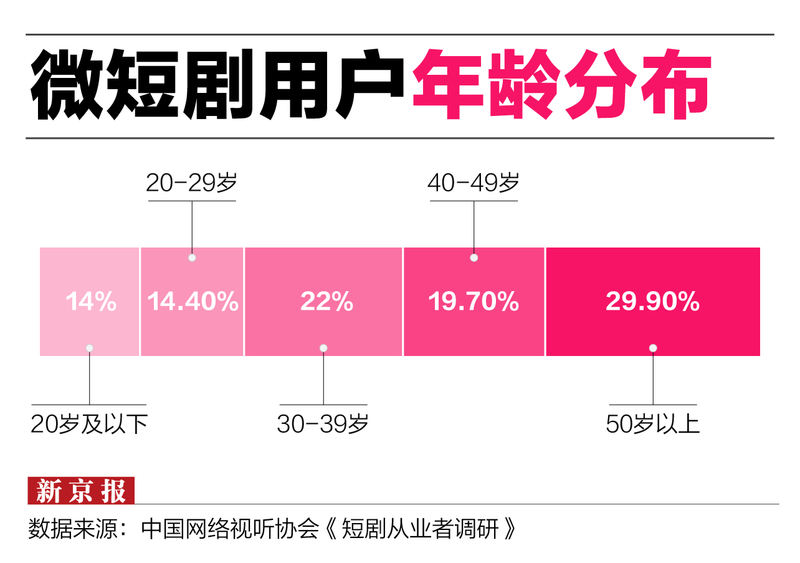
Core Insights - The report indicates that the micro-short drama industry in China is transitioning from a chaotic growth phase to a more refined and high-quality development phase, driven by audience demand, regulatory requirements, and the need to enhance industry value [1][2][9]. Industry Development - The micro-short drama industry has seen significant growth, with 700 million users supporting a market size of 50 billion yuan. The user demographic is diversifying, with nearly 30% of users aged 50 and above, indicating broader acceptance beyond the younger generation [2][5]. - By the end of 2024, over 80,000 companies will be involved in the industry, including web literature companies, MCN agencies, advertising firms, and traditional film and television production companies, leading to a cross-industry integration [5][9]. Content Quality and Audience Engagement - The shift towards high-quality content is driven by the audience's evolving aesthetic expectations. Audiences are moving away from sensationalist content towards narratives that are logically coherent and culturally rich, as exemplified by works like "My Return Has Wind" [5][10]. - Major platforms like Douyin, Kuaishou, iQIYI, and Tencent are investing heavily in high-quality projects, with Tencent alone spending over 100 million yuan on "Lion City Mountain Sea" to explore the concept of "short drama blockbuster" [6][7]. Regulatory Environment - The regulatory framework is becoming more structured, with the National Radio and Television Administration implementing a "classification and tiered review" system to prevent low-quality content from being aired. Local governments are also providing support through subsidies and industrial park development [9][10]. Challenges and Recommendations - Despite the positive trends, the industry faces challenges such as content template overuse, high infringement rates, and algorithmic biases favoring click-driven content over quality [11][12]. - The report suggests establishing a long-term mechanism focused on script quality, including better profit-sharing for writers and the creation of a script database to support original content [12]. Future Outlook - The ongoing push for quality content is expected to transform micro-short dramas into significant cultural and social vehicles, moving away from mere entertainment to encompass broader cultural functions [12].
产业园狂卷、地方文旅入局,短剧的“地域生意”还好做吗?
3 6 Ke· 2025-07-16 00:01
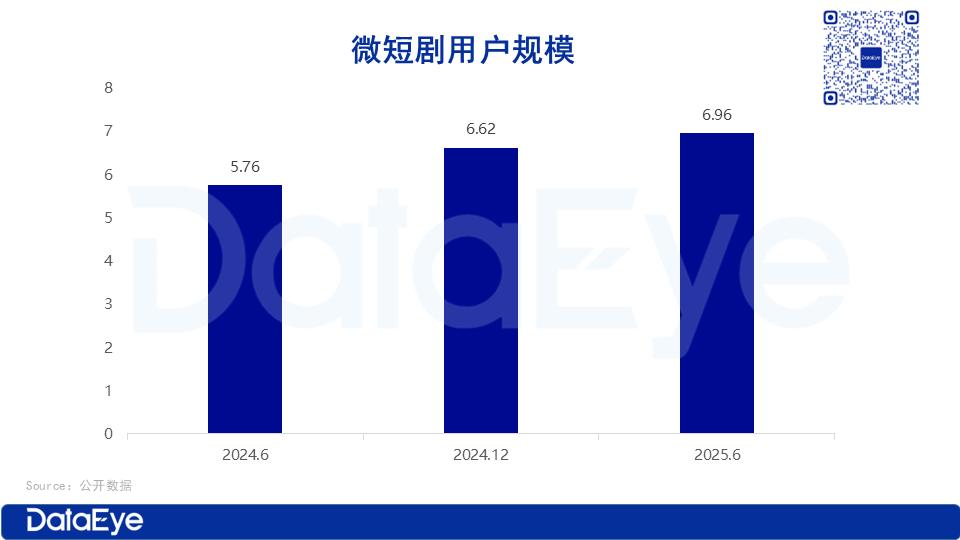
Group 1 - The micro-short drama market is expected to reach approximately 42.3 billion yuan in 2025, with a year-on-year growth of 28%, driven by the explosive growth of native models and a significant increase in free models [1] - The user base for micro-short dramas has reached 696 million, with a half-year growth rate of 5.1% [1] - Local governments are actively supporting the micro-short drama industry, leading to a surge in regional stories and the establishment of production bases in cities like Linfen, Zhengzhou, and Xi'an [3][4][6] Group 2 - The establishment of production bases is attracting talent and content companies, creating a network for short dramas in various cities [6][10] - The cost advantages of lower labor and venue costs in cities like Zhengzhou and Xi'an are driving the growth of short drama production [10][12] - The integration of full-chain services in production bases is enhancing the efficiency and effectiveness of short drama creation [8][12] Group 3 - Local policies are increasingly supporting the integration of short dramas with cultural tourism, with significant funding initiatives in places like Shenzhen and Shandong [13][17] - Successful short dramas have demonstrated the potential to boost local tourism, as seen with various productions leading to increased visitor numbers and local business growth [17][18] - The relationship between short dramas and cultural tourism is mutually beneficial, with each driving the other's growth [17][20] Group 4 - The importance of local knowledge and authenticity in short drama production is highlighted, with successful projects often involving local talent and settings [20][22] - The need for a balance between policy requirements and market demands is crucial for the success of cultural tourism-themed short dramas [30][31] - The industry is evolving, with companies exploring differentiated strategies to capture market opportunities in the competitive landscape [29][33]
文艺圈大混战,谁先“变短”谁就赢?
Ge Long Hui· 2025-05-16 01:58
Core Viewpoint - The short drama industry is rapidly growing, attracting attention from various media companies and investors, despite being perceived as lowbrow content. The market is currently dominated by new entrants and MCN organizations, with established film and television companies cautiously exploring this segment [1][4]. Group 1: Industry Dynamics - The short drama market is experiencing significant interest, with companies like Huace Film & TV and Ningmeng Film & TV making notable strides in this area [1][5]. - Major streaming platforms such as Tencent, iQIYI, and Douyin have already invested in short dramas, indicating a competitive landscape [3]. - The regulatory environment is tightening, with new guidelines requiring platforms to register short dramas, which may impact the content and production strategies of companies [22][23]. Group 2: Company Developments - Huace Film & TV has established multiple production teams and plans to expand its workforce significantly, with five short dramas set to launch by November 2023 [5][6]. - Ningmeng Film & TV reported a revenue of 1.22 billion RMB in 2023, with a net profit of 227 million RMB, marking a year-on-year growth of 28.4% and 60.4% respectively [8][10]. - The short drama segment contributed 32.23 million RMB to Ningmeng's revenue, reflecting a growth of over 1200% [10]. Group 3: Web Literature and Short Dramas - Companies in the web literature sector, such as Zhongwen Online and Yuewen Group, are also entering the short drama market, leveraging their IP for adaptation [14][16]. - Zhongwen Online reported that its IP derivative products, including short dramas, generated significant revenue, with a 94.41% increase year-on-year [14][16]. - Yuewen Group has launched a "Short Drama Star Incubation Plan" to develop its presence in the short drama market, although it has been slower to adapt compared to its competitors [18][19]. Group 4: Market Size and Growth - The micro short drama market in China reached a scale of 37.39 billion RMB in 2023, growing by 267.65% year-on-year, nearing the total box office of films [22]. - The rapid growth of the short drama market has attracted various stakeholders, including government entities and state-owned enterprises, indicating a trend towards higher quality content [22].


业绩承压 传统长剧公司为自救寻“短”
Zhong Guo Jing Ying Bao· 2025-04-24 07:43
Core Insights - The year 2024 is seen as a pivotal year for traditional drama production companies in China, with many reporting revenue declines [1] - The industry is experiencing a downturn, with some companies managing to grow through cost-cutting or reliance on single successful projects, indicating that the sector has not fully recovered [2][3] Company Performance - Huace Film & TV reported a revenue of 1.939 billion yuan in 2024, a decrease of 14.48% year-on-year, with a net profit of 170 million yuan, down 41.55% [1] - Ciwen Media's revenue was 366 million yuan, down 20.63%, but it achieved a net profit of 12.851 million yuan, reversing losses due to reduced operating costs [1] - Ningmeng Media's revenue fell by 46.25% to 657 million yuan, resulting in a net loss of 190 million yuan [1] - Daocaoxiong Entertainment and Huanrui Century were among the few companies to achieve both revenue and profit growth, with Daocaoxiong's revenue increasing by 33.6% to 1.125 billion yuan [2] Industry Trends - The overall performance of traditional long-form dramas is declining, with a significant reduction in the number of new shows being produced [4] - The total number of new domestic dramas released in 2024 was 7,610 episodes, a decrease of 14% year-on-year [4] - The industry is shifting focus towards micro-short dramas, which have seen rapid development in recent years, as companies seek new growth opportunities [6] Strategic Shifts - Companies like Ningmeng Media are exploring micro-short dramas, with their 2023 release "Twenty-Nine" achieving over 1.17 billion views [6] - Huace Film & TV launched seven micro-short dramas in 2024, while Ciwen Media is producing four [7] - Huanrui Century is enhancing its artist management business, which saw an 86.86% revenue increase to 234 million yuan, becoming a key growth area [4][7] - Companies are also investing in AI technology to improve content production and management, indicating a strategic pivot towards innovation [7]