
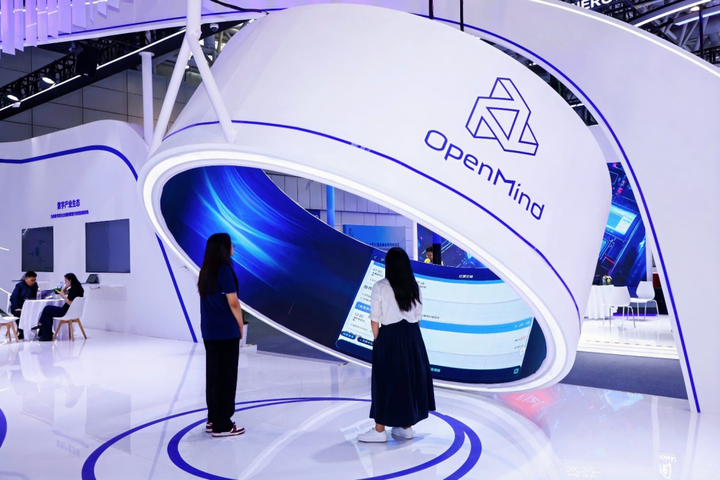
一汽·七星云工作台

Search documents
擎旗奋进 智领新程——中国一汽“十四五”转型发展观察
Xin Hua Wang· 2025-12-29 02:16
Core Viewpoint - During the "14th Five-Year Plan" period, China FAW Group has focused on technological innovation to drive industrial upgrades, showcasing the development of the national automotive industry through the establishment of independent brands, digital transformation, and expansion into overseas markets [1]. Group 1: Independent Brand Development - The national automotive brands have transitioned from catching up to leading, with "Hongqi" achieving over 2 million users and maintaining annual sales of over 400,000 vehicles [2]. - The "Jiefang" brand has achieved cumulative sales of 9 million vehicles, leading the domestic medium and heavy truck market [2]. - The "Benteng" brand has focused on the new energy vehicle market, with its first micro pure electric model, "Benteng Xiaoma," surpassing 170,000 units in sales within two years [2]. Group 2: Technological Innovation - China FAW has developed three major technology platforms: "Hongqi·Tiangong" for pure electric, "Hongqi·Honghu" for hybrid, and "Hongqi·JiuZhang" for intelligent systems [2]. - The company has launched the first domestic advanced process multi-domain integrated chip "Hongqi No. 1" and introduced the first heavy-duty commercial vehicle with in-cylinder direct injection hydrogen engine, achieving a thermal efficiency of over 55% [2]. - The energy density of the all-solid-state battery system has reached 350Wh/kg, and the new generation smart electric drive system has achieved an efficiency of 96% [2]. Group 3: Collaborative Innovation - China FAW has undertaken over 110 national and provincial major projects, establishing a global R&D layout with 12 innovation centers [3]. - The company has broken through more than 1,500 key technologies through collaborative innovation initiatives [3]. Group 4: Digital Transformation - China FAW is accelerating its transformation into a smart enterprise, with the "OpenMind" intelligent operational system achieving a 94.3% accuracy rate in responses and a response time of 6.2 seconds [4][6]. - The production facilities have implemented smart manufacturing processes, with an average daily output of approximately 1,000 new energy vehicles [7]. - The "FAW·Qixing Cloud Workbench" integrates seven major systems to enhance operational efficiency and has been recognized as a typical case of digital integration by the Ministry of Industry and Information Technology [7]. Group 5: International Expansion - China FAW has actively participated in the Belt and Road Initiative, expanding its international presence to over 100 countries and regions, with cumulative exports reaching approximately 400,000 vehicles during the "14th Five-Year Plan" period [8]. - The company has established a global sales and service network, with "Hongqi" models entering the European high-end new energy market [8]. - The launch of the China FAW China-Europe freight train has facilitated the transportation of high-end components, enhancing the connection between the Eurasian automotive industry [8].

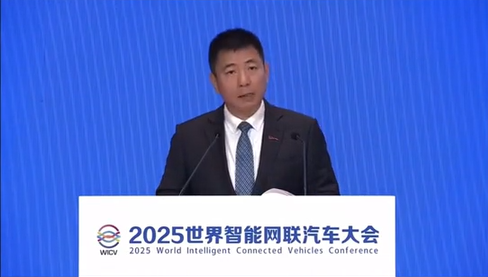
刘亦功:AI 重塑产业逻辑,一汽以生态共筑智能网联新未来
Huan Qiu Wang· 2025-10-17 04:13
Core Insights - The 2025 World Intelligent Connected Vehicles Conference opened in Beijing, highlighting the transformative impact of AI on the automotive industry and the challenges faced by the sector [1][3] Industry Transformation - AI is evolving from a technical tool to the soul of the industry, reshaping every value chain in the automotive sector, with a shift in competition from horsepower to computing power [3] - The core elements of competition are redefined as core software and hardware technology innovation, data-driven user insights, and agile organizational structures [3] Product Value Model - By 2030, the automotive product value is expected to follow a "442" model, with hardware accounting for 40%, software for 40%, and content services for 20% [3] - The business model is transitioning from one-time hardware sales to a lifecycle operation model that includes software and services, emphasizing electrification, intelligence, and ecosystem expansion [3][4] Technological Innovation - The traditional V-shaped development process is being replaced by an agile closed-loop model of "development - verification - learning," breaking linear supply chain relationships [4] - Tech giants are emerging as new Tier 0.5 platforms, reshaping product experiences and brand positioning [4] User Experience - In the AI era, users prioritize experience value over brand, with consumption scenarios expanding from mere transportation to multifunctional services [4] - Companies must enhance their ecosystem-building capabilities through AI to meet personalized and evolving user demands [4] Company Initiatives - The company is implementing an "AI + three-year action plan" to transition from a traditional manufacturing enterprise to a "mobility technology company" [4] - The development of the "Open Mind" enterprise intelligent life form and the "Qixing Cloud Workbench" supports over 20,000 employees in online collaboration, injecting vitality into the organization [4][5] Product Innovations - The Hongqi brand has launched "Sinan Intelligent Driving" and "Lingxi Cockpit," with advanced features such as a recognition precision 50 times greater than laser radar and a computing power of 1000 TOPS [5] - The company has established 25 intelligent factories across five production bases, upgrading production lines and utilizing over 160,000 industrial equipment data points [5] Industry Challenges - The automotive industry faces three core challenges: lack of self-controlled key technologies, issues with repeated construction and data barriers, and the need for breakthroughs in commercializing L3-level autonomous driving [6][7] - The company emphasizes focusing on seven core elements, including computing power, data, and algorithms, to build an open ecosystem through collaborative efforts [6][7]

中国一汽:勇当传统产业数智转型排头兵
Xin Hua She· 2025-05-05 09:53
Core Viewpoint - China FAW Group is positioning itself as a leader in the digital transformation of traditional industries, emphasizing the importance of digitalization for high-quality development in the automotive sector [1][7]. Digital Transformation Initiatives - China FAW has initiated a series of challenging explorations in digital transformation, viewing it as essential for high-quality development [1]. - The company has developed the "FAW·Qixing Cloud Workbench" and the automotive industry's first enterprise-level intelligent agent, OpenMind, to create a digital ecosystem [2][3]. - The digital economy's core industries account for approximately 10% of China's GDP, highlighting the strategic importance of digitalization in global competition [2]. Operational Efficiency and Cost Control - China FAW has achieved significant operational improvements, including the elimination of over 2,000 redundant approval nodes and an automation rate of over 50% in approvals, resulting in a threefold increase in business response speed [3]. - Manufacturing costs have been significantly reduced, and sales conversion rates have increased by 42% [3]. Product Innovation and Market Performance - In the first quarter, China FAW sold 762,000 vehicles, a year-on-year increase of 2.5%, and produced 776,000 vehicles, up 4.8% [5]. - The company launched several new models, including the Hongqi brand's Tian Gong 08 and Tian Gong 05, and the Jiefang brand's new JH6 model [4]. Talent Development - China FAW has established training programs and over 70 digital courses, certifying more than 6,500 technical professionals to enhance employee digital literacy [5]. Collaborative Ecosystem - China FAW is fostering collaboration with over 80 partners, conducting more than 300 training sessions across various industries to promote digital transformation [6]. - A strategic cooperation memorandum was signed with Digital China to explore innovations in digital transformation and smart connected vehicles [6].
打造数智化转型央企样本:中国一汽已实现核心业务100%上线
Zhong Guo Jing Ying Bao· 2025-05-01 02:24
Core Insights - China FAW Group is leveraging digital transformation to enhance operational efficiency and management paradigms, showcasing its initiatives at the 8th Digital China Construction Summit [3][4][5] - The company emphasizes the integration of business and IT as a critical factor for overcoming challenges in digital transformation, positioning it as a top-down initiative [4] Group 1: Digital Transformation Initiatives - China FAW has significantly improved efficiency by reducing seven manufacturing processes to two through neural networks and automated design tools [3] - The company has launched the "FAW·Qixing Cloud Workbench" and the OpenMind enterprise operation intelligent engine, marking a step towards comprehensive digital transformation [4][5] - Over 20,000 employees are now working online, with 100% of core business units operational on the new platforms [5] Group 2: Achievements and Future Directions - The digital transformation has led to optimization in R&D cycles, manufacturing costs, sales conversion rates, and order delivery times, enhancing overall operational efficiency [5] - China FAW is committed to sharing its digital transformation results and promoting the advancement of traditional manufacturing industries [5] - The company provided 106 Hongqi vehicles for service at the summit, reinforcing its role as a pioneer in digital transformation [5]
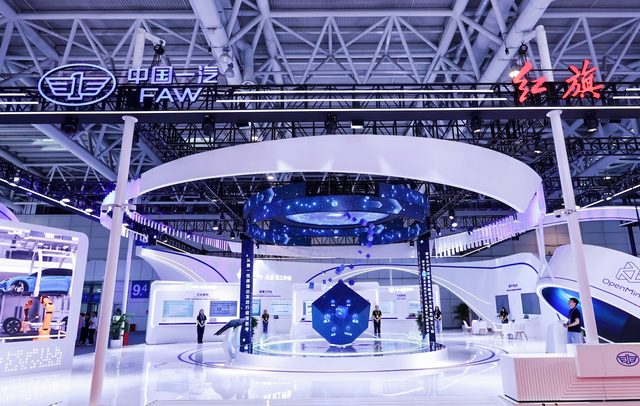
中国一汽全球首发OpenMind智能体,开启企业“自主决策”AI新时代
Jing Ji Guan Cha Bao· 2025-04-30 14:11
Core Viewpoint - China FAW Group Corporation is advancing its digital transformation by launching the world's first enterprise operation intelligent body "OpenMind," marking a significant step into the AI-native era of autonomous decision-making and real-time evolution [1][2]. Digital Transformation Strategy - The company emphasizes that digital transformation is a comprehensive and systemic change, moving away from traditional operational models, with a focus on integrating business and IT [1][2]. - China FAW has identified the need to break down "data silos" and enhance data governance to facilitate real-time data connectivity across various business units [1][2]. Implementation of Intelligent Systems - Over the past three years, China FAW has encapsulated over 38,000 minimal business actions to establish a digital twin system, which includes delivery standards and tools [2][3]. - The "OpenMind" engine utilizes multi-modal perception, intelligent decision-making, and dynamic execution to reconstruct enterprise operational logic [2][3]. Operational Efficiency and Cost Reduction - The implementation of the "One FAW·Qixing Cloud Workbench" has led to significant improvements, such as reducing the vehicle development cycle by over six months and cutting costs by 30% annually [3][4]. - In the supply chain, the transition to make-to-order production has achieved 100% coverage of material orders, with delivery cycles shortened to 15.9 days, outperforming the industry by 25% [3][4]. Industry Impact and Collaboration - China FAW defines core competitiveness in the digital age as a function of data density, connection dimension, and evolution rate, which collectively drive the transition from "experience response" to "intelligent emergence" [4][5]. - The company is sharing its transformation experiences and the "Qixing Cloud Workbench" with over 80 partners, conducting more than 300 cross-industry training sessions to address the issue of "data silos" [4][5].