
司南智驾

Search documents
从“民族汽车”到“国民好车”,从燃油到新能源:红旗的两次破界生长
21世纪经济报道· 2025-12-25 08:16
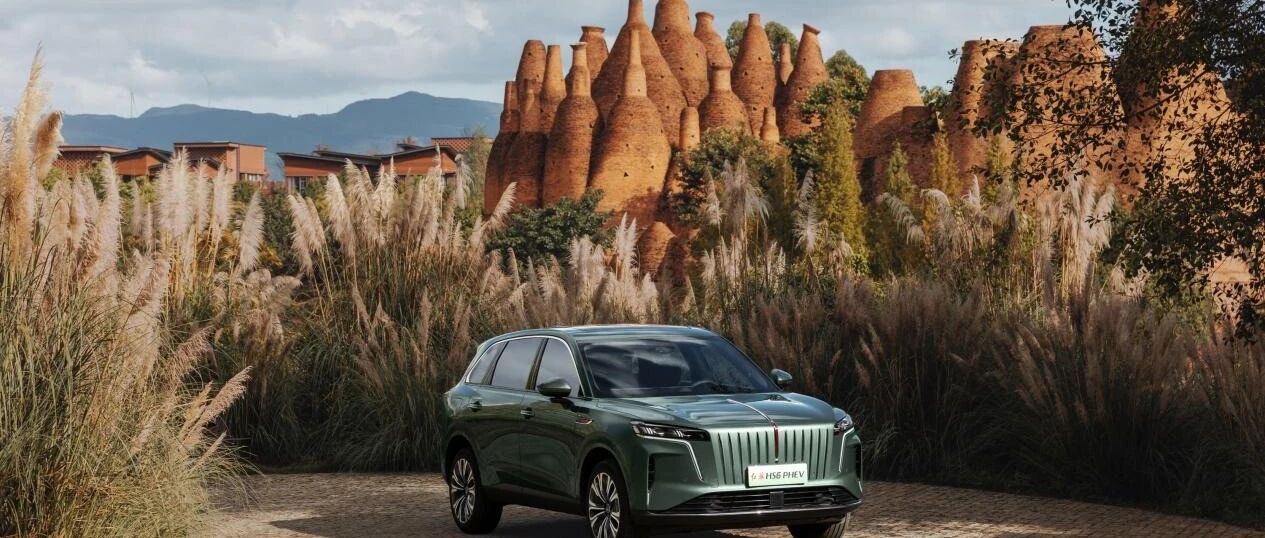
Core Viewpoint - Hongqi represents not just a car but a symbol of national pride and sentiment in China, evolving from a luxury brand to a more accessible option for everyday consumers through significant strategic transformations [1][13]. Group 1: Brand Transformation and Market Position - Hongqi has successfully transitioned to focus on private passenger vehicles and has embraced a full shift to new energy vehicles (NEVs), aiming to redefine luxury for Chinese families in the new energy era [1][2]. - As of July, Hongqi became the first Chinese luxury car brand to reach 2 million users, with November sales of 40,506 units, marking a 60.8% year-on-year increase in NEV sales [1][2]. Group 2: Product Development and Innovation - The newly launched Hongqi HS6 PHEV, priced from 178,800 yuan, boasts a comprehensive range of 1,650 km, showcasing the brand's commitment to high-quality, affordable technology [5][6]. - The HS6 PHEV features a 23 kWh battery capacity, surpassing its predecessors, and offers a pure electric range of 148 km, with the top model reaching 40 kWh and 228 km [5][6]. Group 3: Technological Advancements - The HS6 PHEV is equipped with a 1.5T hybrid engine, achieving a thermal efficiency of 45.21% and a minimum fuel consumption of 5.1L/100 km, outperforming previous models [6][12]. - The vehicle set a Guinness World Record for the longest distance driven on a full charge and tank, covering 2,327.343 km, demonstrating its exceptional endurance and performance [8][12]. Group 4: Intelligent Features and User Experience - The HS6 PHEV incorporates advanced AI and smart driving technologies, including a high-performance Qualcomm chip with up to 100 TOPS of computing power, enhancing its autonomous driving capabilities [14][17]. - The vehicle's intelligent cockpit features a unique understanding of user interaction, progressing from basic command execution to AI-generated content, aiming for a fully integrated user experience [16][19]. Group 5: Future Aspirations and Market Strategy - Hongqi aims to integrate various aspects of vehicle technology, including smart driving, smart cockpit, and power management, to create a cohesive AI-driven experience [20]. - The brand's evolution reflects a broader shift in China's automotive industry from manufacturing to intelligent manufacturing, positioning Hongqi as a leader in the transition to national pride and consumer accessibility [20].

换董事长的第二年,一汽爱上买买买
3 6 Ke· 2025-12-02 11:44
Core Viewpoint - China FAW's November sales reached 306,000 vehicles, comprising 85,000 from its own brands and 220,000 from joint ventures, with a cumulative sales of 2.995 million vehicles from January to November, reflecting a year-on-year growth of 4.8% [1] Group 1: Sales Performance - The sales performance is described as stable yet unremarkable, especially compared to competitors like Dongfeng, Changan, and SAIC, which have seen significant growth in their own new energy brands [1] - In 2023, under the leadership of Chairman Qiu Xiandong, the annual sales were 3.373 million vehicles, but a decline is projected for 2024 with an expected total of 3.2 million vehicles [1] - To achieve a sales target of approximately 3.4 million vehicles by the end of 2026, a 30% month-on-month increase in December sales is necessary, requiring a sales figure of around 400,000 vehicles [1] Group 2: Strategic Investments - China FAW is actively investing in the automotive sector, with a notable investment of over 3.6 billion RMB in Zhuoyue Technology, a supplier of advanced driving assistance systems [2] - Discussions are ongoing regarding a potential 5% equity stake in Leap Motor, valued at approximately 4 billion HKD based on recent stock prices [2][4] - These investments aim to enhance China FAW's technological competitiveness in smart driving, addressing gaps in electric and intelligent vehicle capabilities [4] Group 3: Product Development and Market Position - The Hongqi brand, known for its high-end vehicles, has maintained strong sales, with over 367,000 units sold from January to October, surpassing competitors like Huawei's AITO [8] - Despite strong sales, Hongqi faces challenges in the electric vehicle market, with limited recognition of its new energy models, particularly the Tian Gong series [10] - Future models, including a flagship vehicle utilizing Huawei's full-stack intelligent solutions, are in development, with a planned launch in 2026 [12]

一汽、北汽、宝马等企业发声 大咖共议“新汽车”
Zhong Guo Jing Ying Bao· 2025-10-23 14:31
Core Insights - The smart connected vehicle industry in China is transitioning from a technology exploration phase to a critical period of large-scale development, with significant advancements in autonomous driving technology and vehicle-road collaboration [1] - The integration of AI into the automotive sector is reshaping the industry landscape, moving from hardware-driven to software-defined vehicles, which is expected to enhance the overall value chain [2][3] Group 1: Industry Development - China's smart connected vehicle industry is propelled by a combination of policy support, market drive, and technological breakthroughs, allowing it to transition from a follower to a leader in the global market [2] - The industry is experiencing a transformation where AI is fundamentally reshaping the underlying logic of the industry, product value models, and user experience ecosystems [2][3] Group 2: Technological Advancements - The year 2025 is anticipated to be a turning point for the commercialization of AI in the automotive sector, marking a shift from experimental scenarios to large-scale implementation [3] - Companies are developing differentiated strategies for smart connected technologies across various vehicle models, with L2-level assisted driving becoming standard [6] Group 3: Collaboration and Ecosystem - The development of smart connected vehicles is viewed as a collaborative effort rather than a competitive sprint, emphasizing the importance of open cooperation and innovation [7][8] - Industry leaders are advocating for a national-level collaborative innovation platform to address challenges such as technology barriers and standardization issues [8][9] Group 4: Market Opportunities - The automotive industry is expected to see a shift in business models, with potential monthly subscription services for autonomous driving as L4/L5 technologies mature [4] - The integration of AI capabilities across different scenarios and devices is projected to create vast opportunities within the automotive ecosystem [3]
刘亦功:AI 重塑产业逻辑,一汽以生态共筑智能网联新未来
Huan Qiu Wang· 2025-10-17 04:13
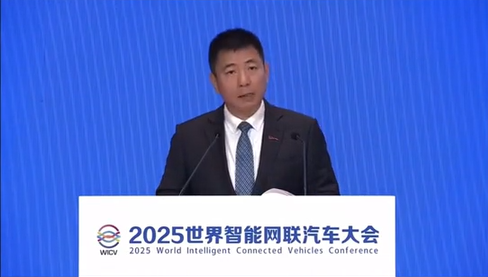
Core Insights - The 2025 World Intelligent Connected Vehicles Conference opened in Beijing, highlighting the transformative impact of AI on the automotive industry and the challenges faced by the sector [1][3] Industry Transformation - AI is evolving from a technical tool to the soul of the industry, reshaping every value chain in the automotive sector, with a shift in competition from horsepower to computing power [3] - The core elements of competition are redefined as core software and hardware technology innovation, data-driven user insights, and agile organizational structures [3] Product Value Model - By 2030, the automotive product value is expected to follow a "442" model, with hardware accounting for 40%, software for 40%, and content services for 20% [3] - The business model is transitioning from one-time hardware sales to a lifecycle operation model that includes software and services, emphasizing electrification, intelligence, and ecosystem expansion [3][4] Technological Innovation - The traditional V-shaped development process is being replaced by an agile closed-loop model of "development - verification - learning," breaking linear supply chain relationships [4] - Tech giants are emerging as new Tier 0.5 platforms, reshaping product experiences and brand positioning [4] User Experience - In the AI era, users prioritize experience value over brand, with consumption scenarios expanding from mere transportation to multifunctional services [4] - Companies must enhance their ecosystem-building capabilities through AI to meet personalized and evolving user demands [4] Company Initiatives - The company is implementing an "AI + three-year action plan" to transition from a traditional manufacturing enterprise to a "mobility technology company" [4] - The development of the "Open Mind" enterprise intelligent life form and the "Qixing Cloud Workbench" supports over 20,000 employees in online collaboration, injecting vitality into the organization [4][5] Product Innovations - The Hongqi brand has launched "Sinan Intelligent Driving" and "Lingxi Cockpit," with advanced features such as a recognition precision 50 times greater than laser radar and a computing power of 1000 TOPS [5] - The company has established 25 intelligent factories across five production bases, upgrading production lines and utilizing over 160,000 industrial equipment data points [5] Industry Challenges - The automotive industry faces three core challenges: lack of self-controlled key technologies, issues with repeated construction and data barriers, and the need for breakthroughs in commercializing L3-level autonomous driving [6][7] - The company emphasizes focusing on seven core elements, including computing power, data, and algorithms, to build an open ecosystem through collaborative efforts [6][7]
红旗提交智能化作业
汽车商业评论· 2025-04-01 04:43
撰文 / 张霖郁 设计 / 师 超 2023年初,中国一汽全面宣布红旗新能源战略,推出了HME纯电平台以及HIS电子电气架构,之后的4月8日,又推出了HMP混动平台。这意味着红旗整 个新能源战略的基建已构建完成。 HME和HIS后来有了可爱的名字,一个叫天工纯电平台,一个叫九章智能。 2023年之前,大家的共识是红旗品牌在燃油车领域已完成了品牌向上的任务,但对于新能源智能化领域,红旗的能力如何,还处于未知状态。 实际上,红旗两年前宣布的天工纯电平台HME和九章智能HIS,汇聚了中国一汽在八大技术领域群和115项关键技术领域的重大成果,拥有近1万项专 利、软件著作权等知识产权。 两年时间, 2025年2月,在这一平台架构下推出的红旗天工05,自带光环,含着金钥匙出生。 "15.98万元的起售价,确实是一步到位了!"当红旗天工05公布价格,在场很多人大为感叹。 天工05的意义并不只是"一款价格更亲民的红旗",甚至也不仅仅是"一款性价比很高的纯电动红旗轿车"。 作为天工系列,它代表了红旗新能源车型全新的智驾以及座舱实力,并在守住安全红线的基础上拉低了购买门槛。 2025年3月的最后一天,红旗又重磅推出了天工06,预 ...